What Does a Marine Actually Do in 2026? Inside the Modern Battle Doctrine
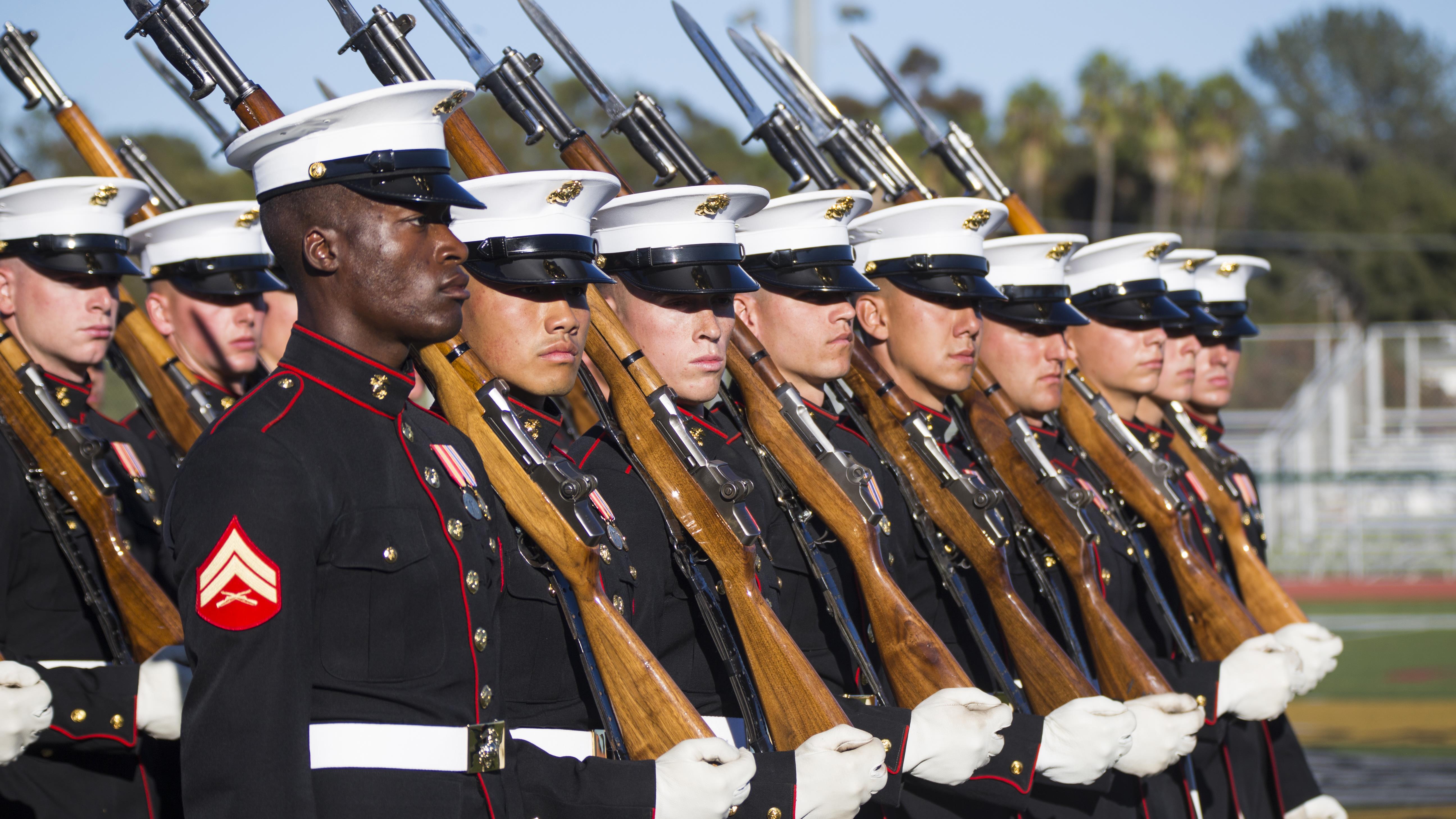
A Marine deploying to an active operational theater in 2026 carries little resemblance to the desert fighters of the early 2000s. Heavy armor is gone, massive logistics footprints have been dismantled, and the classic image of massed amphibious assault operations charging a contested beach has been thoroughly retired. Instead, Marine units operate in dispersed, low-signature teams across isolated archipelagos and coastal choke points, pairing shoulder-fired anti-ship missiles with long-range autonomous sensors.
Recent military assessments, including a detailed Breaking Defense Report, reveal how deeply autonomous systems and unmanned aerial systems have reshaped Marine operational tactics. From launching reconnaissance flights from rigid-hull inflatable boats to relaying targeting coordinates for naval strikes hundreds of miles away, the core responsibilities of a Marine now center on speed, sensor integration, and lethal survivability under constant digital observation.
📌 Key Takeaways:
- Core Mission Shift: Marines now operate primarily as agile, forward-sensing expeditionary forces designed to contest coastal waterways and island chains rather than holding large land garrisons.
- The Technological Leap: Tactical drone warfare, electronic emissions control, and loitering munitions have become foundational requirements down to the individual squad level.
- Doctrinal Overhaul: The implementation of the Force Design doctrine stripped heavy tanks and traditional tube artillery to finance mobile missile batteries and autonomous naval interdiction systems.
Beyond the Beachhead: Daily Reality of Modern Marine Deployments
Every Marine continues to earn the baseline identity of a rifleman, but their day-to-day work centers on multi-domain technical competence. A modern service member holding the infantry rifleman MOS (0311) spends less time drilling linear squad assaults and far more time managing electromagnetic signatures, operating encrypted satellite radios, and deploying loitering reconnaissance assets. Operating in small four-to-twelve-person teams, frontline troops are tasked with establishing expeditionary advanced base operations on remote terrain, often within range of hostile precision fires.
In practice, this means an infantry squad must be capable of establishing an austere forward outpost, launching tactical unmanned aerial systems for over-the-horizon reconnaissance and surveillance, and establishing datalinks with joint air and naval assets. Survivability hinges on speed. Marines land, operate, execute targeting tasks, and relocate within hours to prevent adversary radar and satellite reconnaissance from locking onto their positions.
Support personnel face an identical survival imperative. A combat engineer or motor transport Marine does not merely construct perimeter berms or drive logistics trucks; they run mobile water purification systems, manage specialized hydrogen fuel cells, and coordinate vertical take-off resupply drones that deliver ammunition without alerting hostile sensors.
The Marine Expeditionary Unit as a 24-Hour Global Rapid Trigger
When international crises escalate, the primary tool of American rapid deterrence remains the Marine Expeditionary Unit (MEU). Embarked aboard a three-ship Amphibious Ready Group (ARG), an MEU functions as a self-sustaining combat element of approximately 2,200 Marines and sailors capable of continuous operation without external logistical lines for 30 days.
Public attention frequently turns to these units during major geopolitical confrontations. As geopolitical tensions flared across the Middle East, an analysis by Al Jazeera underscored how the forward presence of an MEU serves as both a diplomatic deterrent and an immediate crisis response force. These units handle non-combatant evacuation operations (NEO), conduct direct-action counterterrorism raids, and insert littoral combat teams into unstable ports on short notice.
The daily routine aboard an amphibious warship is grueling. Troops maintain weapons systems in corrosive saltwater environments, run night-vision rehearsals in darkened vehicle stowage bays, and monitor intelligence feeds streaming from contested sea lanes. The MEU provides combatant commanders with a crisis intervention tool that requires no foreign basing permissions to station off an adversary's shoreline.
How Force Design Doctrine Stripped Armor to Gain Island Mobility
The strategic shift governing how Marines train and fight originated with the institutional restructuring known as the Force Design doctrine. Initiated under former Commandant Gen. David Berger and solidified through mid-decade exercises under current leadership, the transformation systematically dismantled decades of legacy capabilities to prepare the branch for potential high-end maritime conflict in the Indo-Pacific.
The service deactivated all seven active tank companies, transferring its entire fleet of M1A1 Abrams tanks back to the U.S. Army. It reduced conventional towed cannon artillery by more than 60% and scaled back heavy helicopter transport squadrons. In their place, the Marine Corps invested billions in anti-ship missile launchers mounted on autonomous joint light tactical vehicles, known as the Navy Marine Expeditionary Ship Interdiction System (NMESIS).
| Operational Capability | Traditional Model (2010, 2019) | Distributed Doctrine (2020, 2026) |
|---|---|---|
| Heavy Armor | M1A1 Abrams tank battalions attached to divisions | Zero tanks; replaced by mobile anti-ship missile batteries |
| Core Littoral Unit | Regimental Combat Teams built for inland ground warfare | Marine Littoral Regiments (MLRs) focused on sea denial |
| Squad-Level Aviation | Centralized air support requested through forward air controllers | Organic tactical drones and loitering munitions per rifle squad |
| Targeting Footprint | Direct line-of-sight strikes out to 15, 30 km | Sensor-to-shooter networking exceeding 185 km |
This restructuring fundamentally changed the mission profile of the frontline Marine. Rather than kicking down doors in urban environments or advancing behind heavy armor columns, Marine units now operate as the forward eyes and strike weapons of the broader naval fleet, bottling up enemy warships within narrow maritime corridors.

Small Squads, Big Kill Chains: Drone Warfare on the Frontline
The democratization of battlefield robotics has pushed complex electronic systems down to the most junior ranks. Where a lance corporal once focused exclusively on target engagement with a service rifle, that same Marine now controls portable unmanned aerial systems designed to spot targets or strike armored vehicles from several miles away.
Tactical drone warfare has created an environment where visual and electromagnetic camouflage is critical to survival. Marine units train to live under thermal-suppression tarps, power down civilian and tactical communications devices, and transmit high-priority data bursts in fractions of a second. A radio signal held open for longer than 15 seconds can bring precision counter-battery fire onto an expeditionary team's location.
Field exercises across the Pacific rim have proven that modern reconnaissance is no longer the sole domain of specialized scout-sniper units. Standard line companies field loitering munitions that can track moving naval targets in coastal waters, making a single platoon a formidable threat to multi-million-dollar maritime vessels.
The MOS Pipeline: How Marine Corps Recruit Training Meets Modern War
The transformation of operational doctrine has forced an overhaul of the training pipeline. The foundation remains Marine Corps recruit training, a grueling 13-week test of discipline, physical endurance, and stress management conducted at either Marine Corps Recruit Depot Parris Island or Marine Corps Recruit Depot San Diego. The culminating 54-hour Crucible event tests sleep-deprived recruits on leadership, obstacle courses, and basic combat survival.
The substantive divergence occurs once recruits earn the title of Marine and transition to their specialized military occupational specialty (MOS) training:
- School of Infantry (SOI) Modernization: The Infantry Marine Course has doubled in length from historical standards, shifting from a four-week basic infantry course to an intensive 14-week curriculum focusing on distributed decision-making, drone flight, electronic warfare, and naval vessel boarding operations.
- Specialized Technical MOS Paths: Communications, cyber operations, and intelligence tracks now train Marines to manage decentralized ad-hoc networks that function even when primary satellite connectivity is jammed.
- The Littoral Pipeline: Marines assigned to the newly created Marine Littoral Regiments (MLRs) receive specialized instruction in surface search radars, coastal air defense systems, and rapid island-hopping logistics using austere landing craft.
Frequently Asked Questions (FAQ)
Q1: What is the main difference between what a Marine does and what an Army soldier does today?
A1: While both branches maintain infantry and ground capabilities, the Marine Corps functions as a rapid-reaction expeditionary force organized under the Department of the Navy. Marines specialize in amphibious deployments, littoral combat operations, and rapid crisis response without established permanent infrastructure, whereas the Army manages sustained, large-scale, and heavy inland land campaigns.
Q2: Do Marines still train for massive amphibious beach assaults?
A2: Massed beach landings against fortified defenses have been largely replaced by dispersed amphibious insertions. Marines train to land rapidly via tiltrotor aircraft, amphibious combat vehicles, and small surface craft onto austere, distributed island positions to set up missile outposts and radar nodes rather than massing hundreds of vehicles in a single target area.
Q3: How many active-duty Marines are there, and what roles make up the force?
A3: The Marine Corps maintains an active-duty force of approximately 172,000 to 175,000 personnel. While infantry riflemen represent the core combat identity, the majority of Marines fill specialized combat support roles, including aviation maintenance, cyber operations, air traffic control, logistics, electronic warfare, and intelligence analysis.
The Strategic Realities Facing Modern Marines
The modern Marine operates in an unforgiving battlespace defined by persistent overhead surveillance and long-range precision fires. The romanticized notion of endless columns of heavy vehicles advancing across open country has given way to small, hidden teams holding sea lanes hostage with advanced guidance systems and autonomous launch platforms.
This operational reality demands high levels of intellectual independence from young enlisted leaders. When communications are severed by electronic jamming and supply ships cannot reach a remote island, the survival of the squad rests on decisions made by non-commissioned officers under direct pressure. The service has deliberately traded heavy armor and sheer mass for speed, agility, and precision, redefining what it means to be an expeditionary fighter in twenty-first-century combat.


