What Does .COM Actually Mean? The Origin Story Most People Get Completely Wrong
Every time you glance at a browser address bar, the three letters sit at the edge of your vision: .com. It is the default ending of the modern web, an automated keystroke mapped to dedicated keyboard buttons on billions of smartphones. Yet four decades after its introduction into the internet protocol architecture, most people who type it every day have no idea what it actually stands for. The common guesses, company, computer, or communication, are entirely wrong.
The suffix is a historical artifact from the dawn of network engineering. Recent registrar analysis from registry monitors and web architecture studies, including a detailed one.com Report tracking how regional identifiers contrast with global roots, highlights how URL suffixes continue to anchor digital trust. Understanding what .com means requires returning to the exact moment computer scientists realized the early web was about to collapse under its own weight.
📌 Key Takeaways:
- Core Definition: The extension stands strictly for commercial, designed to designate for-profit commercial entities rather than companies or communications.
- Architectural Origin: Established in October 1984 under RFC 920, the designation helped replace flat host files with a hierarchical Domain Name System.
- Current Real Estate Value: Despite hundreds of generic top-level domains entering the root zone, the extension accounts for over 160 million active registrations globally.
The October 1984 Memo That Defined the Web
Before the mid-1980s, the internet did not have domains. Machines on the ARPANET communicated using numerical internet protocol addresses, mapped manually through a single text file named HOSTS.TXT. Whenever a university or defense research lab added a mainframe to the network, Stanford Research Institute’s Network Information Center updated the central file. Network administrators had to download that master text file via FTP to ensure their local systems knew how to find peer machines.
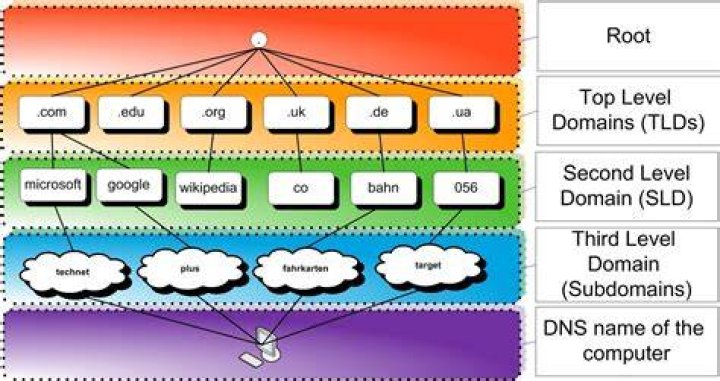
By 1983, host count expansion rendered the centralized file system unworkable. Names collided constantly, and bandwidth was wasted syncing static name maps. Computer scientist Paul Mockapetris engineered a solution: the hierarchical Domain Name System (DNS). Instead of a flat list, names would read like an inverted tree, moving from general categories on the right to specific host machines on the left.
In October 1984, internet pioneers Jon Postel and Joyce K. Reynolds published RFC 920, titled "Domain Requirements." This technical document laid down the structural foundation for top-level domains (TLDs). It dictated that general administrative domains must group organizations by functional category. At the top of that list sat the abbreviation meant to represent any conventional private business: commercial.
Commercial, Not Company: Busting the Universal URL Myth
The most widespread misconception is that .com is an abbreviation for "company." The error seems logical because private corporations dominate the space. However, Postel and Reynolds designed the namespace around activity types rather than corporate governance structures.
RFC 920 explicitly defined the category: "COM - Commercial, this domain is intended for commercial entities, that is, companies that trade or sell goods or services."
While the word "companies" appeared in the descriptive text, the root concept was commercial activity. An enterprise did not need a specific corporate charter, such as an LLC, PLC, or Inc., to belong in the category. The design was purely taxometric. If an organization transacted business or sold products, it was commercial. If it governed, it was governmental. If it educated students, it was educational.
Other persistent myths claim the suffix stood for "communication" or "computer." Neither word ever appeared in early DNS architectural papers as a proposed domain class. Those ideas were retrofitted decades later by casual users attempting to explain why the entire internet seemed to route through three letters.
The Original Six: How .COM Fit Into the 1985 TLD Architecture
When the Domain Name System became operational in January 1985, engineers introduced an initial set of six generic top-level domain (gTLD) roots, along with temporary transitional buckets. Each carried strict operational boundaries intended to keep network traffic organized.
| Top-Level Domain | Intended Meaning | Original 1985 Eligibility Rule |
|---|---|---|
| .com | Commercial entity | Unrestricted businesses and trade operations |
| .gov | Government agency | Strictly limited to US civilian federal bodies |
| .edu | Educational institution | Accredited post-secondary institutions |
| .mil | Military organization | US Department of Defense establishments only |
| .org | Miscellaneous organization | Non-profits and groups failing other criteria |
| .net | Network infrastructure | Network operators and telecom providers |
A frequent question during web history debates centers on related suffixes: what does net stand for, and what does org mean in everyday practice? As shown in the architectural records, .net stood strictly for network administration, reserved for machines running backbone routes, network operation centers, and gateways. .org stood for organization, established as an unclassified spillover category for entities that did not fit trade, military, or higher education molds.
The boundaries collapsed early. By the early 1990s, administrators stopped strictly verifying eligibility for non-defense and non-education suffixes. The open-door policy set the stage for an explosive land rush.
From Defense Research to Unrestricted Speculation
On March 15, 1985, Massachusetts computer manufacturer Symbolics registered Symbolics.com, etching its name into history as the very first domain name registration under the commercial label. For years, uptake crawled. Network access was largely restricted to government contractors, research scientists, and universities. By 1987, only 100 total domains existed across the entire namespace.
The system shifted dramatically in 1991 when the National Science Foundation lifted restrictions on commercial activity over its backbone. The internet was no longer an academic testbed. It was a trade corridor.
In 1995, the National Science Foundation authorized Network Solutions to charge users for registrations: $100 for two years. Rather than depressing interest, commercial fees legitimized domains as corporate assets. Speculators snapped up short names and generic dictionary words.
Governance evolved alongside the financial stakes. By 1998, the US Department of Commerce facilitated the formation of the Internet Corporation for Assigned Names and Numbers (ICANN), a non-profit international body established to oversee IP addresses, protocol parameters, and root zone management. Under ICANN oversight, the original academic utility transformed into an enterprise real estate market.
The Suffix Divide: Country Codes versus Generic Roots
The modern domain environment looks radically different from the clean, six-bucket taxonomy envisioned in RFC 920. Today, site operators choose between three primary buckets: the dominant legacy commercial root, country code top-level domains (ccTLDs), and hundreds of specialized new generic top-level domains.
Country-code extensions like .uk, .de, or .si (Slovenia) operate on two-letter codes derived from ISO-3166 standards. In many domestic markets, local extensions carry higher trust for everyday retail transactions than international names. A consumer in Germany frequently prefers a .de address for local commerce because it guarantees regional consumer protections and domestic payment rails.
Yet on the international stage, .com remains the universal currency of credibility. When ICANN launched its massive expansion of generic suffixes in 2012, introducing extensions like .tech, .app, and .guru, analysts predicted the legacy commercial suffix would lose its grip. The opposite happened. The explosion of niche choices increased cognitive overload, elevating the classic commercial root into a scarcity-driven status symbol.
Frequently Asked Questions (FAQ)
Q1: Does .com stand for "company" or "commercial"?
A1: It stands for commercial. The extension was officially established in October 1984 under RFC 920 to house commercial entities, businesses, and trade operations. While companies use it, "company" is not the meaning of the abbreviation.
Q2: Do you need a registered business license to buy a .com domain today?
A2: No. Although originally intended for commercial entities, restrictions were removed in the late 1980s. Anyone in the world can register a .com domain for personal blogs, non-profits, portfolios, or hobbies without business validation.
Q3: What is the main structural difference between .com, .org, and .net?
A3: When created in 1985, .com was designated for businesses (commercial), .net was reserved for network infrastructure providers (network), and .org served miscellaneous groups like charities and foundations (organization). Today, all three are open to general public registration without categorical restrictions.
The Value of Digital Real Estate
The survival of the commercial extension reflects path dependency in software engineering. When network engineers selected a three-letter shorthand for trade operations in 1984, they were solving a technical routing issue on an academic network of a few thousand computers. They were not attempting to create a trillion-dollar cultural touchstone.
Consumer behavior solidified that foundation. Because the earliest commercial software, browsers, and advertising campaigns prioritized the extension throughout the 1990s, public memory cemented it as the actual definition of a website address. Even as thousands of alternate extensions, country codes, and decentralized alternatives operate across the global network, the abbreviation for early commercial activity remains the default address of human communication online.