What Does Hell Really Look Like? Why Everything Pop Culture Told You Is Wrong
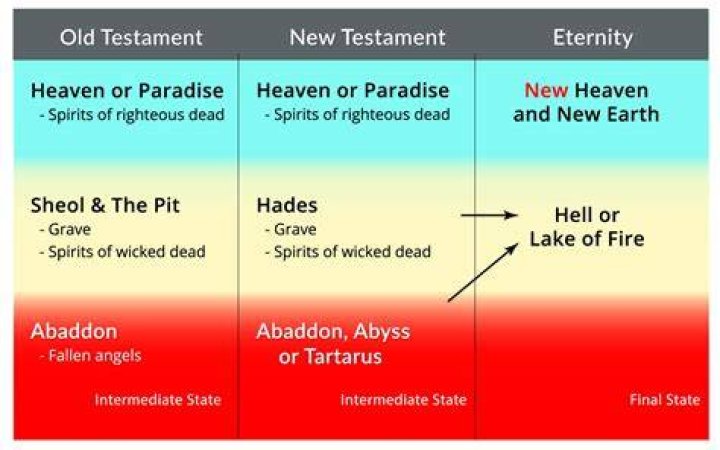
Ask almost anyone to describe the underworld, and they will conjure a familiar red-hued nightmare: caverns of molten sulfur, sharp-horned demons prodding sinners with pitchforks, and an eternity of roasting flesh. This visual shorthand dominates cartoons, heavy metal album covers, and blockbuster cinema. Yet the historical record reveals that our modern visual conception of the abyss owes far more to 14th-century Italian poetry, Victorian illustration, and theatrical set design than to ancient religious scriptures. A recent analysis in the Christianity Today Report on the doctrine of hell underscores how contemporary theologians continue to confront the sharp divide between biblical metaphor and commercialized myth.
Unraveling the architecture of damnation requires stripping away centuries of accumulated folklore. Ancient Hebrew authors, first-century evangelists, and medieval monks each saw vastly different worlds when they looked beyond the grave. The true history of hell is not a single burning chamber, but a shifting catalog of silent dust, city garbage dumps, biting frost, and psychological isolation.
📌 Key Takeaways:
- Folklore Over Scripture: The pervasive pop culture image of a fiery underground torture chamber overseen by pitchfork-wielding demons originated in medieval European theater and Renaissance poetry rather than the Bible.
- Conflicting Ancient Metaphors: Biblical texts offer competing descriptions of judgment, oscillating between the physical refuse fires of Gehenna, the shadowy silence of Sheol, and the vast, freezing isolation of "outer darkness."
- Dante’s Subzero Reality: In literary history, the deepest pit of the abyss is not hot at all; Dante Alighieri placed Satan at the ninth circle of the *Inferno* inside a lake of solid ice.
The Ancient Shadows of Sheol and the Smoldering Pit of Gehenna
In the earliest layers of the Hebrew Bible, there is no subterranean torture chamber. Instead, the dead drifted into Sheol, an amorphous, subterranean underworld of silence, dust, and shadow. Sheol was not a punitive realm reserved for wicked souls; righteous and wicked figures alike shared the same muted, twilight existence. As noted in historical surveys by The Jerusalem Post tracing how Western culture reshaped the biblical afterlife, translators working on the 1611 King James Bible systematically blurred early theological categories by translating Sheol, the Greek realm of Hades, and the historical valley of Gehenna into one catch-all English noun: "hell."
Gehenna, however, had an actual geographical coordinate. Known as the Valley of Hinnom (Gei Hinnom), this steep ravine wrapped around the southwestern flank of ancient Jerusalem. In the eighth and seventh centuries BCE, it served as the site of pagan child sacrifices to the deity Molech. By the Second Temple era, the ravine had been transformed into an ash-choked municipal dump where city refuse, animal carcasses, and the bodies of executed criminals burned continuously with sulfur. When Jesus invoked Gehenna in the Gospels, his listeners did not picture an abstract subterranean torture facility. They pictured a smoldering, garbage-strewn canyon on the edge of town, where carrion maggots never ran out of food and fires never ceased consuming waste.
Metaphors in Conflict: Lake of Fire Against Outer Darkness
New Testament accounts present two distinct visual environments for punishment, and they are physically irreconcilable. On one side stands the apocalyptic vision recorded in the Book of Revelation, which describes a lake of fire burning with brimstone. This image, deeply rooted in Jewish apocalyptic literature of the first century BCE, symbolized absolute ruin and decisive divine victory over systemic evil. In Revelation's narrative, Death and Hades themselves are thrown into this fiery reservoir, signaling the liquidation of mortality itself.
Conversely, the Gospel of Matthew repeatedly sketches the destiny of the unrighteous using the phrase outer darkness, accompanied by the weeping and gnashing of teeth. Fire produces illumination; outer darkness is characterized by sensory deprivation and profound exile from the presence of God. First-century writers used these conflicting motifs not to provide a surveyor's map of the cosmos, but to communicate moral gravity. By treating these symbolic warnings as literal architectural blueprints, later commentators created a conceptual puzzle that church artists struggled to paint: a place somehow simultaneously blindingly bright with magma yet pitch-black.
Dante’s Architectural Nightmare and the Frozen Lake of Cocytus
Western culture received its definitive visual blueprint of hell from a 14th-century Florentine exile. When Dante Alighieri completed his Inferno around 1320, he organized the underworld into an inverted funnel containing nine concentric circles, descending from polite philosophical melancholy directly into absolute terror. Dante combined classical Greco-Roman mythology with scholastic Catholic theology, populating his subterranean abyss with centaurs, harpies, and real political rivals from the streets of Florence.
Dante’s moral system was predicated on contrapasso, the idea that the punishment mirrors or opposes the sin. The lustful were whipped endlessly by violent winds; the gluttonous lay face-down in putrid, freezing slush. As literary analyst Mike Schramm examined in *1819 News*, Dante went so far as to cast classical heroes like Odysseus into the eighth circle inside blazing individual flames, condemning the Greek explorer for his deceptive counsel and reckless disregard for moral boundaries.
Dante’s most radical visual disruption sits at the very center of the Earth. The ninth circle, known as Cocytus, contains no flame whatsoever. It is a vast, wind-swept expanse of solid ice. Trapped at the absolute center is Lucifer, trapped in his own freezing wind generated by three sets of bat-like wings. Here, Dante transformed the worst tier of eternal damnation into absolute coldness, emotional detachment, and profound paralysis.
Evolution of the Underworld Across Two Millennia
Historical research compiled by archival sources, including historical entries in Britannica, highlights how every era redesigned the landscape of punishment to reflect its own deepest civil anxieties.
| Tradition / Period | Dominant Visual Environment | Primary Symbolic Function |
|---|---|---|
| Ancient Hebrew (Sheol)1000, 300 BCE | Muted subterranean dust, silence, dry earth | The inevitable, neutral resting state of all mortal creatures |
| First-Century Judea (Gehenna)50 BCE, 70 CE | Smoldering municipal valley, worm-infested refuse | Moral waste, exclusion from the kingdom, national judgment |
| High Medieval Frescoes1100, 1400 CE | The "Hellmouth" beast-mouth, cauldrons, grotesque flesh-eating demons | Ecclesiastical social control, literacy-free moral terror |
| Dantean Renaissance1320, 1500 CE | Architectural tiers: mud, boiling blood, raging storms, frozen lake | Strict scholastic justice and proportional moral retribution |
| Miltonic Epic1667 CE | "Darkness visible," burning marl, the capital city of Pandemonium | Psychological alienation, political hubris, defiant pride |
Milton’s Pandemonium and Medieval Fear Campaigns
Three centuries after Dante, the English poet John Milton altered the aesthetic once again in his 1667 masterpiece, Paradise Lost. Milton abandoned the cramped circular tunnels of Italian scholasticism for an immense cosmic void. In his epic, hell is a vast continent called Chaos, lit by "no light, but rather darkness visible."
Milton’s demons build an opulent golden palace named Pandemonium, complete with parliamentary debating chambers, marble pillars, and philosophical symposia. Satan in Paradise Lost is not a frozen beast gnawing on traitors, but a charismatic military strategist delivering rebellious political speeches. Milton famously diagnosed the psychological core of the environment when he wrote: "The mind is its own place, and in itself can make a Heav'n of Hell, a Hell of Heav'n."
Yet it was the grotesque visual vernacular of medieval church artists that captured popular imagination long before Milton. Between 1100 and 1500, European parish churches painted their western walls with massive judgment scenes known as Doom paintings. Sinners were dragged toward the gaping, toothy jaws of the Hellmouth, a literal sea monster or dragon swallowing the condemned whole. Inside, horned creatures equipped with blacksmith tools, pitchforks, and chains boiled monarchs and corrupt bishops in enormous iron cauldrons. These graphic displays required zero literacy to understand, burning fear into peasant communities and cementing our current cartoonish image of the red-skinned torturer.
Modern Theological Interpretations and the Psychology of Damnation
In modern theological scholarship, the debate over eternal retribution has splintered into three distinct frameworks. Traditionalists maintain the model of Eternal Conscious Torment (ECT), arguing that divine holiness necessitates an endless, conscious retribution for sin, though many contemporary conservative scholars interpret the fire and darkness as poetic figures signifying the absolute loss of God's presence rather than physical combustion.
A second camp, championing conditional immortality or annihilationism, points to the original biblical idioms of consumption, decay, and fire destroying whatever falls into it. In this view, Gehenna is an execution chamber rather than a preservation chamber; the wicked cease to exist entirely rather than suffering infinite misery for finite sins. A third camp, Christian universalism, asserts that judgment fires function purgatively, refining characters until reconciliation is achieved.
Mid-20th-century Christian apologist C.S. Lewis offered one of the most culturally resonant visual descriptions in his 1945 novella The Great Divorce. Lewis abandoned brimstone entirely, rendering hell as an endless, drizzling, gray industrial town. Residents constantly quarrel with their neighbors, abandon their flats, and move millions of miles further out into the infinite suburbs to avoid human contact. In Lewis's framing, hell is not a locked dungeon presided over by demonic guards, but an empty, self-imposed isolation where the doors are locked from the inside.
Frequently Asked Questions (FAQ)
Q1: Is hell hot or cold according to historical texts?
A1: Historical traditions embrace both. Biblical passages alternate between the heat of fire and the absolute chill of darkness. Dante placed the ultimate locus of evil in the subzero, frozen ice lake of Cocytus, while Jewish apocalyptic accounts in texts like the Book of Enoch occasionally depicted alternating regions of extreme fire and freezing snow.
Q2: Where did the devil's pitchfork and horns come from?
A2: The devil’s visual trappings are classical Greek and Roman imports. Early European artists adapted the goat-like horns, hooves, and rustic implements of the Greek god Pan, alongside the trident of the sea god Poseidon and the underworld pitchfork of Pluto. These pagan motifs were stitched onto Christian demonology during the Early Middle Ages.
Q3: Does the Old Testament describe an underground fire pit?
A3: No. The Hebrew scriptures describe Sheol, an undifferentiated, shadowy realm of silence where all people went after death. The concept of fiery post-mortem punishment entered Jewish thought much later, during the Hellenistic period between 300 BCE and the first century CE, spurred by interactions with Persian and Greek philosophies.
The Enduring Need to Map the Abyss
Humanity’s evolving portrait of the underworld has never been a static theological map. Instead, it acts as a cultural mirror reflecting the immediate dreads of each passing generation. Ancient desert cultures, surrounded by harsh wilderness, feared waste heaps and eternal thirst. Medieval communities, plagued by feudal inquisitions and plague pits, imagined the afterlife as an iron cauldron presided over by cruel executioners. Industrialized societies created vast bureaucratic voids, while modern thinkers envision boundless suburban loneliness.
Examining these historical visions uncovers a clear pattern. The red-tights devil, sulfur pit, and iron pitchfork are theatrical props inherited from centuries of European storytelling. Stripped of these medieval additions, the ancient question remains startlingly open: whether understood as a refuse fire outside Jerusalem, an icy waste, or complete existential isolation, human beings consistently project their darkest moral fears into the territory beyond the grave.


