What Does It Actually Mean? Decoding the Viral Spanish Phrases Taking Over Current News
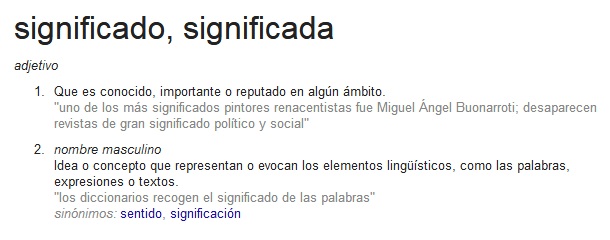
When millions of English-speaking soccer fans tuned into international tournament coverage and saw thousands of blue-and-white-clad supporters bouncing rhythmically while chanting in unison, Google searches for broken Spanish queries surged. Chief among them was the phrase "que se significa", a colloquial, technically redundant rendering of "¿qué significa?" ("what does it mean?") that millions typed into search bars to decode the stadium roar. Foreign phrases routinely cross digital borders without translation, propelled by viral TikTok clips, live sports broadcasts, and geopolitical headlines.
The query reached a boiling point after high-profile South American matches sparked international curiosity over stadium taunts, economic buzzwords, and viral regional slang. As documented by an in-depth Diario AS Report examining Argentina fans' favored anti-England anthem, international observers are discovering that direct literal translations miss the deep historical trauma, political satire, and linguistic nuances that give these phrases their punch.
📌 Quick Summary:
- The Grammar Confusion: The viral query "que se significa" is a common non-standard search hybrid of "¿qué significa?" ("what does it mean?") and "cómo se significa", reflecting raw digital search behavior.
- The Epicenter of the Trend: The surge stems directly from the Argentina stadium chant "el que no salta es un inglés" ("whoever doesn't jump is an Englishman"), rooted in the 1982 Falklands War.
- Beyond the Pitch: Latin American political slang, hyperinflation idioms, and regional sports taunts increasingly slip into global financial and news discourse, requiring cultural context over algorithmic machine translation.
The Grammar Behind the Query: Deconstructing "¿Qué Significa?"
Search engines regularly register spikes for "que se significa" whenever a Spanish-language audio clip goes viral. In standard Spanish grammar, the construction is incorrect. The proper interrogative is simply "¿Qué significa?" (literally, "What does [it] mean?") or "¿Qué quiere decir?" ("What does it want to say?"). The reflexive pronoun se often bleeds in from parallel phrases like "¿Cómo se dice?" ("How does one say?") or passive constructions like "¿A qué se refiere?".
Algorithmic search logs reveal how second-language speakers and curious spectators parse spoken phrases phonetically. When spectators hear a chant roaring through a stadium or a political candidate shouting a slogan during a rally in Buenos Aires or Mexico City, they search using rough approximations. The underlying intent remains uniform: English-speaking audiences want an immediate decode of raw cultural sentiment that generic translation software fails to explain.
"El Que No Salta Es Un Inglés" and the Lingering Ghost of 1982
The chant driving the greatest volume of translation lookups is "El que no salta es un inglés". Translated word-for-word, the phrase means: "Whoever doesn't jump is an Englishman." On screen, it looks like simple stadium choreography: entire sections of 80,000 supporters bouncing in unison, turning concrete grandstands into vibrating kinetic machines. Anyone standing still stands out instantly.
The song carries genuine geopolitical weight. The hostility between Argentine football culture and England crystallized following the 1982 Falklands War (known across South America as La Guerra de las Malvinas). That 74-day conflict claimed the lives of 649 Argentine military personnel, 255 British military personnel, and 3 civilian islanders. The military defeat left deep scars across Argentina's national psyche.
Four years later, during the 1986 World Cup quarterfinal in Mexico City, Diego Maradona scored his infamous "Hand of God" goal, followed four minutes later by the "Goal of the Century." Maradona later stated that defeating England felt like overcoming a country that had killed Argentine boys. The stadium chant transformed the military defeat into an enduring cultural confrontation, one that Argentine supporters deploy whether playing England, Brazil, or France.
Stadium Chants, Historical Scars, and Global Matchups
Chants in Latin American football are rarely just about the 90 minutes on the pitch. They function as collective historical archives, economic protests, and localized rivalries set to the tempo of brass bands and bass drums (bombos con platillo). When these chants surface during global telecasts, international audiences scramble to understand their origins.
| Chant / Spanish Phrase | Literal Translation | Historical & Sociopolitical Context |
|---|---|---|
| "El que no salta es un inglés" | Whoever does not jump is an Englishman | Direct reference to the 1982 Falklands/Malvinas conflict. Used to unify the stadium against a common historic antagonist. |
| "Muchachos, ahora nos volvimos a ilusionar" | Boys, now we have got our hopes up again | Argentina's anthem during the 2022 World Cup campaign; references the fallen soldiers of Malvinas alongside Maradona and Messi. |
| "Decime qué se siente" | Tell me how it feels | Taunt directed at Brazil during the 2014 World Cup, mocking their continental dominance on home soil. |
| "No hay plata" | There is no money | Political and economic catchphrase coined by President Javier Milei in late 2023, viralized globally amid fiscal austerity debates. |

Latin American Idioms Infiltrating Global Financial Feeds
The viral spread of Spanish phrases extends beyond sporting events. Financial volatility and unconventional governance across Latin America have pushed localized slang into international business reporting. Terms that once existed solely within domestic vernaculars now populate London and New York trading desks.
Consider the phrase "No hay plata", delivered bluntly during the December 2023 presidential inauguration in Argentina. The phrase instantly morphed into social media memes, T-shirts, and headlines across Reuters, Bloomberg, and the Financial Times. To understand what the phrase meant in context required knowing that Argentina was battling annual inflation north of 200% alongside empty central bank reserves. The sentence became shorthand for aggressive state contraction.
Similarly, the phrase "dólar blue" (the informal, black-market exchange rate in Argentina) confuses casual readers searching for monetary policy updates. It does not refer to a distinct physical currency. It represents a parallel financial reality born from decades of strict currency controls (cepo cambiario). Automated translators turn these phrases into literal gibberish. Only cultural reporting fills the gap.
Why Direct Machine Translation Fails Regional Vernacular
Standard language models and online dictionary services translate vocabulary; they do not translate subtext. When a spectator runs a phrase like "tirar la toalla" or "pecho frío" through automated software, the results are technically accurate yet culturally useless. A player described as a "pecho frío" is not literally experiencing a cold chest; they are being condemned for lacking competitive grit under pressure.
The problem deepens with lunfardo, the historic Buenos Aires slang rooted in 19th-century Italian immigrant communities, and regional Mexican or Caribbean dialects. When viral clips hit TikTok and X, automated captioning tools generate broken English subtitles that flatten irony, erase historical pain points, or fabricate meanings. As international digital audiences consume cross-border content in real time, the gap between literal text and true cultural resonance widens rapidly.
Frequently Asked Questions
Q1: What is the correct grammar: "que se significa" or "¿qué significa?"?
The grammatically correct question in Spanish is "¿Qué significa?" (What does it mean?). The phrasing "que se significa" is a common error made by both native and non-native speakers, blending the verb significar with reflexive constructions like "cómo se dice".
Q2: Why do Argentina fans chant about England when playing other countries?
The rivalry with England transcended standard sports competition following the 1982 Falklands War. Chanting "el que no salta es un inglés" acts as a universal rallying cry for Argentine fans to generate stadium-wide unity, regardless of the team standing across the field.
Q3: How do international soccer federations view these chants?
FIFA and regional confederations like CONMEBOL have steadily tightened disciplinary codes. Governing bodies regularly issue fines to national associations when chants cross from historical satire into xenophobic, discriminatory, or politically contentious territory.
Navigating Cross-Border Slang in an Instant Digital Media Cycle
International culture no longer filters through domestic bureaus before reaching foreign audiences. A chant recorded on an iPhone in an elevator in Buenos Aires, a heated locker-room celebration in Madrid, or an economic soundbite from an unconventional press briefing travels around the planet in seconds. The steady search volume for fractured phrases like "que se significa" proves that while digital platforms make foreign content instantly visible, they do not make it instantly legible. Navigating this interconnected media stream requires moving past literal word-for-word decoders and examining the political, historical, and emotional realities that give foreign phrases their power.


