Where Did Michael Jackson Die? Complete Guide to the Location, Estate, and Final Resting Place
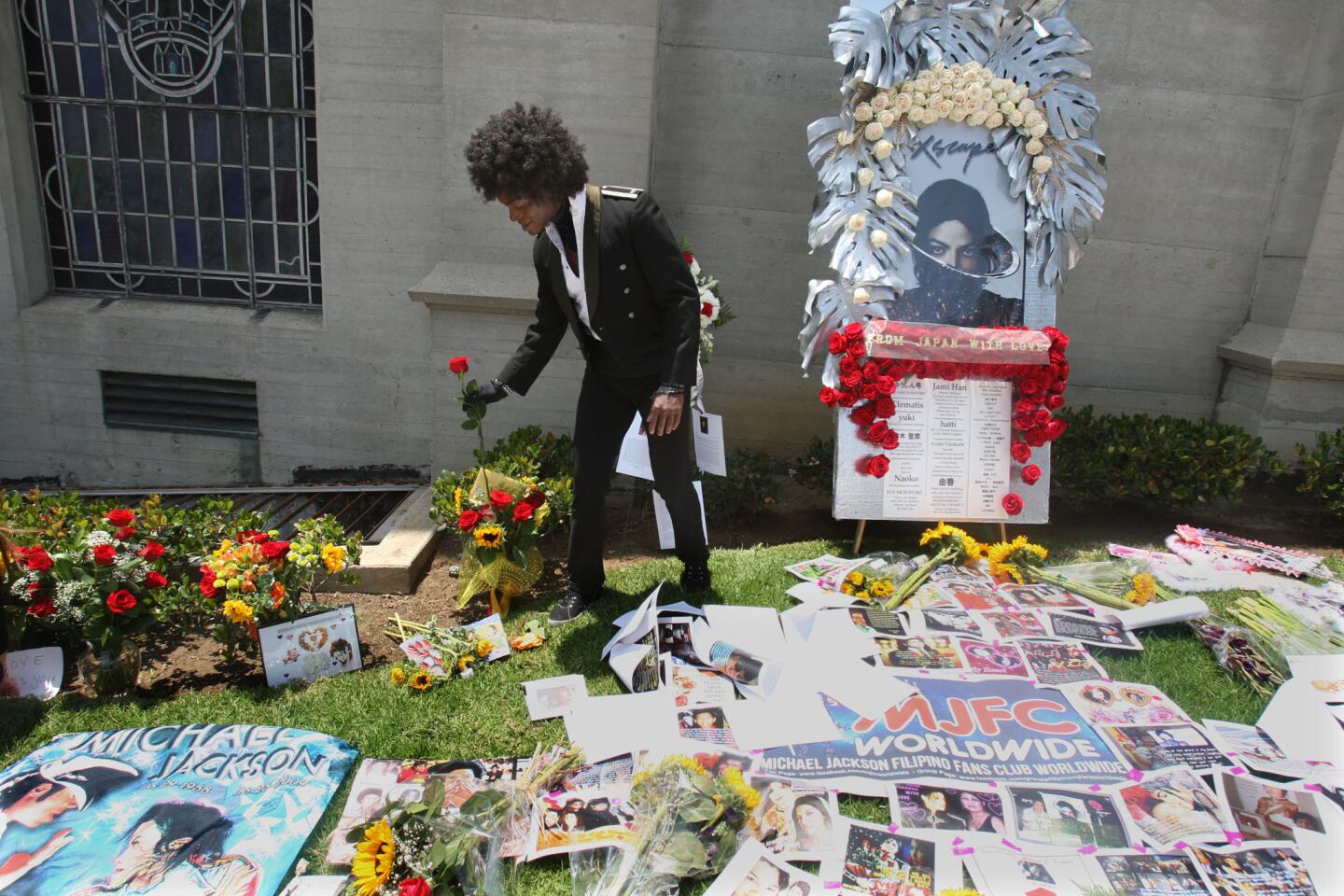
Global interest in Michael Jackson has surged once again following the theatrical run of Lionsgate's biographical feature Michael. As box office trackers across the industry, including the latest MJVibe Report, log massive worldwide turnout, millions of casual viewers and longtime listeners find themselves returning to the fundamental question that shook the world on June 25, 2009: where did Michael Jackson die?
The geographic answer involves three distinct locations across Los Angeles County. Jackson suffered fatal cardiac arrest inside a rented French chateau in Holmby Hills, received aggressive emergency resuscitation before being officially pronounced dead at Ronald Reagan UCLA Medical Center, and now rests permanently inside a secured mausoleum in Glendale. Untangling these sites requires tracing the final hours of the King of Pop.
📌 Key Takeaways:
- Fatal Medical Emergency: 100 North Carolwood Drive, an 18,000-square-foot French chateau-style mansion in Holmby Hills, Los Angeles.
- Official Pronouncement of Death: Ronald Reagan UCLA Medical Center in Westwood, where emergency physicians pronounced Jackson dead at 2:26 p.m. PDT on June 25, 2009.
- Final Resting Place: The Great Mausoleum at Forest Lawn Memorial Park in Glendale, California, secured inside the private Holly Terrace section.
The Holmby Hills Rental at 100 North Carolwood Drive
Contrary to widespread belief, Michael Jackson did not die at Neverland Ranch. He abandoned his famed 2,700-acre Santa Barbara County sanctuary in 2005 following his acquittal in a high-profile criminal trial, vowing never to sleep there again. When concert promoter AEG Live arranged his ambitious 50-date This Is It concert residency at London's O2 Arena in early 2009, Jackson relocated to Los Angeles to participate in rehearsals at the Staples Center and the Forum.
AEG leased a sprawling estate for Jackson at 100 North Carolwood Drive in the ultra-exclusive Holmby Hills neighborhood of Westwood, paying roughly $100,000 per month. Designed by architect Richard Landry and completed in 2002, the three-story, French neoclassical residence spanned approximately 18,000 square feet, featuring seven bedrooms, thirteen bathrooms, a 2,000-bottle wine cellar, a private theater, and manicured grounds shielded by imposing wrought-iron gates.
Jackson occupied the second-floor master suite, which he maintained in near-total seclusion. The estate served as both a sanctuary and an impromptu, unregulated medical ward. His personal physician, Dr. Conrad Murray, routinely administered powerful sedatives to combat the singer's chronic insomnia, culminating in the lethal sequence of drug administrations during the early morning hours of June 25.
June 25, 2009: A Forensic Timeline of Events
Jackson returned to 100 North Carolwood Drive around 1:00 a.m. after completing a rigorous midnight rehearsal at the Staples Center. Over the next nine hours, Dr. Murray administered repeated doses of valium, lorazepam, and midazolam to induce sleep. At approximately 10:40 a.m., Murray administered a 25-milligram dose of the surgical anesthetic propofol diluted with lidocaine, leaving the singer's side shortly thereafter.
When Murray returned, Jackson was non-responsive and had stopped breathing. Because Murray did not have basic medical monitoring equipment, pulse oximeters, or a precision infusion pump in the bedroom, vital minutes were lost attempting manual chest compressions on a soft mattress instead of a hard floor.
| Time (PDT) | Location | Crucial Event / Action |
|---|---|---|
| 10:40 a.m. | 100 N Carolwood Dr (Bedroom) | Propofol administered via IV drip; Jackson enters profound unconsciousness. |
| 11:00 a.m., 12:05 p.m. | 100 N Carolwood Dr (Upstairs) | Respiratory arrest occurs; Murray notices apnea and attempts bedside CPR without dialing 911. |
| 12:21 p.m. | 100 N Carolwood Dr (Security Post) | Jackson's security guard Alberto Alvarez places frantic 911 call after bagging medical vials. |
| 12:26 p.m. | 100 N Carolwood Dr (Driveway) | Los Angeles Fire Department (LAFD) Engine 71 arrives; paramedics find Jackson pulseless. |
| 1:07 p.m. | En Route on Sunset Boulevard | LAFD Ambulance 71 transports Jackson toward UCLA while continuing mechanical CPR. |
| 1:14 p.m. | Ronald Reagan UCLA Medical Center | Emergency trauma team initiates advanced cardiac life support (ACLS) protocols. |
| 2:26 p.m. | Ronald Reagan UCLA Medical Center | Emergency physician Dr. Richelle Cooper officially pronounces Michael Jackson deceased. |
Ronald Reagan UCLA Medical Center: The Emergency Pronouncement
Paramedics rushed Jackson down Sunset Boulevard into the emergency bay of Ronald Reagan UCLA Medical Center at 757 Westwood Plaza. Over a dozen physicians and clinical staff under the direction of Dr. Cooper administered aggressive interventions for one hour and twelve minutes. Medical staff inserted an endotracheal tube, administered epinephrine and atropine, and utilized a balloon pump to stimulate circulation.
Jackson exhibited asystole throughout the efforts, a flatline without electrical activity. No spontaneous heartbeat was ever re-established. At 2:26 p.m. PDT, medical efforts officially ceased. Jackson was declared dead at age 50.
The Los Angeles County Coroner, led by Chief Medical Examiner Dr. Lakshmanan Sathyavagiswaran, took custody of the body that afternoon. Following an exhaustive three-month toxicological investigation, the coroner ruled the death a homicide caused by propofol acute intoxication, with an operative contributing effect from benzodiazepines. The legal proceedings concluded in late 2011 with Conrad Murray's conviction for involuntary manslaughter.
Forest Lawn Memorial Park Glendale: The Final Resting Place
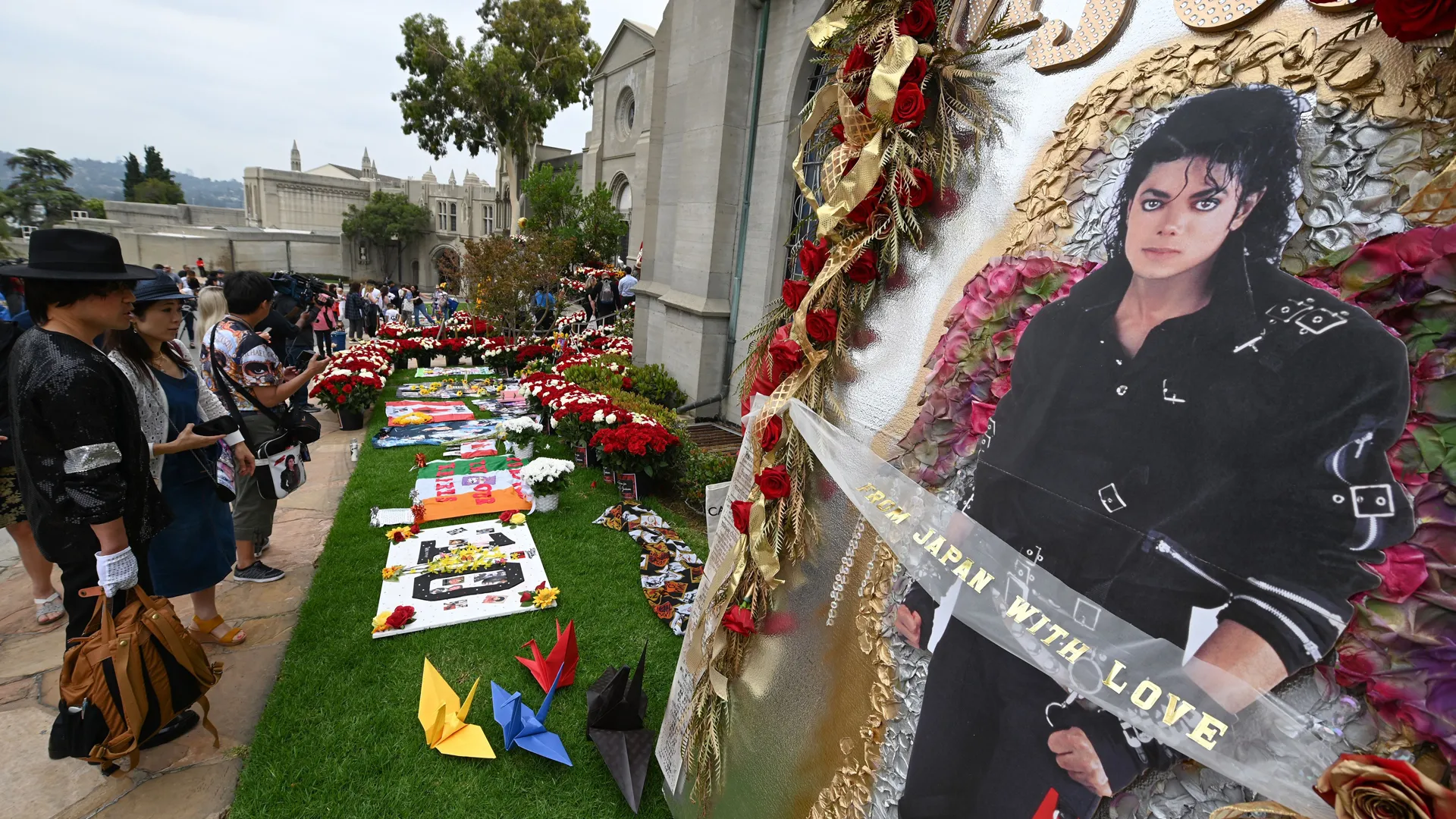
Jackson's permanent burial site is located at Forest Lawn Memorial Park in Glendale, roughly eight miles north of downtown Los Angeles. On September 3, 2009, more than two months after his passing, family and close associates gathered for a private sunset interment.
Jackson rests inside the Great Mausoleum, specifically in the Holly Terrace section. The Great Mausoleum is an architectural landmark inspired by Genoa's Campo Santo, adorned with stained-glass reproductions of Leonardo da Vinci's The Last Supper. Jackson was entombed in a 14-karat gold-plated bronze Promethean casket lined with blue velvet, costumed in an ornate stage jacket designed by Michael Bush and his iconic white rhinestone glove.
Security at Holly Terrace is among the tightest of any celebrity cemetery globally. The mausoleum is not accessible to the general public. Entry requires specialized biometric and physical keycard clearance reserved exclusively for crypt owners and immediate family members. Visitors to Forest Lawn may walk the surrounding cemetery grounds, but closed-circuit cameras and 24-hour private security patrol the perimeter of Holly Terrace to prevent unauthorized access.
Why Michael Jackson Was Not Buried at Neverland Ranch
Immediately following his death, the Jackson family weighed interring the pop icon on the grounds of Neverland Ranch near Los Olivos. The proposal mirrored Elvis Presley's resting place at Graceland, which draws hundreds of thousands of paying visitors annually. However, state and local regulations intervened.
California Health and Safety Code strictly regulates the burial of human remains outside registered cemetery grounds. Establishing a single-grave cemetery on private agricultural land requires extensive environmental reviews, county zoning variances, and long-term perpetual care trusts. Santa Barbara County authorities signaled that granting such permits would require months of contentious public hearings.
Furthermore, Jackson's siblings held conflicting views. Several family members maintained that Michael felt betrayed by Santa Barbara County following the 2005 trial and would have despised being permanently anchored to a property he abandoned. Forest Lawn offered an immediate, legally sound, and completely secure solution.
The 2026 Cultural Re-Examination
The global rollout of Lionsgate's biographical film Michael has reignited public conversation surrounding Jackson's final months. Box office trackers show sustained international interest, while trade reports spotlight the intricate production dynamics behind the project. For instance, reports published by Forbes highlighted sensitive editorial decisions regarding controversial scenes cut prior to release, while coverage from Just Jared documented comments from Jackson's daughter, Paris Jackson, addressing her distance from the production's narrative choices.
This renewed attention highlights how commercial pressures collided with severe medical negligence during the summer of 2009. The rented estate in Holmby Hills was not a leisurely private retreat. It functioned as an operational staging ground for an unprecedented 50-night arena comeback that Jackson, physically depleted, struggled to endure.
Frequently Asked Questions (FAQ)
Q1: Can fans visit Michael Jackson's tomb inside Forest Lawn Glendale?
A1: No. The Great Mausoleum and the Holly Terrace section are strictly closed to the general public. Only verified family members and crypt owners holding authorized electronic access keys may enter the building. Fans frequently leave flowers, letters, and tributes on the exterior terrace steps near the locked wrought-iron doors.
Q2: Who owns the Holmby Hills mansion where Michael Jackson died today?
A2: The property at 100 North Carolwood Drive was owned at the time of Jackson's death by Hubert Guez, CEO of the apparel brand Ed Hardy. The mansion was sold to a private buyer in November 2012 for $18.1 million. It remains a private single-family residence and is not open for public tours or commercial access.
Q3: Did Michael Jackson die instantly from the propofol injection?
A3: Propofol is a rapid-onset hypnotic agent that depresses respiration within minutes when administered without mechanical ventilation. Coroner testimony established that Jackson suffered respiratory depression leading to cardiac arrest shortly after the drug entered his bloodstream, aggravated by earlier doses of lorazepam and midazolam.
Q4: What happened to Neverland Ranch after Michael Jackson died?
A4: Neverland Ranch was rebranded as Sycamore Valley Ranch and placed on the market. In December 2020, billionaire businessman Ron Burkle, a former associate of Jackson, purchased the 2,700-acre estate for approximately $22 million, utilizing the property for private ranching and conservation.
The Geography of Michael Jackson's Final Chapter
Understanding where Michael Jackson died requires separating the physical address of his medical collapse from his official clinical declaration and his eventual resting place. He suffered cardiac arrest inside his rented bedroom at 100 North Carolwood Drive in Holmby Hills. He was officially pronounced deceased at Ronald Reagan UCLA Medical Center in Westwood. Finally, he was laid to rest behind locked marble corridors at Forest Lawn Memorial Park in Glendale.
These three distinct Southern California landmarks chart the closing hours of pop music's most complicated icon. Decades after the emergency sirens faded down Sunset Boulevard, the sites stand as quiet reminders of the catastrophic convergence of commercial expectation, isolation, and reckless medical care that brought an end to an unprecedented career.