Why Roblox Erased Massacre Games: The Inside Story Behind the Content Purge
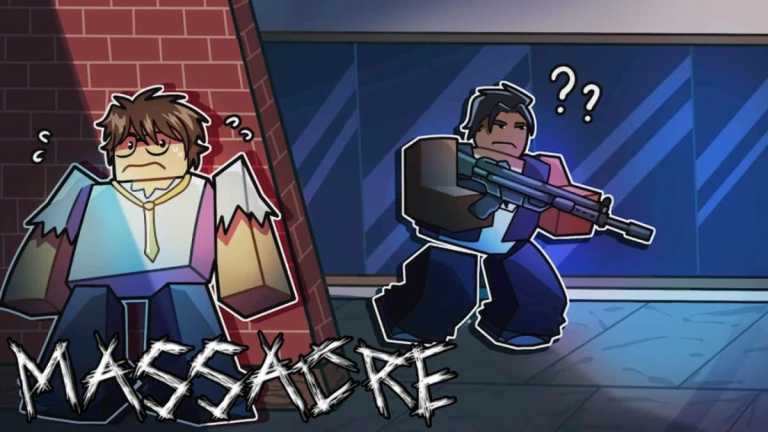
Roblox scrubbed dozens of user-generated experiences simulating real-world mass casualty events, shutting down accounts tied to active criminal investigations and triggering high-level scrutiny from state prosecutors. The sweep targeted recreations of real-world tragedies, including an active recreation of the 2022 Robb Elementary School shooting in Uvalde, Texas, alongside violent mall-rampage maps tied to offline perpetrators. As reported by the Houston Public Media Report, state law enforcement opened formal inquiries into how simulations depicting the murder of children could slip through automated filters on a gaming platform populated heavily by minors.
The purge marks a turning point in platform oversight. With more than 80 million daily active users, Roblox operates one of the largest decentralized creation ecosystems on the web. Bad actors have repeatedly bypassed keyword blocks using obfuscated code, re-uploading violent simulations faster than human moderators can strike them down. The backlash that ignited in early 2026 pushed the company past standard policy warnings into permanent hardware bans, law enforcement coordination, and structural overhauls of its user-generated content architecture.
📌 Key Takeaways:
- The Direct Trigger: Roblox wiped multiple shooting simulations after public outrage mounted over an interactive Uvalde school shooting recreation and profiles linked to violent offline crimes.
- The Legal Escalation: The Texas Attorney General opened formal inquiries into platform safety failures, zeroing in on lapses in screening real-world violence.
- Enforcement Overhaul: The purge eliminated edge-case combat simulators, resulting in permanent bans for creators violating the mass violence depiction policy.
The Uvalde Simulation and the Outrage That Forced San Mateo’s Hand
The immediate public backlash surfaced when Texas residents and child safety advocates discovered an active, playable map replicating Robb Elementary School. The experience permitted users to navigate classroom hallways modeled after the site where 19 students and two teachers were murdered in May 2022. Local news station KABB documented that the game was operating without age-gates, surfacing directly in search results when users typed fragmented keywords designed to skirt basic string filters.
Roblox issued an emergency experience takedown within hours of the broadcast reports. A corporate spokesperson confirmed the map breached core platform rules prohibiting content that glorifies, depicts, or recreates real-world mass casualty events. But the damage had already spread. Outraged parents, school safety activists, and state leaders demanded an explanation for how an accurate architectural model of an elementary school massacre stayed live on a network rated for young children.
Internal moderation logs reviewed after similar incidents showed bad actors frequently disguise asset names. Instead of labeling files with overt terms, creators uploaded 3D school desk bundles, classroom floor plans, and ambient audio files across separate dummy accounts. The full recreation was only compiled inside a final published place file right before public distribution, allowing it to bypass pre-publication algorithmic text filters.
The Canadian Mall Attack and Jesse Van Rootselaar's Removed Profiles
Scrutiny escalated when international headlines tied the platform to real-world criminal violence in Canada. Media reports, including coverage by the New York Post and WION, revealed that Jesse Van Rootselaar, an individual implicated in a fatal domestic mass casualty attack, maintained an active presence on the platform under custom developer profiles. Van Rootselaar created and published an experience titled "Remember," which simulated mass violence inside a shopping mall.
The revelation that an active shooter had used Roblox Studio to prototype or publicize violent mall-massacre fantasies led to a company-wide purge of related community groups. Safety engineers traced linked alternate accounts, wiping custom asset libraries, audio files, and script collections. Digital forensics experts pointed out that fringe web communities had long treated the sandbox engine as an accessible canvas for hosting edgy or nihilistic recreations of historic killings.
Online forums and social media erupted as players noticed historical school shooting simulations vanishing in real time. On specialized subreddits and developer Discord servers, community members tracked the sudden removal of long-standing war roleplay maps and tactical urban shootouts that straddled the boundary between fictional military gameplay and unauthorized depictions of civilian violence.
Timeline of Platform Safety Crackdowns and Legal Actions (2024, 2026)
The removal of these simulations was not an isolated intervention. It represents the culmination of a multi-year clampdown on unmonitored multiplayer experiences across the ecosystem.
| Date / Timeframe | Incident / Action | Regulatory & Structural Fallout |
|---|---|---|
| November 2024 | Introduction of strict age-based account segregation and off-platform link bans. | Creators restricted from routing younger players to unmonitored external chat apps. |
| February 2026 | Public discovery of Jesse Van Rootselaar's "Remember" mall massacre map. | Global account termination, metadata scrubbing, and law enforcement asset freezes. |
| April 2026 | Discovery and takedown of playable Uvalde Robb Elementary shooting simulation. | Texas Attorney General initiates formal safety investigation into platform moderation. |
| Mid, 2026 | Automated mass violence neural filter deployed across user-generated content uploads. | Instant ban protocols enforced on school layouts, civilian weapon nodes, and terror tags. |
The Mechanics of UGC Moderation and Evasion Tactics
Roblox relies on a two-tier screening process: automated machine-learning pipelines that evaluate 3D meshes, textures, and audio upon upload, backed by thousands of human reviewers located across global operations hubs. Despite processing billions of asset checks monthly, the platform faced severe blind spots when handling context-dependent content.
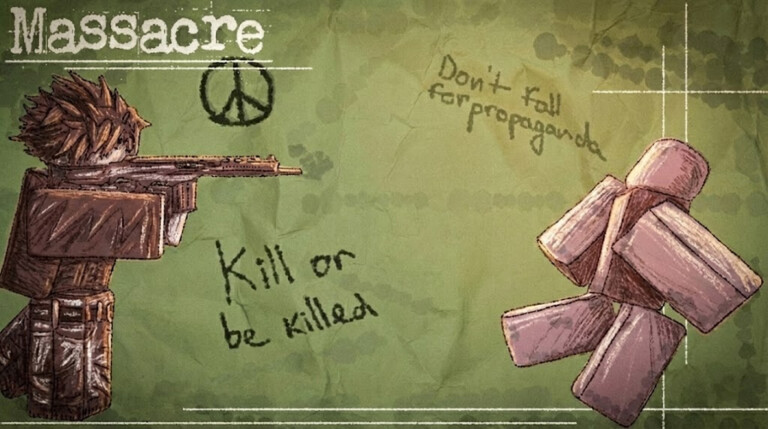
A standard 3D asset of a school desk or a fluorescent ceiling fixture does not violate community guidelines. A script that equips a blocky avatar with a hunting rifle is standard across hundreds of legitimate battle-royale experiences. Bad actors exploited this design by avoiding overt keywords like "shooting" or "massacre" in public metadata. They named experiences using cryptic numbers, ambiguous acronyms, or non-indexed characters.
Once inside, players were instructed via third-party messaging apps to meet in specific lobbies that arranged private servers. These custom instances configured the otherwise benign assets into chilling real-world architecture. By the time algorithmic detection flagged anomalous user density or report spikes, the sessions had already circulated through underground Discord networks. Closing these loopholes forced the moderation team to deploy spatial geometry matching, scanning 3D floor plans against blueprints of real-world crime scenes.
Legal Scrutiny: State Prosecutors and Child Safety Mandates
The emergence of school shooting models sparked immediate friction with government regulators. The Texas Attorney General's office initiated a formal inquiry to evaluate whether Roblox engaged in deceptive trade practices by marketing a platform as safe for children while hosting simulations of domestic terror. Investigators demanded records detailing how long the Uvalde map stayed active, how many users joined the instance, and why internal automated tripwires failed to flag it prior to local television coverage.
The regulatory pressure extends beyond Texas. State attorneys general across the country have expanded their focus on algorithmic harm and minor protection in social gaming environments. Officials argue that hosting unmonitored mass-murder simulations presents acute psychological hazards to youth players while providing malicious actors with sandboxes to rehearse or memorialize atrocities.
Roblox reinforced its legal defense by demonstrating massive capital investments in human safety personnel and automated scanning tools. Yet legal analysts note that Section 230 protections, which traditionally shield platforms from liability over third-party uploads, face unprecedented challenges when applied to algorithmic recommendation feeds that surface illicit content to minors without parental consent.
Frequently Asked Questions (FAQ)
Q1: Why were massacre-themed games suddenly wiped from Roblox?
A1: Roblox initiated an aggressive purge following national news coverage of games replicating real-world attacks, specifically a simulation of the Robb Elementary School shooting in Uvalde and maps tied to Canadian mass shooter Jesse Van Rootselaar. The games breached core rules against depicting real-world mass casualty events.
Q2: What specific rules does Roblox have regarding mass violence?
A2: The Roblox Community Standards strictly prohibit any depiction, glorification, or recreation of real-world mass casualty events, modern school shootings, terrorist attacks, or acts of domestic violent extremism. Accounts found developing, promoting, or distributing such assets face immediate, permanent termination alongside potential law enforcement referrals.
Q3: How did developers sneak school shooting maps onto the platform?
A3: Creators circumvented automated text scanners by using obfuscated titles, innocent file names for 3D school assets, and unindexed tags. The maps were frequently distributed via private links across external chat platforms like Discord, hiding their true layout from moderation until player reports caught human review attention.
Q4: What actions did the State of Texas take against Roblox?
A4: Following reports that children could play inside an interactive recreation of the Uvalde school shooting, the Texas Attorney General launched an investigation into the company’s moderation procedures, child safety protections, and compliance with consumer protection statutes.
Q5: Can legitimate tactical military and police games still exist on Roblox?
A5: Yes. Fictional combat experiences, law enforcement roleplays, and military strategy simulations remain permitted as long as they do not reference real-world massacres, feature realistic civilian slaughter mechanics, or recreate specific schools, malls, or public places targeted in actual criminal violence.
What Lies Ahead for Roblox Safety Architecture
Roblox cannot afford to treat content moderation as a reactive public relations response. The convergence of state legal action, national headlines, and criminal investigations has forced the platform to adopt an uncompromising approach toward mass violence depictions. The era when creators could hide behind cryptic asset names to construct macabre murder simulators is closing.
Safety engineers are rolling out automated spatial modeling to reject real-world institutional floor plans before maps go live. Creators hosting experiences that touch on tactical combat will see far stricter verification checks, tighter identity requirements, and aggressive chat screening. While these measures risk restricting creative freedom for legitimate independent developers, Roblox has made its priority explicit: preventing the exploitation of its virtual worlds from overshadowing the security of the children who play inside them.