Why the #10 Guard Buzz Cut Is Quietly Replacing Traditional Short Crops in 2026
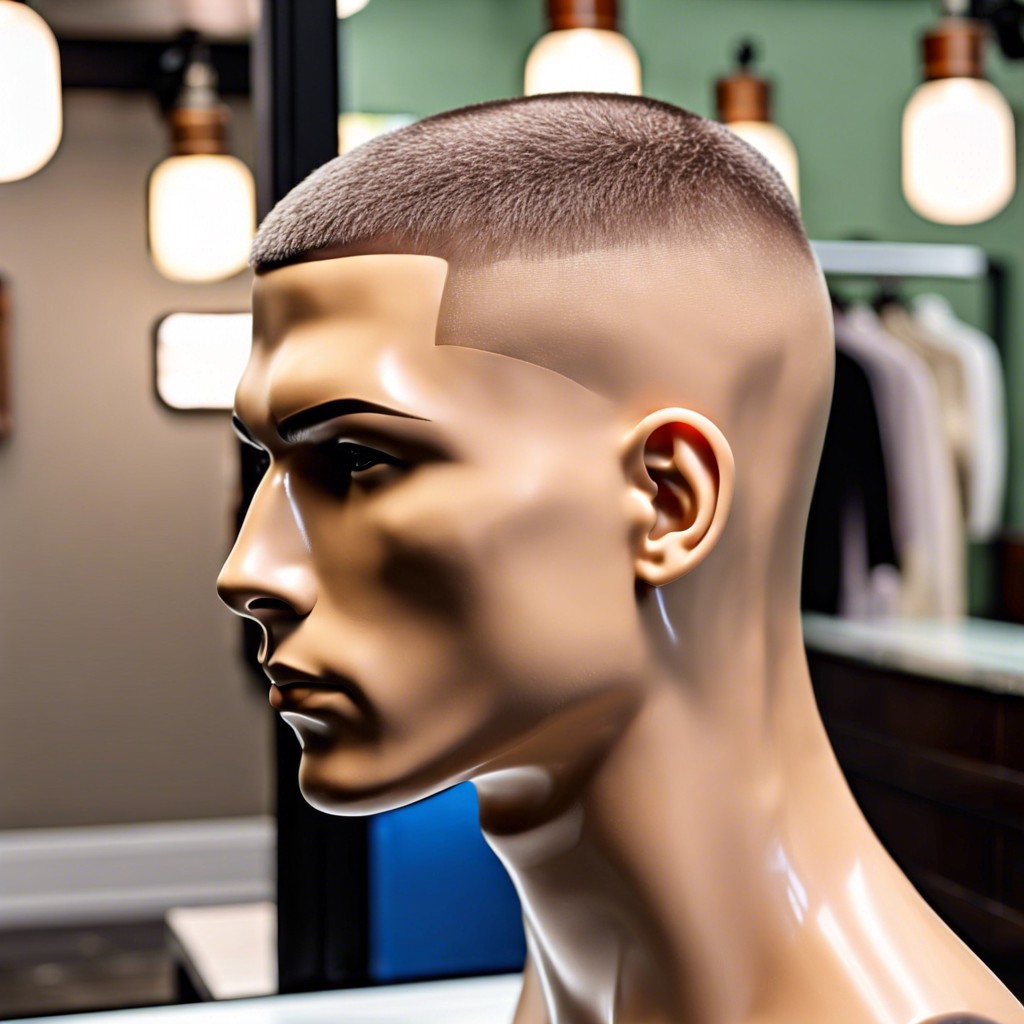
Why the #10 Guard Buzz Cut Is Replacing Short Crops in 2026
For decades, the standard buzz cut came with an ultimatum: surrender to an aggressive, visible scalp or spend twenty minutes every morning wrestling with paste and a blow dryer. That binary choice eroded throughout late 2025 and early 2026. As documented in a recent Man of Many Report charting barbershop movements, urban grooming routines are pivoting away from high-maintenance crops toward deliberate, longer-guard buzz variations.
(Source: Man of Many: "14 Best Buzz Cut and Fade Haircuts for Men: A Barber’s Guide")
Sitting right at the intersection of extreme ease and polished structure is the #10 guard buzz cut. Leaving precisely 1.25 inches (31.75 mm) of hair across the crown, this cut offers a distinct profile that sidesteps the severity of military-style cuts while stripping away the daily friction of a textured crop.
📌 Key Takeaways:
- The Dimension: A #10 clipper guard cuts hair to exactly 1.25 inches, establishing an intentional bridge between a buzz cut and a traditional short scissor cut.
- Total Coverage: The extra length provides complete scalp exposure coverage, protecting the head from UV exposure and eliminating the stark, uneven patches common with shorter guards.
- Effortless Styling: Unlike shorter buzz styles, this length retains enough density to direct with a dab of matte styling clay while remaining short enough to dry in under five minutes.
The Backlash Against High-Maintenance Textured Crops
Between 2021 and 2024, the French crop and heavy textured crop dominated salon chairs. Men spent considerable cash on sea salt sprays, styling powders, and bi-weekly fringe adjustments. The aesthetic looked exceptional under studio lighting, yet proved infuriating to maintain on humid mornings, during gym sessions, or beneath winter beanies.
The alternative was typically the skin fade buzz cut. Men who took that route discovered a different irritation: raw scalp exposure. Shaving down to a #1 or #2 reveals scalp pigmentation irregularities, head shape asymmetries, and surgical scars. A #10 guard cuts through both extremes. It provides the clean, utilitarian silhouette of a clipper cut while preserving natural hair flow and shadow across the skull.
Barbers across major metropolitan hubs report an influx of clients who want to drop their morning grooming routine to zero while keeping an office-ready appearance. When hair sits at roughly an inch and a quarter, cowlicks lie flat, natural wave patterns stay subdued, and the silhouette holds its shape without requiring structural hold products.
The Geometry of 1.25 Inches and Zero Scalp Exposure
Understanding why this cut functions so effectively requires looking at clipper guard mechanics. Most standard retail clippers stop at an 8 guard, which leaves exactly one inch of length. For men with straight or fine hair, one inch can often stand stiffly on end, creating an awkward, bristly look reminiscent of an unmanaged prep-school crew cut.
Specialty Wahl guard attachments changed that dynamic by introducing sizes up to #10 and #12. That extra quarter-inch provided by the #10 clipper guard allows the hair shaft to break its vertical tension. Instead of sticking straight outward like a brush, the strand bends slightly, lying flush against adjacent hairs.
This micro-bend creates full optical density. The scalp disappears entirely, even under harsh overhead office LED lighting. For individuals dealing with diffuse thinning on the crown or an uneven skull contour, that tiny fraction of an inch marks the difference between visible skin and continuous, uniform density.
Clipper Guard Sizes and Scalp Coverage Compared
Choosing the correct guard requires balancing maintenance cycles with how much scalp you are comfortable revealing. The metrics below outline how the upper-tier guards stack up in real-world application.
| Clipper Guard Size | Cut Length | Scalp Exposure Level | Daily Styling Required |
|---|---|---|---|
| #2 Guard | 1/4 inch (6.35 mm) | High; scalp clearly visible | 0 minutes |
| #4 Guard | 1/2 inch (12.7 mm) | Moderate; shadows in bright sun | 0 minutes |
| #6 Guard | 3/4 inch (19.05 mm) | Low; visible only at whorls | 1 minute (optional) |
| #8 Guard | 1 inch (25.4 mm) | Minimal; full dark shadow | 1, 2 minutes |
| #10 Guard | 1.25 inches (31.75 mm) | Zero; 100% hair density | 1, 3 minutes (flexible) |

Barber Shears Blending Meets Modern Taper Fades
Running a single plastic comb evenly over the entire skull creates an unflattering sphere. The modern incarnation of this cut relies on hybrid barbering: pairing the mechanical consistency of clippers up top with manual scissors around the edges.
Barbers establish the baseline length across the top of the cranium using the #10 guard, clipping against natural growth patterns to catch stray hairs. Once that foundation is set, the transition zone around the parietal ridge determines whether the result looks like a cheap home cut or an upscale editorial finish.
This is where barber shears blending proves critical. A skilled barber uses scissor-over-comb techniques to transition the 1.25-inch top into the side profile. From there, clients usually request a low-to-mid taper fade around the sideburns and nape. Keeping weight around the temples while cleaning the edges transforms what could be a shapeless buzz into a structured architectural frame for the jawline.
In a direct crew cut comparison, the #10 buzz maintains uniform length across the entire top surface, whereas a crew cut tapers dramatically from longer hair at the front hairline down to a shorter crown. That structural consistency makes the #10 cut far simpler to maintain between appointments.
Managing Hairline Recession and Crown Thinning
The instinct for men spotting an encroaching Norwood 3 hairline or thinning along the vertex is frequently to shave everything off immediately. While a bald head remains a classic look, skipping straight to the razor is rarely necessary.
Hairline recession styling is largely an exercise in managing contrast. When hair on the sides sits thick and dark while the front thins, the disparity draws the eye directly toward the thinning area. By dropping the crown to a #10 guard and tightening the temple area with a smooth skin or taper fade, the visual difference softens immediately.
Thinning hair also struggles under the weight of greasy, petroleum-based pomades, which clump individual follicles together and expose the scalp underneath. At 1.25 inches, hair responds exceptionally well to a pea-sized amount of matte styling clay or dry paste. The kaolin or bentonite clay coats the hair fibers, expanding their diameter slightly and absorbing excess oil. The result is a matte, tactile finish that scatters ambient light rather than reflecting it, creating the appearance of a fuller, thicker head of hair.
Frequently Asked Questions (FAQ)
Q1: Do all barber clippers support a #10 guard attachment?
A1: Standard consumer clipper kits usually top out at a #8 guard (1 inch). Professional lines, particularly those using Wahl guard attachments, sell #10 (1.25 inches) and #12 (1.5 inches) guards as add-ons. If your local barber does not carry a physical #10 guard, they can easily replicate the exact length using clipper-over-comb or basic scissor-over-comb techniques down to 1.25 inches.
Q2: How often do I need a haircut to maintain a #10 guard buzz cut?
A2: Human hair grows at an average rate of 0.5 inches per month. To keep the structured, clean profile of the 1.25-inch top and maintain crisp edges, book a touch-up every **3 to 4 weeks**. If you wear it with an aggressive low skin fade on the sides, you may want a quick perimeter clean-up at the 2-week mark.
Q3: Will a #10 guard cut work with naturally wavy or coarse hair?
A3: Yes. At 1.25 inches, wavy and coiled textures show their natural shape without spiraling out of control. It eliminates the triangle-shaped bulk common in longer medium-length cuts while avoiding the harsh skin exposure of shorter clipper guards.
The Shift Toward Low-Effort Precision
Men's hair trends are continually balancing practicality against presentation. The elaborate, multi-product styling regimens of the past five years are losing ground to styles that prioritize function and personal comfort.
Opting for a #10 guard buzz cut is a calculated middle ground. It delivers the sharp, clean efficiency of a clipped head while bypassing the severe visibility of a bare scalp. It works just as effectively in a corporate boardroom as it does on a morning run, proving that simplifying your grooming routine does not require giving up your signature style.


