Why the Mid Fade Curly Hair Cut Is Dominating Barbershops Everywhere This Season
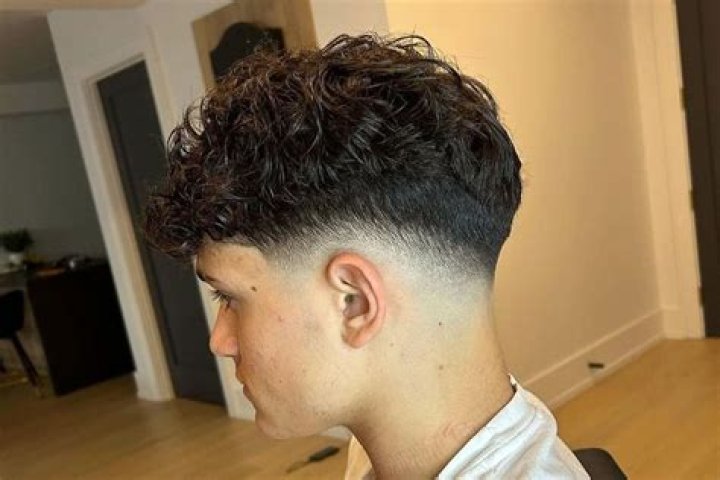
Walk into any high-volume barbershop in Brooklyn, London, or Melbourne this season, and the ambient noise is almost identical: the buzz of cordless clippers clearing space around the temple, followed by the soft hiss of water misting over coiled locks. For decades, men with natural curls faced two bad options. They either cut their hair down to a buzz cut or fought an impossible battle against humidity with stiff, suffocating pomades. Today, the mid fade curly hair cut has eliminated that compromise, carving out a middle ground that keeps natural volume on top while carving ultra-clean lines into the sides.
Recent style surveys from fashion forecasters and men's grooming platforms, including trend coverage in the Boss Hunting Report tracking the shift toward relaxed shapes, confirm that natural texture has displaced the slicked-back rigidity of the 2010s. The mid fade sits precisely between the aggressive height of a high skin fade and the subtle taper of a classic executive contour. It hits right above the ear, transitioning smoothly from bare skin to controlled weight, allowing type 2 waves, type 3 curls, and type 4 coils to stand out without expanding sideways into an uncontrollable cloud.
📌 Key Takeaways:
- The Midline Anchor: Dropping the fade line around 1.5 inches above the ear creates a universal focal point that balances round, oval, and square jawlines.
- The Maintenance Dynamic: It bridges the gap between high-contrast runway aesthetics and low maintenance hair routines, needing clipper touch-ups every 2, 3 weeks while upper curls flourish untouched.
- The Product Pivot: Stiff clays and drying alcohol sprays have vanished, replaced by lightweight curl cream and low-heat diffusers that preserve the hair’s natural moisture barrier.
The Shift from Rigid Pompadours to Natural Texture
The sudden dominance of this cut marks the end of a long stylistic cycle. Through the mid-2010s, barbershops made their money pushing rigid pompadours, side parts, and comb-overs requiring blow-dryers, round brushes, and half a tin of heavy paste. Men with coiled hair spent hours trying to force their strands straight. If your hair naturally bent into tight rings, the prevailing industry advice was to buzz it off or accept permanent frizz.
Social media hair creators and modern street style shifted that calculation completely between 2023 and 2026. Athletes, musicians, and everyday salon-goers started letting their natural curl pattern run wild. However, an unshaped mass of curls often widens at the ears, creating a bottom-heavy triangle that overwhelms the face. The mid skin fade solved this structural flaw overnight. By shearing away the bulk right where the skull curves outward, the cut gives unruly curls a sharp, tailored frame.
How the Mid Fade Balances Volume and Structure
A mid fade begins its transition midway up the head, typically an inch to an inch and a half above the ear. This placement is deliberate. A high fade removes too much hair from the parietal ridge, which can make the head look disproportionately tall when paired with voluminous curls. A low taper fade leaves too much bulk around the temple, which often forces men with coarse hair to deal with awkward puffiness after a single week.
By hitting the midpoint, the fade creates immediate contrast. Barbers blend down to a true zero or skin level at the bottom, creating a clean canvas that accentuates the organic shapes resting on top. Whether worn forward as a textured fringe or allowed to fall loosely over the forehead, the upper length can do whatever it wants because the perimeter is razor-sharp. It turns wild growth into intentional design.
Comparing Fade Architectures Across Textured Hair Types
Choosing the right cut requires matching fade architecture to your specific curl pattern, face shape, and daily routine. While the mid fade remains the most versatile option, neighboring variations like the burst fade and taper fade serve different structural needs.
| Fade Variation | Transition Point | Maintenance Cycle | Best Curl Category |
|---|---|---|---|
| Classic Mid Fade | 1.5 inches above ear, wraps level around the occipital bone | Every 14, 21 days | Type 2C, 3B (Loose to defined corkscrews) |
| Drop Fade Curls | Begins at mid-level near temple, dips low behind ear | Every 18, 24 days | Type 3A, 4A (Dense rings needing crown weight) |
| Burst Fade | Semi-circles around the ears, leaving length in the back | Every 10, 14 days | Type 3C, 4C (Afro-textured faux-hawks, dense coils) |
| Classic Taper Fade | Confined strictly to sideburns and the bottom neckline | Every 21, 30 days | Type 2A, 3A (Subtle waves, professional corporate environments) |
Porosity, Creams, and Diffusers: The Chemistry of Curl Definition
A precise clipper blend counts for little if the hair on top resembles dry steel wool. Healthy curl definition relies on a basic understanding of hair porosity, the cuticles' ability to absorb and hold hydration. High-porosity hair drinks up moisture quickly and loses it just as fast, leading to chronic frizz. Low-porosity strands resist moisture entirely, causing heavy oils to sit uselessly on top.
The standard routine has moved far past petroleum-based pomades. Modern curls require hydration layering right out of the shower. Applying a nickel-sized dab of leave-in curl cream while strands are soaking wet seals the cuticle before frizz forms. For guys wanting a relaxed, natural finish, running a pea-sized amount of matte pomade through the ends locks the clumps together without greasy sheen.
Drying technique matters just as much as chemistry. Roughing up curly hair with a terry-cloth towel shatters curl groupings instantly. Instead, scrunch the hair gently with an old cotton t-shirt or a microfiber towel. To speed up drying without blowing the curls apart, snap a diffuser attachment onto your hair dryer. Keeping the heat setting on low and cupping sections from the tips upward preserves structural ringlets, delivering full volume and crisp separation in under 5 minutes.
Navigating the Barber Consultation Without Ending Up with a Buzz Cut
Barbershops are visual environments. Sitting down and simply asking for a "mid fade with curls" is a gamble because every barber interprets clipper guards and blend heights differently. A productive barber consultation requires precise terminology and clear boundary-setting before the clippers even turn on.
Start by identifying your baseline length. If you want a textured fringe falling toward the eyebrows, tell the barber explicitly to leave the front section alone, trimming only split ends using point-cutting techniques rather than straight shears. Point-cutting preserves the staggered, natural bounce of the hair. Traditional blunt cuts leave harsh horizontal lines that make curly hair bunch up awkwardly.
Specify where you want the fade to drop. If your skull has a flat occipital bone at the back, ask the barber to drop the fade slightly behind the ears, borrowing elements from drop fade curls to create a rounded, flattering profile. If you have fine hair, ask for a number 1 guard on the sides instead of going down to bare skin, which avoids exposing too much scalp under bright sunlight.
Frequently Asked Questions (FAQ)
Q1: How often do I need to visit the barbershop to maintain a mid fade?
A1: The fade itself stays crisp for about 10 to 14 days before stubble softens the transition line. Most clients book a quick line-up and side clean-up every 2 to 3 weeks while letting the top length grow out for 8 to 12 weeks before trimming.
Q2: Can I get this style if I only have wavy or slightly loose hair?
A2: Yes. A mid fade works well on type 2 waves. Instead of tight corkscrews, the hair forms a textured, tousled canopy. You can enhance the wave pattern by applying sea salt spray to damp hair followed by a small amount of curl cream.
Q3: How do I stop my mid fade curls from frizzing overnight?
A3: Traditional cotton pillowcases absorb moisture from your hair and cause friction as you toss and turn. Switching to a satin or silk pillowcase prevents this friction, allowing your curls to stay intact overnight so you can refresh them in the morning with a light mist of water.
Textured Cuts in 2026 and Beyond
The rise of the mid fade curly hair cut is part of a broader, lasting shift in men's grooming. Guys have abandoned rigid, over-engineered hairstyles that demand a half-hour of morning labor in front of a mirror. Modern hair routines prioritize working with your natural genetics rather than fighting them.
By blending the sharp discipline of technical barbering with the easy freedom of natural texture, the mid fade hits a sweet spot that feels timeless. It looks sharp in a boardroom, relaxed on a weekend, and requires little more than water, good cream, and a skilled barber to stay looking fresh.


