Why Waking Up at 6:00 AM Leaves You Exhausted: The Hidden Sleep Inertia Trap
Every night, millions of people command their smartphones or smart speakers to wake them up at 6:00 AM, anticipating a productive start to the morning. Instead, the shrill ring of the alarm triggers a disorienting haze, heavy limbs, and a sudden desire to hit snooze repeatedly. As documented by an Android Authority Report covering widespread morning alarm failures and the search for reliable wake-up tools, our reliance on mobile alerts often collides with biological friction and software bugs alike. When an alarm abruptly interrupts biology mid-cycle, waking up becomes a physical battle against internal chemistry.
The sluggish state that follows is known medically as sleep inertia. It is not an indicator of personal laziness or an inherent inability to be an early riser. Rather, morning grogginess is the measurable neurological hangover caused by tearing the brain out of deep, slow-wave rest before the central nervous system can reconfigure itself for conscious alertness.
📌 Key Takeaways:
- The Root Mechanism: Waking up exhausted at 6:00 AM usually stems from deep sleep disruption rather than a lack of total sleeping hours.
- The Mathematical Fix: Syncing bedtimes to 90-minute sleep cycles ensures alarms sound during lighter sleep stages or the REM sleep stage.
- Tool Reliability: Relying on uncalibrated default phone alarms risks technical glitches and jarring sonic shocks that trigger intense sleep inertia.
The Biology of Sleep Inertia and the Cortisol Awakening Response
Sleep inertia describes the transitional period between slumber and wakefulness marked by reduced cognition, impaired motor dexterity, and subjective drowsiness. Under optimal biological conditions, the brain prepares for waking roughly an hour before daylight. Body temperature begins to tick upward, blood pressure stabilizes, and the endocrine system initiates the cortisol awakening response. This surge of cortisol acts as an endogenous ignition switch, prompting energy mobilization across major organ systems.
Setting an inflexible alarm for 6:00 AM without syncing bedtime interrupts this natural hormonal curve. If a digital ringer blares while the brain is immersed in delta-wave deep sleep, the prefrontal cortex remains partially deactivated. Adenosine, the chemical byproduct of cellular metabolism that induces drowsiness, lingers in synaptic gaps instead of clearing out cleanly. The brain finds itself forced into high gear while biochemically saturated in neurochemical brakes, creating severe brain fog that can linger for 30 to 120 minutes.
The Math of 90-Minute Sleep Cycles and Sleep Architecture
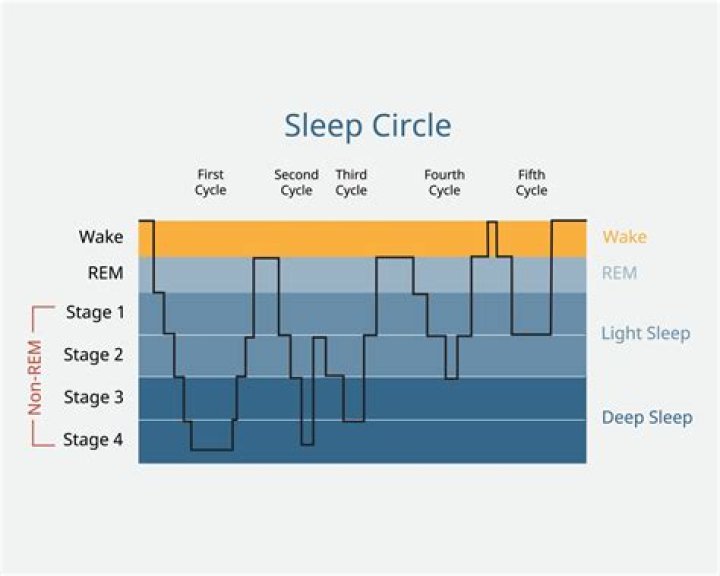
Human sleep architecture is non-linear. The brain cycles through distinct stages roughly every 90 minutes, beginning in light NREM (non-rapid eye movement) sleep, descending into slow-wave restorative deep sleep, and ascending into the REM sleep stage where dreaming predominates. The point at which an alarm rings within this cycle determines how refreshed a person feels upon opening their eyes.
Dr. Derek Suite, MD, highlighted this structural dynamic in an analysis published by Black Westchester, explaining why an individual can get eight full hours of sleep yet wake up feeling physically wrecked. Waking up at 6:00 AM after sleeping for eight hours means sleeping for 480 minutes, a duration that splits directly across five complete cycles and dumps the sleeper right into the middle of a sixth deep sleep cycle. In contrast, sleeping seven and a half hours equates to 450 minutes, which precisely completes five full 90-minute cycles. Counterintuitively, waking up after seven and a half hours often yields vastly higher morning vigor than an eight-hour stretch that gets violently cut short mid-cycle.
| Target Wake Time | Recommended Sleep Onset | Total Cycles Completed | Wake Stage Probability |
|---|---|---|---|
| 6:00 AM | 9:00 PM (In bed by 8:45 PM) | 6 Cycles (9.0 Hours) | Light Stage 1 / REM (Minimal grogginess) |
| 6:00 AM | 10:00 PM (In bed by 9:45 PM) | 5.3 Cycles (8.0 Hours) | Stage 3 Deep Sleep (Severe sleep inertia) |
| 6:00 AM | 10:30 PM (In bed by 10:15 PM) | 5 Cycles (7.5 Hours) | Light Stage 2 / REM (Smooth awakening) |
| 6:00 AM | 12:00 AM (In bed by 11:45 PM) | 4 Cycles (6.0 Hours) | Light Stage 1 / REM (Alert, slight sleep debt) |
Because the average adult requires 14 to 20 minutes to fall asleep, attempting to target a 6:00 AM wakeup without factoring in sleep latency creates a persistent scheduling error. Turning out the lights at 10:30 PM means sleep onset occurs closer to 10:48 PM, causing the 6:00 AM alarm to sound right in the middle of slow-wave sleep.
When Technology Fails: Software Glitches and Alarm Reliability
Even when biological calculations are sound, software can introduce costly failure points. The infamous Google Clock alarm bug underscored how systemic mobile operating system flaws can silently silence morning alerts. For months, users worldwide woke up hours late because background process optimizations and Spotify API integration failures caused the native clock app to fail silently without generating audio.
As documented by Popular Science in their assessment of reliable morning utilities, standard mobile alarms suffer from fundamental design flaws. They prioritize jarring volume over sensory adaptation, and native operating system updates frequently reset background execution permissions. Users seeking reliable alarms have increasingly turned to smart alarm clock apps like Sleep Cycle, Alarmy, or dedicated hardware wake-up light alarm clocks. These devices monitor micro-movements and respiratory rhythms via bed-side sonar or accelerometers, ringing during a 20-minute flexible window when the sleeper is already drifting out of REM sleep stage rather than jarring them awake during deep rest.
Environmental Reset: Entraining Your Circadian Rhythm
Your master biological clock, the suprachiasmatic nucleus located within the hypothalamus, takes cues primarily from environmental light rather than smartphone notifications. Pitch-black bedrooms make waking up at 6:00 AM miserable because the body continues secreting melatonin. Without light, the brain believes it is still the middle of the night.
Replacing acoustic shock with a wake-up light alarm solves this disconnect. These devices simulate dawn by gradually increasing light intensity from deep amber to 300-lux daylight over a 30-minute span prior to 6:00 AM. Photons pass through closed eyelids, suppressing melatonin production and priming the cortisol awakening response. Waking becomes a natural physiological outcome rather than a sudden emergency.
Frequently Asked Questions (FAQ)
Q1: Why do I feel more tired waking up at 6:00 AM after eight hours of sleep than after six hours?
A1: An eight-hour sleep window often ends squarely inside Stage 3 slow-wave sleep. Waking up during deep delta-wave sleep triggers intense sleep inertia. A six-hour window matches four full 90-minute sleep cycles, meaning your alarm is far more likely to ring during light Stage 1 or REM sleep.
Q2: How do I know if my sleep inertia is normal or a medical issue?
A2: Normal sleep inertia fades within 15 to 30 minutes, particularly after exposure to sunlight and water. If extreme grogginess persists for more than two hours despite maintaining a consistent schedule, consult a sleep specialist to screen for sleep apnea or upper airway resistance syndrome.
Q3: Is the snooze button actively making my morning exhaustion worse?
A3: Yes. Hitting snooze signals your brain to initiate a brand-new sleep cycle that it cannot possibly finish in nine minutes. Fragmenting your rest fragments sleep architecture, multiplying your morning grogginess and keeping your brain in a daze.
Mastering the 6:00 AM Threshold
Successfully waking up at 6:00 AM requires working with your body's internal architecture rather than fighting it with deafening ringtones. Align your bedtime with 90-minute sleep cycle intervals, account for the time it takes you to actually fall asleep, and bring daylight into your bedroom using dawn simulators. Eliminating sleep inertia transforms the first hour of your day from a groggy struggle into a period of calm, clear-headed focus.