Ad-Lib Meaning Explained: Proof That Hollywood’s Best Scenes Were Never in the Script
Ad-Lib Meaning Explained: Proof That Hollywood’s Best Scenes Were Never in the Script
When an actor freezes under studio lights, misses a cue, or deliberately abandons the shooting draft, two things can happen: the take collapses into the blooper reel, or cinema history quietly writes itself. The term "ad-lib" is thrown around casually on film sets, late-night junkets, and television retrospectives, yet its mechanical reality on a multimillion-dollar soundstage is far more disciplined than simple recklessness. As Sandra Bullock recently illuminated while revisiting an unreleased scene from Miss Congeniality 2 featuring an ode to Dolly Parton, detailed in an Entertainment Weekly Report, even the most poignant off-script inventions often walk a razor-thin line between editorial brilliance and the cutting room floor.
📌 Key Takeaways:
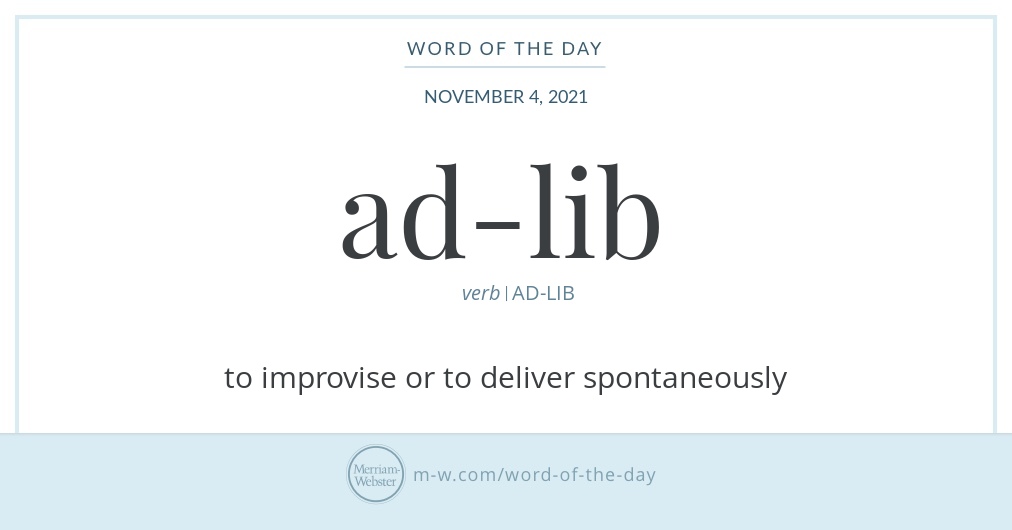
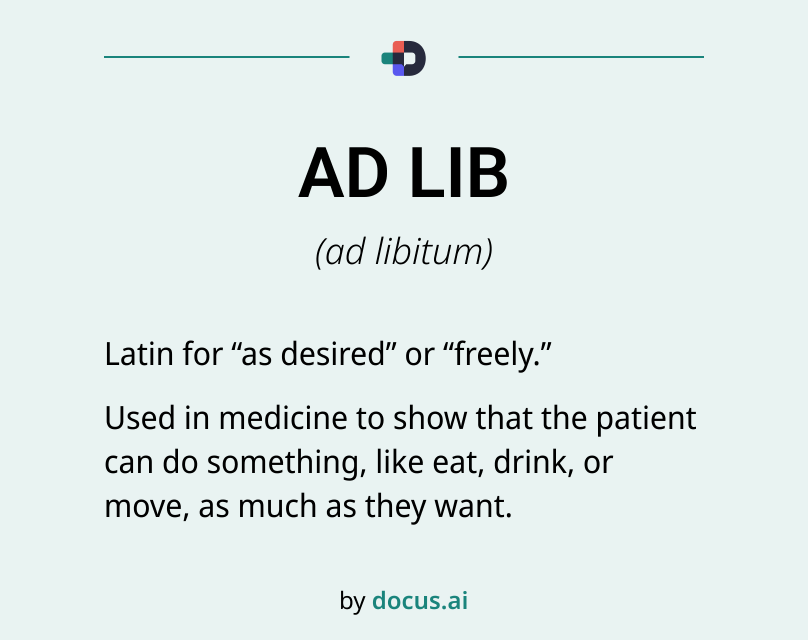
- Linguistic Origin: The word stems from the Latin phrase ad libitum, translating literally to "at one's pleasure" or "as you desire."
- Creative Distinction: An ad-lib differs from pure theatrical improvisation; it is an unscripted flourish embedded within an existing, tightly structured scene.
- Production Realities: While spontaneous line delivery produced classic beats in Friends and Mean Girls, studio directors frequently discard ad-libs to protect narrative pacing and continuity.
From Classical Latin to Modern Soundstages: The Etymology of Ad Libitum
The phrase traces back centuries before Thomas Edison patented the motion picture camera. Originating from the Latin ad libitum, the phrase appeared routinely in early musical notation and formal ecclesiastical scripts. In Renaissance choral scores and Baroque concertos, an ad libitum notation signaled that an organist, violinist, or soprano could alter a cadence, extend a trill, or omit an accompanying part altogether based on acoustic intuition. It meant freedom granted within an established architecture.
By the late 19th and early 20th centuries, British and American vaudeville performers adopted the phrase into common backstage argot, abbreviating it to "ad-lib." If an acrobat slipped or a lighting rig failed, a stage comic was expected to deploy extemporaneous speech to keep paying crowds distracted. From the live proscenium arch, the term migrated directly into early Hollywood talkies, where mechanical microphones and expensive 35mm film stock made unauthorized chatter an expensive liability.
Scripted Rigor Versus Actor Freedom: The Tension Behind Spontaneous Line Delivery
Modern screen production runs on strict division of labor. Screenwriters spend years balancing character arcs, pacing beats, and legal clearance guidelines. When an actor steps onto set, production insurance companies calculate risk down to minutes per setup. In writers' rooms overseen by purists like Aaron Sorkin, straying from punctuation marks is famously prohibited; every comma represents a calculated rhythmic breath.
Directors working within comedy performance cultivate the opposite environment. Filmmakers like Adam McKay, Judd Apatow, and Christopher Guest treat the script as an architectural frame rather than an immutable law. They shoot three takes "for the page" before letting performers riff "for the cut." This improv acting technique relies on absolute mastery of the fictional psyche. An actor cannot ad-lib successfully if they do not know what their character had for breakfast, what they owe in rent, and how they react when cornered.
The Audition Room Pivot: How Ashley Tisdale Infiltrated the Mean Girls Screenplay
The power of character spontaneity does not belong solely to tenured movie stars holding final-cut privilege. It often surfaces in high-stakes casting rooms where desperate contenders try to break through identical readings. In March 2024, actress Ashley Tisdale disclosed to Rolling Stone that an ad-lib she devised while auditioning for the 2004 comedy classic Mean Girls ended up etched into the final film, even though she did not book the role.
Tisdale had tested for both Karen Smith and Gretchen Wieners. During her read for the scene where the Plastics discuss their physical insecurities in front of Regina George’s bedroom mirror, Tisdale decided to break away from the sides. As Regina and the others complained about their shoulders and skin, Tisdale invented a deadpan line targeting her own hair: "My hairline is so weird."
Director Mark Waters and writer Tina Fey kept the observation. While Amanda Seyfried secured the role of Karen Smith, Tisdale’s unscripted audition choice was preserved word-for-word in the final screenplay, delivered by Seyfried straight into the vanity glass. It stands as definitive proof that brilliant extemporaneous character work carries structural value that outlasts the audition that generated it.
Cinematic Outtakes and Accidental Gold: A Screen History Breakdown
Film scholars differentiate between scripted perfection and the accidental lightning strikes that occur when cameras roll without interference. When Peter Ostrum stumbled over a step in 1971's Willy Wonka & the Chocolate Factory, Gene Wilder stayed rigidly in character. When an extra nearly struck Dustin Hoffman with a yellow cab on 58th Street during the filming of 1969's Midnight Cowboy, Hoffman did not yell cut; he slammed the hood and barked a line that defined his career.
| Production Title | Actor / Performer | The Spontaneous Delivery | Final Production Result |
|---|---|---|---|
| Friends (Season 4, 1998) | Robin Williams & Billy Crystal | Entire Central Perk couch dispute about infidelity | Aired unedited; scripted cast genuinely stunned |
| Jaws (1975) | Roy Scheider | "You're gonna need a bigger boat" | Voted AFI #35 movie quote of all time |
| The Empire Strikes Back (1980) | Harrison Ford | "I know" (replacing scripted "I love you too") | Redefined Han Solo's character arc |
| Good Will Hunting (1997) | Robin Williams | Monologue about his deceased wife farting in bed | Matt Damon broke into genuine laughter; camera shook |
| Mean Girls (2004) | Amanda Seyfried (origin: Ashley Tisdale) | "My hairline is so weird" | Permanent mirror scene dialogue anchor |
The Dolly Parton Cut: Why Brilliant Improvisations End Up on the Cutting Room Floor
For every ad-lib that reaches cinematic canon, dozens of equally brilliant lines end up buried on hard drives. A spontaneous line delivery may electrify the soundstage crew during production, but post-production editing operates under mathematical demands. If an unscripted joke breaks the emotional tone of the subsequent dramatic transition, the editor must remove it.
Sandra Bullock brought this dilemma to light when discussing an unused sequence from 2005's Miss Congeniality 2: Armed and Fabulous. While filming a lavish, high-camp disguise sequence alongside Regina King, Bullock introduced an unscripted, reverent tribute to country icon Dolly Parton. Bullock noted that the dynamic interplay between the leads felt electric, natural, and genuinely hilarious in the moment.
Yet the sequence was cut. The comedic rhythm of the edit required swift pacing to set up the ensuing rescue sequence, and Bullock's Parton improvisation dragged the film's structural timing. The anecdote exposes the hard truth of cinematic outtakes: an ad-lib does not survive simply because it is funny; it survives only if it propels the story forward without breaking the narrative spine.
The Mechanics of Character Spontaneity: Why Audiences Detect Rehearsed Comedy
Audiences possess an uncanny, subconscious radar for staged dialogue. When two actors deliver memorized lines back and forth, brain scans show that viewers predict conversational cadences almost instantly. Rehearsed comedic dialogue often rings hollow because humans rarely speak in polished, sonically symmetrical sentences.
Real human conversation is cluttered with micro-pauses, false starts, mid-sentence adjustments, and physical shifts. When an actor ad-libs within the emotional truth of a role, their autonomic physical posture changes. Their eyes search the room. Their voice drops half an octave. This character spontaneity produces a physiological resonance that technical screenwriters cannot replicate with ink on paper.
When Robin Williams launched into his spontaneous story about his wife's gastrointestinal habits in Good Will Hunting, Matt Damon's reaction was not an actor playing Will Hunting listening to Sean Maguire. It was Damon completely destabilized by Williams. If you look closely at the shot, the frame trembles slightly, the camera operator was laughing so hard he could barely hold the rig steady. That visual vulnerability cannot be written into stage directions.
Frequently Asked Questions (FAQ)
Q1: What is the mechanical difference between an ad-lib and pure improvisation?
A1: Pure theatrical improvisation involves building characters, scenes, and narratives entirely from scratch without an underlying script. An ad-lib is a surgical deviation: an actor working inside an established screenplay alters a specific line, movement, or reaction while maintaining the overarching narrative framework of the scene.
Q2: Do actors get writing credits or extra pay when their ad-libs make the final cut?
A2: No. Under Writers Guild of America (WGA) agreements and standard SAG-AFTRA performance contracts, dialogue invented extemporaneously by actors on set is considered part of their performance service. Intellectual property generated during production belongs to the production company, meaning unscripted contributions do not grant residual writing credit.
Q3: Can ad-libbing ruin sound mixing and camera continuity?
A3: Constantly. If an actor changes their dialogue without notifying the sound engineer, the boom microphone may be pointed at the wrong person. Similarly, if an unscripted physical joke happens in a wide shot, the actor must recreate that exact movement in medium shots and close-ups, or the editor cannot splice the footage together cleanly.
The Unscripted Impulse in an Automated Era
In an entertainment ecosystem dominated by algorithmic script analysis, IP-driven franchises, and meticulously mapped digital effects, genuine creative disruption has become rare. Every frame of modern studio filmmaking is scrutinized by risk-averse executives, legal clearance teams, and demographic focus groups before a single dollar is spent on set building.
Against that industrialized backdrop, the ad-lib remains the final frontier of pure actor agency. It proves that despite billions of dollars invested in screenwriting software and visual effects engines, human intuition remains irreplaceable. A bored actor on a sweltering boat in Martha's Vineyard muttering about a bigger hull, or a comedic powerhouse testing a partner's composure in an empty therapy office, reminds everyone in the dark theater why stories matter: the best moments in life, as on celluloid, arrive unannounced.


