Alibaba Group Under Siege: How Landmark DSA Fines and Fingerprinting Leaks Alter the Sourcing Landscape
On July 20, 2026, European Union antitrust regulators struck Hangzhou with an unprecedented regulatory hammer. The European Commission levied a record €550 million ($629 million) penalty against Alibaba Group under the Digital Services Act (DSA), concluding a grueling multi-year investigation into systemic market failures across AliExpress. The findings detailed a continuous stream of non-compliant electronics, toxic consumer goods, and intellectual property infringements slipping past marketplace filters. As detailed in the South China Morning Post Report, Alibaba immediately mounted an appeal against the penalty, maintaining that its automated seller surveillance meets EU benchmarks.
The punitive ruling landed alongside an alarming technical discovery. Independent cybersecurity audits identified silent acoustic tracking libraries running inside the AliExpress mobile client. The code captured near-ultrasonic ambient signals to map consumer hardware across local networks without user consent. For enterprise supply chains, dropshippers, and small-batch importers navigating the divide between AliExpress and Alibaba.com, the twin crises broke open fundamental questions regarding platform integrity, product liability, and commercial compliance.
📌 Key Takeaways:
- The Enforcement Action: The European Commission slapped Alibaba Group with a historic €550 million fine on July 20, 2026, for repeated Digital Services Act compliance failures regarding counterfeit and hazardous goods.
- Privacy Backlash: Security researchers uncovered unauthorized acoustic device-fingerprinting scripts embedded in AliExpress mobile applications, drawing immediate scrutiny from data regulators.
- Sourcing Boundaries: Alibaba operates as an industrial B2B production engine governed by high Minimum Order Quantities, whereas AliExpress serves as a retail-priced dropshipping conduit carrying direct consumer legal liabilities.
The Mechanics Behind Brussels' €550 Million DSA Sanction
European regulators did not arrive at the €550 million figure overnight. The formal case originated in early 2024 when customs officials across Germany, France, and the Netherlands recorded sustained spikes in hazardous import seizures. Lab testing on unbranded toys purchased through AliExpress revealed endocrine-disrupting phthalates exceeding statutory ceilings by 430%. Uncertified lithium-ion chargers lacked basic thermal cutoffs, presenting immediate fire risks inside private residences.
The Digital Services Act mandates that Very Large Online Platforms (VLOPs) systematically identify, assess, and suppress illegal inventory. Regulators concluded AliExpress relied on superficial keyword blocks that merchant syndicates bypassed with trivial misspellings and mirrored product images. Brussels targeted structural inaction. When algorithmic filters detected flagged vendors, shell accounts surfaced hours later under recycled business registrations.
Alibaba Group legal representatives argued the penalties fail to reflect the technical hurdles of policing tens of millions of active listings. Even so, the Commission demonstrated that internal moderation algorithms consistently favored transaction conversion over safety interventions. The financial penalty represents roughly 6% of Alibaba's European cross-border retail revenue for the fiscal period, establishing a binding precedent that online marketplaces bear direct financial liability for unsafe shipments crossing continental borders.
Silent Tracking: The AliExpress Acoustic Fingerprinting Fallout
Parallel to regulatory actions in Brussels, a coalition of privacy engineers published findings detailing undocumented background scripts running in Android and iOS builds of the AliExpress shopping app. The software accessed device audio APIs without requesting explicit microphone permissions, processing sound frequencies above 18 kHz. Retail beacons placed in brick-and-mortar storefronts, streaming media, and smart television advertisements emit these high-frequency audio pings to bridge consumer identities across offline and online spaces.
The discovery blew apart user trust. Security analysts demonstrated that the application logged ambient acoustic metadata alongside precise device hardware profiles, accelerometer readings, and battery discharge rates. By clustering these data points, the platform generated unique behavioral fingerprints resistant to cookie clearing or network-level VPN masking. The scripts operated continuously, consuming background system resources and transmitting payload packets back to regional Content Delivery Networks.
The global blowback forced consumer rights organizations to file joint privacy complaints with France’s CNIL and the German Federal Commissioner for Data Protection. The scandal changed how corporate procurement departments handle mobile software. Enterprises routinely bar sourcing personnel from installing retail applications on devices tied to proprietary corporate networks, shifting business-to-business communications strictly toward sandboxed desktop environments.
B2B Wholesale vs B2C Retail: How the Platforms Truly Diverge
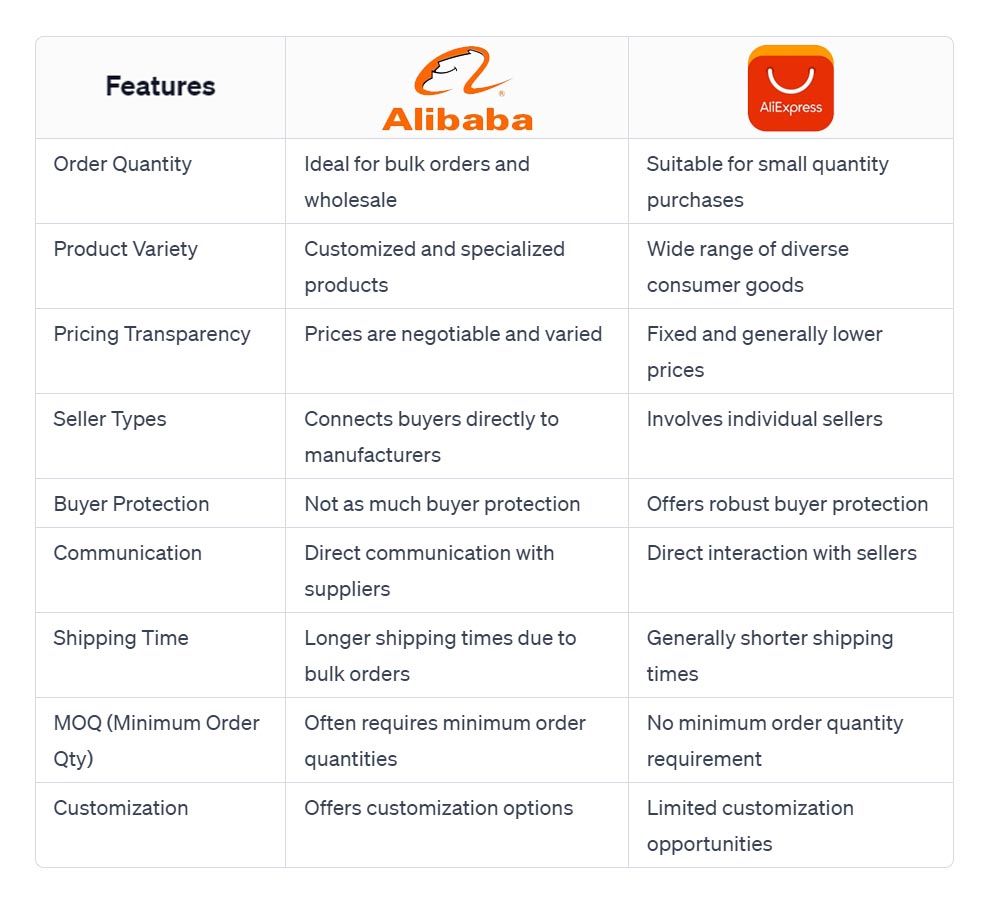
Understanding the distinction between Alibaba and AliExpress requires stripping away the common corporate branding. Alibaba.com is an industrial B2B wholesale platform built to connect commercial buyers directly with primary fabricators, original equipment manufacturers (OEM), and trading intermediaries. The ecosystem operates on long-term production contracts, technical CAD schematics, and extensive product customization.
AliExpress functions on an entirely separate model. It is a B2C retail marketplace designed for individual shoppers and micro-merchants seeking single units or small lots. Inventory on AliExpress consists largely of ready-to-ship, mass-produced merchandise held in domestic consolidation warehouses. Pricing mirrors international consumer retail rather than raw factory cost, embedding fulfillment, domestic courier margins, and middleman profits into every transaction.
Sourcing strategies hinge on these operational mechanics. A brand purchasing 5,000 custom-tooled stainless steel tumblers with laser-etched branding and Pantone-matched powder coating must negotiate via Alibaba.com. Conversely, a solo merchant testing customer demand for an existing fitness accessory with zero upfront inventory operates through AliExpress dropshipping fulfillment. The platforms fulfill entirely different phases of the product life cycle.
Sourcing Realities: A Direct Platform Comparison
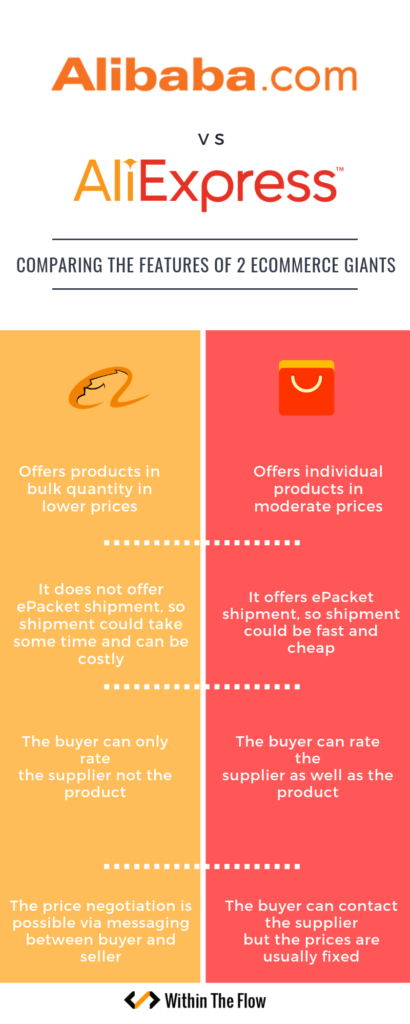
The decision to procure stock through Alibaba versus AliExpress dictates production capital, shipping lead times, and regulatory compliance exposure. The operational metrics break down across distinct structural parameters:
| Operational Metric | Alibaba.com (B2B Production) | AliExpress (B2C & Dropship) |
|---|---|---|
| Target Buyer | Commercial enterprises, brand owners, volume distributors | End consumers, boutique retailers, direct dropshippers |
| Minimum Order Quantity (MOQ) | Strict thresholds (typically 100, 5,000 units depending on tooling) | Zero requirement (orders accept 1 unit single purchases) |
| Pricing Structure | Volume-tiered unit pricing ($1.50, $3.20 per unit based on volume) | Fixed retail unit rates with modest multi-buy discounts (3, 8%) |
| Customization Scope | Full OEM/ODM fabrication, bespoke molds, custom retail packaging | Finished off-the-shelf inventory; rare surface-level logo additions |
| Logistics & Delivery | Ocean freight, air cargo, DDP/FOB terms (25, 55 calendar days) | Postal consolidators, ePacket, Cainiao express (7, 21 business days) |
| Transaction Escrow | Trade Assurance protection contracts held until production clearance | Automated consumer buyer protection with tight 15-day dispute windows |
Vetting Suppliers, Trade Assurance, and Product Safety Risks
The regulatory fallout in Europe exposed the hazards of unverified purchasing. On Alibaba.com, professional buyers screen suppliers through rigorous verification protocols. A "Gold Supplier" badge simply indicates a paid commercial membership. In contrast, the "Verified Supplier" designation requires on-site factory audits conducted by independent international assessment bodies like TÜV Rheinland or SGS. These inspectors document factory floor square footage, production lines, machinery maintenance logs, and raw material provenance.
Trade Assurance protection provides structural security for wholesale capital. When drafting a procurement contract on Alibaba, the buyer specifies tolerances for manufacturing defects, shipment deadlines, and laboratory testing mandates. Funds stay in escrow. If an independent pre-shipment quality inspection reveals that an electronic product fails CE or FCC dielectric strength testing, the buyer can freeze the capital transfer. The escrow refuses release until the manufacturer retools the assembly run or issues a direct refund.
AliExpress operates without this enterprise-grade safety architecture. Consumer dispute resolution policies handle missing packages and broken plastic casings adequately, but they provide zero recourse against latent regulatory non-compliance. Once a buyer confirms delivery or the platform's standard 15-day window lapses, dispute rights expire. Dropshippers importing skin creams, power supplies, or children's apparel via AliExpress frequently assume full civil and criminal product liability under Western legal standards without possessing the original laboratory declarations of conformity.
Supply Chain Realignment: Adapting to Heightened Cross-Border Scrutiny
The convergence of the DSA penalty and the acoustic tracking scandal has rewritten the operational playbook for commercial importers. Customs agencies throughout North America and the European Union have expanded targeted inspections of micro-parcels. Shippers attempting to bypass customs declarations through de minimis thresholds face automated data matching and mandatory inspection holds.
High-volume merchants are phasing out blind AliExpress dropshipping. The platform's variable shipping schedules, unpredictable factory runs, and elevated counterfeit hazards expose sellers to merchant account suspensions across payment processors like Stripe and PayPal. Serious brands use AliExpress solely as a real-time testing sandbox: running live advertising campaigns against low-volume orders to establish consumer demand before committing manufacturing capital.
Once sales validate a product concept, procurement teams migrate the inventory to Alibaba.com for private label sourcing. Contract manufacturing allows companies to negotiate direct unit costs down by 60% to 80%, lock in verified factory certifications, and secure bulk ocean freight agreements. Direct factory contracts grant access to genuine Material Safety Data Sheets (MSDS) and RoHS compliance records, neutralizing the legal risks that triggered the European Commission's historic enforcement action.
Frequently Asked Questions (FAQ)
Q1: Does the €550 million EU penalty mean AliExpress will stop operating in Europe?
A1: No. The Digital Services Act fine penalizes past regulatory failures rather than imposing an operational shutdown. Alibaba is appealing the fine in European courts while overhaul actions continue across merchant onboarding, listing moderation, and counterfeit removal procedures to avoid subsequent sanctions.
Q2: How does Minimum Order Quantity (MOQ) affect total sourcing capital?
A2: On Alibaba.com, factories require MOQs to justify production setup expenses and raw material purchases, demanding upfront commitments from $500 to over $10,000. AliExpress has an MOQ of one, letting buyers purchase individual items without financial exposure, albeit at substantially higher per-unit rates.
Q3: How does Trade Assurance differ from standard credit card chargebacks?
A3: Trade Assurance functions as a specialized industrial escrow contract. It binds supplier payouts to verifiable pre-shipment quality checks and contractual delivery dates. A credit card chargeback occurs post-payment through banking channels, which can trigger supplier blacklisting or merchant account freezes.
Q4: Why are regulatory agencies scrutinizing dropshipped electronics more heavily in 2026?
A4: Micro-shipments of low-cost electronics frequently lack basic CE, UL, or FCC certifications, creating fire and electrical hazards. Under revised consumer protection frameworks, direct-to-consumer businesses importing non-compliant goods bear identical legal liability to primary domestic manufacturers.
Strategic Takeaways for 2026
The structural gap between AliExpress and Alibaba.com has widened beyond basic transaction size. Procurement on AliExpress functions as a convenience-driven consumer environment where buyers trade manufacturing oversight and pricing leverage for speed and zero inventory obligations. However, the platform's chronic compliance vulnerabilities and privacy controversies turn dropshipping into a precarious venture for brands seeking long-term stability.
Alibaba.com remains the indispensable workhorse for structured private label sourcing and volume manufacturing. Achieving success there demands diligent supplier vetting, strict Trade Assurance contract terms, and independent third-party laboratory audits. Sourcing in 2026 demands complete operational transparency. Merchants who rely on gray-market marketplace arbitrage face mounting regulatory headwinds, while businesses investing in documented factory partnerships build resilient, legally defensible global supply chains.


