Bali Safety Realities: What Beaches, Dive Sites, and Seismic Zones Look Like Now
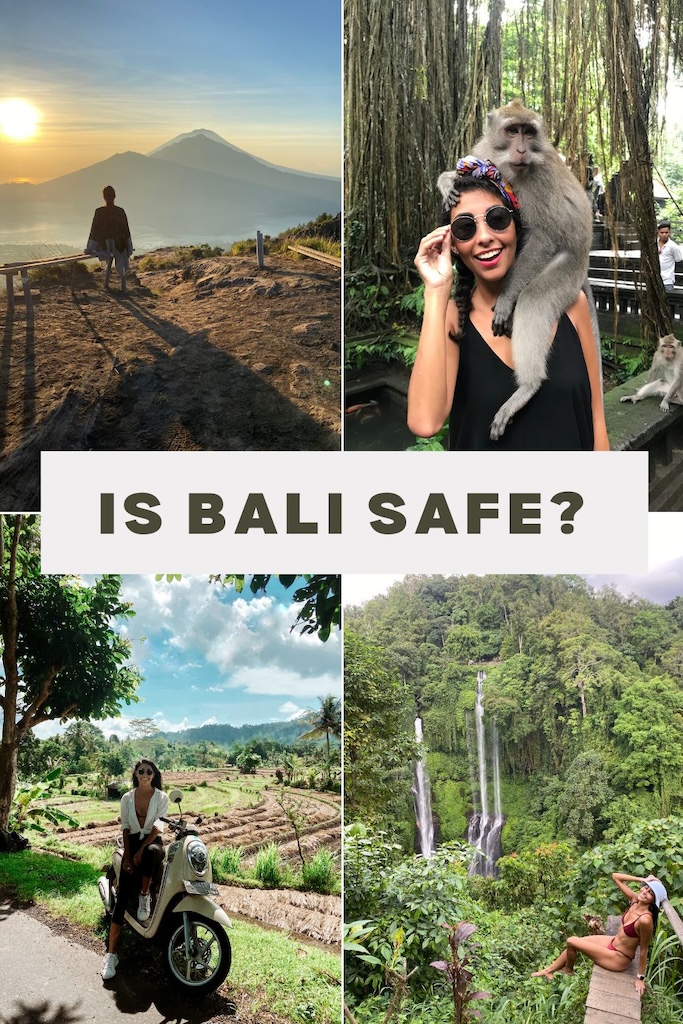
Southern Bali’s surf breaks and volcanic shorelines remain among the most visited coastlines on earth, yet shifting ground conditions throughout 2026 have prompted international travelers to reassess their assumptions. Recent seismic rumbles along the Sunda Arc and persistent maritime swells have collided with rapid municipal expansion. According to The Bali Sun Report, the local travel safety index recorded elevated concerns across several key regencies this year, reflecting higher hospital admissions from road trauma alongside unpredictable coastal rip currents.
The island is not experiencing a sudden collapse of security, but the gap between curated vacation imagery and daily street reality has widened. Navigating the province today requires understanding specific geographical vulnerabilities rather than relying on generalized travel advice. From deep-water downcurrents off Nusa Penida to organized bag snatching on congested thoroughfares, visitors face distinct operational risks depending entirely on where they stay and how they move.
📌 Key Takeaways:
- Coastal Conditions: Rogue swells, ocean rip currents, and unpatrolled beach zones account for the highest proportion of preventable tourist fatalities on the south and east coasts.
- Seismic Baseline: Mount Agung volcanic activity remains under stable monitoring, but localized tectonic tremors along regional fault lines demand active awareness of evacuation routes.
- Urban Hazards: Rising density across Badung Regency has pushed Canggu and Seminyak crime rates upward, driven primarily by opportunistic scooter theft, ATM skimming, and nightlife phone grabs.
Ocean Rip Currents and Diver Safety Across the South Coast
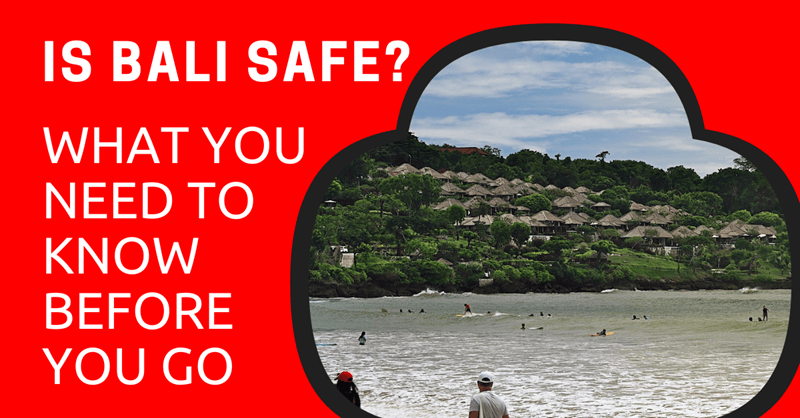
The Indian Ocean swells that make Bali a premier surfing destination carry structural hazards that claim dozens of lives annually. Ocean rip currents and beach flags dictate the daily margins of safety across Kuta, Seminyak, Canggu, and Uluwatu. Red flags planted by the Balawista surf lifesaving service signify hard prohibitions, not suggestions. Strong undertows at Echo Beach and Batu Bolong frequently pull swimmers past the break line within seconds, where breaking waves exceed two to three meters during peak tidal shifts.
Conditions turn far more unforgiving around offshore islands like Nusa Penida and Nusa Lembongan. At popular dive sites such as Crystal Bay and Blue Corner, powerful vertical currents, known among dive professionals as washing machine or downwelling currents, can pull divers downward into deep thermal layers. Inexperienced drift divers relying on cut-rate operators face significant exposure. Reputable dive outfits in Sanur and Padangbai mandate advanced open-water certification and surface marker buoys for high-flow drift sites, screening participants stringently before booking departures.
Beach safety infrastructure varies wildly outside established municipal zones. While central Kuta features active lifeguard towers, beaches along the Bukit Peninsula and the black-sand stretches of Tabanan offer zero active surveillance. Tourists caught in sudden shore breaks at Dreamland or Keramas find themselves entirely dependent on fellow beachgoers for rescue.
Mount Agung Volcanic Activity and Regional Tectonic Realities
Indonesia sits directly atop the Pacific Ring of Fire, and Bali rests along an active tectonic collision zone between the Indo-Australian and Eurasian plates. Shallow tremors frequently register between magnitude 4.2 and 5.4 across the Bali Sea and Lombok Strait. These shakes routinely rattle hotel plaster and trigger localized panic, though modern concrete-reinforced buildings generally withstand the energy without structural failure. Brick boundary walls and unreinforced tile awnings in older village compounds pose the most immediate threat during sudden ground movement.
Active geological observation by the Center for Volcanology and Geological Hazard Mitigation (PVMBG) keeps Mount Agung volcanic activity under continuous electronic watch. Following its major eruptive cycle in 2017, 2019, Agung has settled into a baseline status, with automated seismographs tracking gas emissions and subsurface harmonic tremors. Standard Indonesia travel advisories outline an exclusion zone around the summit crater that expands or contracts based on seismic data. Trekkers attempting unguided ascents of Agung or Mount Batur risk steep fines, toxic sulfur exposure, and sudden landslides caused by heavy tropical rains.
Preparedness during a tremor centers on immediate spatial awareness. Falling masonry, overhead electrical cables, and glass facades along crowded commercial avenues present higher casualty risks than seismic collapses themselves. Coastal visitors must register local tsunami sirens and identify elevated evacuation routes immediately upon checking into beachfront lodgings.
Canggu and Seminyak Crime Rates: Street Theft and Nightlife Realities
Violent assault against foreigners remains statistically uncommon across Bali, but petty property crime has surged in direct proportion to tourist congestion. The Canggu and Seminyak crime rates reflect an ongoing wave of motorcycle-borne drive-by phone snatching. Criminal crews on modified automatic scooters operate in pairs along poorly lit arteries like Jalan Raya Semat, Batu Bolong, and Petitenget. The passenger rips high-end smartphones directly out of pedestrians’ hands or handlebar navigation mounts before accelerating into gridlocked traffic.
Drink tampering risks persist in crowded entertainment districts. While commercial methanol poisoning has declined in licensed venues due to strict enforcement, illicit batch spirits occasionally resurface in off-strip dive bars offering extreme drink discounts. Spiking with sedatives or incapacitating compounds occurs in dense club corridors, targeting solo patrons whose belongings are subsequently cleaned out. Bottled beer or drinks mixed in direct sight offer the highest degree of protection against chemical tampering.
| Location / Zone | Primary Safety Hazard | Statistical Incident Level | Recommended Operational Countermeasure |
|---|---|---|---|
| Canggu & Berawa | Drive-by phone snatching, scooter collisions | Elevated (Daily occurrences) | Keep phones pocketed off sidewalks; wear DOT helmets |
| Seminyak & Legian | ATM skimming, drink tampering, pickpocketing | Moderate to Elevated | Use bank-branch ATMs; monitor beverage preparation |
| Nusa Penida Coast | Tidal drop-offs, rogue waves, downdraft currents | High maritime severity | Avoid surf-edge photography; hire certified boat operators |
| Ubud & Gianyar | Monkey bites/rabies, ravine road washouts | Low to Moderate | Maintain distance from wildlife; verify rabies vaccines |
ATM skimming prevention demands strict card discipline throughout the southern tourist corridor. Fraud syndicates mount clandestine pinhole cameras and fake card readers over standalone machines located inside unmonitored convenience stores. Travelers who insert cards into these compromised terminals often report unauthorized international withdrawals within 48 to 72 hours. Withdrawing cash exclusively from physical bank branches, such as Bank Central Asia (BCA) or Bank Mandiri complexes protected by dedicated security guards, virtually eliminates skimming exposure.
Scooter Accidents, Road Conditions, and Medical Evacuation Traps
Trauma wards at major Denpasar hospitals tell an unvarnished story: scooter accidents and road conditions represent the single greatest statistical threat to foreign visitors in Bali. Narrow asphalt roads built for light residential traffic buckle under hundreds of thousands of daily scooter movements, delivery trucks, and ride-hail minivans. Potholes, loose gravel, oil slicks, and sudden drainage ruts along shortcut paths lead to catastrophic losses of control, particularly during monsoonal downpours.
Unlicensed riding carries severe medical and financial fallout. Thousands of travelers rent 125cc or 155cc scooters with zero prior motorcycle experience, lacking both valid motorcycle endorsements on their home licenses and an International Driving Permit (IDP). Insurers aggressively audit hospital claims; an accident occurring without the appropriate license tier routinely results in a denied claim. Medical evacuations to Singapore or Darwin for complex orthopedic reconstruction or traumatic brain injury quickly scale from $35,000 to over $120,000, forcing families into online fundraising campaigns.
Regional police divisions have intensified checkpoints along Sunset Road and the Canggu shortcuts. Officers inspect helmet compliance, valid registration papers, and international licenses. Fines must be handled through formal court tickets or designated bank payment slips rather than arbitrary roadside cash settlements.
Nighttime Solo Female Travel and Law Enforcement Realities
Independent female exploration across Bali remains broadly viable, though nighttime solo female travel requires precise route management. Harassment typically manifests as persistent catcalling or curbside propositions from motorcycle taxi operators along nightlife strips. However, isolated walking on dark rural lanes or poorly lit beach pathways carries tangible safety vulnerabilities.
Relying on street-hailed independent motorbikes after midnight introduces unneeded danger. Transport apps like Gojek and Grab provide end-to-end GPS route tracking, registered driver identities, and shareable trip coordinates. If app drivers are unavailable, Bluebird taxis equipped with running meters offer the most secure ground transit alternative. Passengers should lock scooter bags under the seat rather than holding them across their shoulders, eliminating targets for snatch-and-grab thieves.
The visible tourist police presence (*Polda Bali*) operates specialized mobile units in Kuta, Seminyak, Sanur, and Ubud. While designated tourist officers speak English and assist with theft reports or emergency mediations, administrative processes can feel agonizingly bureaucratic. Retaining emergency contacts before incidents occur is mandatory:
- National Emergency Composite: Dial 112 for immediate medical, fire, or rescue coordination.
- National Police: Dial 110 for direct law enforcement dispatch.
- Ambulance & Paramedics: Dial 118 (or contact private providers like BIMC Hospital at +62 361 761263).
- Tourist Police Headquarters (Denpasar): Reachable directly at +62 361 224111.
Common Tourist Scams: Money Changers and Fake Rental Damage
Financial scams in Bali rely on calculated psychological pressure and slight-of-hand mechanics. Unauthorized money changers operating from small stalls behind souvenir shops advertise exchange rates well above the global interbank benchmark. Tellers count bills openly, then drop bank notes behind the counter counter-ledge or fold them underneath wooden trays during final handovers. Travelers who fail to recount the money themselves walk away missing 20% to 30% of their converted cash. Sticking to authorized foreign exchange services displaying certified licensing shields against currency fraud.
Vehicle rental operations present a separate vector for exploitation. Independent rental shops occasionally accuse returning tourists of causing pre-existing scratches, cracked fairings, or mechanical damage, demanding inflated repair charges while holding the tourist's passport as collateral. Handing over an actual passport as a rental deposit violates Indonesian law and strips renters of leverage. Renters should provide only photocopies with watermarks, inspect every panel on camera with the vendor present, and record a continuous high-definition video of the vehicle before driving off.
Frequently Asked Questions (FAQ)
Q1: Is it safe to swim at Bali's popular beaches right now?
Swimming is safe only at patrolled beaches between the designated red-and-yellow flags. Coastlines displaying solid red flags harbor powerful ocean rip currents that overwhelm even confident swimmers. Never enter the water after dusk or along unpatrolled breaks on the Bukit Peninsula and Tabanan.
Q2: Do I really need an International Driving Permit to ride a scooter in Bali?
Yes. Indonesian law requires a valid home motorcycle license paired with an International Driving Permit (1949 or 1968 convention). Operating a scooter without both documents invalidates nearly all travel insurance medical coverage and exposes riders to police fines or vehicle impoundment.
Q3: How dangerous are regional earthquakes and Mount Agung for tourists?
Minor tectonic tremors occur regularly along the Sunda Arc but rarely cause severe damage to modern hotel structures. Mount Agung is actively tracked by geological authorities and sits under stable monitoring. Travelers should review their accommodations' earthquake evacuation pathways and monitor PVMBG updates.
Q4: How prevalent is ATM skimming in tourist hubs?
Skimming remains a persistent risk at standalone, unattended ATMs in small supermarkets across Seminyak, Canggu, and Kuta. Minimize this exposure by withdrawing cash exclusively from machines located inside physical bank branches staffed by security personnel.
Navigating Bali with Clear Eyes in 2026
Assessing safety in Bali requires shedding romanticized expectations in favor of grounded vigilance. The island remains an exceptionally rewarding travel destination, but it is a bustling, rapidly urbanizing developing province confronting environmental stress and congested roadways. Those who treat its surf with healthy respect, reject unlicensed scooter rentals, bypass unvetted currency exchanges, and secure robust medical evacuation coverage travel through the archipelago with minimal friction. Awareness of the actual landscape transforms safety from a gamble into a manageable routine.


