Breaking Down the 'Bad' Short Film: The Visual Genius and Choreography That Changed Music Videos
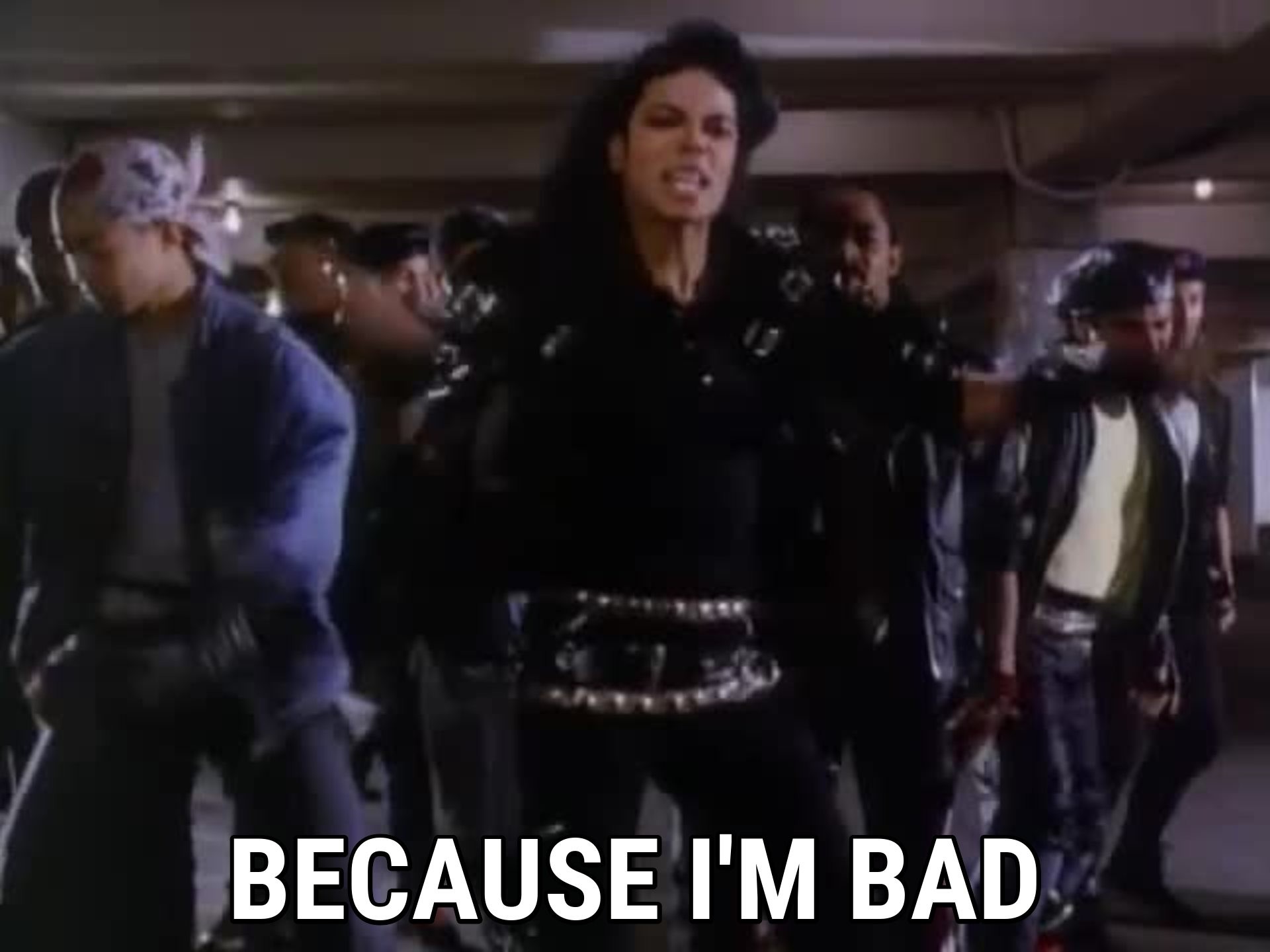
In the late summer of 1987, Michael Jackson faced an unprecedented creative challenge: outperforming Thriller, the best-selling album in music history. Rather than replicating the supernatural horror and red leather jacket of 1983, Jackson took a radical artistic turn into gritty urban realism. When CBS aired the 18-minute short film for "Bad" during prime-time television on August 31, 1987, the world saw an artist transforming MTV-era music videos into high-caliber cinematic theater. As highlighted in a Revolt TV Report examining Jackson's mastery of visual art, this release fundamentally elevated short-form musical filmmaking from disposable promotional clips to premier narrative cinema.
Behind that transformation was an ambitious convergence of Hollywood auteur direction, visceral physical theater, and sonic precision. Directed by Martin Scorsese and filmed on location in New York, the project introduced a completely altered visual persona for the King of Pop. The defiant vocal chant, "I'm bad, I'm bad, you know it", became more than an earworm hook; it served as a creative manifesto challenging street conventions and redefining what pop music visuals could achieve.
📌 Key Takeaways:
- Cinematic Direction: Martin Scorsese directed the 18-minute extended cut on 35mm film, utilizing sharp black-and-white cinematography to ground the story before bursting into underground color.
- Choreographic Impact: Vincent Paterson and Jackson constructed intricate subway station choreography that fused street locking, Broadway discipline, and sharp military formations.
- Visual Legacy: The multi-buckle black leather aesthetic disrupted pop fashion conventions, establishing an enduring visual template that current concert choreographers and directors still study today.
From Private School Classrooms to Harlem Streets: Constructing Darryl
The narrative arc of "Bad" opens far from the glossy stages of arena pop. Jackson stars as Darryl, an intelligent inner-city youth returning home from a prestigious, predominantly white boarding school for winter break. Richard Price, the acclaimed screenwriter behind The Color of Money and later The Wire, penned the script based on the tragic real-life story of Edmund Perry, an honor student from Harlem shot and killed by an undercover police officer in 1984.
This dramatic backbone gave the short film emotional weight rarely seen on MTV. When Darryl reconnects with his neighborhood friends, led by Mini Max, played by an unknown Wesley Snipes in his breakthrough performance, the central conflict ignites. Darryl faces relentless peer pressure to demonstrate that academic success has not made him soft.
Snipes projected genuine street menace, delivering lines with cold territorial swagger. His performance forced Jackson to respond not with pop-star charm, but with psychological tension. The conflict peaks when the gang descends into an empty underground transit station to rob an elderly bystander. Darryl steps in front of the victim, stops the assault, and is accused of abandoning his roots. That accusation forces Darryl's dramatic transformation.
Martin Scorsese and Hoyt Schermerhorn: Directing Realism on 35mm
Scorsese brought his signature gritty New York visual style directly to the production. The team secured permission from the Metropolitan Transportation Authority to film inside Brooklyn's Hoyt Schermerhorn subway station, an operational transit hub on the A, C, and G lines. Filming took place over roughly two and a half weeks during overnight hours, with cast and crew working through frigid winter temperatures beneath city streets.
Scorsese made the deliberate choice to shoot the introductory narrative in stark, high-contrast monochrome. The black-and-white framing highlights Darryl’s alienation in both worlds: an outsider in his clean-cut boarding school and an outsider in his old neighborhood.
The visual shock occurs when Darryl turns back toward Mini Max's gang inside the station. The frame bursts into fully saturated, vibrant color. Jackson suddenly stands transformed, shed of his school overcoat and dressed in an aggressive, jet-black leather ensemble designed by Dennis Tompkins and Michael Bush. Studded with heavy silver buckles, zippered seams, and metal rivets, the outfit delivered an undeniable visual disruption. Scorsese tracked Jackson with dynamic dolly zooms and sweeping crane shots, matching the abrasive energy of the underground station to the aggressive pulse of the music.
Subway Station Choreography and Vincent Paterson’s Movement Blueprint
Once the music starts, the short film abandons spoken dialogue in favor of physical expression. Jackson collaborated with choreographer Vincent Paterson to develop a physical vocabulary that moved away from the fluid moonwalks of Motown 25. Instead, the choreography integrated tight, militaristic isolation, popping, street locking, and dynamic foot shuffles.
Paterson, who had previously performed as a lead dancer in Beat It and Thriller, worked with Jackson to assemble a handpicked ensemble of street dancers and Broadway pros. The resulting routine felt dangerous rather than polished.
The movement vocabulary incorporated aggressive pelvic thrusts, sudden chest pops, synchronous foot stamps, and defiant hand gestures. Dancers moved in tight geometric wedges along the tiled platform, snapping their fingers in rhythmic counterpoint to the thumping synthesizer bassline. Jackson led the formation with frantic, hyper-controlled kinetic energy. Every spin, heel turn, and vocalized grunt was matched to physical punctuations, turning the subway platform into a rhythmic sparring ring.

Production Benchmarks: Measuring Jackson's Cinematic Era
The scale and budget poured into "Bad" set unprecedented benchmarks for the recording industry in 1987. Record label executives initially balked at the $2.2 million budget for an extended music short film, but the cultural and commercial returns completely reshaped promotional budgets for the following decade.
| Production Metric | Thriller (1983) | Bad (1987) | Black or White (1991) |
|---|---|---|---|
| Director | John Landis | Martin Scorsese | John Landis |
| Production Budget | $500,000, $900,000 | $2.0M, $2.2M | $4.0M, $4.5M |
| Runtime (Full Short Film) | 13 minutes, 42 seconds | 18 minutes, 05 seconds | 11 minutes, 00 seconds |
| Filming Location | Los Angeles streets & meat locker | Hoyt Schermerhorn Station (NYC) | Universal Studios soundstages |
| Key Movement Vocabulary | Horror theatrics & synchronized zombie march | Militant street locking, thrusts & snap formations | Global cultural dance & panther morphing |
Quincy Jones Production and the Bad Album Sonic Architecture
The visuals worked because the auditory foundation supported every frame. Produced by Quincy Jones alongside Jackson as co-producer, the track "Bad" discarded soft pop textures in favor of hard-edged, cutting-edge synthesis. Recorded at Westlake Recording Studios in Los Angeles, the production utilized an aggressive Synclavier synthesizer bass line combined with heavy drum machine programming and punchy brass arrangements.
The audio mix created space for Jackson's vocal mannerisms. Jackson filled the track with rhythmic hiccup gasps, percussive breath intakes, and vocalized screams that served as musical instruments.
Within the broader Bad album tracklist, the title cut anchored a deliberate shift in sonic character. While tracks like "The Way You Make Me Feel" offered playful funk and "Smooth Criminal" pursued high-tempo suspense, "Bad" provided raw defiance. The mix balanced punchy frequencies that resonated through television speakers, ensuring that every visual step in the Hoyt Schermerhorn terminal felt tied directly to the downbeat.
Subverting Toughness and Cementing a Visual Legacy
The climax of the short film delivers an important social subversion. After delivering an explosive dance routine accompanied by a gospel choir backing, Darryl does not attack Mini Max. He steps forward, looks him directly in the eyes, and extends an open hand.
Mini Max pauses, visibly moved by the power of Darryl's conviction. He shakes Darryl's hand, asks, "That's the way it goes down, huh?", and walks away into the shadows with his crew. Darryl stands alone on the platform as the color fades back into black and white, leaving him back in his civilian coat, resolute in his moral autonomy.
Jackson proved that being "bad" did not mean succumbing to street violence or posturing for approval. True strength meant possessing the courage to stand by one's convictions regardless of peer pressure. That thematic complexity, captured through Scorsese's lens, separated Jackson from his peers. Decades later, top-tier choreographers directing modern stadium shows continue to cite the precision formations and spatial transitions of "Bad" as a foundational textbook for pop music performance.
Frequently Asked Questions (FAQ)
Where was the subway sequence for the "Bad" music video filmed?
The subway scenes were filmed on location at the Hoyt Schermerhorn subway station in Brooklyn, New York. The platform area was closed off during overnight hours across several weeks to allow the production team to set up tracks, lighting rigs, and choreography sets.
Who played the gang leader confronting Michael Jackson in "Bad"?
Wesley Snipes played the role of Mini Max, Darryl's neighborhood rival. The role marked Snipes' first major on-screen performance and played a pivotal role in launching his Hollywood acting career.
What real event inspired the storyline of the "Bad" short film?
Screenwriter Richard Price based the narrative on the real-life 1984 tragedy of Edmund Perry, a Harlem teenager who attended an elite Massachusetts boarding school and was fatally shot by a plainclothes police officer in New York. Jackson and Price wanted to explore the real tensions of young people navigating disparate social worlds.
The Lasting Impact of Jackson's Subway Classic
The 1987 release of "Bad" marked a permanent shift in how music visualizers functioned within global pop culture. By hiring an acclaimed cinematic director, tackling social realities, and combining street movement with precision stage dance, Michael Jackson transformed a promotional single into an enduring piece of short-form filmmaking. The black leather buckles, the aggressive subway station steps, and the unyielding declaration of integrity rewrote the visual language of the MTV era, establishing an artistic benchmark that continues to command respect.


