Bridging Generations: How Hip-Hop Rhymes Are Transforming Youth Literacy
Children's reading stamina is collapsing across primary education, but an unexpected pedagogical alliance is mounting a defense through verse, rhythm, and tempo. Former Children’s Laureate Michael Rosen and Jacob Mitchell, the educator widely known as MC Grammar, have officially joined forces on an ambitious national reading project dubbed Gallery Kids, according to The Bookseller Report. By pairing classical performance poetry with modern rap dynamics, the initiative aims to rebuild early language development by turning phonemic drills into live acoustic performance.
The collaboration comes at a critical moment for primary educators. Decades of reliance on rigid, mechanical decoding have produced a cohort of pupils who can sound out individual syllables on demand yet struggle to comprehend full paragraphs or read recreationally. By treating hip-hop flow and lyrical poetry as serious pedagogical instruments rather than mere novelties, teachers are reconnecting struggling readers with the natural momentum of spoken language.
📌 Key Takeaways:
- The Alliance: Children's literary icon Michael Rosen and MC Grammar have partnered via Gallery Kids to introduce rhythm-based learning into reading curricula.
- The Cognitive Mechanism: Multisyllabic rhyme schemes and rhythmic cadence reinforce phonemic awareness faster than passive rote phonics drills.
- Classroom Reality: Decoupling poetry from static textbooks re-engages pupils who score low on conventional reading satisfaction surveys.
The Gallery Kids Initiative and an Unlikely Generational Alliance
The pairing of Michael Rosen, now approaching his eightieth year, with Jacob Mitchell represents an intentional bridge across performance traditions. Rosen built an enduring international reputation on vocal elasticity, physical theater, and humorous verse that demystified the printed word. Mitchell spent years in primary classrooms as a certified teacher before trading traditional lesson plans for an 808 drum machine, rapping classic storybooks to demystify complex sentence structure for reluctant readers.
Their partnership under the Gallery Kids umbrella addresses a shared frustration with current literacy policy. Traditional curriculum frameworks have increasingly siloed phonics instruction into standardized phonetic assessments. In doing so, they stripped the spoken bounce out of classroom reading.
"Children do not experience spoken language as static symbols arranged on paper," Mitchell noted during a recent briefing on the project. "They experience sound as percussion, momentum, and stress. If you strip the beat out of language instruction, you cut off the bridge to fluency."
The initiative supplies schools with audio-first literacy toolkits, pairing Rosen’s nonsensical rhythmic verse with Mitchell’s syncopated hip-hop backing tracks. Instead of sitting quietly at worktables, children chant, rap, and identify internal rhymes on downbeats. The goal is straightforward: restore acoustic pleasure to reading before mechanical fatigue sets in.
Breaking the Phonics Deadlock Through Cadence and Flow
Phonics instruction in English-speaking schools has faced mounting scrutiny. While systematic synthetic phonics reliably teaches children to decode letters into isolated sounds, national literacy surveys across the UK and the United States show sharp drops in reading engagement among seven-to-eleven-year-olds. According to National Literacy Trust tracking, fewer than 35% of children aged 8 to 18 reported enjoying reading in their free time by early 2026, the lowest level recorded in two decades.
The disconnect lies in the space between decoding a word and processing its expressive cadence. When a child reads without internal cadence, comprehension drops. Fluent readers unconsciously hear a voice in their head that pauses at punctuation, stresses operative nouns, and quickens through descriptive clauses.
Hip-hop literacy directly addresses this gap. By imposing a consistent metronome over sentences, rap forces readers to track meter and syllable count in real time. A struggling reader who stumbles across a three-syllable word in isolation often sails through it when it lands squarely on the third beat of a 90-BPM bar. Flow supplies the connective tissue that static phonics programs overlook.
| Instructional Method | Core Linguistic Focus | Primary Cognitive Mechanism | Student Engagement Dynamic |
|---|---|---|---|
| Standard Synthetic Phonics | Grapheme-to-phoneme conversion | Serial visual parsing and auditory blending | High mechanical accuracy; high fatigue risk |
| Traditional Poetry Recitation | End-line rhyme and iambic meter | Auditory memory and vocal inflection | Moderate; frequently hindered by archaic vocabulary |
| Hip-Hop Literacy & Spoken Word | Multisyllabic rhymes, syncopation, assonance | Rhythmic entrainment and rapid phonemic sorting | High active participation; low performance anxiety |
Multisyllabic Rhyme Schemes and the Architecture of Phonemic Awareness
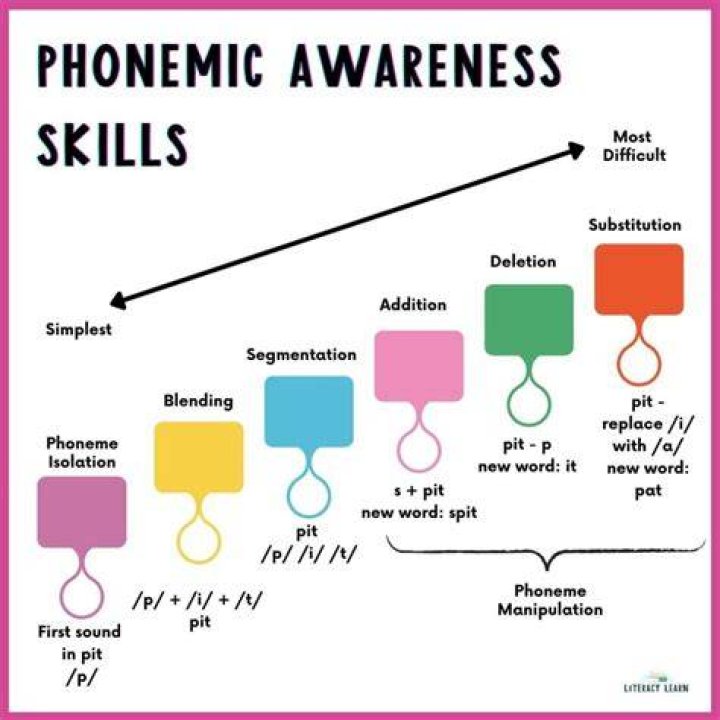
Phonemic awareness requires children to hear, identify, and manipulate individual sounds within spoken words. Standard nursery rhymes emphasize terminal single-syllable pairings like "cat" and "hat." Modern lyrical rap operates on a vastly more complex acoustic canvas: multisyllabic rhyme schemes, internal slant rhymes, and assonance patterns that train the human ear to detect subtle phonological shifts.
Consider the pedagogical difference between simple end-rhymes and the rhythmic schemes pioneered by hip-hop lyricists. When children write or dissect verses containing compound rhymes, matching phrases like "critical thinking" with "pivotal linking", they must mentally disassemble syllables, isolate vowel sounds, and match consonant clusters.
Rosen has spent decades demonstrating this through nonsense phonetics, using exaggerated onomatopoeia to break down speech barriers. Mitchell applies the same structural principle using boom-bap rhythm grids. When pupils map syllables to drum beats, they visualize text division without relying on intimidating orthographic terminology. Polysyllabic words stop looking like barricades and start feeling like rhythmic syncopations.
Neurological studies examining auditory entrainment show that human brains synchronize neural oscillations to the beat of heard speech. This rhythmic locking creates temporal expectations, allowing the auditory cortex to predict incoming sounds before they finish landing. For a child with dyslexia or auditory processing challenges, this metronomic predictability acts as an acoustic scaffold, making word recognition significantly faster.
Classroom Realities: Who Thrives and Where Hip-Hop Methods Fall Flat
Despite the energy surrounding Mitchell and Rosen's collaborative model, adopting hip-hop literacy requires strict structural boundaries. Educators who attempt to implement these techniques without understanding the underlying mechanics risk reducing linguistic instruction to empty noise.
Teachers who treat rap simply as an entertaining distraction often bypass the rigorous phonetic mapping required for genuine reading comprehension. Rhythm aids memory, but it does not automatically translate into print decoding unless students actively correlate spoken bars with printed text on the page.
Environments where rhythm-based learning delivers measurable results:
- Key Stage 1 and Key Stage 2 classrooms with high proportions of English as an Additional Language (EAL) learners, where physical rhythm accelerates speech pattern acquisition.
- Intervention groups for struggling older readers (ages 9, 13) who associate standard remedial reading books with embarrassment and failure.
- Spoken word workshops focused on vocabulary expansion, creative writing composition, and expressive reading fluency.
Contexts where the approach encounters operational friction:
- Early diagnostic phases for severe visual processing disorders, where acoustic tempo can sometimes mask an inability to visually track text.
- Unstructured classrooms lacking baseline acoustic management; rhythmic chanting easily devolves into acoustic chaos without firm routine control.
- Curricula that fail to transition students from oral rhythm drills to independent, silent printed text analysis.
The Cultural Shift in Youth Reading Engagement
The union of Michael Rosen and MC Grammar signals a broader cultural realignment in how schools approach children's literature. For decades, traditionalists viewed urban vernacular, rap lyrics, and beat-driven performance as cultural distractions pulling youth away from standard English canons.
That purist division has collapsed under empirical reality. The language young people consume daily outside school hours is overwhelmingly digital, musical, and compressed. Insisting that early literacy must remain tied exclusively to pastoral, nineteenth-century verse forms isolates the reading process from children's real acoustic environments.
By bringing spoken word education and rap structures onto equal footing with classic poetry, Gallery Kids validates the linguistic sophistication children already recognize in their headphones. When an elementary student realizes that the multisyllabic rhyme schemes used by their favorite hip-hop artists share the exact structural DNA found in Lewis Carroll or Edward Lear, poetry stops looking like an elite historical artifact. It becomes an active creative tool they already know how to use.
Frequently Asked Questions (FAQ)
Q1: Does using rap in classrooms damage grammar and spelling standards?
A1: Decades of sociolinguistic research demonstrate that practicing rap enhances linguistic dexterity rather than harming it. To execute a rhyme scheme or maintain tempo, students must command a wider vocabulary and manipulate syntax far more aggressively than conventional worksheets require. Formal spelling conventions are reinforced when spoken lyrics are written down and edited on the page.
Q2: How does rhythm-based learning assist children with learning differences like dyslexia?
A2: Dyslexia is frequently linked to difficulties in phonological processing, the ability to isolate and sequence sounds rapidly. Rhythm provides an external temporal scaffold. By anchoring phonetic units to an audible beat, rhythm-based exercises give neurodivergent learners extra temporal cues that ease both decoding and working memory load.
Q3: Can teachers implement hip-hop literacy without musical training or rap experience?
A3: Structured musical expertise is not necessary. Programs like Gallery Kids supply ready-made instrumental loops, call-and-response templates, and syllable-matching exercises. The teacher's primary role is facilitating text analysis and rhythm matching rather than performing as an emcee.
The Next Acoustic Frontier in Reading
Literacy is fundamentally an acoustic art form that human culture eventually froze onto paper. When educators treat written English purely as an abstract visual code, they discard the very auditory instincts that allow human beings to master language in the first place.
The convergence of Michael Rosen's performance poetry and MC Grammar's modern rap pedagogy strips away centuries of academic stuffiness to expose the beating pulse of language. As schools look for answers to dwindling attention spans and post-pandemic learning deficits, the solution may not be another silent phonics workbook. It may be turning up the beat, stepping to the microphone, and letting children rhyme their way to fluent comprehension.


