Caught on Camera: The Funniest 'Must've Been the Wind' Moments
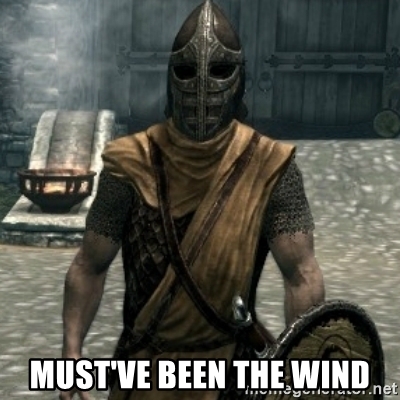
A bandit stands beside an open campfire deep inside a subterranean tomb. Out of the darkness, a barbed steel arrow thuds squarely into his forehead, draining three-quarters of his health bar in a violent spray of pixels. He draws his iron war axe, shouts into the empty corridors, dashes around a stone pillar, and pauses. Ten seconds tick by. The combat music fades, he slides the axe back into its scabbard, and mutters with complete serenity: "Must've been the wind."
For over a decade, this single line of Bethesda dialogue has served as the universal punchline for immersion-shattering video game artificial intelligence. What began as a routine line of spoken dialogue in The Elder Scrolls V: Skyrim rapidly metastasized into one of the most enduring video game logic memes across YouTube, Reddit, and TikTok. As highlighted in a Polygon.com Report examining why broken game systems hold an irreplaceable charm for players, software jank often breeds emotional affection rather than pure frustration. Few technical quirks illustrate that reality better than an enemy NPC rationalizing traumatic brain injury as a gentle breeze.
📌 Key Takeaways:
- The Mechanical Trigger: Bethesda's Creation Engine relies on a binary alert meter where hostile NPCs drop suspicion after a rigid 10, 15 second cooldown, triggering passive voice barks regardless of line-of-sight damage.
- The Viral Explosion: Documented extensively by Know Your Meme gaming archives, the phrase jumped from gameplay recordings to multi-million-view live-action parody sketches and short-form video trends.
- The Design Dilemma: Developers frequently preserve hyper-forgiving stealth AI detection loops because hyper-realistic enemy persistence routinely tests poorly with mainstream gaming audiences.
How Bethesda Stealth Mechanics Built an Unintentional Comedy Engine
The comedy of the meme stems directly from an irreconcilable clash between visual reality and underlying code. In The Elder Scrolls V: Skyrim, stealth functions through an eye-shaped crosshair indicating light exposure, movement noise, and enemy alert states. When a player fires from a crouched position, applying a 3x sneak attack multiplier from the archery skill tree, the game calculates damage instantly. However, the guard awareness reset loop operates on completely separate behavioral logic.
If the attacking player breaks line of sight and remains motionless behind a pillar or high ledge, the target cannot find an active path to the aggressor. Once the internal search timer counts down to zero, the NPC’s state machine forces a transition from "Alert" directly back to "Idle."
To signal this state change audibly to the player, the engine fires a predetermined dialogue audio trigger. Because Bethesda voice actors recorded environmental barks intended for missed arrows landing nearby, the same sound file plays whether the projectile struck a stone wall or penetrated an enemy's skull. The resulting dissonance, an NPC casually shrugging off severe physical trauma, turned ordinary dungeon crawling into an accidental comedy theater.
The Arrow in the Head Trope: Viral Gameplay Proof That Broke the Internet
The internet's documentation of this quirk spans thousands of hours of gameplay uploads. Early viral clips from late 2011 captured players crouching in the rafters of dragonsreach or the murky corridors of Bleak Falls Barrow, turning Draugr and bandit chiefs into human pincushions. One widely shared clip features a Whiterun guard taking three consecutive arrows to the chest and eye socket, pacing around a wooden stall, and promptly returning to patrol duty after remarking that his imagination was playing tricks on him.
What elevated these clips beyond standard bug reports was the sheer visual absurdity of the engine's asset persistence. Projectiles in Skyrim do not despawn immediately; they remain visibly anchored to the character's collision mesh. Bandits frequently hold elaborate conversations with fellow gang members while carrying a two-foot glass arrow protruding directly through both ears.
Online gaming channels quickly recognized that these clips generated staggering engagement. Content creators stopped editing out stealth glitches and began orchestrating them intentionally. Players stacked stealth modifiers, stripped their characters of armor to minimize movement sound values, and methodically shot targets from six inches away, daring the stealth AI detection system to acknowledge their existence.
Tracking the Evolution of Stealth AI Logic Across Gaming Eras
The transition of the phrase from an in-game frustration into a cornerstone of internet culture reflects broader shifts in how games handle stealth loops. The table below traces how guard alertness and search routines developed across major stealth-action franchises:
| Game Title / Engine | Suspicion Reset Window | Corpse & Damage Awareness | Meme Factor & Community Perception |
|---|---|---|---|
| The Elder Scrolls V: Skyrim (Creation Engine) | 10, 15 seconds | None; ignores personal damage and nearby bodies once reset occurs. | Universal internet gold; birthed the core "Must've been the wind" meme. |
| Dishonored (Modified Unreal 3) | 20, 30 seconds | High; fallen allies trigger permanent heightened patrols and alarm bells. | Respected for tension, though occasional vertical sightline blind spots exist. |
| Metal Gear Solid V (Fox Engine) | 60, 120 seconds | Dynamic; radio checkpoints confirm unit status; base enters soft alert. | Praised for tactical depth; AI rarely drops suspicion cleanly. |
| Assassin's Creed Mirage (AnvilNext 2.0) | 15, 25 seconds | Moderate; guards investigate corpses but eventually resume default routes. | Frequently lampooned for whistling-from-haystack exploits. |

Pathfinding Glitches That Turned Simple Code into Pure Slapstick
Beyond dialogue lines, the meme gained momentum because of the physical chaos that accompanies Bethesda's navigation meshes (navmeshes). When an NPC takes sudden damage from an unseen angle, their initial reaction is to run toward the origin coordinates of the projectile. However, geometry conflicts frequently cause this behavior to derail completely.
A bandit attempting to investigate an arrow shot might encounter a displaced wooden bucket, a companion's corpse, or a slightly elevated flagstone. Instead of navigating around the obstruction, an NPC pathfinding glitch locks the character into an endless running animation against a solid surface. Viewers watch a heavily armed warrior jog furiously into a brick wall for ten seconds before calmly stopping, adjusting his shield, and concluding that the phantom assault was simply barometric pressure.
In other instances, guards step directly over the freshly slain bodies of their colleagues. The sight of an Imperial soldier looking down at three dead companions, walking directly across their torsos, and declaring that nothing is amiss captured the essence of stealth game humor. These interactions demonstrated that the game’s artificial intelligence lacked contextual memory; each state existed in an isolated bubble, oblivious to what happened milliseconds prior.
From Game Glitch to Stage Craft: The Rise of Live-Action Parodies
As the joke matured, it migrated from raw in-game captures to high-production gaming parody skits. Production groups like Viva La Dirt League and creators like Joel Haver built massive digital followings by translating video game logic into real-world human behavior.
In these live-action recreations, actors don leather armor and carry foam swords through forests, perfectly mimicking the stiff, mechanical movements of digital characters. One actor will crouch in plain sight on a suburban lawn while wearing bright clothing. The guard actor walks up, looks directly into the crouching player's eyes, and wanders off while wondering aloud who made that rustling sound.
These videos routinely amass millions of views because they expose the unspoken contract between gamers and software designers. Players want to feel like master assassins, but they rarely want enemies to behave with realistic human survival instincts. If guards in The Elder Scrolls V acted realistically, sounding horn alarms, locking down castle gates, and organizing sweeping perimeter searches after seeing an ally drop dead, the stealth archer playstyle would grind to a frustrating halt.
The Game Design Dilemma: Why the Wind Still Howls
Why do modern open-world games continue to permit variations of this ridiculous behavior? The answer lies in player psychology and combat pacing. Early playtests of advanced stealth games reveal a consistent trend: when developers program enemies to retain persistent memory and search tirelessly, player satisfaction drops sharply.
A guard who refuses to reset creates an escalating failure state. If an errant arrow permanently alerts an entire military camp, the player is forced into open melee combat or pressured to reload a previous quicksave. The reset loop functions as a deliberate mechanical release valve. It gives the player permission to disengage, reset their positioning, and try again without losing progress.
Developers understand that dialogue barks like "Must've been nothing" or "Must've been the wind" sound ridiculous when an arrow is sticking out of someone's throat. Yet, industry designers frequently accept the meme-worthy awkwardness as an acceptable price for frictionless gameplay loops. The jank is not necessarily an oversight; it is often a pragmatic compromise between tactical realism and pure entertainment.
Frequently Asked Questions (FAQ)
Q1: What game did the "Must've been the wind" meme actually come from?
The phrase originates primarily from *The Elder Scrolls V: Skyrim*, released by Bethesda Softworks in November 2011. While similar lines appeared in earlier stealth games like *Thief* and *The Elder Scrolls IV: Oblivion*, *Skyrim* cemented the phrase into internet lore due to the frequency of its guard reset dialogue paired with arrows sticking visibly out of character models.
Q2: Why do guards say "Must've been the wind" after taking direct damage?
The dialogue system triggers based on combat alert states rather than character health conditions. When a player strikes an enemy from hidden stealth and breaks line of sight, the enemy enters a temporary search state. Once the search timer expires without locating the player, the game fires an audio file meant to represent returning to calm, irrespective of whether the NPC took zero damage or critical arrow hits.
Q3: Have modern games fixed this stealth AI awareness issue?
Modern titles handle awareness with greater nuance, but the core reset mechanic remains prevalent. Games like *The Last of Us Part II* and *Metal Gear Solid V* introduce persistent search patterns where enemies remain suspicious, communicate via radio, or discover dead bodies hours later. However, mainstream action RPGs still implement timer-based reset mechanics to keep stealth gameplay accessible and prevent players from being trapped in permanent alert states.
The Cultural Endurance of Unintentional Game Design
The ongoing fascination with the "Must've been the wind" meme demonstrates how technical limitations can morph into celebrated cultural folklore. Players do not mock the dialogue out of genuine malice toward the developers; they celebrate it as a shared badge of gaming literacy. Everyone who has picked up a virtual bow and arrow knows the specific, unhinged joy of watching an enemy dismiss a near-fatal headshot as an atmospheric disturbance.
As artificial intelligence in video games grows increasingly sophisticated, with neural networks and complex decision-making systems threatening to eliminate awkward code behaviors, players may eventually look back on these mechanical quirks with nostalgia. The Creation Engine's stubborn, unyielding simplicity created accidental improvisational theater that scripted cinema could never replicate. Until game worlds become completely indistinguishable from real life, digital guards will continue to pace through stone corridors, stare into the shadows, and blame the weather for human error.


