Chainsaw Man Poster Wave Explained: From Reze Arc 4DX Visuals to Jump Festa Reveals

When theatrical distributors across Japan updated their lobby displays for the winter corridor, art collectors and anime fans witnessed an aggressive shift in studio marketing strategy. Studio MAPPA transformed the standard promotional campaign into a high-stakes collectibles race, anchoring theatrical runs and convention stages with limited-run physical art prints. As tracking data from an Anime News Network Report confirmed, the Chainsaw Man anime film slipped to the #8 spot during the competitive New Year box office window, just ahead of Demon Slayer: Infinity Castle dropping to #10. To maintain box office momentum and anchor fan loyalty, producers unleashed waves of premium promotional prints that blurred the line between ephemeral theater marketing and fine art collecting.
The visual campaign evolved dramatically across 2025 and 2026. What began as a sequence of romantic yet explosive theater one-sheets for the Reze Arc culminated in high-profile industry showcases, including major portfolio reveals at the MAPPA 15th anniversary event and winter convention debuts. Understanding the provenance, production quality, and distinct editions of these prints gives collectors direct insight into modern anime industry mechanics.
📌 Key Takeaways:
- Theatrical Strategy: Studio MAPPA turned theatrical print variants into box office longevity tools, deploying textured 4DX visuals to drive repeat screenings through early 2026.
- Artistic Pivot: Promotional art transitioned from the soft, cinematic palette of the film to gritty manga-fidelity visuals for the upcoming International Assassins arc.
- Collector Market: Premium theater-distributed prints and licensed wall tapestries have created a volatile secondary market characterized by distinct Japanese and Western print specifications.
How the Reze Arc Movie Poster Campaign Reset Anime Key Visuals
The campaign began by subverting audience expectations. Typical shonen promotional material defaults to crowded, high-contrast action montages featuring five to seven characters locked in mid-strike poses. MAPPA discarded that template entirely for the standalone film adaptation. The premiere Reze Arc movie visual adopted a French New Wave cinematic sensibility, showcasing Denji and Reze under muted fireworks along a rain-slicked Tokyo curb. The illustration established a delicate, melancholic atmosphere that belied the character's lethal nature.
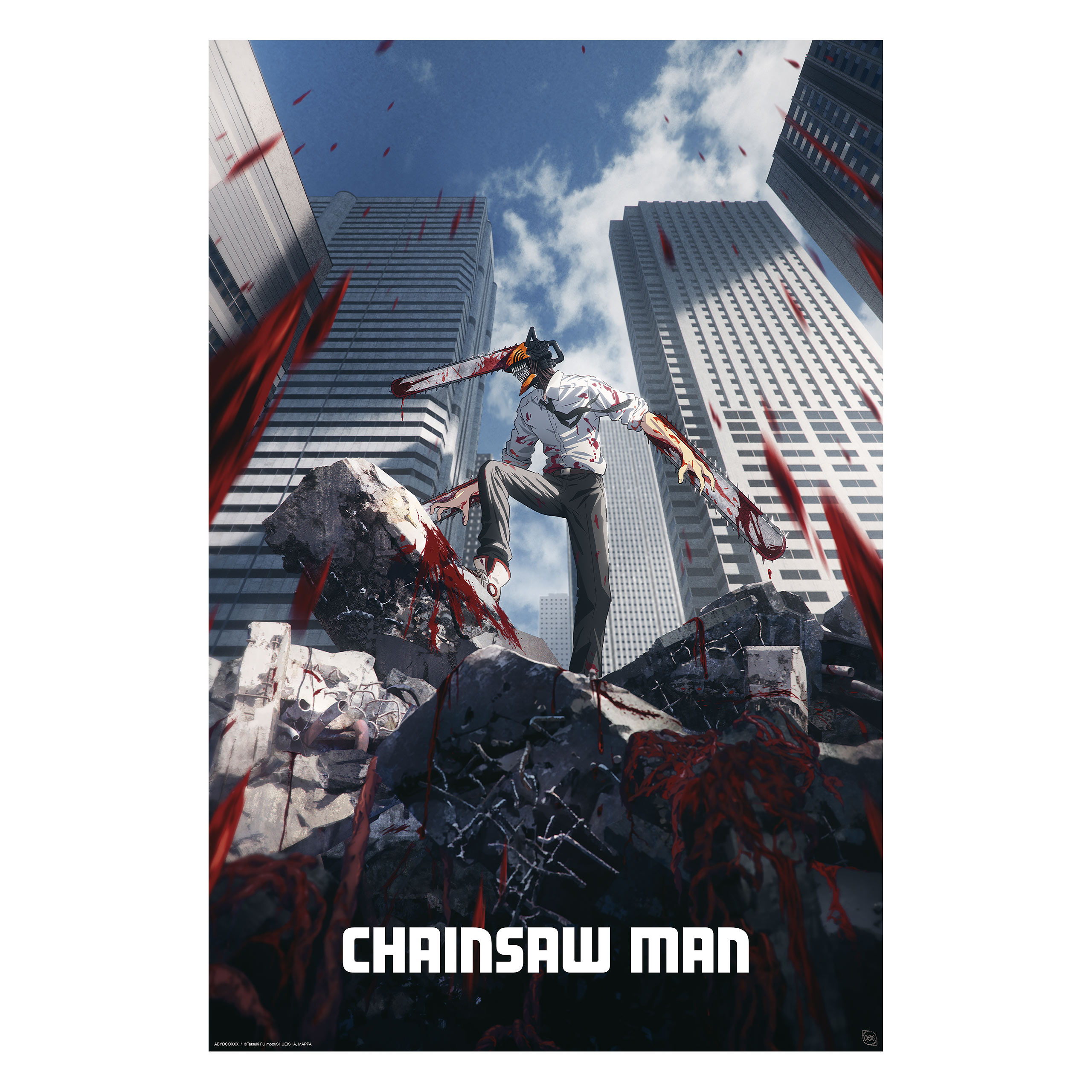
By late 2025, theater operators received the second-wave box office visual release, known among collectors as the "Explosion & Petals" dual sheet. Designed under the direct supervision of original manga creator Tatsuki Fujimoto, this variant leaned hard into pop art surrealism. Fujimoto’s distinctive scratchy line weight merged with digital colorist backgrounds, resulting in a composition that contrasted blood-red hydrangeas against industrial demolition wreckage. Rather than serving as passive lobby advertisements, these sheets functioned as collectible artifacts designed to frame the central emotional conflict before ticket holders took their seats.
The Theatrical 4DX Release Poster and Screen-Specific Prints
When Japanese cinemas introduced specialized motion-seating engagements, distributors paired the screenings with tactile physical bonuses. The theatrical 4DX release poster was printed on 300 GSM heavy linen cardstock rather than conventional gloss stock. Measuring B2 size (500 × 707 mm), this edition featured spot-varnish detailing over Chainsaw Man’s blood-splattered saw guards and embossed cherry blossom elements surrounding Bomb Girl. The sensory feel of the print mirrored the kinetic violence of the theater seats.
Secondary market prices spiked within hours of the first screenings. The 4DX promotional sheets commanded ¥8,500 to ¥12,000 ($55 to $80 USD) on domestic Japanese marketplaces like Mercari. The deliberate scarcity turned an ordinary movie outing into an authentication hunt, proving that studio marketing had found a reliable lever to stabilize ticket sales during post-holiday lulls.
Timeline of Official Chainsaw Man Print and Poster Releases (2025, 2026)
Tracking the cadence of these releases reveals how production committees coordinate marketing across cinematic runs, licensing partnerships, and television series announcements. The distribution schedule highlights a calculated escalation in visual intensity.
| Release Window | Official Poster Title / Format | Distribution Channel | Estimated Print Volume |
|---|---|---|---|
| Autumn 2025 | Reze Arc Theatrical One-Sheet (Teaser) | Japanese Theaters & Toho Cinema Foyers | ~45,000 units (Standard B2) |
| December 2025 | Jump Festa Exclusive Visual (Assassins Teaser) | Makuhari Messe Attendee Packs | ~12,000 units (A3 Foil-Stamped) |
| January 2026 | Theatrical 4DX Release Poster (Variant B) | Tiered Ticket Admission Incentive | ~20,000 units (Textured Linen) |
| June 2026 | MAPPA 15th Anniversary Key Visual (Retrospective) | Exhibition Pop-Up & Online Lottery | ~8,000 numbered units |
From Jump Festa Exclusives to the Shocking Assassins Arc Teaser
The tonal pivot arrived in late December at Makuhari Messe. Attendees expecting another round of soft-focus movie promotional art were met with an unexpected reveal. The Jump Festa exclusive visual discarded the cinematic sheen of the film entirely, unveiling a stark, high-contrast monochrome design heralding the International Assassins arc for Season 2.
The poster depicted Santa Claus, Master Quanxi, and the American brothers framed within fragmented mirror shards reflecting Denji’s central torso. Rumors had swirled on Japanese social boards for weeks regarding when MAPPA would bridge the narrative gap between the film and the next television season. The stark line work, drawn with aggressive pen strokes matching Fujimoto's early manga chapters, triggered an immediate shockwave across forums. Unopened convention prints featuring the metallic silver Jump stamp traded hands for over $140 USD within days of the event floor closing.
The MAPPA 15th Anniversary Event and Archival Collector Releases
Studio MAPPA marked its milestone year with major media announcements, as detailed by Polygon in coverage of the studio’s 15th anniversary showcase covering Chainsaw Man, Jujutsu Kaisen, and upcoming feature productions. The studio utilized the anniversary to address archival print demand, rolling out museum-grade releases for long-term domestic collectors.
The anniversary catalog presented three specific archival formats:
First came the Denji and Makima wall art, an offset lithograph reproducing the iconic alleyway confrontation from Season 1 on acid-free rag paper. Second, an archival Aki and Power poster print capturing the melancholy of the Hayakawa apartment routine, produced with lightfast pigment inks rated for an 80-year display lifespan. Finally, MAPPA commissioned a massive collector wall scroll fabricated with woven polyester satin and solid aluminum hanging rods, designed to eliminate the edge fraying common to lower-end consumer merch.
Authenticating Modern Chainsaw Man Prints: Materials and Counterfeit Flags
High collector demand has fostered an active market for unauthorized reproductions across global e-commerce portals. Bootleg vendors scrape digital press assets and reprint them on cheap synthetic canvas. Distinguishing an authentic, officially licensed release requires examining three physical characteristics.
First, check the edge typography and copyright registration marks. Authentic Japanese market prints carry micro-print text along the bottom border containing the Shueisha/MAPPA copyright block (© Tatsuki Fujimoto/Shueisha, MAPPA) accompanied by a four-digit licensing SKU. Counterfeits almost always stretch low-res promotional JPEGs, leaving the legal text illegible, blurred, or cropped out entirely.
Second, evaluate the substrate weight and tactile surface. Genuine commercial theater one-sheets utilize semi-gloss paper between 170 and 220 GSM, while specialty Japanese B2 collectibles range up to 300 GSM. If a vendor advertises a "high-resolution anime print" on thin 100 GSM glossy bond or unstructured polyester canvas with chemical solvent smells, it is an unlicensed reprint with negligible collector value.
Frequently Asked Questions (FAQ)
Q1: What are the standard dimensions for official Japanese Chainsaw Man posters?
A1: Official Japanese theatrical posters use the B2 size format (500 × 707 mm / approximately 19.7 × 27.8 inches). Western theatrical one-sheets measure 27 × 40 inches (686 × 1016 mm), while promotional convention mini-prints typically adhere to Japanese B4 or A3 dimensions.
Q2: Why do Japanese theater bonus prints lack pinholes or hanging tabs?
A2: Japanese collectibles are intentionally distributed flat in protective mylar sleeves or loosely rolled inside branded triangular cardboard tubes. They are designed for preservation in archival portfolio sleeves rather than direct tack-mounting.
Q3: Will the Reze Arc theatrical posters receive a second retail printing?
A3: Theater-exclusive incentives stamped with specific cinema chains (such as TOHO or 109 Cinemas) are produced strictly in single, pre-determined print runs. General commercial key art variants are occasionally reprinted as licensed retail mini-posters, but without the original foil embossing or commemorative run markings.
Preserving Contemporary Anime Print Ephemera
The visual identity of Chainsaw Man remains distinct because it rejects static, cookie-cutter anime marketing. By treating every poster release as a self-contained narrative canvas, MAPPA and Tatsuki Fujimoto have turned promotional campaigns into cultural moments that track the evolution of the franchise. For collectors and enthusiasts alike, these prints represent physical snapshots of an ambitious storytelling era, demanding proper archival care, UV-filtering museum glass, and meticulous authentication before entering any long-term collection.


