Comic Strip to Big Screen: What DreamWorks Radically Changed About Hammy the Squirrel
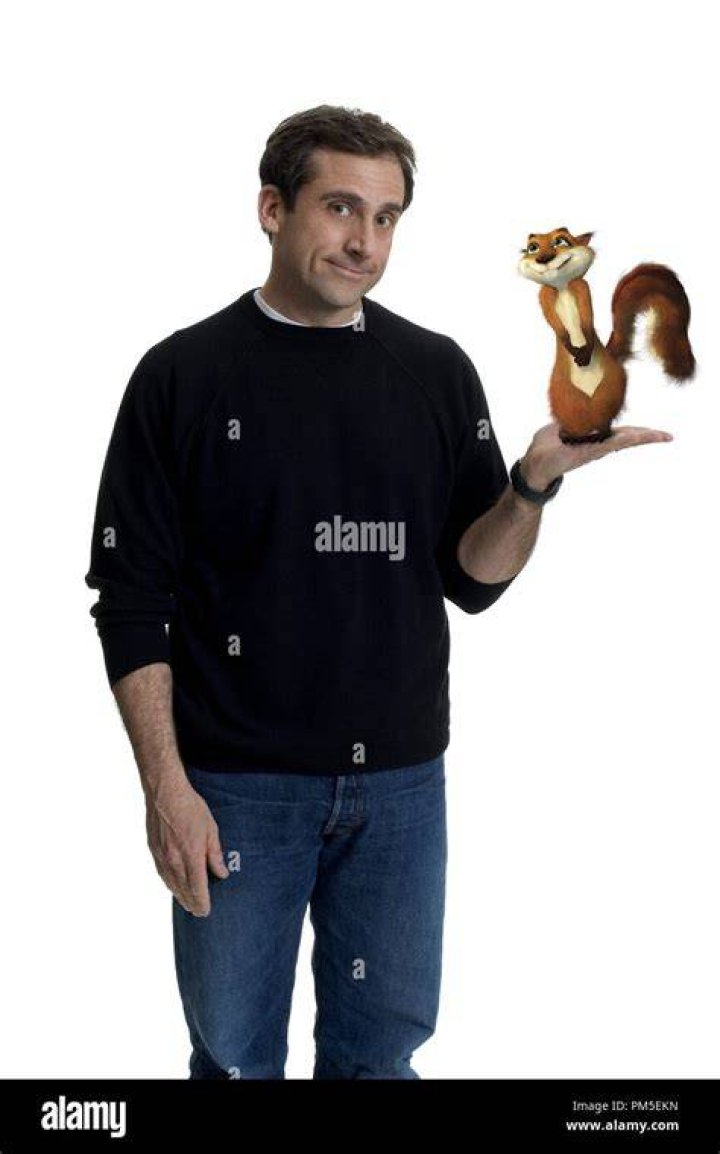
When audiences walked out of theaters in May 2006, they were not talking about suburban sprawl or human consumption habits. They were talking about a squirrel moving so fast the world stood still. Hammy, the manic, attention-deficient North American red squirrel voiced by Steve Carell, stole the show in DreamWorks Animation's adaptation of Over the Hedge. Decades later, clips of Hammy chugging an energy drink and outrunning light waves across a suburban backyard continue to circulate across digital feeds as a benchmark for hyperkinetic character animation.
Yet the film's version of the rodent bore almost no resemblance to the character originally inked onto daily syndicate pages. As documented in a retrospective SYFY Report examining the property's journey from newsprint to pixels, directors Tim Johnson and Karey Kirkpatrick completely retooled the cast dynamic. Michael Fry and T Lewis created a measured, cynical, and politically satirical world in their comic strip. DreamWorks extracted those raw archetypes and forged a summer blockbuster built on slapstick kineticism and commercial critique.
📌 Key Takeaways:
- Origin Shift: Michael Fry and T Lewis created the character as "Sammy," a naive, gentle philosopher rather than an erratic speedster.
- Steve Carell’s Imprint: Carell recorded his dialogue right as The Office and The 40-Year-Old Virgin launched him into stardom, transforming Hammy into an unpredictable improvisational powerhouse.
- Technical Feat: The climatic caffeine sequence demanded groundbreaking lighting physics from DreamWorks animators to simulate near-lightspeed refraction in a 3D environment.
From Newsprint to Screen: The Rebirth of Sammy into Hammy
Michael Fry and T Lewis launched the syndicated Over the Hedge strip in June 1995 through United Feature Syndicate. Their original print universe centered around dry irony. Animals watched humans construct suburban subdivisions and treated suburbanites as bizarre, alien specimens governed by consumer compulsion. Within that strip, the squirrel was originally named Sammy.
Sammy was not a lunatic. He had a childlike temperament, often asking earnest philosophical questions that frustrated Verne the turtle and amused RJ the raccoon. He was gentle, easily distracted, and occasionally prone to deep, melancholy thoughts about acorns and existence. When DreamWorks acquired the film rights in 2001, development executives quickly concluded that Sammy's languid, four-panel print pacing would drag a 90-minute computer-animated film to a dead stop.
Screenwriters transformed the squirrel from an innocent thinker into a living firecracker. They adjusted the name from Sammy to Hammy, partly to sharpen the punchiness of the moniker and partly to reflect his hammy, theatrical unpredictability. Rather than wondering why humans buy lawn ornaments, Hammy wanted sugar, wanted nuts, and could not hold a train of thought longer than three seconds.
How Steve Carell Reconstructed the Neurotic Heart of the Clan
Casting proved decisive. When production got underway in early 2004, Steve Carell was still known primarily as an offbeat correspondent on The Daily Show with Jon Stewart. By the time Over the Hedge hit theaters on May 19, 2006, Carell was an international comedy star following the dual explosions of The 40-Year-Old Virgin and NBC's The Office.
DreamWorks sound stages became a testing ground for Carell's physical voice acting. Kirkpatrick and Johnson let the actor abandon the script to construct running monologues driven by stream-of-consciousness logic. Carell pitched Hammy up an octave, alternating between breathy vocal whispers and throat-tearing squeals.
The performance created a crucial contrast with Bruce Willis, who played the smooth-talking, scheming RJ the raccoon. While Willis delivered cynical barbs, Carell offered total vulnerability and unhinged devotion to cookies. Animators filmed Carell’s mouth movements and wandering eye glances through reference cameras, translating his nervous facial tics onto Hammy's wide-eyed, bushy-tailed digital model. It made Hammy the emotional core of the woodland family, preventing the film's consumerism satire from turning cold.
Comic Strip Versus Cinematic Canon: The Structural Divergences
The transition from a two-dimensional newspaper comic strip to an $80 million Hollywood production forced massive structural shifts. The following comparison illustrates how the squirrel and his woodland world evolved between mediums:
| Character Dimension | Newspaper Comic Strip (1995, Present) | DreamWorks Film (2006) |
|---|---|---|
| Character Name | Sammy the Squirrel | Hammy the Squirrel |
| Core Personality | Philosophical, melancholic, naive observer | Hyperactive, dopamine-starved, manic force of nature |
| Locomotive Speed | Standard woodland movement; grounded pacing | Supersonic bursts approaching time-dilation physics |
| Narrative Function | Deadpan conversational foil to RJ and Verne | Catalytic slapstick driver and third-act problem solver |
| Primary Motivation | Understanding existence and hoarding acorns | Processed junk food, warm cookies, and immediate affection |
The Depelter Turbo Gauntlet and the Mechanics of the Caffeine Scene
Every legendary animated film has a sequence where script, physics, and comedic timing lock into alignment. For Over the Hedge, that moment arrived inside the backyard of homeowners association president Gladys Sharp, guarded by Dwayne LaFontant, the ruthless exterminator known as the Verminator.
Dwayne deploys the illegal Depelter Turbo, a military-grade weapon system that traps targets in an inescapable cage while vaporizing incoming matter with laser grids. The woodland crew faces certain doom until RJ hands Hammy a single can of high-caffeine energy drink.
The sequence shifts into slow motion as the sugar and caffeine hit Hammy's bloodstream. The camera frame stabilizes, sound drops out, and the world decelerates to zero. As Hammy casually steps forward, ripples of light hang frozen in the air. Raindrops stop mid-descent. Heat ripples from the Depelter Turbo freeze into static thermal ribbons.
To execute the scene, DreamWorks animators had to build custom rendering pipelines. They simulated the visual distortion of extreme velocity while maintaining Carell’s comedic micro-expressions. Hammy strolls through the laser matrix without breaking a sweat, casually redirects a missile trajectory, retrieves the stolen cookies, and disarms the contraption before the first sound wave completes its cycle. The sequence serves as an early predecessor to iconic time-stop scenes in later blockbusters, predating the Quicksilver sequences in the X-Men franchise by nearly a decade.
Production Lore: Rigging Fur and Directing Absolute Chaos
Animating a hyperactive squirrel brought massive technical hurdles inside DreamWorks' Glendale campus. In the mid-2000s, rendering dynamic fur was a notoriously resource-intensive bottleneck. Hammy was covered in roughly 1.5 million individual digital hair strands.
Whenever Hammy zipped across the frame, standard physics engines caused his coat to clip into his body geometry or balloon outward into a chaotic haze. Animators had to write proprietary grooming and velocity-clamp scripts to ensure his tail moved with realistic momentum without blowing up the render farm's memory limits.
The creative team also had to avoid turning Hammy into an annoying distraction. Early audience test screenings indicated that too much manic energy alienated viewers if it lacked emotional balance. Kirkpatrick solved this by giving Hammy quiet moments of heartbreak, like his crushed reaction to discovering that tree barks were not stuffed with human snacks, or his unyielding trust in RJ when the raccoon betrayed the pack. The vulnerability made the chaos work.
Frequently Asked Questions (FAQ)
Q1: Why did the creators change the squirrel's name from Sammy to Hammy?
A1: Michael Fry and T Lewis agreed to the change during early film development. The production team felt "Hammy" sounded snappier and leaned directly into the theatrical, over-the-top personality Steve Carell brought to the recording booth.
Q2: Did Steve Carell improvise his lines for Hammy?
A2: Yes. Directors Tim Johnson and Karey Kirkpatrick confirmed that Carell routinely improvised alternate takes, riffing on dialogue about cookies, nuts, and laser pointers. Animators later adjusted facial rigs to capture Carell's erratic vocal cadences.
Q3: How much did Over the Hedge earn at the worldwide box office?
A3: The film grossed approximately $336 million worldwide on an estimated production budget of $80 million, making it a critical financial success for DreamWorks Animation during the summer of 2006.
The Cultural Staying Power of Hammy's Hyperkinetic Speed Run
Hollywood adaptations of classic comic strips often fade from memory, lost to changing tastes or corporate creative compromises. Over the Hedge avoided that trap by treating its source material as a launchpad rather than a sacred blueprint. By taking Sammy’s quiet, puzzled innocence and supercharging it into Hammy’s unhinged velocity, DreamWorks created a rare secondary character that completely hijacked the cultural memory of the franchise.
Decades after its debut, Hammy remains a masterclass in performance-driven CG animation. The caffeine scene endures not because it was an early flex of visual effects technology, but because it paired an explosive vocal performance with razor-sharp physical comedy. In an animation landscape crowded with cynical heroes and fast-talking sidekicks, Hammy proved that pure, unapologetic kinetic frenzy can still deliver pure cinema.


