Debunking the Urban Legends Behind the 13th Floor Haunted House
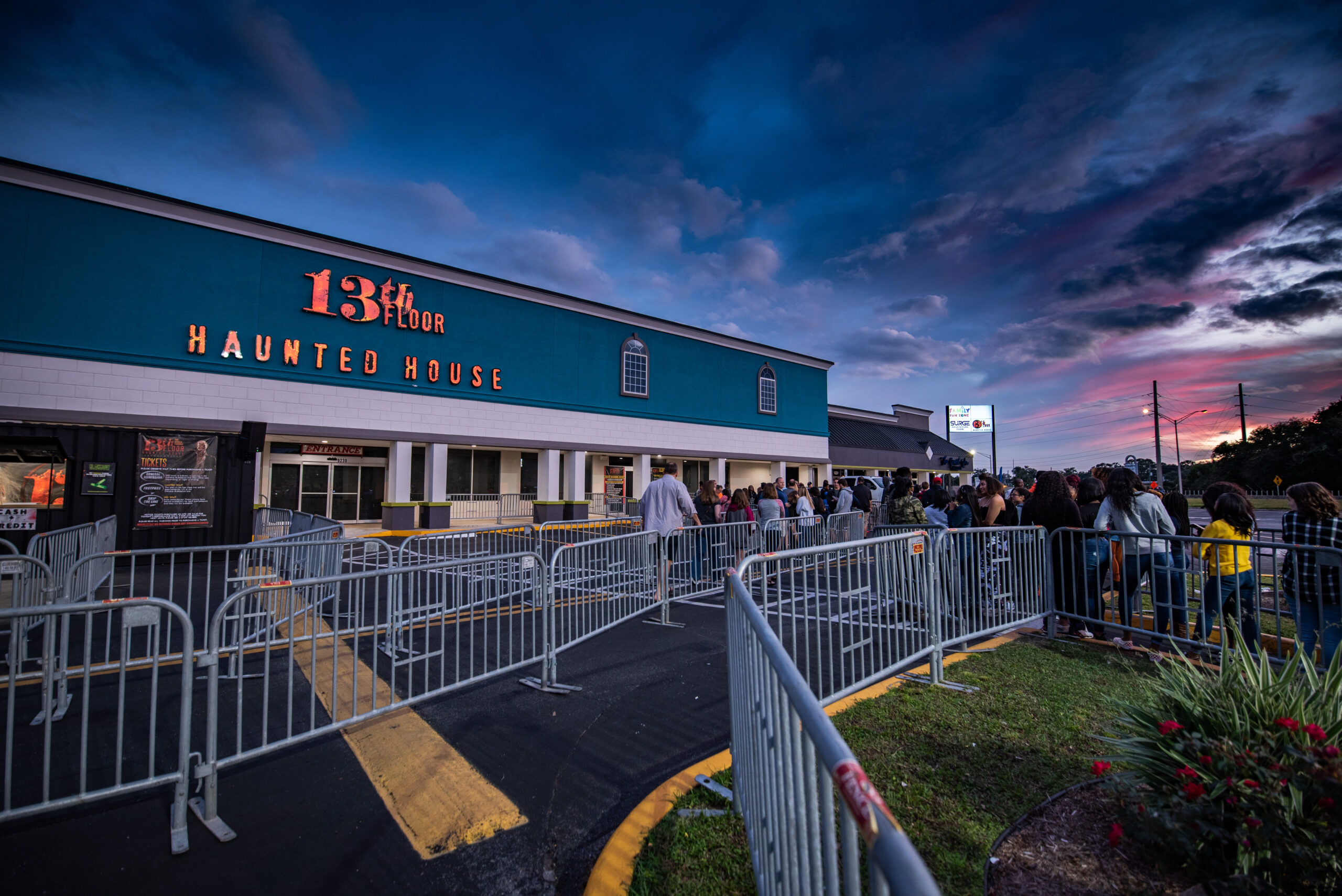
Every October, elevators across North America become unwitting props for an enduring piece of urban folklore. Step into an older high-rise in Chicago, New York, or Denver, and the control panel jumps directly from floor 12 to 14. This architectural quirk has fueled decades of rumors about hidden mezzanine levels, secret government experiments, and occult rituals staged out of public sight. When Thirteenth Floor Entertainment Group transformed this widespread superstition into a multimillion-dollar commercial empire, the myth took on a chaotic second life online. Rumors circulate every autumn claiming patrons must sign physical liability waivers indemnifying staff against cardiac arrest, or that visitors can be grabbed, restrained, or forced through claustrophobic traps against their will.
The reality behind the screams tells a vastly different story of precision engineering, industrial safety protocols, and psychological illusion. From flagship attractions in Denver and Phoenix to the sprawling suburban location documented in a recent WGN-TV Report on the Schiller Park facility, the modern Halloween horror attraction operates more like a theme park than an unregulated underground gauntlet.
📌 Key Takeaways:
- The Architectural Reality: The missing 13th floor is an artifact of commercial leasing psychology and triskaidekaphobia, not building-code mandates or occult history.
- The Safety Distinction: Standard attractions run by Thirteenth Floor Entertainment Group enforce strict no-contact rules, separating mainstream immersive horror from controversial "extreme haunt" survival simulations.
- Production Engineering: Modern locations rely on industrial PLC automation, monitored emergency egress corridors, and rigorous scare-actor choreography rather than physical intimidation.
The Architectural Superstition That Built a Horror Empire
The cultural dread surrounding the number 13, clinically diagnosed as triskaidekaphobia, has influenced Western construction for well over a century. Early skyscraper developers in the late 19th and early 20th centuries feared that prospective tenants would refuse to rent office space or luxury residential suites located on a floor perceived to carry bad luck. Data published by the Otis Elevator Company has historically estimated that as many as 85% of multi-story buildings equipped with their elevators omitted the number 13 from panel dials, opting instead to re-label the deck as "14" or assign it an alphanumeric designation such as "12A" or "M" (Mezzanine).
Urban legend communities online transformed this mundane design compromise into speculative fiction. Creepypastas, early 2000s internet forum threads, and chain emails alleged that certain hotels maintained hidden 13th floors accessible only through specific elevator keycard sequences or unmapped stairwells. These stories claimed the unlisted levels housed psychiatric overflow units, mortuary holding bays, or private societies.
When haunted attraction innovators Chris Stafford and Warren Conlklin consolidated several independent regional operations under the corporate banner of Thirteenth Floor Entertainment Group, they turned that speculative folklore into a trademarked sensory hook. The narrative premise placed customers inside an elevator simulator that plunged or ascended into the forbidden level. By tapping into a cultural belief already familiar to anyone who had ridden an American elevator, the attraction bypassed the need for convoluted backstory, immersing ticket holders instantly in a grounded real-world mystery.
Separating Fiction From Fact: The "Extreme Waiver" Myth
Every September, TikTok and Reddit threads light up with assertions that the 13th Floor attractions demand visitors sign away their legal rights. Commentators frequently confuse commercial haunted houses with extreme niche endurance simulations like McKamey Manor, where attendees submit to physical rough-housing, psychological trauma, and hours of confinement.
The legal reality at commercial walk-through attractions is conventional. When patrons complete haunted house ticket reservations online, the standard digital release mirrors waivers used by municipal trampoline parks, ski resorts, and go-kart facilities. The clauses cover slip-and-fall incidents, disorientation from strobe lights, low ambient visibility, and fog-fluid reactions. No commercial venue invites patrons to sign contracts permitting physical assault, because such waivers are legally unenforceable under American tort law.
Actor contact policies follow strict corporate guidelines. The scare actors and special effects crews operate under a zero-touch mandate. While monsters may lunge within inches of an attendee's face or drop down from ceiling rigs, company policy forbids deliberate physical contact with guests. The inverse applies as well: security teams eject visitors who touch, strike, or verbally harass performers. The sensory terror depends entirely on spatial misdirection, proximity illusions, and synchronized audio bursts, not bodily contact.
The Operational Shift: From Local Barns to Scaled Entertainment
Over the past two decades, seasonal horror attractions transformed from makeshift community fundraisers into a sophisticated entertainment vertical generating hundreds of millions of dollars annually. Thirteenth Floor Entertainment Group led this professionalization, acquiring key regional markets, centralizing prop manufacturing, and instituting uniform training standards across multiple states.
| Operational Metric | Independent Era (2002, 2010) | Corporate Network (2020, 2026) |
|---|---|---|
| Ticketing & Access | Physical cash box at the door; open-ended waiting lines lasting 3, 4 hours. | Dynamic digital reservations; timed-entry windows; variable pricing algorithms. |
| Safety Engineering | Manual fire extinguishers; basic illuminated exit signs; local code walk-throughs. | Integrated PLC beam breaks; automated house-light overrides; dedicated backstage egress. |
| Audio & Visual Tech | Boomboxes hidden in drywall; standard halogen floodlights with gel covers. | Multichannel spatial audio; pneumatic animatronics; programmable DMX lighting. |
| Scare Actor Operations | Volunteer-heavy rosters; ad-hoc costumes; minimal safety training. | Auditioned performance rosters; vocal health coaching; strict non-contact enforcement. |
This industrial shift raised baseline quality while creating a standardized operational template that can be scaled across markets nationwide.

Engineering the Fright: Inside Denver, Phoenix, and Schiller Park Operations
The technical orchestration required to run large-scale Halloween horror attractions requires balancing theatrical terror with rigid safety standards. In major markets, these complexes occupy massive industrial footprints.
In Colorado, the Denver haunted houses ecosystem ranks among the most competitive in the country. Local coverage from The Denver Post and live broadcast segments on 9News highlight how the Denver 13th Floor site serves as a testing ground for cutting-edge atmospheric design. Technicians use directional infrasound, low-frequency sound waves hovering around 19 Hz, to induce physiological feelings of anxiety, dread, and nausea in visitors without their conscious awareness.
Further south, the Phoenix haunted attraction market faces unique seasonal demands. Operating alongside sprawling outdoor setups like Fear Farm, the Phoenix 13th Floor facility relies on massive indoor climate control systems to route thousands of patrons safely through multi-room layouts. Broadcast reporting by ABC15 Arizona notes that the venue functions as an anchor of local spooky season entertainment, drawing sell-out crowds throughout October.
Outside Chicago, the Schiller Park location showcases the logistical demands of suburban industrial parks. Tucked into commercial corridors near O'Hare International Airport, the venue must satisfy strict municipal fire codes. Behind every faux-brick wall and haunted asylum hallway sits a parallel backstage corridor. If a guest experiences a panic attack or medical emergency, scare actors use discreet, color-coded radio signals to pause nearby animatronics. Stationed floor managers can step through disguised magnetic service doors and escort patrons to a well-lit exit in under 45 seconds.
Navigating Spooky Season: Logistics, Pricing, and Visitor Safety
Visiting a high-capacity immersive horror experience requires practical planning, as the days of showing up on a Friday night with cash and stepping straight into a queue are gone.
High ticket volume forces operators to use dynamic pricing. Weekday tickets frequently start around $25 to $35, while peak Saturday nights immediately before Halloween climb to $60 or more for general admission. VIP and fast-pass options, which allow patrons to skip the primary queue, often push ticket prices beyond $80 to $100 per person.
Those planning a trip should evaluate personal physical limitations:
- Ideal Candidates: Horror movie fans, adrenaline seekers, and groups comfortable with loud audio bursts, strobe lighting, heavy theatrical haze, and sudden spatial disorientation.
- Who Should Steer Clear: Individuals with photosensitive epilepsy, severe respiratory sensitivities irritated by dense glycol-based fog fluids, significant mobility impairments (navigating uneven flooring, dark corridors, and vortex tunnels can be hazardous), or anyone experiencing acute panic responses in crowded, pitch-black environments.
Booking reservations during off-peak times, such as Sunday evenings or early October time slots, cuts wait times down dramatically while giving scare actors more room to personalize encounters.
Frequently Asked Questions (FAQ)
Q1: Are scare actors allowed to touch guests inside the 13th Floor Haunted House?
A1: No. Thirteenth Floor Entertainment Group operates under a strict no-contact policy. Performers are trained to break line-of-sight and lunge close to patrons to trigger startle reflexes, but physical contact, grabbing, or restraining visitors is strictly prohibited.
Q2: Why do so many high-rise buildings lack an official 13th floor?
A2: The omission stems from historical commercial real estate management, not structural engineering or legal safety mandates. Developers in the early 20th century feared superstitious tenants would refuse to lease space on the 13th level, prompting architects and elevator vendors to skip the digit entirely on directory boards.
Q3: What happens if a visitor panics and needs to leave the attraction immediately?
A3: Every facility is engineered with continuous hidden emergency corridors and illuminated safety exits. If a guest becomes overwhelmed, they simply inform the nearest actor or floor manager, who will break character, switch off localized special effects, and guide them out via backstage egress doors.
Q4: Do I need to sign a liability waiver before entering?
A4: Yes, but the digital waiver signed during ticket purchase is a routine recreational release similar to those used at theme parks or sports arenas. It acknowledges basic environmental risks like low visibility, fog machines, and strobe lights; it does not authorize physical harm or extreme endurance trials.
The Enduring Psychology of Manufactured Dread
The success of the 13th Floor attractions demonstrates how modern entertainment channels primal human superstition into controlled thrills. By taking an architectural quirk born out of commercial anxiety and coupling it with theatrical engineering, these venues create a safe container for voluntary fear. Visitors enter not because they genuinely believe an elevator will plummet into an unholy abyss, but because the illusion allows them to briefly suspend disbelief. As October crowds line up from Phoenix to Schiller Park, the real triumph belongs to the stagecraft: proving that in a world mapped by GPS and governed by building codes, people will still pay good money to get lost on a floor that doesn't exist.


