Did Ted and Tracy Deserve Better? Fact-Checking HIMYM's Alternate Ending and Scrapped Scenes
On March 31, 2014, roughly 13.1 million viewers sat down to watch the two-part finale of CBS’s flagship sitcom, expecting a poetic payoff to nine years of romantic build-up. Instead, "Last Forever Part 2" executed a swift narrative reversal: killing off the titular mother, Tracy McConnell, and sending Ted Mosby back to Robin Scherbatsky with a stolen blue French horn. The backlash was immediate, ferocious, and lasting. When details of an official alternate cut leaked online, later chronicled in coverage such as the Big Shiny Robot Report, it became clear that creators Carter Bays and Craig Thomas were caught between an ending conceived in 2006 and the organic evolution of their characters across 208 episodes.
More than a decade later, the debate over how How I Met Your Mother handled Ted and Tracy remains a touchstone in television criticism. Archival releases, streaming marathons, and retrospective evaluations from outlets like Collider and TVLine continue to scrutinize the cut footage that might have saved the broadcast version from itself.
📌 Key Takeaways:
- The Core Conflict: The broadcast ending locked Ted and Robin into an endgame mapped out during Season 2, ignoring eight seasons of character growth that made them incompatible.
- The Scrapped Footage: Crucial deleted scenes, including a lunch conversation between Ted and Robin and a candid exchange with Barney, softened the abrupt transition, but producers cut them for runtime.
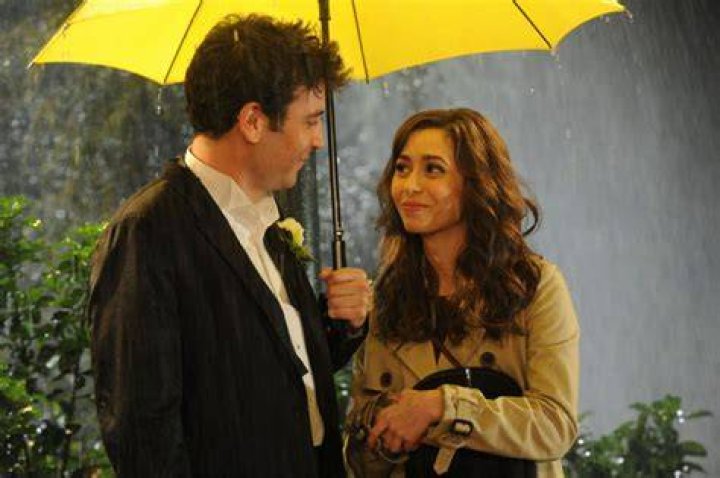
- The Alternate Cut: The official Season 9 DVD alternate ending eliminates Tracy’s death entirely, terminating the narrative on Ted and Tracy's fateful conversation under the yellow umbrella at the Farhampton train station.
The Nine-Year Trap of a Pre-Recorded Ending
The central flaw of the finale stems from an unusual production constraint. Fearing that child actors Lyndsy Fonseca and David Henrie would age visibly out of their roles, Carter Bays and Craig Thomas filmed their reactions for the final scene back in 2006, midway through Season 2. That scene had Henrie and Fonseca bluntly telling their father that the story was never truly about their mother, giving him explicit permission to pursue "Aunt Robin."
By locking down that narrative conclusion early, the writers chained a sprawling nine-season ensemble sitcom to an outdated premise. In 2006, Ted pursuing Robin felt like an unresolved romance between young twenty-somethings in Manhattan. By 2014, the show had spent seven subsequent seasons systematically showing why Ted and Robin could never work as a long-term couple. Robin wanted international career mobility and zero children; Ted wanted suburban domesticity, marriage, and an idyllic family. Forcing them back together within two minutes of screen time invalidated years of hard-won emotional maturity.
Furthermore, Season 9 took a massive structural gamble by setting its entire 24-episode arc across a single weekend: the wedding of Barney Stinson and Robin Scherbatsky. Spending 22 episodes validating Barney and Robin's union, only to dissolve their marriage ten minutes into the finale, gave audiences whiplash. The broadcast edit felt less like organic storytelling and more like a mathematical equation forced to solve for zero.
How Cristin Milioti Broke the Show’s Original Calculus
When the production team cast Cristin Milioti as the girl with the yellow umbrella for the Season 8 finale, they faced an impossible task. For eight years, Ted had mythologized this unseen woman. Fans built impossible expectations. Milioti had to step into the role and instantly convince viewers that she justified Ted's near-decade of heartbreak.
Milioti succeeded far beyond expectations. Her performance brought warmth, quirky timing, and effortless charm to Tracy McConnell. Episodes like "How Your Mother Met Me" showcased her independent grief over her late partner Max, making her feel like a fully realized person rather than a generic romantic prize. Her chemistry with Josh Radnor felt grounded, gentle, and earned. Viewers fell in love with Tracy.
Because Milioti made Tracy so compelling, the decision to reveal her terminal illness, breeze through her death, and pivot back to Robin struck many viewers as callous. Tracy was reduced to a narrative incubator whose primary mechanical purpose was giving Ted the two children Robin could not provide. Instead of celebrating the meeting promised in the show's title, the finale treated Tracy as an obstacle cleared away so Ted could loop back to square one.
The Critical Deleted Scenes That CBS Left on the Floor
Much of the fury directed at "Last Forever Part 2" stems from pacing. Events spanning sixteen years (from 2014 to 2030) were compressed into 44 broadcast minutes. Several deleted scenes preserved in the complete series home release prove that Bays and Thomas actually filmed the emotional tissue needed to make the transitions work.
| Cut Sequence | What It Depicted | Narrative Impact If Kept |
|---|---|---|
| Ted and Robin’s Diner Lunch | Robin confesses to Ted that she wonders "what if," admitting regret over letting him go. Ted gently rejects her, stating he is deeply, blissfully in love with Tracy. | Proves Ted's complete devotion to Tracy during their marriage; establishes that Robin spent years pining while Ted was entirely faithful. |
| Barney at the Bar with Ted | Barney explains why he returned to his womanizing ways, revealing that his outward bravado masked deep pain from the divorce. | Bridges Barney's abrupt relapse, making his eventual transformation upon the birth of his daughter feel earned rather than sudden. |
| Extended Grieving Window | Dialogue emphasizing that Tracy passed away six years prior, illustrating the depth and duration of Ted's grief before his kids spoke up. | Alleviates the audience impression that Ted jumped immediately from Tracy’s deathbed to Robin’s apartment with the blue French horn. |
The diner scene remains the most significant cut. In that sequence, Ted demonstrates genuine emotional growth. He does not waver. He does not pine. By deleting this exchange, the broadcast edit left the door open to an uncomfortable interpretation: that Ted spent his entire marriage to Tracy secretly waiting for Robin.
The Official Alternate Cut: A Reversal of Fortune
In response to fan outrage, Carter Bays announced in April 2014 that an alternate edit existed. Included on the Season 9 DVD set, this version relies entirely on existing footage, clever voiceover re-sequencing, and radical editorial omissions.
In the alternate ending, the entire sequence involving Tracy's illness, the hospital visits, and Ted standing outside Robin's window is excised. Instead, Bob Saget's narration delivers a retrospective monologue summarizing the strange, circuitous journey of Ted's thirties. The montage revisits the yellow umbrella, the blue French horn, the missed connections, and the friendships that defined the gang's booth at MacLaren's Pub.
The scene then shifts to the Farhampton train station under the falling rain. Ted walks up to Tracy, remarks on the initials TM on her yellow umbrella, and they strike up a conversation. Bob Saget speaks his final line: "And that, kids, is how I met your mother." The screen cuts to black over the swelling chords of The Walkmen's "Heaven." For a significant portion of the fanbase, this four-minute sequence serves as the canonical finale.
Audiences Divided: Cynical Realism Versus Romantic Payoff
The split between the broadcast ending and the alternate cut exposes a fundamental disagreement over what genre How I Met Your Mother belonged to. The show's creators argued that the ending reflected the messy, unpredictable nature of adult life. People get divorced. Tragedies occur. True love does not always look like a neat storybook ending. In their eyes, Ted getting two great loves in one lifetime was bittersweet realism.
Critics and viewers rejected this defense because How I Met Your Mother was rarely structured as gritty realism. It was an exaggerated, romantic comedy full of slap bets, telepathic conversations, musical numbers, and grand romantic gestures involving stolen restaurant decorations. Viewers invested nine seasons into the mystery of the mother based on an implied narrative promise. To pull the rug out in the final ten minutes felt less like emotional bravery and more like a bait-and-switch.
In discussions across Reddit's dedicated fan communities, casual viewers and dedicated archivists maintain a sharp division. Viewers who favor the alternate ending emphasize narrative coherence: if a show spends nine years building toward an umbrella, let the story end under the umbrella. Defenders of the original cut argue that the show was always about Ted's obsession with Robin, pointing back to the pilot's final line: "That's how I met your Aunt Robin."
Frequently Asked Questions (FAQ)
Q1: Why did the creators stick to the Robin ending if the characters outgrew it?
Carter Bays and Craig Thomas were committed to their original vision filmed in 2006. Because they captured the reaction shots of the kids early on, they felt tied to that planned climax, failing to anticipate how deeply the audience would connect with Tracy or how natural Barney and Robin's union would become.
Q2: Where can fans officially watch the alternate ending?
The alternate ending is available as an official special feature on the How I Met Your Mother: The Complete Series DVD set and the standalone Season 9 DVD release. Unofficial clips and side-by-side comparisons also circulate widely across video streaming platforms.
Q3: Did Cristin Milioti know her character was going to die when she was cast?
Milioti learned of Tracy’s fate early in her tenure on the show. The cast and production crew kept the secret closely guarded until the broadcast, though many fans had correctly deduced the twist following the Season 9 episode "Vesuvius," where Ted breaks down in tears over the idea of a mother missing her daughter's wedding.
The Legacy of Farhampton Station
Television history is littered with finales that divided audiences, from The Sopranos cut-to-black to Lost’s church gathering. Yet How I Met Your Mother occupies a unique position because the studio itself provided an officially sanctioned fix. The existence of the alternate ending is an implicit admission that the storytelling faltered at the finish line.
For modern viewers streaming the series, the journey between Ted, Tracy, and Robin no longer has to end with that contested blue French horn. The Farhampton train platform remains waiting: a rainy night, two yellow umbrellas, a bass guitar, and an introduction that took nine years to say.


