Does 'Ne' Really Mean Yes? The Linguistic Truth Behind Korean Agreement Patterns
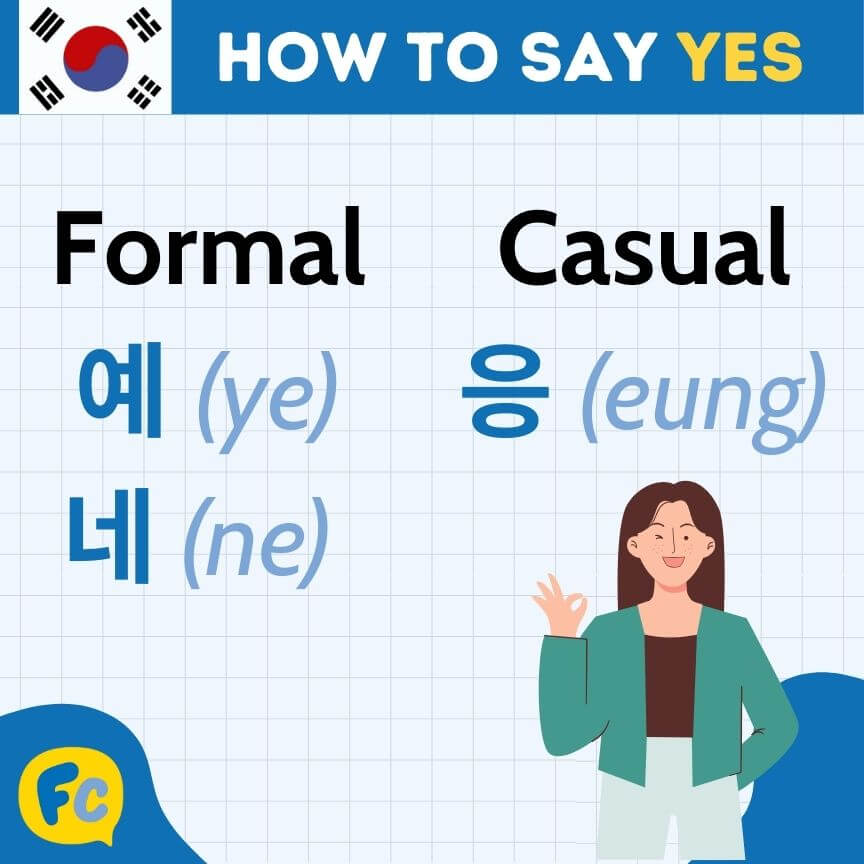
Every foreign traveler landing in Seoul eventually faces the same disorienting interaction. You ask a convenience store clerk, "You don't have an umbrella?" The clerk nods politely, says "Ne" (네), and leaves you standing in the rain because there are no umbrellas in stock. To an English ear, a positive nod paired with an affirmative sound signals that umbrellas exist. To a Korean speaker, that single syllable does not confirm an inventory; it validates the accuracy of your negative assumption.
The Korean language treats affirmation as an epistemic contract rather than a binary truth switch. While cross-linguistic analysis published in the Wikipedia (en) Report notes that regional variants like the Gyeongsang dialect retain grammatical systems dividing yes, no questions from wh-questions, a structural footprint inherited from Middle Korean, Standard Korean roots its affirmative mechanics in the complex dynamics of agreement, acoustic assimilation, and social distance.
📌 Key Takeaways:
- Truth-Value Polarity: Korean affirmations confirm whether the speaker's statement is correct, flipping the Western rulebook when responding to negative interrogatives.
- Acoustic Denasalization: The common phonetic confusion between "ne" and "de" stems from word-initial nasal lenition in standard Seoul dialect phonology, not regional slang.
- Hierarchical Precision: Choosing between ye (예), ne (네), and eung (응) is dictated by social distance within the Korean polite speech levels.
The Cognitive Trap of Answering Negative Questions in Korean
English is an absolute polarity language. If you ask, "Didn't you eat lunch?" the English response "No" targets the action itself: no eating occurred. Korean, conversely, operates on relative agreement polarity. When answering negative questions in Korean, your response confirms or rejects the speaker's framing.
If someone asks, "Bap an meogeosseoyo?" (밥 안 먹었어요? / "You didn't eat lunch?"), replying with ne means: "That is correct; your statement that I did not eat is true." Replying with aniyo (아니요) means: "Your statement is incorrect; I actually did eat."
This structural divergence creates frequent operational misunderstandings in bilingual workplaces. During project standups, an expat manager asking, "Has the client review not arrived?" will interpret a junior developer's "Yes" as confirmation that the review arrived. In reality, the developer intended to say, "Yes, you are right, it has not arrived." Navigating this divide requires decoupling the word from the Western concept of an affirmative action and reframing it as a validation of the listener's premise.
Deciphering the Speech Hierarchy: Ye, Ne, and Eung
Affirmation in Korean cannot be divorced from the broader Korean honorific system. How you say yes communicates your perceived institutional and social standing relative to the person standing across from you.
The standard baseline is ne (네), the universal workhorse of polite conversation (haeyo-che). It signals compliance, active listening, and baseline deference. Step into higher echelons of professional, military, or ceremonial environments, and you encounter ye (예). While both appear in polite speech levels, ye represents an elevated, formal affirmative response. In boardrooms, television broadcasts, and interactions with clients, substituting ne with ye signals heightened institutional discipline.
Drop the honorific endings entirely to speak in informal, non-polite speech (banmal), and the affirmation shifts to eung (응), occasionally softened to a casual ung in text messaging. Using this informal affirmative with a superior, an elder, or a stranger is a direct social transgression. Between close peers or when speaking down to children, however, it remains the standard conversational anchor.
The Evolution of Affirmation and Question Syntax
Modern Korean affirmation patterns emerged through centuries of grammatical pruning. Historical texts show that Middle Korean maintained elaborate interrogative inflections that explicitly signaled whether an inquiry required an affirmative verification or informational expansion.
| Term & Speech Tier | Linguistic Context | Sociolinguistic Purpose |
|---|---|---|
| Ye (예)Formal Polite (Hasipsio-che) | High-formality corporate, military, ritual contexts | Expresses strict vertical deference and official compliance |
| Ne (네)Standard Polite (Haeyo-che) | Everyday public service, workplace, strangers | Default conversational marker; denotes baseline mutual respect |
| Eung (응)Informal Intimate (Banmal) | Close friends of equal age, family, younger speakers | Removes structural hierarchy to reinforce emotional intimacy |
| Geureohseumnida (그렇습니다)Declarative Assertion | Official interviews, press statements, legal testimonies | Transforms "yes" into an emphatic factual validation: "That is so" |
Middle Korean question grammar distinguished systematically between polar yes-no constructions (often employing the -nya marker) and interrogative-content wh-questions (employing -nyo). Although Standard Modern Korean, anchored to the Seoul dialect, collapsed these distinctions into unified endings, historical remnants survive in the southeastern provinces.
In Gyeongsang dialect yes no questions, speakers still append specific inflectional suffixes, such as -ga or -a, to distinguish polar inquiries from information-seeking queries ending in -go or -o. This grammatical preservation shows that the act of seeking affirmation in Korean has historically occupied an entirely distinct syntactical class compared to simply asking for details.

Why Ne Sounds Like De: Seoul Dialect Phonology
Beginners studying Hangul inevitably ask why the word written as ne (네) sounds unmistakably like de when spoken by native Seoul residents. This is not auditory hallucination or regional slang. It is an acoustic reality documented in standard Seoul dialect phonology known as word-initial denasalization.
In modern South Korean speech, initial nasal consonants (/n/ and /m/) frequently lose their nasal acoustic characteristics when they sit at the absolute beginning of an intonational phrase. The soft palate raises slightly earlier than in Western phonetics, blocking airflow through the nasal cavity. As a consequence, the alveolar nasal [n] sounds closer to the voiced alveolar stop [d], while [m] leans toward [b].
When a train conductor announces a stop or an office worker answers a ringing desk phone with ne, Western listeners hear a crisp "De!". If the speaker places the word mid-sentence, or drags the vowel during thoughtful conversation, the nasality reasserts itself. Understanding this phonetic shift prevents learners from attempting to spell the response as de in Hangul, which creates an unintelligible transcription.
Beyond Simple Agreement: Korean Conversation Fillers
A native conversation in Seoul rarely features ne used purely as a literal agreement. Instead, it functions as the central engine of backchannel communication, known in linguistics as aizuchi in Japanese or discursive backchanneling in English.
Listen closely to any phone call in an office. One speaker will unleash an uninterrupted rhythmic stream of "Ne... ne... ne..." delivered with rising and falling inflections. In this register, the word does not mean "I agree with everything you are saying." It means "I am actively listening, processing your thoughts, and yielding the conversational floor to you." Dropping these affirmations leaves the speaker wondering if the call dropped.
Korean conversation fillers also lean heavily on variations of affirmation to manage pacing. Phrases like geureomyo (그럼요 / "Of course"), mat-ayo (맞아요 / "That is correct"), and the contemplative geulsseyo (글쎄요 / "Well, let me see") act as structural buffers. By alternating between affirmative acknowledgment and non-committal stalling, speakers preserve social harmony without boxing themselves into promises.
Frequently Asked Questions (FAQ)
Q1: If someone asks, "You aren't hungry?" how do I say I AM hungry?
A1: Answer with "Aniyo, baegopayo" (아니요, 배고파요). The aniyo rejects the speaker's negative premise ("No, your assumption is incorrect"), and baegopayo explicitly clarifies your physical state ("I am hungry").
Q2: Is it ever appropriate to use "eung" in a professional setting?
A2: No. Using eung with superiors, clients, or unfamiliar colleagues is considered a significant breach of etiquette. Reserve it strictly for close friends of equal or younger age, romantic partners in casual settings, or younger family members.
Q3: Why do some Koreans say "Ne" with an intake of breath?
A3: Inhaled speech (ingressive sound production) is a common pragmatic device in conversational Korean. Inhaling slightly while saying ne or ye signals heightened attentiveness, agreement without interrupting the other speaker's train of thought, and emotional responsiveness.
Mastering Korean Affirmation Dynamics
Treating ne as an exact twin of the English word "yes" will reliably lead to communication breakdowns. Western affirmation tracks the ontological status of reality: did an event happen, or did it not? Korean affirmation tracks interpersonal perception: do I share your framing of the world, or am I contradicting you?
Navigating this linguistic structure demands listening to the grammar of the question before firing off a reflexive answer. When a negative question lands, ignore your English habit of tracking the physical action. Focus instead on whether the speaker's statement is accurate, adjust your speech tier to reflect the room's hierarchy, and let the phonetics of modern Seoul carry the interaction.


