Everything to Know About Penelope: An Epic New Musical — Cast, Music, and Plot
Greek mythology is experiencing a massive cultural renaissance, driven by cinematic spectacles and ambitious theatrical scores. As documented in a recent Britannica Report highlighting Hollywood's high-profile revisit of ancient epic poetry in 2026, audience fascination with Homer’s source material has reached record highs. Yet while cinema often fixes its lens squarely on clashing swords and roaring seas, musical theater has turned its attention home to Ithaca. At the center of that narrative shift stands Penelope, a figure long relegated to the margins of her husband’s twenty-year voyage, now reimagined as a fiery, complex protagonist commanding the spotlight.
That artistic focus has triggered intense interest around two distinct musical phenomena: the viral digital juggernaut of Jorge Rivera-Herrans’ EPIC: The Musical and the intimate, acclaimed regional production of Penelope: An Epic New Musical staged by Jobsite Theater. Searchers tracking down Penelope's musical journey encounter both works simultaneously. One is a sprawling, concept-album-driven pop-opera spanning nine sagas; the other is a genre-bending chamber rock cabaret anchored by performer Colleen Cherry. Understanding how these productions breathe modern agency into the Queen of Ithaca requires examining the scores, the casts, and the dramatic architecture that elevate her from a patient weaver into an indomitable force.
📌 Key Takeaways:
- Dual Adaptations: Theater audiences frequently confuse Jorge Rivera-Herrans’ EPIC: The Musical with Alex Bechtel’s chamber musical Penelope, both of which radically reposition the Queen of Ithaca.
- The Jobsite Staging: Jobsite Theater’s celebrated run featured Colleen Cherry delivering a powerhouse solo-cabaret performance backed by an on-stage string and rhythm ensemble.
- EPIC’s Vocal Power: In Rivera-Herrans’ concept albums, Penelope is voiced by Chicago actor Teagan Earley, serving as the emotional anchor of both the Wisdom Saga and the climactic Ithaca Saga.
- Narrative Reclamation: Both scores discard the archaic trope of passive fidelity, portraying Penelope’s psychological duel with the Suitors as an active, perilous battle of survival.
From Homeric Subtext to Center Stage: Reclaiming the Queen of Ithaca
In classical literature, Homer’s Odyssey treats Penelope as an ideal model of feminine restraint. She weaves by daylight, unravels her shroud under cover of darkness, and sheds bitter tears within the upper chambers of her palace. Her husband, Odysseus, battles monsters and sorceresses across the Mediterranean, while Penelope fends off more than a hundred aggressive noblemen, the Suitors of Ithaca, who drain her estate and terrorize her son, Telemachus.
Modern playwrights and composers see a different reality behind the ancient hexameters. Penelope’s twenty-year resistance was never passive. It required extraordinary psychological endurance, political maneuvering, and calculated emotional warfare. Facing relentless coercion, she held an unstable kingdom together using nothing but intellect, rhetoric, and sheer will.
This dynamic fuels contemporary appetite for Greek mythology adaptations. Instead of framing Penelope simply as Odysseus's domestic reward at the finish line, modern lyricists capture the internal violence of waiting. Whether arranged for a full symphonic studio production or stripped down to a cabaret piano, Penelope's interior world offers raw dramatic tension that matches any sea monster Odysseus ever faced.
The Digital Phenomenon: Penelope in Jorge Rivera-Herrans’ EPIC
Composer and creator Jorge Rivera-Herrans built EPIC: The Musical directly in dialogue with millions of listeners across TikTok, YouTube, and streaming platforms. Structured across nine thematic concept releases, the project reimagines the epic poem as an adrenaline-fueled video-game-inspired musical. Across this sprawling project, Odysseus and Penelope serve as the thematic poles of the narrative: his struggle is getting home, while hers is keeping that home from falling into ruins.
Penelope’s musical presence looms over early sagas through lingering leitmotifs before stepping into center stage during the Wisdom Saga and the final Ithaca Saga. Actor and vocalist Teagan Earley provides Penelope's speaking and singing voice, bringing a mix of warmth, classical elegance, and steel-edged defiance to the role. Earley's vocal delivery gives life to Rivera-Herrans’ complex orchestrations, where orchestral violins merge with electronic synthesizers.
The turning point for Penelope arrives in the long-awaited sequence containing "The Challenge song." Here, Penelope formally announces the archery contest: stringing Odysseus’s massive hunting bow and shooting an arrow clean through twelve axe handles. In Earley’s delivery, the moment is not a surrender to the inevitable. It is a desperate, calculated gamble to buy time, executed under the watchful eyes of predatory men who intend to seize her crown.
The Chamber Stage: Jobsite Theater’s Penelope and Colleen Cherry
While Rivera-Herrans conquered the digital streaming charts, a completely different, deeply physical theatrical interpretation captured live theater audiences: Penelope: An Epic New Musical, created by Alex Bechtel alongside Grace McLean and Eva Steinmetz. When Tampa’s Jobsite Theater mounted its production, it turned the Homeric myth into an intimate, roof-shaking rock-and-roll confession.
Jobsite's staging featured Tampa Bay artist Colleen Cherry as Penelope. Backed by a five-piece band consisting of a string quartet and drums, Cherry held the stage alone for 75 minutes without an intermission. The set resembled an abandoned, whiskey-strewn lounge, a palace frozen in an agonizing loop of suspended time. Penelope pours drinks, cracks dark jokes, tunes instruments, and sings her heart out to an absent husband who might already be dead at the bottom of the sea.
Bechtel’s score leans heavily into indie-folk, chamber pop, and theatrical cabaret, contrasting with Rivera-Herrans’ cinematic, orchestral-electronic hybrid. Cherry’s performance was hailed by critics for balancing bitter, biting humor with devastating vulnerability. Rather than relying on Greek choruses or divine intervention, Jobsite’s production proved that a single woman on an empty stage with a microphone can generate all the thunder of an ancient storm.

Production Comparison: Two Visions of Penelope
Both productions capture the imagination of musical theater enthusiasts, but their structural approaches, instrumentation, and dramatic focus differ substantially. The table below outlines how these two celebrated works interpret the myth of Penelope:
| Feature | EPIC: The Musical (Rivera-Herrans) | Penelope (Bechtel / Jobsite Theater) |
|---|---|---|
| Medium & Format | Digital concept albums / 9 distinct sagas | One-woman chamber musical / 75-minute live staging |
| Lead Performer | Teagan Earley (Voice Actor / Vocalist) | Colleen Cherry (Solo Actress & Vocalist) |
| Musical Style | Pop-opera, cinematic orchestral, EDM, video-game motifs | Chamber-folk, indie-rock, cabaret, live strings & drums |
| Narrative Scope | Full Odyssey timeline from Troy to Ithaca’s slaughter | Penelope’s isolated domestic vigil during Year 20 |
| Portrayal of Suitors | Active ensemble antagonists (led by Antinous) | Lurking off-stage presence, felt through atmospheric dread |
| Climax & Catharsis | Bow challenge, palace massacre, intimate marital reunion | Personal self-emancipation and psychological survival |
The Ithaca Saga Tracklist and the Emotional Climax of EPIC
Within Jorge Rivera-Herrans’ concept album series, the final collection, the Ithaca Saga, serves as the grand culmination of Penelope's musical arc. After enduring through the Troy Saga, the Cyclops Saga, the Ocean Saga, the Circe Saga, the Underworld Saga, the Thunder Saga, and the Wisdom Saga, the story finally pivots to the domestic fortress of Ithaca.
The tracklist of the Ithaca Saga delivers an unrelenting sonic collision between Penelope's quiet resilience and the violent desperation of her environment:
- "The Challenge": Penelope lays down the ultimate gauntlet for the Suitors using Odysseus’s great bow. Teagan Earley’s soaring vocals convey profound sorrow wrapped in absolute strategic composure.
- "Hold Them Down": The dark, driving rock-heavy number highlighting the depravity of the Suitors, led by Antinous, as they plan to assassinate young Telemachus and take the throne by force.
- "Odysseus": The ferocious confrontation where Odysseus reveals his identity, joining forces with Telemachus and loyal allies to cleanse the royal hall.
- "I Can't Help But Wonder": A vulnerable, introspective exchange reflecting on years of estrangement, trauma, and lingering distrust.
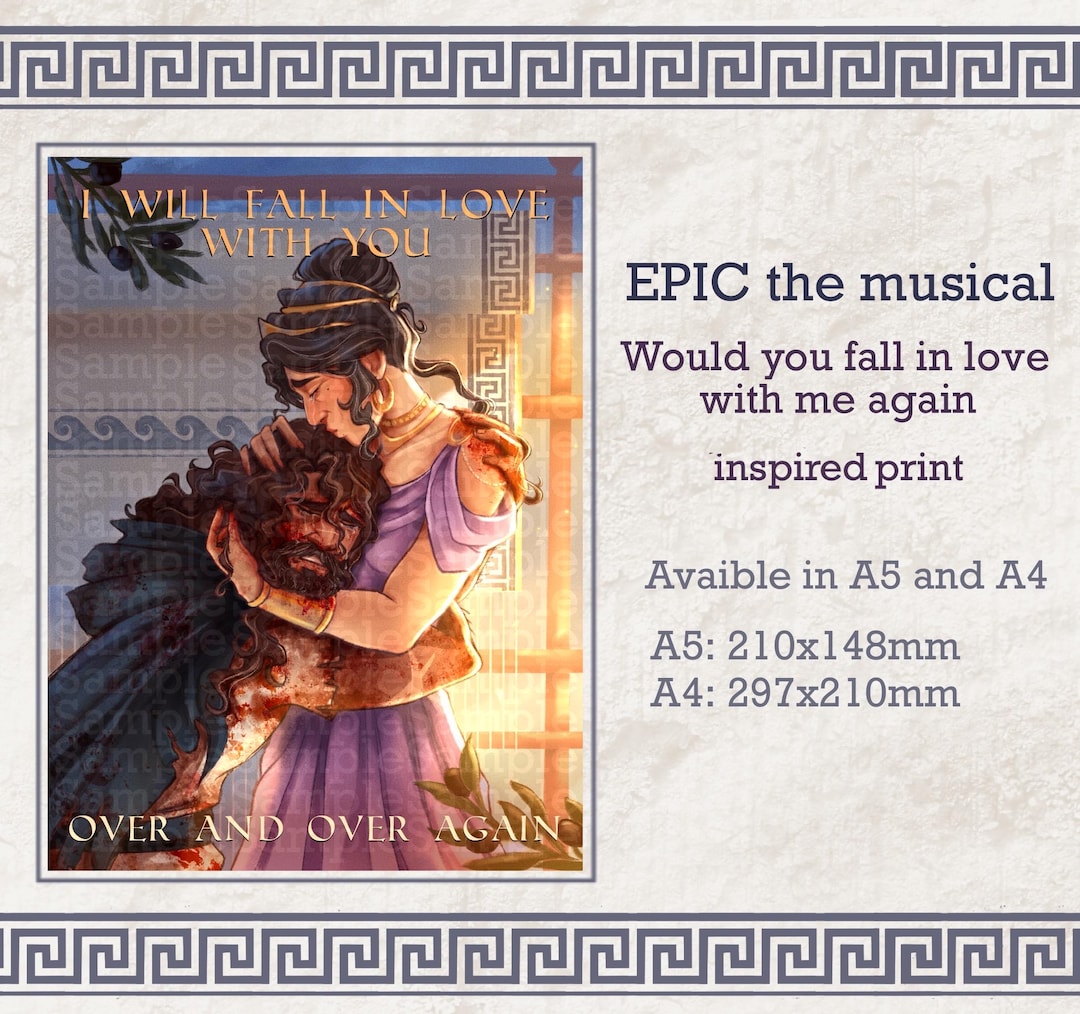
- "Would You Fall in Love With Me Again": The emotional finale between Odysseus and Penelope, resolving their shared grief and testing whether two people forged by decades of war can truly heal together.
What sets Rivera-Herrans' writing apart in this concluding saga is Penelope's cautious skepticism. When Odysseus returns, she does not instantly collapse into his embrace. Having defended herself against deceptive men for two decades, she tests him using the secret of their olive-tree bedpost, preserving her intellectual agency right through the musical’s final cadence.
Navigating the Two Works: Which Musical Should You Experience?
Theater fans drawn to the intersection of ancient history and cutting-edge songwriting often wonder how best to engage with these two interpretations. Each serves a very different artistic purpose.
If you crave sweeping world-building, booming orchestral-pop production, fast-paced action sequences, and an interconnected cast of gods and warriors, Jorge Rivera-Herrans’ EPIC: The Musical is designed for you. The albums are accessible on major streaming services, accompanied by vibrant community-led animatics, track breakdowns, and cast commentaries.
If you prefer raw character studies, stripped-down instrumentation, and the immediate electricity of a performer singing feet away from your seat, the Alex Bechtel musical staged by companies like Jobsite Theater offers an unforgettable experience. Colleen Cherry’s turn as Penelope strips away mythological bombast, offering an unflinching portrait of a woman who refuses to break under the weight of an endless silence.
Frequently Asked Questions (FAQ)
Q1: Are "EPIC: The Musical" and "Penelope: An Epic New Musical" the same production?
No. They are two entirely separate adaptations of Homeric myth. EPIC: The Musical is a 40-song, multi-saga concept musical conceived by Jorge Rivera-Herrans that achieved viral popularity online. Penelope: An Epic New Musical is a standalone, one-woman chamber musical written by Alex Bechtel, produced regionally by companies including Jobsite Theater in Tampa, Florida.
Q2: Who plays Penelope in Jorge Rivera-Herrans’ EPIC: The Musical?
Penelope is voiced by singer and actress Teagan Earley. Her performances are central to both the Wisdom Saga and the grand finale, the Ithaca Saga, where she sings key numbers like "The Challenge" and "Would You Fall in Love With Me Again."
Q3: Who starred in Jobsite Theater's production of Penelope?
Tampa Bay theater veteran Colleen Cherry starred in Jobsite Theater’s staging of Penelope. She performed the 75-minute musical as a solo act, supported live by an on-stage string quartet and percussion ensemble.
Q4: What musical genres are featured across these adaptations?
Rivera-Herrans' EPIC incorporates a dynamic blend of pop-opera, modern symphonic scoring, electronic dance beats, and video-game style leitmotifs. In contrast, Bechtel's Penelope leans into chamber-folk, theatrical cabaret, indie-pop, and intimate rock instrumentation.
Q5: How does Penelope’s character differ from the original Homeric text in these shows?
Both modern adaptations discard the ancient framing of Penelope as a purely passive, sorrowful bystander. Instead, they frame her waiting as an active political and psychological siege, emphasizing her tactical brilliance, her survival instincts, and the emotional toll of protecting Ithaca’s throne alone.
The Evolution of Penelope’s Voice
The surge of interest surrounding Penelope across contemporary stages reveals a fundamental shift in how timeless literature is reinterpreted. Audiences no longer accept narratives that treat the women of classical myth merely as domestic prizes waiting on the shoreline. They expect multi-dimensional characters whose internal battles carry the same dramatic stakes as wandering across monster-infested seas.
Whether experienced through the symphonic pop power of Jorge Rivera-Herrans and Teagan Earley or the intimate, whiskey-soaked cabaret grit of Alex Bechtel and Colleen Cherry, Penelope has permanently stepped out from Odysseus's shadow. The Queen of Ithaca is no longer defined solely by her loyalty. In modern musical theater, she is celebrated for her defiance, her razor-sharp intellect, and a voice that commands the entire stage.


