Fact Check: Where Did 'It Fuckin Wimdy' Actually Come From and Why Is It Spelled That Way?

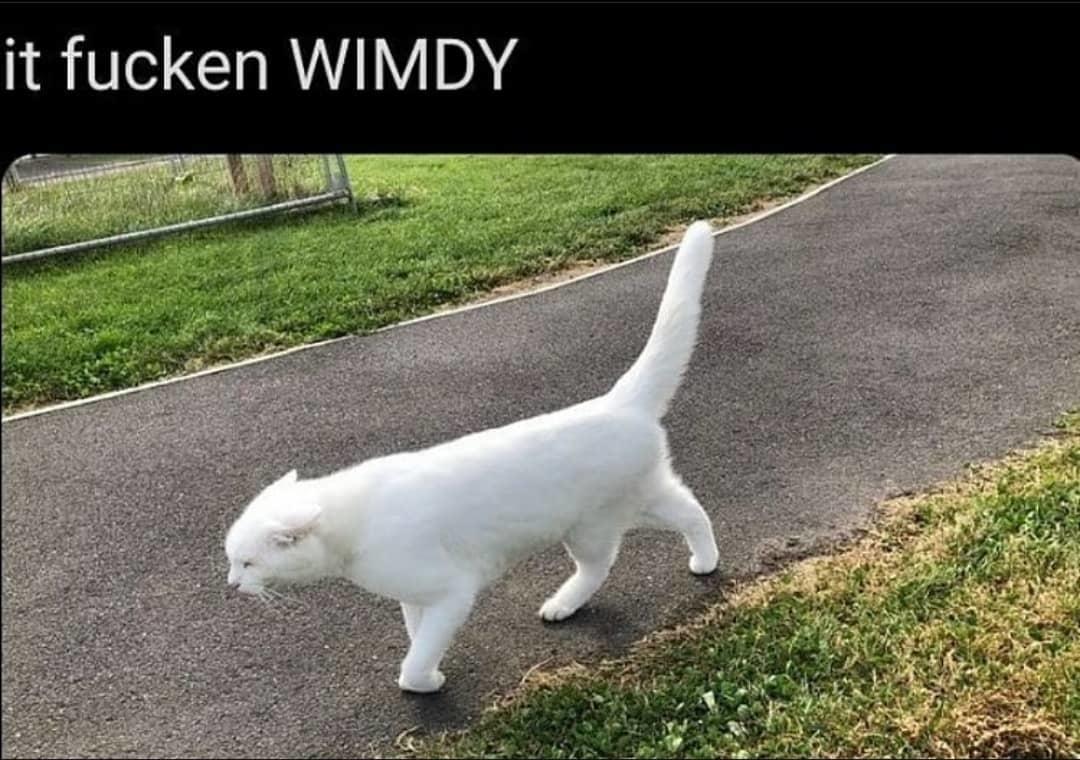
Every time an autumn nor'easter or a midwinter blizzard batters the northern hemisphere, social media feeds inevitably flood with the same portrait: a wild red fox squinting against violent gusts, its fur swept backward, captioned with four lowercase words: "it fuckin wimdy." The phrase has transcended ordinary internet slang to become an unofficial meteorological benchmark across digital culture.
Far from a fleeting viral gag, the image macro represents a rare convergence of wildlife photography, accidental keyboard ergonomics, and phonological mimicry. Tracing the trajectory of this viral reaction image reveals why a single misspelled adjective captured the collective imagination of millions and shows how Tumblr's archival culture still shapes modern social media slang.
📌 Key Takeaways:
- The Origin: The phrase originated on Tumblr in late 2020 as a minimalist user-generated caption appended to an older wildlife photograph of a red fox enduring gale-force winds.
- The Typo Mechanics: While "wimdy" began as an apparent finger slip on adjacent QWERTY keys ("m" and "n"), its phonetic texture mirrors speaking through shivering lips, cementing its popularity.
- Cultural Footprint: The meme has evolved from niche animal internet humor into mainstream weather commentary, repeatedly referenced by professional meteorologists, merchandise makers, and brand accounts during seasonal storms.
How a Blustery Fox Conquered Digital Weather Reporting
Viral internet humor usually burns hot and dies fast. Platforms like TikTok and X cycle through audio tracks and visual formats in a matter of days, yet "it fuckin wimdy" resurfaces reliably every year between October and March. The image functions as a universal shorthand for raw environmental misery.
The visual foundation is undeniable. The fox does not look majestic or predatory. It looks thoroughly exhausted by physics. The animal's eyes are clamped into defensive slits, its whiskers are pinned flat, and its snout bears the exact stoic endurance familiar to anyone who has ever stepped into a 45-mile-per-hour headwind while walking to a bus stop. When digital archives catalog seasonal reaction imagery, this fox regularly rivals classic winter staples like the bundled-up Bernie Sanders inauguration photo or vintage Bill Murray stills from Groundhog Day.
Community trackers on platforms like Know Your Meme document hundreds of spin-offs, ranging from cross-stitch embroidery patterns to digital illustrations of video game characters placed in the same wind-tunnel pose. The image resonates because it strips away all pretension: weather is not always dramatic or cinematic; sometimes it is just relentlessly annoying.
The Tumblr Post History Behind the Iconic Mispelling
The phrase traces directly back to late 2020 on Tumblr, a platform renowned for its distinctive brand of chaotic, low-stakes text posts. Digital archivists point to user reblog chains where an unadorned image of the wind-blown fox was circulating among animal photo blogs. A user slapped the profane, childish four-word caption beneath it, and the post exploded across thousands of reblogs within 48 hours.
Tumblr's interface during this era rewarded absurd, deadpan text additions over polished graphic design. Unlike Instagram or Reddit, where memes frequently feature bold Impact font or elaborate multi-panel structures, Tumblr users favored raw screencaps paired with mundane, unpunctuated prose. The lowercase styling of "it fuckin wimdy" provided a jarring contrast to the vulgar intensifier, creating an immediately recognizable comedic rhythm.
From Tumblr, screenshot aggregators ported the post to Twitter and Reddit's /r/me_irl community, where it garnered over 80,000 upvotes within its first major syndication window. By early 2021, the post had severed ties with its original microblogging thread and entered the public domain of universal internet lore.
Linguistic Phonetics and the Power of 'Wimdy'
The enduring appeal of the catchphrase rests largely on a single consonant swap. On a standard physical or mobile QWERTY keyboard, the letter "m" sits immediately to the right of the letter "n." Striking "m" instead of "n" is one of the most common typographical errors in the English language. Yet if the caption had simply read "it fuckin windy," it would have faded into obscurity within a week.
Linguists who analyze internet syntax point out that "wimdy" behaves like an onomatopoeic performance. Pronouncing an "n" requires pressing the tongue against the roof of the mouth with the jaw slightly open. Pronouncing an "m," by contrast, requires pressing both lips firmly together. In freezing weather, when wind numbs facial muscles, speakers naturally compress their lips to block out cold air. The word "wimdy" sounds like someone attempting to speak through chattering teeth while their face is being pummeled by arctic air.
This falls into the rich tradition of early-2000s animal internet humor, echoing the deliberate phonetic corruptions of "lolcats" and "doge." However, while doge relied on an elaborate dialect ("much cold, very gust"), the fox meme operates with brutal economic efficiency. It delivers total communicative clarity in four words.
Timeline of the Fox's Ascent Across the Web
Tracking the lifespan of the meme illustrates how decentralized humor migrates from private feeds to institutional weather coverage over several consecutive storm seasons.
| Timeframe | Platform Milestone | Cultural Adoption |
|---|---|---|
| November 2020 | First documented Tumblr caption post | Confined to microblogging reblogs and animal aesthetic accounts. |
| Early 2021 | Cross-posting to Reddit and Twitter/X | Reaches broader audiences; spawns redraws in gaming and anime fandoms. |
| 2022, 2023 | Algorithmic indexing on Know Your Meme | Etsy sellers produce unauthorized stickers, car decals, and coffee mugs. |
| 2024, 2026 | Integration into mainstream weather reports | Adopted by commercial meteorologists and news desks as a shorthand storm warning. |
The Wildlife Reality Behind the Original Wind-Blown Fox Photo
Behind every iconic animal macro sits a real animal captured by a wildlife photographer who likely never anticipated their subject becoming an internet punchline. The source photo features a wild red fox (Vulpes vulpes) standing in an open tundra environment, facing powerful coastal gusts.
Foxes rely on extraordinarily dense double coats during winter months, consisting of a short, thick underfur topped by long, water-repellent guard hairs. When winds exceed 30 knots, these guard hairs part against the direction of the wind, creating the puffed, chaotic appearance seen in the viral image. Squinting is a functional survival trait: foxes narrow their eyes to shield their corneas from abrasive windblown grit, frozen snow crust, and ice particles.
Online visual culture frequently divorces nature photography from its original context. While the meme treats the fox's expression as relatable human grumpiness, field biologists recognize it as normal wild behavior. The animal was simply conserving body heat and shielding its retinas while navigating a routine arctic front.
Commercialization and Copyright Friction in the Meme Economy
As the phrase cemented itself into social media slang, it caught the attention of internet merchandisers. A search across independent storefronts yields thousands of results: enameled pins, embroidered winter beanies, desk mats, and laser-engraved weather vanes, all bearing the squinting fox and its four-word declaration.
This commercial explosion underscores the ambiguous legal territory of viral media. The original photographer holds the copyright to the source image, yet the viral value is generated by the user-added text. In practice, original wildlife photographers rarely receive royalties from these bootlegs, as tracking thousands of small-batch vendors across global marketplaces is legally cost-prohibitive.
Even broadcast organizations have flirted with the trend. During regional wind advisories, local television meteorologists across the American Midwest and the United Kingdom frequently share censored versions ("it freakin wimdy") on their official social feeds to boost viewer engagement during severe weather warnings.
Frequently Asked Questions (FAQ)
Q1: What is the exact origin of "it fuckin wimdy"?
A1: The phrase originated on Tumblr in late 2020 when a user paired an existing wildlife photograph of a fox in gale-force winds with the minimalist, lowercase caption "it fuckin wimdy." The post was rapidly reblogged and subsequently went viral across Reddit and Twitter.
Q2: Was the spelling of "wimdy" intentional or an accident?
A2: Evidence suggests it began as an authentic typographical error caused by the adjacent placement of the "m" and "n" keys on standard QWERTY keyboards. The community embraced the typo because the bilabial "m" sound phonetically mimics shivering or speaking through tightly clenched lips in cold weather.
Q3: Who took the original fox photograph?
A3: The image was captured by a wildlife photographer documenting wild red foxes in harsh northern coastal/tundra conditions. Like many early Tumblr reaction images, the photographer's watermark was cropped out during early reblogs, leaving the original artist uncredited in most viral iterations.
Q4: Why does the meme keep resurfacing every winter?
A4: Unlike event-specific memes tied to political debates or pop-culture releases, "it fuckin wimdy" is tethered to cyclical seasonal weather. Whenever major windstorms, nor'easters, or arctic fronts hit populated areas, social media users deploy the image as a universal, relatable visual reaction.
The Permanent Cultural Legacy of the Blustery Fox
The endurance of "it fuckin wimdy" proves that online humor does not require complex irony or expensive multimedia production to survive. A single unscripted animal reaction, combined with an accidental keyboard slip, created an indelible cultural shorthand that continues to outlive deliberate corporate branding campaigns.
As long as cold fronts collide with warm currents and sweep over urban high-rises and open plains, people will open their phones, brace against the gale, and post the same squinting fox. It remains an authentic artifact of an internet era where four misspelled words could define the weather for an entire generation.


