Fact Check: Which Hundred Acre Wood Characters Did Peter Cullen Actually Voice?
Tributes across the entertainment industry continue to honor legendary Canadian voice actor Peter Cullen following his passing at age 85. While mainstream pop culture immediately associates Cullen's thunderous bass with Autobot leader Optimus Prime, a generation of animation fans remembers his voice for an entirely different emotional frequency: the world-weary, tail-losing donkey of the Hundred Acre Wood. As documented in a sportskeeda.com Report chronicling his expansive resume, Cullen moved fluidly between giant mechanical titans and hand-drawn storybook classics.
Yet online credit databases and circulating fan posts often blur the lines regarding Cullen’s specific Disney resume. Did he lend his vocal cords to multiple residents of the woods, or was his presence centered exclusively on a single beloved beast? Untangling Disney's historical audio archives reveals an actor whose understated delivery helped define modern adaptations of A.A. Milne's literary universe.
📌 Key Takeaways:
- The Core Assignment: Peter Cullen served as the primary voice of Eeyore across television, films, and video games from 1988 through 2009.
- Incidental Credits: Beyond Eeyore, Cullen recorded several minor background characters and antagonist voices in The New Adventures of Winnie the Pooh, including Heffalump variants and nightmare creatures.
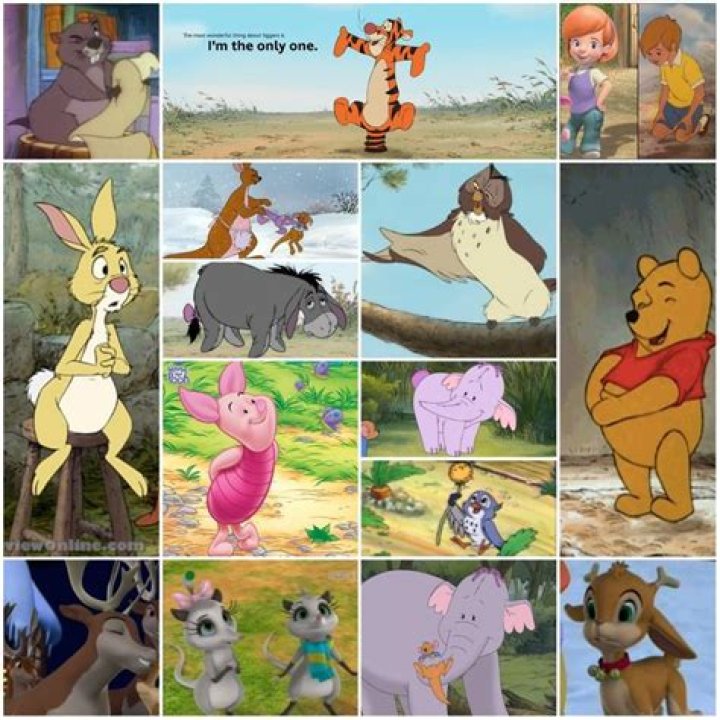
- Debunked Conflations: Cullen never voiced major figures like Tigger, Rabbit, Owl, or Piglet; those roles belonged to distinct Disney voice cast legends including Paul Winchell, Jim Cummings, Ken Sansom, and John Fiedler.
The Voice Behind the Gloom: How Peter Cullen Redefined Eeyore
When Walt Disney Television Animation launched The New Adventures of Winnie the Pooh in 1988, studio executives faced a delicate creative hurdle. Original voice actor Ralph Wright had shaped Eeyore’s monotone cadence in the classic 1960s and 1970s featurettes, but Wright died in 1983. Disney needed a performer capable of sustaining deadpan melancholy without dragging down the Saturday-morning tempo.
Cullen approached the assignment with quiet restraint. Rather than portraying Eeyore as bitterly depressed, he injected a slow, tender resignation into lines like, "Thanks for noticin' me." Cullen often reflected in retrospectives that he drew inspiration directly from downtrodden passersby he encountered on city streets, individuals whose soft-spoken humility masked a profound warmth.
The approach paid off immediately. Cullen’s Eeyore was not an outcast among the winnie the pooh characters. He was a fully accepted, deeply loved member of the community whose gray outlook never broke the sunny camaraderie shared with Pooh, Piglet, and Christopher Robin. Cullen would maintain this signature timbre across two full decades of high-profile theatrical and home-video projects.
Untangling the Cast Sheet: Cullen’s Incidental Hundred Acre Wood Roles
While Eeyore remains Cullen’s defining credit in the franchise, animation scholars and production sheets confirm he contributed several incidental vocal tracks to The New Adventures of Winnie the Pooh between 1988 and 1991. The series leaned heavily on surreal dream sequences, bedtime stories, and cautionary tales where characters ventured into imaginary wildernesses.
During these episodes, directors frequently called on Cullen’s lower vocal registers to animate one-off creatures. In the 1988 episode "The Great Honey Pot Robbery," Cullen provided gruff voices for members of the imaginary pack animals and shadowy thieves. When the show introduced comic nightmare scenarios featuring Heffalumps and Woozles, Cullen occasionally layered his voice into the chorus of strange beast sounds alongside veteran mimic Jim Cummings.
These contributions were rarely billed individually on screen. They appeared under general "Additional Voices" title cards at the close of broadcast episodes. This practice led early internet fan registries to falsely assign Cullen everything from standard woodland animals to miscellaneous forest birds. In reality, these secondary assignments were utility vocal tracks typical of standard voiceover ensemble contracts in late-1980s television.
Two Decades in the Thistle Patch: Cullen’s Chronological Winnie the Pooh Credits
Between his debut in 1988 and his final recorded tracks for the franchise in the late 2000s, Cullen anchored the character through major shifts in Disney animation, transitioning from hand-painted cel television series to high-budget theatrical features and interactive games.
| Production Title | Release Window | Confirmed Role | Ensemble Context |
|---|---|---|---|
| The New Adventures of Winnie the Pooh | 1988, 1991 | Eeyore / Incidental Monsters | Series regular alongside Jim Cummings, Paul Winchell, and John Fiedler |
| Winnie the Pooh: Seasons of Giving | 1999 | Eeyore | Direct-to-video seasonal special compiling television stories and new links |
| The Tigger Movie | 2000 | Eeyore | Major theatrical release; Cullen provided crucial deadpan comedic beats |
| Piglet's Big Movie | 2003 | Eeyore | Theatrical release focusing on John Fiedler's central performance as Piglet |
| Pooh's Heffalump Movie | 2005 | Eeyore | Expanded theatrical run expanding the boundaries of the Hundred Acre Wood |
| My Friends Tigger & Pooh | 2007, 2009 | Eeyore | Cullen's final ongoing television tenure before handoffs to Bud Luckey and Brad Garrett |
Separating Fact from Rumor Across the Hundred Acre Wood Cast
Over the decades, inaccurate cast listings across user-edited film registries created lingering misperceptions regarding Cullen's contributions. Some databases erroneously credited him with voicing characters like Owl or Rabbit during interim episodes. This confusion stemmed from Cullen’s immense versatility, including his simultaneous work on other high-energy 1980s television hits like DuckTales and Chip 'n Dale: Rescue Rangers.
The division of labor in the Disney voice cast was actually clear and remarkably consistent:
- Handled almost exclusively by John Fiedler from 1968 until his death in 2005. Fiedler's naturally high register was the exact acoustic opposite of Cullen's gravelly base.
- Brought to life by veteran character actor Ken Sansom, whose clipped, neurotic diction defined the garden-tending hare for over two decades.
- Mastered by Hal Smith following the 1960s films, later shifting to Andre Stojka in subsequent home media projects.
- Performed primarily by Patricia Parris and later Kath Soucie as the maternal Kanga, with Roo voiced by various young performers including Nicholas Melody and Jimmy Bennett.
- Shared across generations by original legend Paul Winchell and Jim Cummings, who stepped into the role smoothly to preserve Winchell's trademark bouncy laugh.
Cullen rarely crossed into these lanes. He recognized that Eeyore required a particular atmospheric isolation. The donkey spoke sparingly, and every line required room to breathe against the frantic physical comedy orchestrated by the rest of the cast.
Vocal Chemistry: Cullen, Jim Cummings, and Ensemble Directing
The creative magic of Disney’s 1990s Pooh projects rested on the audio dynamics between its lead performers. In an era before modern remote recording booths, Disney voice casts often recorded radio-style ensemble sessions in the same physical space.
Jim Cummings, who voiced both Winnie the Pooh and eventually Tigger, established an immediate working rhythm with Cullen. Cummings brought an airy, breathless innocence to the silly old bear, creating a deliberate acoustic counterweight to Cullen’s chest-resonating baritone. When Eeyore quietly observed that his house of sticks had collapsed again, Pooh’s cheerful optimism acted as the natural narrative foil.
Sound directors at Disney Television Animation deliberately kept Cullen’s vocal tracks clean of excessive equalization. They let the raw texture of his natural voice, including subtle vocal fry and trailing sighs, stand unvarnished. This human touch gave Eeyore an authenticity that prevented the character from sliding into pure parody, elevating children's television into something universally poignant.
Frequently Asked Questions (FAQ)
Q1: Did Peter Cullen voice Eeyore in the 2018 live-action film Christopher Robin?
A1: No. While many fans hoped Cullen would reprise his signature part for the hybrid live-action project, Disney cast actor Brad Garrett, who brought his own deadpan baritone to the digitally animated character.
Q2: How did Peter Cullen balance voicing Eeyore and Optimus Prime simultaneously?
A2: Cullen viewed the roles as opposite sides of vocal control. He described Optimus Prime as driven by authority, compassion, and strength from the chest, whereas Eeyore required dropping all physical tension and vocal energy down into a quiet, resigned sigh.
Q3: Who was the original voice of Eeyore before Peter Cullen took over?
A3: Eeyore was originally voiced by Disney story artist and writer Ralph Wright, who supplied the character's voice for Winnie the Pooh and the Honey Tree (1966) and subsequent classic shorts through the 1970s.
The Enduring Resonance of Cullen’s Understated Artistry
Peter Cullen built a legendary career on iconic vocal archetypes. Audiences celebrate his heroic declarations as giant robots defend humanity, but his gentle handling of a downcast donkey in a patch of thistles required an equally profound mastery of the craft.
Without Cullen’s patient pacing, Eeyore could easily have become an irritant or an uncomfortably gloomy caricature. Instead, his work alongside the wider ensemble preserved the gentle emotional balance originally conceived by A.A. Milne. In the vast company of Hundred Acre Wood inhabitants, Cullen left an unmistakable mark, proving that the quietest voice in the room often leaves the deepest impression.


