Fact-Checking 'Chama': Translation, Brazilian Slang, and the Fighter's Trademark
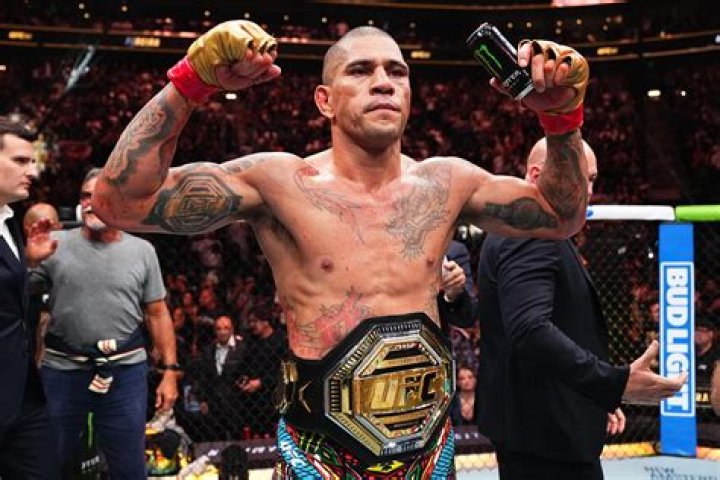
When light heavyweight champion Alex Pereira stepped onto the stage at the UFC 300 pre-fight press conference in Las Vegas, he did not prepare a theatrical monologue. Facing relentless taunts from challenger Jamahal Hill, the Brazilian striker stared blankly through his opponent, raised a microphone, and uttered a single, guttural word: "Chama." The arena erupted, commentator Joe Rogan broke into disbelief on his live broadcast, and millions of combat sports viewers flooded search engines asking whether the phrase was an ancient indigenous curse, a brutal personal insult, or a casual greeting. As detailed in coverage from The SportsRush Report, Pereira’s one-word trademark has systematically evolved from obscure São Paulo street vernacular into the dominant verbal currency of mixed martial arts.
The reality behind the expression defies dramatic combat mythology. Far from a menacing threat, "chama" is an everyday piece of Brazilian slang whose impact relies entirely on Pereira's deadpan, stone-faced delivery. Understanding why this single syllable carries such immense weight requires examining both the mechanics of Brazilian Portuguese and the austere charisma of the fighter known worldwide as Poatan ("Hands of Stone").
📌 Key Takeaways:
- Linguistic Reality: "Chama" literally translates to "flame" (noun) or "calls" (third-person verb), but Brazilian street slang uses it as an enthusiastic prompt roughly equivalent to "let's go," "bring it on," or "send it."
- The UFC Ignition: Alex Pereira transformed the regional term into a global combat meme during his UFC title runs, cementing its status during his icy UFC 300 faceoff against Jamahal Hill.
- Cross-Locker Room Adoption: Champions including Zhang Weili and Deiveson Figueiredo quickly absorbed the catchphrase into their own public appearances, turning a Paulistano colloquialism into universal MMA shorthand.
The São Paulo Asphalt Where Chama Found Its Voice
Alex Pereira did not invent the word. He picked it up on the peripheries of São Paulo, where he worked long hours in a tire repair shop (borracharia) as a teenager before ever strapping on kickboxing gloves. In the working-class neighborhoods and favelas of southeastern Brazil, slang moves with rapid fluidity. Young Brazilians frequently truncate complete idioms into punchy verbal punctuation marks.
The term traces back to longer vernacular phrases such as chama no problema ("call on the problem" or "bring on the challenge") and chama que vem ("call it and it comes"). Over time, the phrase compressed down to its absolute root: chama.
On the streets of São Paulo, someone might shout chama when inviting friends out on a Friday evening, dropping the clutch on a motorcycle, or confirming a lucrative business deal. It signifies motion, readiness, and total absence of hesitation. When Pereira carried that regional verbal tic into elite kickboxing and later the UFC, he stripped away all traditional showmanship. Other fighters hired publicists and rehearsed insults; Pereira merely brought the language of his tire-shop youth into the world's most visible sporting arenas.
Grammar Meets the Cage: Literal Translation vs. Street Reality
Online discussions routinely derail over Portuguese grammar dictionaries. If an English speaker runs the word through automated software, the system produces two distinct definitions based on part of speech:
- The Noun (A chama): Translates directly to "the flame" or "the blaze."
- The Verb (Ele/Ela chama): The third-person present conjugation of chamar, meaning "he/she calls" or "summons."
Neither formal definition captures how the word operates inside contemporary Brazilian youth culture. It functions not as a descriptive noun or an active verb clause, but as an imperative interjection. Context dictates everything. When Pereira says it, the phrase operates on multiple registers simultaneously:
| Context & Application | Literal Portuguese Definition | Actual Communicative Meaning |
|---|---|---|
| Standard Linguistic Usage | "Flame" (noun) / "Calls" (verb) | Refers to open fire or summoning someone by name. |
| Brazilian Street Vernacular | Truncation of chama no probleminha | "Let's get this moving," "I'm down," or "count me in." |
| Poatan Octagon Delivery | Monosyllabic deadpan interjection | "Bring the fight," "let's do it," or "no more talk." |
| Global MMA Fanbase & Memes | Universal battle cry / sign-off | Unchecked confidence, stoic hype, and collective fandom. |
Because the noun form translates to "flame," foreign viewers frequently assume Pereira is making a mystical reference to his warrior spirit or ancestral fire. Pereira himself has repeatedly clarified that while the fire imagery makes for good merchandise, his usage simply mirrors how he talks to his training partners back home. When he says it, he means: Let's get down to business.
The UFC 300 Standoff and Jamahal Hill's Confusion
The international explosion of the catchphrase occurred in April 2024 during the buildup to UFC 300. Headlining the historic milestone card at T-Mobile Arena, Pereira was paired against former champion Jamahal Hill. Hill arrived at the press conferences armed with verbal barbs, custom props, and aggressive posturing designed to force an emotional reaction out of the Brazilian champion.
Pereira gave him nothing. Throughout twenty minutes of chaotic trash talk from the rest of the dais, the light heavyweight titleholder sat motionless, staring straight ahead like a carved monolith. When Hill addressed him directly, Pereira raised the microphone, held it to his lips, and dropped his trademark:
"Chama."
The reaction was immediate. Ringside color commentator Joe Rogan, who has spent decades analyzing high-stakes fight psychology, beamed openly at the spectacle. Rogan broke down the moment on his broadcast and podcast, pointing out how Pereira’s monosyllabic response dismantled Hill’s entire theatrical approach. Hill looked visibly frustrated; he had brought an arsenal of trash talk to a man who responded with a slang term usually reserved for hopping on a moped.
The bout ended with a cold, brutal first-round knockout. After referee Herb Dean stepped in briefly following an accidental low blow, Pereira waved the official off with his hand and folded Hill with a counter left hook seconds later. The meme was officially forged in bronze: show up, say chama, deliver destruction, go home.
How Zhang Weili and UFC Gold Spread the Single-Word Gospel
A catchphrase rarely transcends its sport unless other top-tier competitors start repeating it. Following Pereira's meteoric ascent across both the middleweight and light heavyweight divisions, chama escaped the confines of his personal camp and spread through international locker rooms.
Former flyweight champion Deiveson Figueiredo began punctuating his post-fight interviews with the phrase, giving a nod to his fellow countryman while firing up Brazilian audiences. Far more surprising was its adoption by two-time strawweight champion Zhang Weili.
During public training sessions and media scrums leading up to her own title defenses, the Chinese powerhouse surprised journalists by smiling broadly, mimicking Pereira's iconic bow-and-arrow cage walk, and yelling "Chama!" to the cameras. The moment instantly swept through combat sports channels on Instagram, TikTok, and X. It proved that the term required zero Portuguese fluency to understand. Its meaning had transformed into pure athletic intent, a shared code among champions who prefer devastating action over verbal posturing.
Psychological Warfare in a Single Syllable
Modern combat sports promotion often demands exhaustingly loud personalities. Conor McGregor established a blueprint built on bespoke suits, sharp insults, and rapid-fire psychological degradation. For years, up-and-coming fighters attempted to copy that formula, flooding press conferences with rehearsed theatrics.
Pereira's sudden emergence reversed that entire paradigm. He does not yell. He does not jump on tables. When challenged, he simply utters the word like a machine acknowledging a command prompt.
This creates an intense psychological vacuum for opponents. A fighter who spends three months cultivating genuine personal animosity finds themselves standing across from an individual who reduces all that emotional effort to a casual chama. The word acts as a mirror; it leaves loud opponents looking frantic and insecure while Pereira remains completely unbothered. The psychological dominance does not stem from linguistic complexity, but from absolute emotional economy.
Frequently Asked Questions (FAQ)
Q1: Is "Chama" an indigenous Pataxó word?
A1: No. While Alex Pereira proudly embraces his indigenous Pataxó heritage, which inspired his moniker "Poatan" (meaning "Hands of Stone" in Tupi), the word "chama" is standard Brazilian Portuguese street slang, not an indigenous dialect term.
Q2: Does Pereira use the term to disrespect his opponents?
A2: No. It is not an insult or derogatory term. In Brazilian vernacular, it represents readiness, excitement, and acceptance of a challenge. When directed at an opponent, it essentially translates to "let's fight" or "bring it on."
Q3: How do you properly pronounce "Chama"?
A3: It is pronounced roughly like "SHAH-mah" in Brazilian Portuguese. The initial "ch" carries a soft "sh" sound, with heavy emphasis on the first syllable and a relaxed, falling second syllable.
Q4: Why do English-speaking commentators sometimes translate it as "Call it"?
A4: In formal Portuguese grammar, *chamar* means "to call." When translated word-for-word without understanding street slang context, people interpret it as "he calls" or "call it," even though the colloquial intent mirrors "let's go."
The Enduring Impact of Poatan's Monosyllabic Brand
Combat sports culture has always latched onto signature catchphrases, but few have spread with the sheer speed of Pereira's single-word trademark. In an era dominated by calculated digital personas and manufactured press conference outrage, a stoic Brazilian stonecutter turned two-division champion managed to captivate the sporting world simply by stripping away the noise.
"Chama" succeeds because it demands no translation. Fans shouting it across sold-out arenas in Las Vegas, London, or Rio de Janeiro are not thinking about Portuguese verb conjugations or tire shops in São Paulo. They are tapping into the quiet, unyielding menace of an athlete who lets his left hook do all the talking. Pereira speaks once, the crowd answers, and the fight begins.


