Fact-Checking Spider Vision: Do Spiders Actually See You Staring Back?
Few domestic encounters trigger an adrenaline spike quite like waking up in the dark to the sensation of something skittering across your forehead, or locking eyes with a tiny jumping spider perched on a computer monitor. Millions of people routinely scroll through viral social media posts depicting arachnids crawling onto human eyelids or claiming that morning eye crust is secret evidence of nocturnal insect visits. These visceral anxieties persist because human visual psychology naturally assumes other creatures perceive the world just as we do, interpreting a spider's sudden pivot toward an observer as calculated hostility or conscious eye contact.
The biological reality tells an entirely different story. Most arachnids navigate an environment defined by tactile tremors, chemical gradients, and blurry shadows rather than crisp facial recognition. Even when a startled spider appears to charge straight at a person's face, entomologists note that the animal is simply seeking the nearest dark shelter. As detailed in an authoritative Snopes.com Report investigating arachnid flight dynamics, spiders possess zero instinct to seek human companionship or protection, nor do they target human eyes; they run purely toward protective silhouettes created by human shadows.
📌 Key Takeaways:
- Visual Diversity: While web-building spiders are functionally blind and rely on slit sensilla vibrations, hunting spiders like Salticidae possess telephoto principal eyes with exceptional spatial acuity.
- The "Eye-Contact" Illusion: Spiders tilting their cephalothorax toward human eyes are responding to rapid pupil or eyelash motion, tracking high-contrast movement rather than recognizing a face.
- Busted Sleep Myths: Viral claims alleging that morning eye crust stems from arachnid secretions are medical nonsense; morning rheum consists strictly of meibomian oil, dried tears, and exfoliated epithelial cells.
- Medical Realities: Actual spider encounters involving the human eye are exceedingly rare ocular foreign body events, primarily caused by defensive urticating hairs or accidental corneal abrasion.
The Optical Illusion of Arachnid Eye Contact
Human beings are wired for facial pareidolia. The brain constantly searches for two eyes, a nose, and a mouth in inanimate patterns, projecting intent onto non-human species. When a tiny jumping spider freezes, tilts its cephalothorax at an acute 45-degree angle, and seemingly stares directly into your pupils, your nervous system registers direct visual engagement. It feels personal.
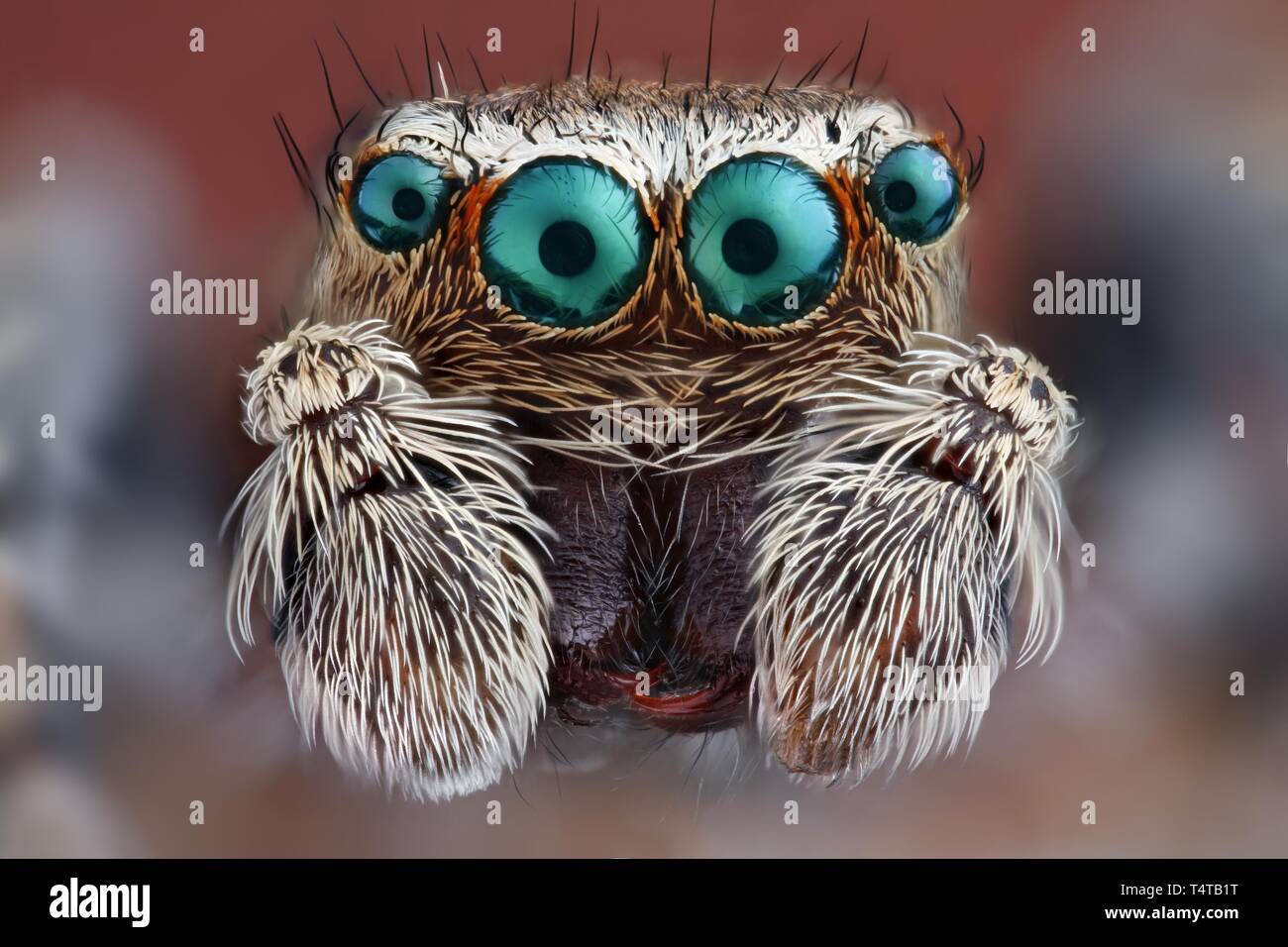
That tilt is not emotional recognition. It is optical calibration. Jumping spiders (family *Salticidae*) possess an eye arrangement completely foreign to vertebrates. Their two large anteromedian eyes, the principal eyes, act like internal telephoto lenses. Because their rigid outer chitinous lens cannot distort like a human lens to change focus, salticids maneuver long, Boomerang-shaped retinal tubes located deep within their heads using three pairs of specialized muscles. When the creature tilts its head, it is literally repositioning the internal retina to sweep light across an incoming target.
What the spider registers is a localized zone of high-frequency motion. Blinking eyelids, shifting irises, and fluttering eyelashes present high-contrast, flickering edges. To an arachnid visual system calibrated to isolate prey and incoming predators, your eyeball represents an active, potentially threatening boundary of light and dark. It is not staring into your soul; it is tracking a fluctuating silhouette against a bright background.
How Spider Eye Anatomy Processes the World
The arachnid visual apparatus typically features eight eyes divided into two functional tiers: principal eyes and secondary eyes. Understanding this anatomical split explains why different species react to humans in wildly contradictory ways.
Principal eyes, always the anteromedian pair, develop from distinct embryonic tissue and lack a tapetum lucidum (the reflective layer that makes cat eyes glow in headlights). In active day hunters, these lenses project inverted images onto multi-tiered retinas capable of processing polarized light and resolving fine details. Salticid vision boasts an angular resolution of roughly 0.04 to 0.1 degrees, remarkably sharp for an organism with a central nervous system containing fewer than 100,000 neurons.
Secondary eyes (anterolateral, posterolateral, and posteromedian) serve an entirely different tactical role. Equipped with reflective tapeta, these lateral lenses act as wide-angle peripheral motion detectors. They provide almost 360-degree surveillance with low spatial fidelity. The lateral eyes spot a blur of movement across the room, which triggers an immediate reflex: the spider pivots on its pedicel to align its high-definition principal eyes with the target.
Contrast this with web-weaving orbweavers (*Araneidae*) or cellar spiders (*Pholcidae*). In these nocturnal and web-bound families, the lenses are crude cuticular bulges. They can barely resolve shapes beyond basic light-dark circadian discrimination. For these spiders, the human eye does not exist as a distinct object. Their entire sensory world is mapped through slit sensilla on their exoskeletons and trichobothria (microscopic hairs) that measure sub-micron acoustic vibrations across web silk.
Comparing Arachnid Visual Acuity and Optical Structures Across Common Families
| Spider Family | Primary Visual Setup | Effective Visual Range | Dominant Environmental Sensor |
|---|---|---|---|
| Salticidae (Jumping Spiders) | Large telephoto principal eyes + 6 motion-detecting secondary eyes | 10, 35 cm for high detail; motion up to 2 m | High-resolution trichromatic and UV vision |
| Lycosidae (Wolf Spiders) | Enlarged posterior eyes with reflective tapeta | 5, 15 cm in low-light environments | Night-vision motion tracking + substrate vibrations |
| Sparassidae (Huntsman Spiders) | Two curved rows of 4 eyes optimized for panoramic motion | 10, 20 cm for silhouette shifts | Mechanoreception and air-displacement hairs |
| Araneidae (Orb Weavers) | 8 small, low-resolution cuticular eyes | Under 2, 3 cm; limited to light intensity | Tension sensors on structural web silk |
| Sicariidae (Recluse Spiders) | 6 dyad-arranged eyes (reduced from 8) | Under 5 cm; poor optical resolution | Olfaction, contact chemoreception, and thigmotaxis |
Dismantling Nocturnal Myths: The Sleep Crust Fabrication
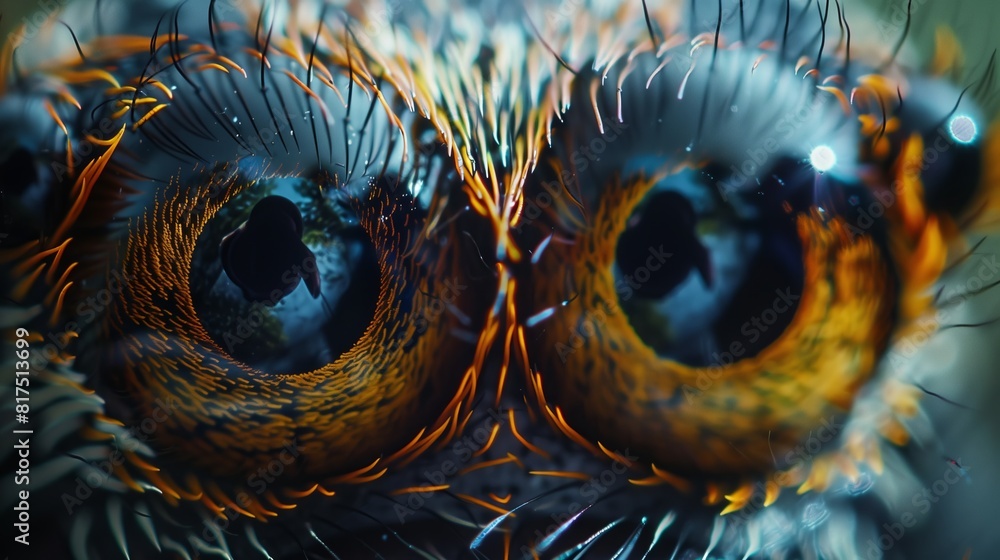
Human panic surrounding spiders often surfaces in the bedroom. For years, viral message boards and chain emails promoted an unscientific urban legend claiming that morning eye crust, the gritty yellow mucus medically classified as rheum, is the byproduct of "male spider milk" deposited on human eyes during sleep. This assertion prompted entomological and medical reviews that completely dismantled the claim as online fiction.
Rheum has nothing to do with arthropod biology. During waking hours, your eyes blink thousands of times, sweeping a protective tear film of aqueous fluid, oily lipid secretions from the meibomian glands, and conjunctival mucus across the cornea into the nasolacrimal ducts. When you sleep, that blinking mechanism shuts down. Dead epithelial cells, atmospheric dust, and dried lipid tears coagulate at the inner canthus of the eye. It is an internal maintenance waste product, not an external nocturnal insect deposit.
Spiders actively avoid sleeping humans. The thermal signature of a 98.6°F (37°C) human body, combined with the heavy expulsion of carbon dioxide and microscopic mattress tremors caused by breathing, registers to an arachnid as an existential hazard. A human is a massive, warm predator. Unless accidentally trapped between a sheet and an eyelid, spiders do not linger near human facial features.
Defensive Posturing and Negative Phototaxis
When a human attempts to swat or shoo a large wandering spider, the insect frequently appears to dash directly toward the person's feet or face. This behavior forms the core of many arachnophobic panic attacks. Popular urban rumors even suggest that cornered spiders identify human vulnerability and leap specifically toward the eyes to blind their attackers.
This is a fundamental misinterpretation of negative phototaxis. When a human stands over an arachnid, the body casts a wide, high-contrast shadow. To a wolf spider or huntsman with low visual acuity, the human body does not register as a creature with limbs and teeth; it appears as a giant vertical rock wall, a hollow log, or a dark crevice. In terror, the spider sprints directly toward the darkest sector of its visual field to escape open light, running under the shoe or right up the leg of the shrieking observer.
Defensive behavior also dictates how spiders position their front legs. When cornered, species like the Brazilian wandering spider or the Sydney funnel-web rear upward, exposing their chelicerae (fangs) and pedipalps. This vertical posture raises their principal eyes to track the looming threat overhead. Humans interpret this upright stance as an imminent leap toward the face. In reality, it is a desperate static deterrent designed to make the spider appear twice its actual size so the approaching silhouette backs away.
Clinical Realities: Spiders as an Ocular Foreign Body
While spiders do not seek out human eyes, arachnid encounters involving the ocular orbit do occasionally occur in clinical ophthalmology. These are classified not as venomous assaults, but as mechanical foreign body injuries.
The most medically documented threat stems from New World tarantulas (family *Theraphosidae*). When agitated, tarantulas use their rear legs to rapidly kick thousands of microscopic, barbed urticating hairs from their abdomen into the air. If these airborne setal barbs land on an exposed cornea, they pierce the epithelial layer and migrate into the anterior chamber, triggering a severe inflammatory condition known as ophthalmia nodosa. Left untreated, it requires long-term topical corticosteroid therapy to prevent corneal scarring and permanent vision loss.
Accidental eye trauma from smaller household spiders is strictly mechanical. If an individual rubs their eye while a tiny web-weaver or garden spider is resting on the eyelid, the crushing force can trap cuticular fragments beneath the conjunctiva. Emergency optometrists manage these events exactly like windblown grit: copious sterile saline irrigation, topical antibiotic drops to prevent secondary bacterial keratitis, and fluorescent dye staining to verify corneal integrity. True envenomation through an eyelid is extraordinarily rare, as household spider chelicerae struggle to pierce elastic dermal tissue without rigid counter-pressure.
Frequently Asked Questions (FAQ)
Q1: Can jumping spiders actually see and track my eyes moving?
A1: Yes, jumping spiders have sufficient spatial acuity to detect the high-contrast movement of human irises and blinking lashes within a range of approximately 10 to 30 centimeters. They do not comprehend what an eye is, but their retinas physically move to track the localized motion.
Q2: Is it possible for a spider to lay eggs inside human eyelids?
A2: No. This is a medical urban legend. Spider egg sacs require stable, undisturbed, and humidity-controlled environments to survive. The constant movement of the eyelid, the antimicrobial enzymes in human lysozyme tears, and normal human grooming make human eyes hostile to arachnid egg development.
Q3: What should I do if a spider or insect enters my eye?
A3: Do not rub the eye, as crushing the arthropod drives abrasive chitin or urticating hairs directly into the cornea. Flush the eye immediately with an ophthalmic saline wash or lukewarm tap water for 10 to 15 minutes. If redness, sharp foreign-body sensation, or blurred vision persists, visit an optometrist or urgent care clinic for an anterior segment slit-lamp examination.
The Evolutionary Distance Between Eight Lenses and Two
The human impulse to attribute conscious curiosity or predatory malice to a spider staring back from the wall says far more about human psychology than arachnid ecology. Over hundreds of millions of years, arthropods split into radically distinct evolutionary niches. Some, like the orbweavers, discarded spatial vision entirely in favor of an exquisitely sensitive web network that translates physical vibration into spatial awareness. Others, like the jumping spiders, constructed a multi-lens optical array that rivals modern micro-optics, packing remarkable movement-tracking into a pinpoint nervous system.
When an arachnid points its face toward your own, it is not evaluating you as prey, nor is it planning an assault on your eyelids. It is simply processing light, running frantic navigational calculations, and attempting to survive in a room inhabited by a giant that moves at impossible scales. Recognizing how spiders actually perceive their environment dissolves irrational phobias, replacing instinctive terror with an objective appreciation for how diverse eyes can be on the same shared planet.