Fact-Checking the 8-Ounce Cup: Medical Standards vs. Modern Serving Sizes
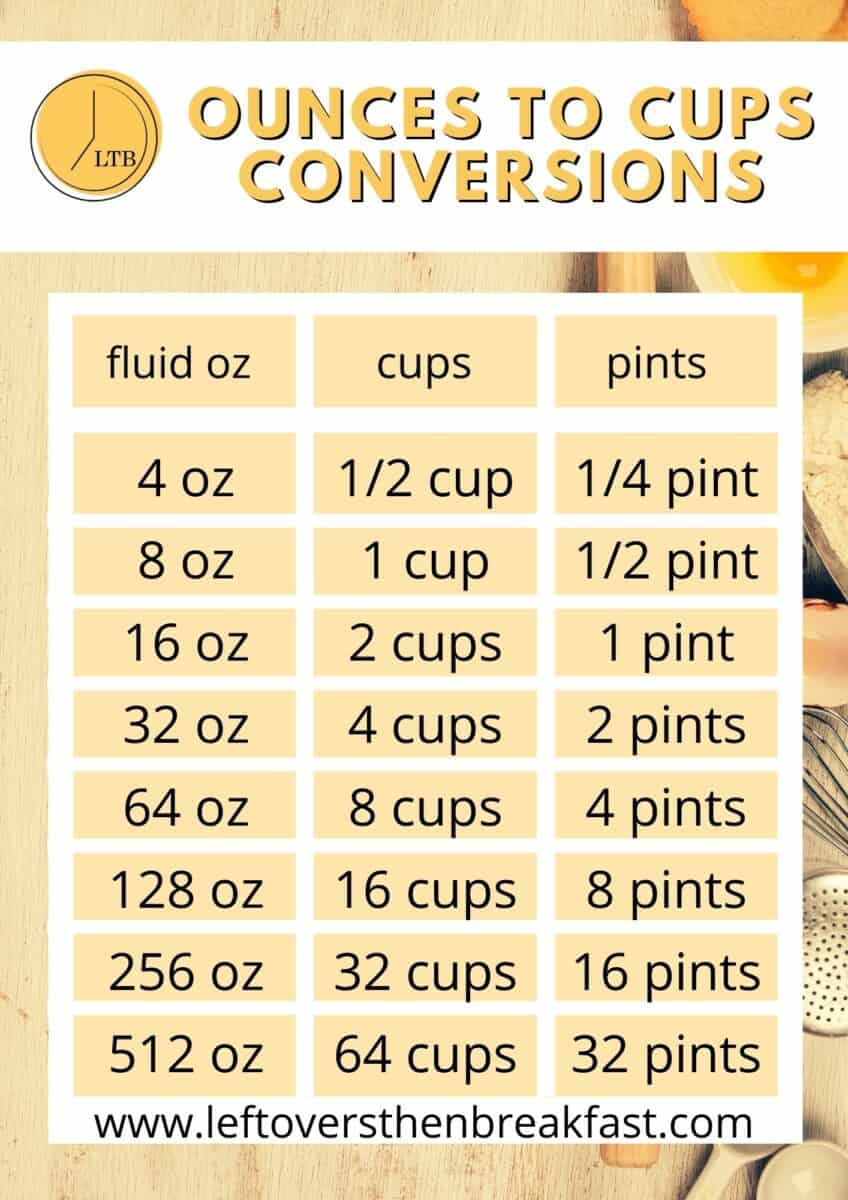
Pouring a cup of coffee feels like the simplest ritual in American life, yet the math behind that pour is broken. When medical researchers or health headlines report that drinking two to three cups of coffee daily lowers cardiovascular risk, a trend highlighted in a recent Axios Report linking an extra cup to better heart outcomes, patients assume their morning drinkware matches the study data. It almost never does.
The standard baseline taught in elementary school is that 8 ounces equal one cup. That single conversion hides a maze of regulatory quirks, metric divides, and industrial design choices that distort how much we eat and drink every day.
📌 Key Takeaways:
- The Customary Rule: One standard US customary cup equals exactly 8 fluid ounces (236.6 mL) of liquid volume, but federal nutrition labels define a legal serving cup as 240 mL.
- The Mug Inflation: Typical ceramic mugs sold today hold between 12 and 16 fluid ounces, meaning two mugs easily equal three to four clinical coffee servings.
- The Weight Trap: Fluid ounces measure volume, while avoirdupois ounces measure weight; an 8-ounce cup of all-purpose flour weighs barely 4.25 dry ounces.
The Arithmetic of US Customary Volume
The standard conversion taught across North America is unambiguous on paper. One US customary cup holds exactly 8 fluid ounces. It equals half a liquid pint, 16 level tablespoons, or 48 level teaspoons. When measuring room-temperature water, that volume translates to approximately 236.588 milliliters.
That definition governs domestic culinary traditions. Recipes published in American cookbooks rely on this volumetric shorthand. If you fill a clear glass liquid measuring cup to the 1-cup line with broth, milk, or olive oil, you hold 8 fluid ounces of volume. Yet friction emerges the moment that volume moves from home kitchens to commercial packaging.
The Food and Drug Administration maintains its own legal definition for packaging compliance. Under 21 CFR 101.9, the nutritional label cup definition rounds a cup to an even 240 milliliters. That minor bump makes metric conversion straightforward for manufacturers. It also creates a permanent split between what your Pyrex cup holds (236.6 mL) and what federal regulators calculate as a single serving (240 mL).
Dry Ounces vs. Liquid Ounces: The Baker's Hazard
The English language uses the word "ounce" for two fundamentally different properties: weight and volume. Confusing the two ruins recipes and throws off macronutrient tracking. A fluid ounce (fl oz) measures the space a liquid occupies. An avoirdupois ounce (oz) measures mass, standardized at 28.3495 grams.
Water creates the illusion that these two units are interchangeable. One fluid ounce of water weighs almost exactly one ounce avoirdupois at standard room temperature. That coincidence breaks down for nearly every other pantry ingredient. Density dictates weight.
Scoop 8 dry ounces of all-purpose flour into a bowl, and you have nearly two full cups of volume. Flour is aerated and light, weighing roughly 4.25 ounces (120 grams) per cup. Honey sits at the opposite extreme. A single 8-fluid-ounce cup of clover honey weighs roughly 12 dry ounces (340 grams). Confectioners' sugar, cocoa powder, rolled oats, and brown sugar all carry distinct bulk densities. Relying on an 8-ounce dry-goods conversion without a digital kitchen scale produces wild swings in kitchen volume equivalencies.
Global Standards: How the Cup Changes Across Borders
Step outside the United States, and the definition of a cup shifts entirely. The international culinary landscape relies on three competing standards alongside legacy imperial guidelines. These regional divides explain why imported recipes often fail when prepared with standard American nested measuring cups.
| Measurement System | Fluid Ounce Equivalent | Volume in Milliliters | Primary Jurisdictions |
|---|---|---|---|
| US Customary Cup | 8.00 fl oz (US) | 236.59 mL | United States (Culinary) |
| US Legal / FDA Cup | 8.12 fl oz (US) | 240.00 mL | US Nutrition Facts Labels |
| Metric Cup | 8.45 fl oz (US) | 250.00 mL | Australia, New Zealand, Canada |
| Imperial Cup (Historic) | 9.61 fl oz (US) / 10 fl oz (Imp) | 284.13 mL | United Kingdom (Pre-metrication) |
| Japanese Traditional (Gō) | 6.09 fl oz (US) | 180.39 mL | Japan (Rice Cookers, Sake) |
The Commonwealth metric cup adds a noticeable margin over the American cup. An Australian recipe calling for four cups of stock requires 1,000 mL. An American cook following that instruction with standard US nested cups adds roughly 946 mL, leaving the liquid ratio shy by more than 50 milliliters. The gap widens with rice cookers, where the included plastic measuring cup represents the Japanese gō (180 mL), not the 8-ounce standard.
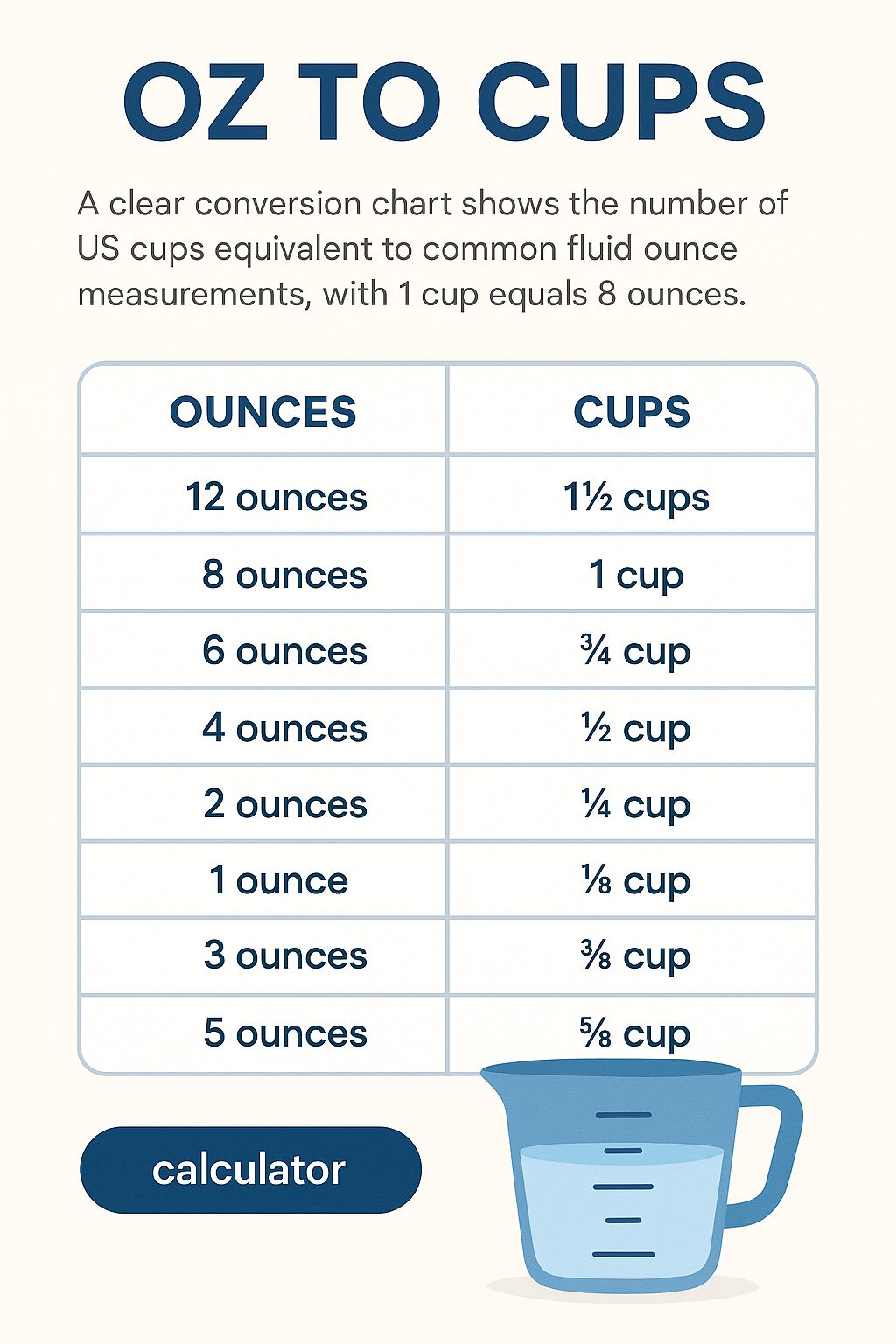
The Coffee Machine Distortions: Why Carafes Don't Hold 8 Ounces
The starkest departure from the 8-ounce standard happens on the kitchen counter. Automatic drip coffeemakers manufactured by brands like Mr. Coffee, Cuisinart, and Braun print cup increments along their glass carafes. A "12-cup" machine does not brew 96 fluid ounces of coffee.
In the appliance industry, a cup is standardized at 5 to 6 fluid ounces (148, 177 mL). A standard 12-cup carafe holds approximately 60 fluid ounces of liquid. Machine manufacturers adopted this compact metric decades ago, modeling it on vintage porcelain teacups rather than American diner mugs.
Meanwhile, retail ceramic drinkware has expanded dramatically. A basic stoneware mug purchased at target or specialty retailers holds between 12 and 16 fluid ounces. Large diner mugs and insulated tumblers regularly hold 20 to 30 fluid ounces. Someone who drinks two full mugs from home has consumed up to 32 fluid ounces of brew. By domestic appliance standards, that person drank six cups of coffee before noon.
Cardiovascular Guidelines and the Reality of Caffeine Intake
The gap between laboratory definitions and household reality creates genuine health blind spots. Epidemiological studies linking coffee consumption to reduced risks of type 2 diabetes, stroke, and heart failure define a cup strictly between 6 and 8 fluid ounces.
When the FDA outlines caffeine safety, it identifies 400 milligrams per day, roughly four to five standard cups of brewed coffee, as an amount not generally associated with negative side effects for healthy adults. An 8-ounce cup of drip coffee contains approximately 95 to 105 mg of caffeine. Darker roasts, brew temperatures, and bean varietals shift that range, but the volume anchor remains constant.
A consumer filling a 16-ounce insulated mug twice a day has finished four 8-ounce medical servings. If the coffee is a lightly roasted, concentrated specialty pour-over containing 150 mg of caffeine per 8 fluid ounces, those two mugs deliver 600 mg of caffeine. That intake exceeds daily federal recommendations by 50 percent, despite the drinker believing they only had "two cups."
Measuring Cup Accuracy: Meniscus Errors and Tool Drift
Even when cooks know that an 8-ounce liquid cup requires a volume measure, tool inaccuracies distort the outcome. Nested dry measuring cups are designed to be filled to the rim and swept flat with a knife edge. Liquid measuring cups feature transparent walls, pouring spouts, and headspace above the 1-cup marking to prevent spilling.
Liquid measurements require reading the bottom of the meniscus at direct eye level. Looking down from above skews the reading high, causing cooks to under-measure liquids by 5 to 10 percent. Consumer testing of cheap plastic nested cups frequently reveals manufacturing tolerances off by up to 15 percent across budget brands.
For high-stakes culinary preparations, professional bakeries abandoned volumetric cups decades ago. Weighing water, milk, eggs, and fats in grams on a tared digital scale eliminates every discrepancy between legal, customary, and appliance definitions. A gram of water is unequivocally one milliliter of water.
Frequently Asked Questions (FAQ)
Q1: Does 8 ounces always equal 1 cup for any ingredient?
No. Eight fluid ounces equals one cup of volume, but eight ounces by weight only fills one cup if the ingredient has the exact density of water. Eight ounces of flour fills nearly two cups, while eight ounces of honey fills roughly two-thirds of a cup.
Q2: Why do drip coffee carafes say 12 cups if they only hold 60 ounces?
The coffee machine manufacturing industry defines a single cup as 5 fluid ounces (sometimes 6 ounces in European designs). This standard reflects traditional European coffee cups rather than the 8-ounce US customary volume or modern oversized ceramic mugs.
Q3: How many milliliters are in an 8-ounce cup?
An 8-fluid-ounce US customary cup contains 236.59 milliliters. Nutrition labels regulated by the FDA round this value up to 240 milliliters, while a Commonwealth metric cup contains 250 milliliters.
Q4: Can I use a coffee mug to measure a cup of water for a recipe?
Never use tableware mugs for cooking. Standard ceramic mugs vary between 10 and 18 fluid ounces in total capacity and lack calibration marks. Using one introduces massive volumetric errors into baking and cooking ratios.
Recalibrating Everyday Household Measurements
The simple assumption that 8 ounces makes a cup falls apart under real-world scrutiny. In clinical studies, an 8-ounce cup represents a controlled therapeutic dosage unit. On food labels, it serves as an idealized 240-milliliter reference serving. On the kitchen counter, it clashes with appliance manufacturers using 5-ounce carafes and drinkware makers churning out 16-ounce vessels.
Navigating these differences requires conscious separation between cooking, drinking, and health monitoring. When dosing caffeine, measure by true fluid volume rather than the physical mug on the counter. When baking, rely on mass in grams over volumetric cups. Mastering that distinction transforms vague kitchen arithmetic into reliable, everyday precision.


