Fact-Checking the AutoZone Commercial Hack: Legal Shortcut or Retail Fraud?

Social media feeds regularly surface questionable retail workarounds, but few have spread across automotive circles quite like the so-called AutoZone commercial loophole. Drivers looking to dodge soaring vehicle repair costs watched videos detailing how everyday shoppers walked away with massive price breaks simply by giving an auto shop's phone number at checkout. What looked like a harmless consumer tip quickly snowballed into a widespread headache for retail managers, professional mechanics, and corporate loss-prevention teams.
The controversy gained fresh momentum following an AOL.com Report documenting a customer who claimed to uncover a drastic discount after seeing a replacement car component listed for just $10 under commercial tiering, down from its standard consumer shelf price. The story touched a nerve with motorists squeezed by persistent inflation and high labor rates, but it also prompted sharp scrutiny from legal specialists and automotive retailers who warn that exploiting unauthorized business accounts crosses directly into retail fraud.
📌 Key Takeaways:
- The Viral Method: Shoppers bypass retail prices by giving commercial account phone numbers at parts counters, triggering steep professional markdowns.
- The Legal Risk: Misrepresenting yourself as an agent of a third-party business to secure discounted rates or evade sales tax constitutes actionable fraud.
- The Industry Response: Major aftermarket parts chains are rolling out strict PIN verifications, authorized buyer registries, and automated audits to shut unauthorized purchasers out.
How a $10 Part Sparked a Viral Commercial Desk Trend
The premise behind the viral trend was disarmingly simple: skip the retail checkout line, walk straight back to the commercial counter, and recite the phone number of a commercial garage or fleet operator. Because commercial terminals are built for speed and trade efficiency, staff historically processed cash or card payments on house accounts without demanding extensive credential checks.
Consumers documented markdowns that shocked casual drivers. Alternators listed at $219 on the retail floor frequently dropped to $135 under commercial pricing. Brake rotors, sensors, and suspension hardware often carried profit margins of 30% to 60% that disappeared the moment a commercial code was entered. When casual buyers discovered wholesale auto parts pricing hiding behind the counter, clips on TikTok, YouTube Shorts, and Reddit accumulated millions of views, with posters branding it an "unlimited discount trick."
What creators frequently omitted was the structural cost absorbed by the trade community. Repair shops that spend tens of thousands of dollars annually negotiate those volume rates through sustained inventory turnover. When random consumers link personal cash purchases to a repair facility's profile, it corrupts accounting ledgers, skews business warranty records, and exposes the account owner to unexpected commercial audits.
The Mechanics of AutoZone Commercial Accounts and Pro Pricing
An AutoZone commercial account exists to serve full-time industry operations: independent mechanic garages, national collision centers, and municipal agencies managing transit vans. It is not an informal rewards club. Establishing an account requires submitting formal corporate documentation, including standard EIN registration requirements, valid state business licenses, and designated commercial credit applications for open billing terms.
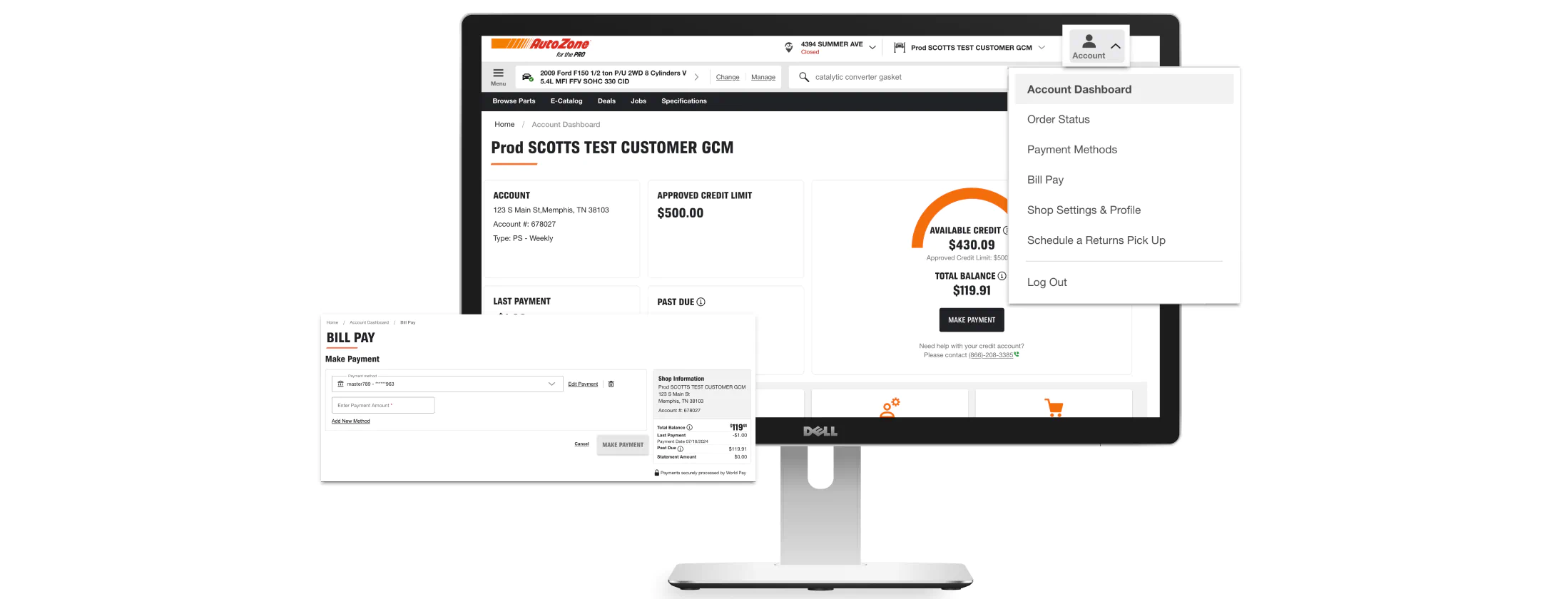
The business model relies on two distinct pillars: wholesale pricing and dedicated logistics. Through specialized programs like the shop owner discount program, businesses receive wholesale rates indexed against their purchase volume. They also rely on commercial delivery services, where dedicated parts runners transport components directly to repair bays within 30 to 45 minutes to keep technicians productive. Professional accounts access these logistics through the AutoZone Pro account portal, an enterprise digital system completely distinct from the public consumer website.
When an unauthorized individual walks up to a commercial desk, they are attempting to exploit systems configured for business-to-business commerce. Retailers absorb credit card processing fees, specialized inventory logistics, and commercial support staff costs under the contractual expectation that commercial partners yield high annual volume. Siphoning those terms for an occasional DIY brake job undermines the foundational economics of wholesale distribution.
Retail vs. Commercial Accounts: Governance, Pricing, and Security
Understanding why retailers are aggressively curbing rogue counter purchases requires looking at the structural differences between retail customers and verified commercial operators.
| Account Parameter | Retail Consumer | Verified Commercial Account | Unauthorized Piggybacker |
|---|---|---|---|
| Pricing Model | Standard Retail MSRP | Volume Commercial Pricing Discount (20%, 55% off) | Illicitly obtained commercial trade pricing |
| Identity Verification | None (Standard retail POS) | EIN, business registry, commercial credit check | Stolen, guessed, or unverified shop phone number |
| Tax Treatment | Standard state and local sales tax | Resale tax exemption certificate on file | Potential illegal tax evasion if billed tax-exempt |
| Warranty & Returns | Tied to individual receipt or phone number | Tracked via corporate account database | Voided due to unauthorized account utilization |
| Compliance Risk | Zero legal exposure | Compliant under corporate supplier contracts | Substantial retail fraud risks and civil exposure |
The Legal Line Between a Coupon Hack and Retail Fraud
Online forums often treat using a random phone number at checkout as a harmless game, comparable to scanning a supermarket loyalty card left behind by another customer. Under state and federal commercial codes, that comparison collapses immediately.
When an individual approaches a parts counter and provides another entity's phone number or business name, they make an affirmative representation that they possess authority to transact on that account. Under statutory fraud definitions, obtaining property or pecuniary advantages by intentionally deceiving a merchant regarding one's identity or employment status is classified as false pretenses or theft by deception. If an unauthorized buyer charges the invoice to a business's revolving credit balance, it becomes an outright criminal offense.
The hazard grows far more severe if the transaction defaults to tax-exempt status. Professional automotive businesses routinely keep an official state tax exemption certificate attached to their commercial accounts, allowing them to purchase replacement parts without paying local sales tax on the expectation that tax will be collected when the part is resold to an end customer. When a DIY consumer buys parts on that account without paying sales tax, the transaction becomes tax fraud. State revenue departments run forensic audits on merchant accounts, and unexplained non-taxed sales can trigger devastating penalties for the shop owner and legal scrutiny for the individual involved.
How Retailers Are Enforcing Stricter Counter Controls
Faced with growing inventory discrepancies and furious corporate account holders, major parts retailers have accelerated aggressive terms of service enforcement. The era of loosely quoting a local radiator repair shop's phone number at the counter has effectively ended.
Counter software terminals across national chains have received security patches. Commercial accounts now commonly require an authorized buyer list, where employees must present physical corporate identification or a matching driver's license before an invoice generates. Many accounts require a dynamic four-digit security PIN sent directly to the registered business owner's mobile device, preventing walk-in buyers from impersonating shop staff.
Loss prevention divisions also deploy algorithmic transaction monitoring through the AutoZone Pro account portal. Invoices paid with personal credit cards bearing names that fail to match the corporate registration immediately flag for manual review. When suspicious patterns emerge, regional commercial account managers freeze the account, contact the actual business owner, and revoke walk-in privileges for non-verified personnel. Store personnel caught processing unauthorized transactions face internal reprimands or termination for policy non-compliance.
Legitimate Pathways to Automotive Discounts for Independent Drivers
Drivers who maintain multiple family vehicles or run independent enterprises do not need to resort to illegal counter deception to lower their maintenance costs. Multiple legal, above-board channels deliver wholesale-adjacent pricing without running afoul of fraud statutes.
Sole proprietors, mobile mechanics, hot-shot couriers, and agricultural operators can apply for a genuine fleet maintenance account. If an individual operates an LLC or registered trade business with several registered vehicles, most auto parts retailers permit them to open an official commercial profile upon providing state registration and basic business documentation. This opens commercial pricing tiers, parts delivery options, and dedicated account management without deception.
For standard hobbyists and DIYers, signing up for consumer loyalty ecosystems, timing purchases during seasonal manufacturer rebate cycles, and utilizing price-matching policies against reputable online distributors remain the safest strategies. Securing a legitimate 15% to 20% savings through authorized consumer rebates guarantees valid manufacturer warranties, provides clean purchase documentation, and avoids criminal retail fraud risks entirely.
Frequently Asked Questions (FAQ)
Q1: Is it illegal to use a local garage's phone number to get discounted car parts?
Yes. Claiming an association with a commercial garage without authorization to gain financial discounts constitutes misrepresentation, commonly prosecuted as theft by deception or retail fraud depending on transaction size and jurisdiction.
Q2: What happens if an unauthorized purchase is processed as tax-exempt?
Using a business's tax exemption certificate to avoid paying sales tax on personal purchases violates state revenue laws. Both the unauthorized purchaser and the business holding the tax certificate face civil penalties, back taxes, and potential criminal tax evasion investigations.
Q3: Can an individual driver open a commercial account at AutoZone?
AutoZone reserves commercial accounts for legitimate businesses, fleets, and registered automotive professionals. Applicants must provide an EIN or tax documentation, commercial credit details, and proof of enterprise status during the commercial credit application process.
The Changing Realities of the Parts Counter in 2026
Viral internet workarounds often gloss over the complex business relationships and legal liabilities governing modern supply chains. While parts markups can frustrate budget-conscious vehicle owners, commercial pricing is an earned wholesale concession built on corporate credit commitments, ongoing volume, and formal contracts.
The aggressive crackdown at commercial desks reflects a retail ecosystem tightening its controls against automated identity abuse and casual deception. For independent drivers, automotive trades, and supply networks alike, maintaining clear lines between enterprise accounts and retail consumer channels safeguards the accountability that keeps the automotive repair industry functioning.


