Fact-Checking the Geometry: Does a Circle Actually Have Zero Sides?
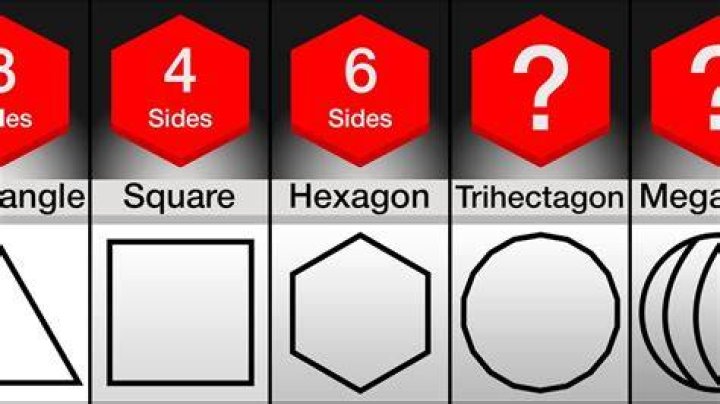
Few basic math questions spark as much exasperation or split-second arguments as asking someone to count the sides of a circle. When television personality Vinay Gowda went on air during a reality television segment and claimed a circle has two sides, social media erupted into widespread mockery, prompting a heated defense covered by The Times of India. Yet Gowda’s intuitive retort, referring to the inside and the outside, highlights a fundamental collision between casual everyday language and formal mathematical rigor.
Depending on whether you consult classical Euclidean geometry, modern calculus, or differential topology, the answer shifts between zero, infinity, and one. The confusion does not stem from faulty calculation, but from projecting rules meant for polygons onto a continuous curve.
📌 Key Takeaways:
- Euclidean Definition: A circle has zero sides because classical geometry strictly defines a side as a straight line segment bounded by vertices.
- Calculus & Limits: A circle functions as the regular polygon limit as the number of edges approaches infinity, making infinite sides an operational approximation rather than a structural fact.
- Topological Boundary: In modern differential geometry, a circle consists of one continuous boundary separating the Euclidean plane into two distinct regions.
Why Euclid Assigned Zero Straight Edges to Curves
In book one of Euclid’s Elements, geometry begins with precise structural classifications. A polygon is explicitly defined as a two-dimensional figure enclosed by straight line segments, known as edges. Triangles have three segments, quadrilaterals have four, and decagons have ten. Every edge connects two discrete vertices, producing sharp structural corners.
A circle breaks this framework entirely. Euclid defined a circle as a closed plane curve consisting of all points equidistant from a single central point. Because it contains no vertices and no straight line segments, standard classical geometry assigns it exactly zero sides.
Confusing a curve with a line segment represents a fundamental category error in plane geometry. A side cannot be bent. If a shape’s perimeter is curved along every single sub-millimeter of its length, counting straight components yields zero.
The Calculus View: Polygons Approaching Infinity
The argument for infinite sides gained historical traction through the method of exhaustion, pioneered by Archimedes around 250 BCE to approximate the value of pi. Archimedes inscribed regular polygons inside a circle and circumscribed them around the exterior. He started with hexagons, moved to 12-gons, 24-gons, 48-gons, and ultimately settled on 96-sided polygons to sandwich the circle’s ratio between 3.1408 and 3.1429.
As the number of sides $n$ grows, each straight edge shrinks toward an infinitesimal length. In the language of modern calculus and limits, a circle represents the regular polygon limit as $n \to \infty$.
Yet a limit describes a target, not an identity. A regular polygon with an infinite number of edges is formally studied in higher mathematics as an apeirogon. In Euclidean space, an apeirogon does not curve back onto itself to enclose area; its edges extend infinitely in both directions unless defined in hyperbolic geometry. Approaching a circle via infinite discrete steps demonstrates how calculus operates, but a circle does not literally hold an infinite count of straight sticks.
Comparing Geometric Interpretations of a Circle's Structure
| Geometric Discipline | Assigned Count | Formal Mathematical Justification |
|---|---|---|
| Classical Euclidean Geometry | 0 sides | Requires straight line segments connecting distinct vertices; curves possess neither. |
| Calculus & Real Analysis | $\infty$ (as a limit) | The perimeter represents the limit of an $n$-sided regular polygon as $n$ approaches infinity. |
| Differential Topology | 1 boundary component | The circle forms a 1-dimensional manifold without boundary ($\partial M = \emptyset$) bounding a 2D disk. |
| Spherical Geometry / Degenerate Polygons | 1 side (Monogon) | A single vertex joined to itself by a single geodesic edge on curved non-Euclidean surfaces. |
| Colloquial / Linguistic Riddle | 2 sides | Refers to the Jordan Curve Theorem separating the 2D plane into inside and outside domains. |
The Inside, Outside Riddle and the Jordan Curve Theorem
The viral debate sparked by Vinay Gowda's claim exposes an ambiguity in the English language. In daily speech, the word "side" routinely denotes a surface, flank, or geographic orientation. A sheet of paper has two sides; a house has an inside and an outside.
Topology validates this spatial intuition through the Jordan Curve Theorem. Proven rigorously by Oswald Veblen in 1905, the theorem asserts that every continuous, simple closed curve in a plane divides the plane into two connected regions: a bounded "inside" region and an unbounded "outside" region. The curve acts as their shared boundary.
When someone says a coin or a circle has an inside and an outside, they are describing spatial partition, not edge geometry. Conflating topological boundaries with Euclidean polygonal edges produces endless playground semantic debates.
Differential Geometry: Curvature Without Edges
In differential geometry, mathematicians abandon the polygon metaphor entirely to analyze smooth curves. Instead of searching for line segments, differential geometers define a circle through smooth parameterization and constant curvature.
Using Cartesian coordinates, a circle of radius $r$ centered at the origin is represented as:
$$x(t) = r \cos(t), \quad y(t) = r \sin(t) \quad \text{for } t \in [0, 2\pi)$$
At every point along this smooth curve, the direction of the tangent line changes continuously. The curvature $\kappa$ is constant and equal to $1/r$. Unlike a polygon, which has zero curvature along its straight edges and undefined, infinite curvature spikes at its sharp vertices, a circle possesses smooth, uninterrupted curvature throughout.
This differential formulation underpins the standard circumference formula $C = 2\pi r$. By integrating arc length along this continuously turning vector, calculus yields the exact perimeter without ever requiring a single flat edge or discrete corner.
Degenerate Polygons and the Monogon Concept
Can a polygon ever have just one side? In standard flat Euclidean space, a polygon requires at least three straight segments to close without overlapping, making the triangle the simplest possible polygon. Two straight lines cannot enclose a space on a flat surface without intersecting at two points, which would bend them into curves.
On curved surfaces, standard Euclidean limitations vanish. Spherical geometry permits a monogon: a degenerate polygon with one vertex and one continuous edge. On a sphere, a geodesic line segment can depart a single vertex, wrap entirely around the spherical surface, and return to the exact same vertex.
A circle drawn on flat paper is not a monogon because it features zero vertices. The comparison reveals how modifying surface curvature alters the most basic geometric definitions of polygons, edges, and enclosing loops.
Frequently Asked Questions (FAQ)
Q1: Why do primary school teachers often say a circle has one side?
A1: Elementary curricula frequently use "side" loosely to mean "continuous outer boundary." Calling the perimeter a single curved side helps children distinguish circles from shapes with zero boundaries, like open lines. In strict mathematical terminology, a side must be straight, meaning the formal answer remains zero.
Q2: If a circle has zero sides, how can it have an area?
A2: Area measures the two-dimensional region enclosed by a perimeter, regardless of whether that perimeter consists of straight lines or curves. The formula $A = \pi r^2$ calculates the surface enclosed by the boundary, not the sum of flat geometric edges.
Q3: Does a 3D sphere have any sides?
A3: Similar to a 2D circle, a sphere has zero flat faces. In differential geometry, it is classified as a closed, compact 2D manifold without boundary embedded in 3D space. It divides space into an interior volume and an exterior region, but contains no polygonal edges or planar faces.
Navigating Mathematical Rigor Across Contexts
Precision in mathematics depends entirely on the definitions applied. When someone asks how many sides a circle has, the response hinges on the operational system in play.
For standard school geometry and standard technical drafting, zero remains the only defensible Euclidean answer. A side is a straight line segment, and a circle contains none. For calculus students running integration routines, treating the perimeter as the limit of infinite infinitesimal segments provides functional computational power. For everyday linguistic riddles, acknowledging an inside and outside captures spatial reality.
Treating math as a rigid collection of trick answers obscures the richer reality underneath: shapes are defined by the frameworks we choose to measure them.


