Friday Night Lights Turns 20: Looking Back at the Groundbreaking Drama That Launched Superstars
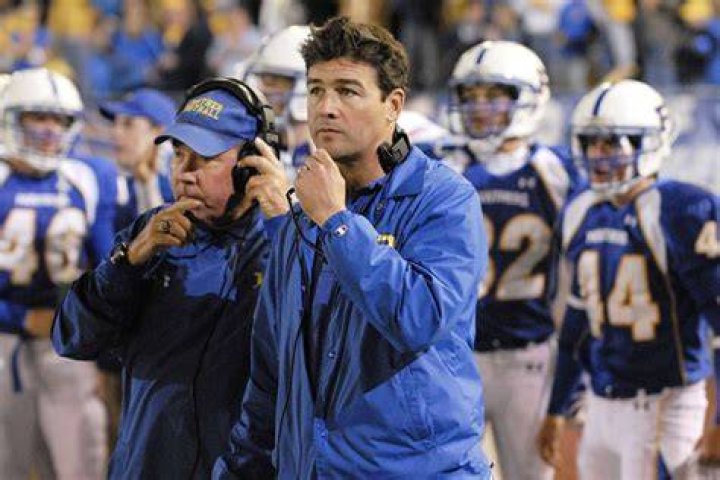
Twenty years after the pilot first aired in October 2006, the television adaptation of Friday Night Lights remains an unmatched study of working-class American life, athletics, and community fragility. When the series originally struggled for broadcast ratings on NBC, few industry observers predicted it would become the launchpad for a generation of Hollywood royalty. According to a Variety Report detailing the cast's 20th anniversary reunion at the ATX TV Festival in Austin, the ensemble's return arrives alongside a newly greenlit retrospective docuseries examining the drama's enduring footprint.
While viewers initially tuned in for the small-town mythology of West Dillon, the introduction of Michael B. Jordan in Season 4 fundamentally redirected the show’s legacy. Stepping into the cleats of troubled quarterback prodigy Vince Howard, Jordan delivered a performance so kinetic, layered, and raw that it salvaged a narrative transition that could have sunk a lesser production. Two decades later, tracing Jordan's journey from a doomed street kid in West Baltimore to an Oscar-contending director and global box-office force reveals that East Dillon was the crucible where his artistic identity was forged.
📌 Key Takeaways:
- The Landmark Milestone: The creative team and cast assemble in Austin for the 20th anniversary reunion at the ATX TV Festival, celebrating the show's 2006 debut and its upcoming retrospective docuseries.
- The Soft-Reboot Triumph: When the production split Dillon across economic and racial lines in Season 4, Michael B. Jordan's Vince Howard anchored the East Dillon Lions, turning a risky structural reset into the show's artistic peak.
- The Career Crucible: Peter Berg and Jason Katims' three-camera improvisation system liberated Jordan after his breakthrough role as Wallace on The Wire, directly shaping the physical and emotional gravitas behind the Creed franchise.
The Austin Gathering and the Resurgence of East Dillon
The announcement of the 20th anniversary reunion at Austin’s ATX TV Festival confirmed what television critics have maintained for two decades: Friday Night Lights has defied the typical decay rate of mid-2000s network dramas. The event, held in the city where the production lived and filmed for five seasons, brings showrunner Jason Katims, executive producer Peter Berg, and cast members back to the soil that grounded the series. Coupled with a new multi-part retrospective docuseries charting the production's unconventional history, Dillon, Texas, is back in the cultural conversation.
The show's longevity stems from its stubborn refusal to simplify middle America. When NBC faced low viewership numbers following Season 2, an unprecedented cost-sharing agreement with DirecTV’s The 101 Network saved the series from cancellation. That survival pact led directly to the East Dillon creative pivot in Season 4.
Splitting Dillon into two separate school districts allowed the writers to tackle urban disinvestment, institutional racism, and systemic poverty head-on. The West Dillon Panthers represented institutional wealth, polished boosters, and generational privilege. The newly reopened East Dillon High had a weed-choked field, rusted lockers, and uniforms cobbled together on a shoestring budget. At the heart of that fractured landscape stood Vince Howard.
Vince Howard and the Reinvention of Michael B. Jordan
Before donning the red and gold jersey of the East Dillon Lions, Jordan was already recognizable to prestige television viewers. His gut-wrenching turn as Wallace in Season 1 of HBO's The Wire had turned him into an avatar of systemic vulnerability. He followed that with recurring roles on All My Children and Parenthood, yet Vince Howard demanded something radically different: explosive athletic charisma combined with deep domestic exhaustion.
Vince is introduced in the Season 4 premiere, sprinting through an alley to escape police cruisers before facing a juvenile court judge who gives him a binary choice: join Coach Eric Taylor’s fledgling football program or face detention. Jordan refused to play the role as a familiar archetype. His Vince was defensive, guarded, and fiercely protective of his mother, Regina, who was struggling with substance abuse.
Jordan captured the heavy physical toll carried by high schoolers thrust into adult domestic roles. When Coach Taylor, played with gruff restraint by Kyle Chandler, tells Vince, "You may not think so, but you're a leader," Jordan’s silent reaction tells the story. The subtle flicker of suspicion giving way to reluctant trust remains one of the finest moments of understated acting in modern television.
By Season 5, Jordan controlled the screen with total command. Vince's journey through college recruitment, the corrupting influence of street agents, the return of his formerly incarcerated father, and the relentless pressure to secure a State Championship transformed the final two seasons into essential viewing.
From Baltimore to Dillon: Jordan's Path to A-List Stardom
The technical environment on Friday Night Lights radically reshaped Jordan's craft. Peter Berg designed a production model where artificial film lights were stripped away, three handheld 16mm cameras ran continuously, and actors were forbidden from hitting traditional marks. If an actor wanted to pace around the kitchen, sit on the floor, or alter a line, the camera operators had to adapt in real time.
That freedom allowed Jordan to develop a rhythmic naturalism that traditional multi-camera or static-set productions often stifle. The table below traces how his performance in Dillon served as the crucial bridge between his early television breakthroughs and his ascension as an international box-office anchor.
| Career Era | Defining Title & Role | Stylistic Skill Developed | Commercial & Critical Impact |
|---|---|---|---|
| 2002 | The Wire (Wallace) | Raw, unvarnished innocence; conveying systemic tragedy without sentimentality. | Critical acclaim; established him as an emerging dramatic actor at age 15. |
| 2009, 2011 | Friday Night Lights (Vince Howard) | Loose, improvisational naturalism; physical lead presence under handheld cameras. | Sustained the show's creative revival; caught the attention of director Ryan Coogler. |
| 2013 | Fruitvale Station (Oscar Grant) | Intimate human complexity; handling real-world tragedy with quiet dignity. | Sundance Grand Jury Prize; cemented Jordan as a premier leading man. |
| 2015, 2026 | Creed Franchise & Black Panther | Blockbuster physical transformation; multi-hyphenate directing and franchise leadership. | Over $2.5 billion in cumulative box office; NAACP Image and critical awards. |
When director Ryan Coogler began casting for his 2013 indie masterpiece Fruitvale Station, he cited Jordan's performance as Vince Howard as the decisive factor. Coogler saw someone who could convey vulnerability while maintaining an athletic, imposing physical presence. That collaboration led directly to Creed in 2015, where Jordan carried the weight of the Rocky mythology, eventually directing the franchise’s third installment.
The Dynamics Behind Coach Taylor and Vince Howard
The central emotional engine of Seasons 4 and 5 was the evolving bond between Kyle Chandler's Coach Eric Taylor and Vince Howard. Earlier seasons had explored Taylor’s role as a surrogate father to Jason Street and Matt Saracen. Yet those relationships unfolded within established social structures where Coach Taylor held cultural authority.
In East Dillon, that dynamic shattered. The East Dillon Lions were built on gravel lots, neglected community centers, and racial tension. Vince did not view Coach Taylor as an unquestioned moral authority; he viewed him as another adult who might make promises he couldn't keep.
Chandler and Jordan played these scenes with real restraint. There were no grand monologues or easy redemptions. When Vince’s father, Kenny, steps back into his life after years in prison, pushing his son toward predatory scholarship offers and undermining Taylor’s authority, Vince is torn apart by conflicting loyalties. The tension culminated in Vince being benched for insubordination, a plot twist that forced Jordan to communicate frustration, pride, and shame entirely through posture and averted eyes on the sidelines.
Their dynamic succeeded because both actors resisted sentimentality. When Vince finally takes the field for the State Championship game in the series finale, the resolution between coach and player is forged through mutual respect rather than paternal dependency.
Why Season 4 and Season 5 Outlasted the Original Run
The late-era resurgence of Friday Night Lights serves as a textbook example of narrative adaptation. Most television dramas experience steep creative fatigue by their fourth year, especially teen ensembles where characters age out of high school. By acknowledging that small-town ecosystems change, the production avoided the traps that doomed contemporaries like The O.C. or One Tree Hill.
The production team, guided by Katims, realized that Texas high school football was not merely a backdrop for suburban romance. It was a pressure cooker where race, working-class survival, and regional economics met on Friday nights. Introducing characters like Vince Howard, Luke Cafferty (Matt Lauria), Jess Merriweather (Jurnee Smollett), and Becky Sproles (Madison Burge) revitalized the show’s emotional stakes.
Online communities across Reddit and television subforums frequently place Season 5 alongside Season 1 as the high-water marks of modern network drama. The finale, "Always," offered a definitive, moving conclusion that tied off character arcs without resorting to cheap nostalgia. It gave Michael B. Jordan a complete dramatic canvas: an athlete who grew from an angry runaway into an empathetic young man capable of carrying a broken community to victory.
Frequently Asked Questions (FAQ)
Q1: Why is Friday Night Lights getting renewed attention in 2026?
A1: The series is celebrating its 20th anniversary with a high-profile cast reunion at the ATX TV Festival in Austin, Texas, alongside the announcement of a new retrospective docuseries that re-examines the show's making, its filming techniques, and its lasting cultural footprint.
Q2: In which seasons of Friday Night Lights did Michael B. Jordan appear?
A2: Michael B. Jordan joined the show in Season 4 (2009) as a series regular, playing quarterback Vince Howard. He remained the central protagonist through the conclusion of Season 5 in 2011, appearing across 26 total episodes.
Q3: How did Michael B. Jordan's performance in Dillon influence his casting in Creed?
A3: Director Ryan Coogler has frequently credited Jordan's dual vulnerability and athletic authority as Vince Howard as the performance that inspired him to cast Jordan in Fruitvale Station (2013). That working relationship directly led to Coogler creating the role of Adonis Creed for Jordan in the Creed franchise.
The Lasting Legacy of the East Dillon Lions
Looking back across two decades of prestige television, the final chapter of Friday Night Lights reads less like a standard broadcast drama and more like an incubator for some of modern cinema's most important talents. The show proved that network television could produce cinematic, naturalistic art without relying on high-concept gimmicks or procedural formulas.
For Michael B. Jordan, Vince Howard was the bridge between child acting and adult stardom. It demonstrated that he could shoulder the emotional, physical, and thematic demands of a lead role under pressure. When the East Dillon Lions lined up for that final, unforgettable hail mary in the Texas dusk, Vince Howard wasn't just throwing for a state title. He was launching one of the defining screen careers of the modern era.


