From 1812 Folklore to Viral Sensation: The Complete Evolution of the Magic Mirror
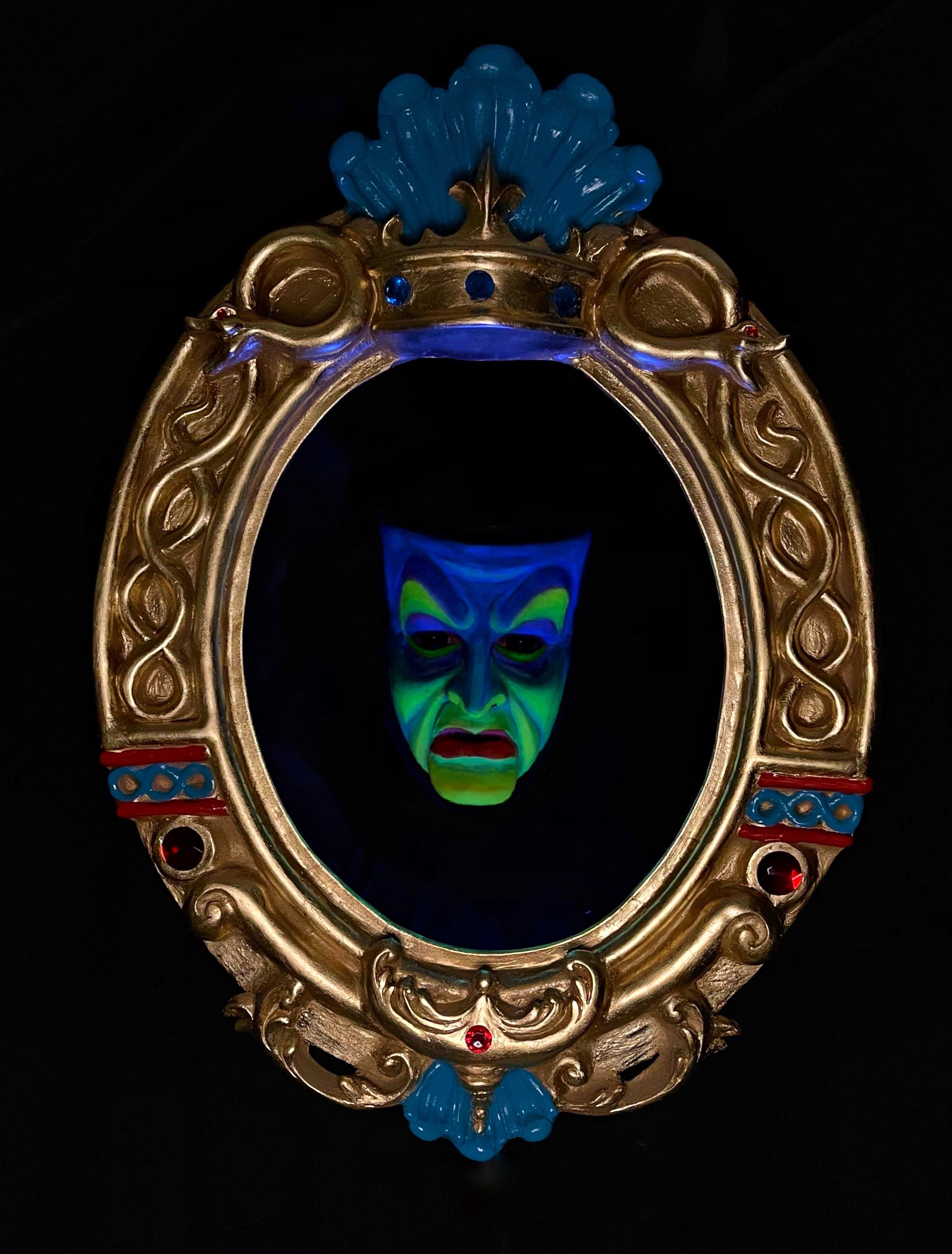
When the Disney live-action remake trailer offered a closer look at the confrontation between Rachel Zegler's Snow White and Gal Gadot's Evil Queen, cultural observers immediately zeroed in on a familiar theatrical centerpiece: the towering, fluid surface of the enchanted oracle. As highlighted in a Motion Picture Association Report examining the project's visual staging, the studio banked heavily on the ancient friction between royal vanity and supernatural truth. What appears on screen as digital sorcery carries more than two centuries of cultural evolution, bridging Bavarian manufacture, folkloric anxiety, and mid-century animation ingenuity.
The Snow White mirror remains one of literature's most durable narrative engines. Long before Hollywood realized the prop as a disembodied face trapped in swirling vapor, it existed as a tangible curio in 18th-century Germany. Its trajectory from local acoustic artifact to central pillar of American animation, and now to a lightning rod for twenty-first-century franchise debates, reveals our persistent discomfort with self-image and validation.
📌 Key Takeaways:
- Folklore Origins: The myth traces back to Lohr am Main mirror folklore and the historical figure Maria Sophia von Erthal, whose stepmother owned an elaborate 18th-century "talking" acoustic mirror.
- The Mandela Effect: The 1937 film never used the phrase "Mirror, mirror on the wall"; the canonical Disney incantation begins strictly with "Magic Mirror on the wall."
- Modern Reinvention: The live-action era pivots the mirror from simple vanity to an allegorical study of autocratic control, seen across versions from 2012's dark fantasy films to the Gal Gadot-led adaptation.
The Real 18th-Century German Mirror of Lohr am Main
Behind the Grimm brothers' fairy tale stands a verifiable piece of industrial history. In 1986, Franconian local historian Karlheinz Bartels uncovered records suggesting that the 1812 fairy tale drew directly from the life of Maria Sophia von Erthal, born in 1725 in the Bavarian town of Lohr am Main. Her father, Prince-Constable Philipp Christoph von Erthal, ran the prestigious Kurmainz Mirror Manufactory, renowned across Europe for producing acoustic glass and cast mirrors of astonishing optical clarity.
Following the death of Maria Sophia's mother, Philipp married Claudia Elisabeth Maria von Venningen, Countess of Reichenstein, in 1743. Archival records in Lohr reveal the Countess possessed an ornate, 1.6-meter mirror manufactured inside the local workshops. The glass bore a distinctive medallion in the upper frame reading "Amour Propre" (Self-Love). Because of the manufactory’s sophisticated acoustic engineering, reflections across the glass produced echoing tonal reverberations, prompting locals to christen it the "Talking Mirror."
The physical mirror still hangs in the Spessart Museum within Lohr Castle. It offers concrete evidence of how domestic luxury goods transformed into supernatural folklore. Bavarian villagers saw the mirror as an unsettling instrument of surveillance, an aristocratic plaything that literally reflected a stepmother’s self-regard back onto an isolated stepdaughter.
The Brothers Grimm and the 1812 Manuscript
When Jacob and Wilhelm Grimm published Kinder- und Hausmärchen in December 1812, they stripped the talking mirror of its regional mechanical context, elevating it to an absolute judge of human beauty. In the early manuscript, the Queen’s interaction with the mirror represents an obsessive daily ritual:
"Spieglein, Spieglein an der Wand, wer ist die Schönste im ganzen Land?"
The German text translates directly to: "Little mirror, little mirror on the wall, who is the fairest in the entire land?" The mirror’s power stemmed entirely from its cold, unwavering objectivity. It could not lie, flatter, or withhold judgment. In early variations recorded by the brothers, the Queen asked this question for years without incident. The rupture occurred only when Snow White reached the age of seven, surpassing her stepmother’s beauty and instantly turning the royal mirror into an existential threat.
The Grimm narrative used the object to critique aristocratic hubris. By demanding reassurance from an inanimate object, the Queen surrendered her sanity to an exterior verdict. The mirror functioned as an externalized conscience, announcing that beauty in the feudal world was both a currency and a perishable asset.
Walt Disney's 1937 Breakthrough and the Mask in the Smoke
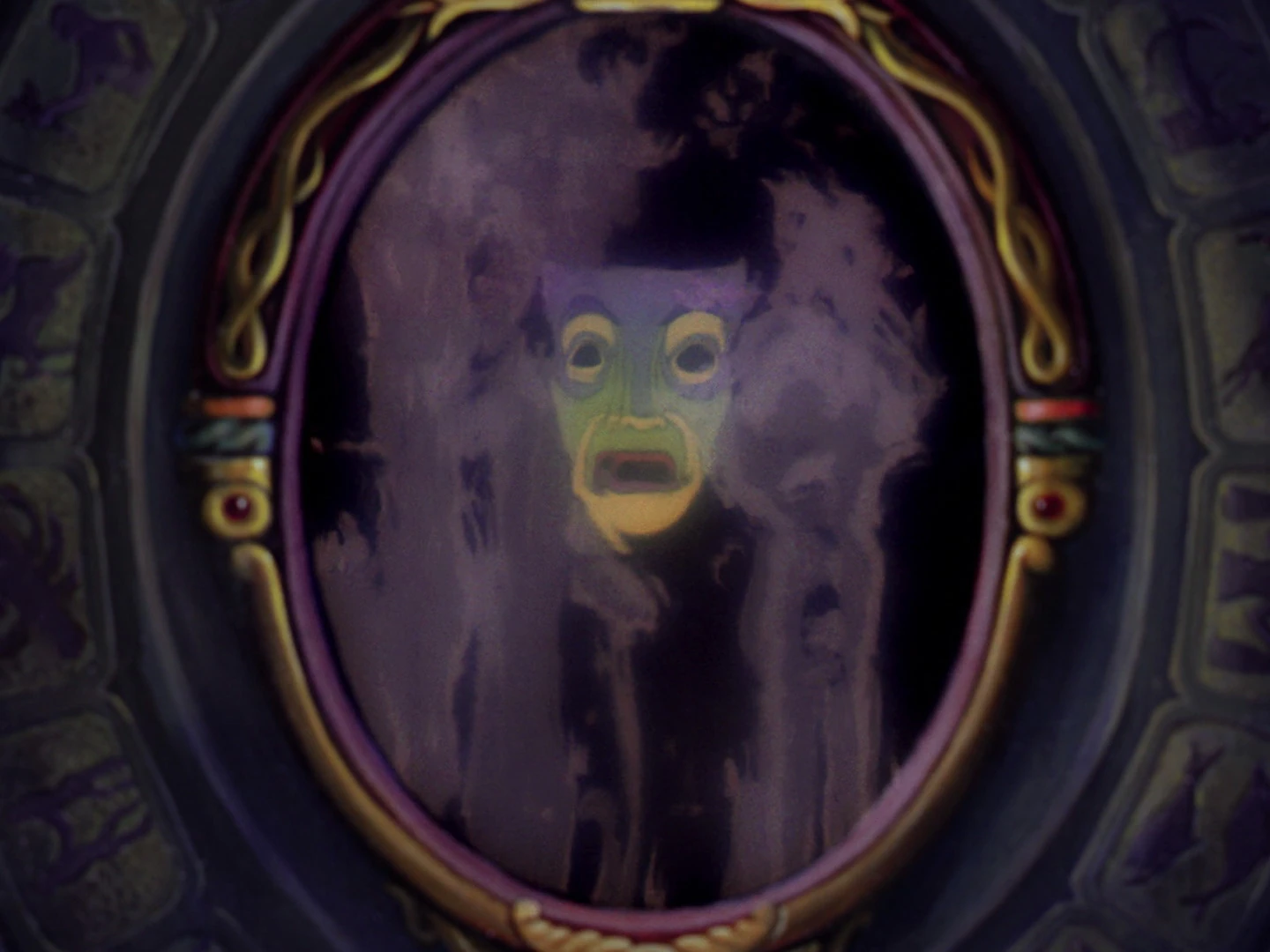
When Walt Disney set out to make America's first full-length animated feature, Snow White and the Seven Dwarfs, the mirror posed a massive visual problem. How could animators make a static glass plate terrifying on a cinema screen? Concept artist Albert Hurter broke away from standard theatrical props, designing the mirror as an ominous Art Deco fixture holding an imprisoned cosmic spirit.
Animators framed the entity inside green flame and billowing smoke. Actor Moroni Olsen provided the baritone voice, speaking through custom acoustic filters to sound cavernous and indifferent. Disney christened the entity the Slave in the Magic Mirror, a captive oracle forced to answer the monarch's bidding:
"Slave in the Magic Mirror, come from the farthest space, through wind and darkness I summon thee. Speak! Let me see thy face."
The theatrical impact of this sequence secured the movie's place in cinema history. At the 11th Academy Awards in 1939, Shirley Temple presented Walt Disney with an iconic Honorary Academy Award consisting of one full-sized Oscar statuette alongside seven miniature figures mounted on a stepped base. The citation recognized the film as a significant screen innovation that had charmed millions, with the mirror sequence singled out by critics as an artistic triumph of synchronized sound and visual effects.
The Great Mandela Effect: Dissecting the Quote Debate
Pop culture preserves a persistent collective misremembering known as the Mandela Effect regarding the mirror’s invocation. Millions of English speakers worldwide swear the 1937 Disney animated film contains the line: "Mirror, mirror on the wall, who is the fairest of them all?"
It does not.
The exact script dialogue spoken by Lucille La Verne as the Evil Queen is: "Magic Mirror on the wall, who is the fairest one of all?"
| Adaptation & Source | Exact Dialogue Used | Visual & Aesthetic Form |
|---|---|---|
| Brothers Grimm Folklore (1812) | "Spieglein, Spieglein an der Wand..." | Carved acoustic glass framed in Rococo wood; Lohr am Main style. |
| Walt Disney Classic (1937) | "Magic Mirror on the wall, who is the fairest one of all?" | Disembodied theatrical mask suspended in green smoke and flame. |
| Snow White and the Huntsman (2012) | "Mirror, mirror on the wall..." | Molten gold disc that liquefies into a robed phantom figure. |
| Disney Live-Action (2025, 2026) | "Magic Mirror on the wall..." | Photorealistic monolithic wall fixture with shifting liquid metal geometry. |
Why did the collective memory drift? The confusion stems from early nineteenth-century English translations of the Grimm text, which translated Spieglein, Spieglein as "Mirror, mirror." School plays, Little Golden Books, and radio serials recycled that alliterative phrase for decades. When audiences revisited the 1937 classic on home video formats throughout the 1990s and 2000s, many were shocked to hear the Queen address the entity as "Magic Mirror."
Gal Gadot and Rachel Zegler: Reimagining the Oracle for 2026
The contemporary screen adaptation starring Rachel Zegler and Gal Gadot pulls the mirror into the visual effects era. Rather than relying on simple stage illusion or rotoscoped animation, modern production teams constructed the enchanted talking mirror face through real-time motion capture and generative physics simulations. The surface behaves like mercury, rippling outward as Gadot's monarch demands confirmation of her royal standing.
The thematic stakes have shifted noticeably. In early interviews and preview materials, the creative team framed the rivalry not simply as an obsession with wrinkles or cheekbones, but as a battle over leadership authority. The mirror serves as an algorithmic judge, measuring social influence, popular affection, and genuine charisma rather than sheer biological symmetry. When the glass names Snow White as the rightful sovereign, it signals a political threat to the Queen’s empire.
Audiences today view the glass through the lens of algorithmic validation. We live surrounded by glowing screens that track our reactions and quantify our social value. The Queen's compulsive need to interrogate her screen reflects contemporary screen culture back at the viewer with zero nostalgic softening.
Frequently Asked Questions (FAQ)
Q1: Did the Queen in the 1937 Disney film ever say "Mirror, mirror on the wall"?
A: No. In the 1937 Walt Disney classic, the Evil Queen explicitly states: "Magic Mirror on the wall, who is the fairest one of all?" The phrase "Mirror, mirror" comes from English literary translations of the original German fairy tale, not the Disney animated screenplay.
Q2: Where is the historical mirror that inspired the Snow White story located today?
A: The physical mirror that inspired the folklore is on public display at the Spessart Museum inside Lohr Castle in Lohr am Main, Germany. Built around 1720, it belonged to Claudia Elisabeth von Venningen, the real-life stepmother of Maria Sophia von Erthal.
Q3: Why was Walt Disney awarded seven miniature Oscars for Snow White?
A: During the 11th Academy Awards in 1939, the Academy Board of Governors recognized Disney's technical and storytelling achievement with a unique Honorary Academy Award: one standard-sized Oscar statuette accompanied by seven graduated miniature Oscars mounted on a stepped wooden base.
Why the Glass Never Lies: The Enduring Power of the Oracle
Two centuries after the Grimm brothers committed the tale to paper, the mirror remains the central axis of the Snow White mythos. Its horror does not come from fangs, spells, or claws. It comes from unvarnished, disinterested truth. The mirror possesses no malice; it simply reports reality without deference to wealth, beauty, or absolute crown authority.
Every generation redesigns the mirror to match its prevailing anxieties. For 18th-century German villagers, it represented the mysterious mechanical wonders of wealthy nobility. For Walt Disney’s Depression-era audiences, it stood as a marvel of synchronized color and industrial sound. For today's moviegoers, it mirrors the digital feeds that demand our attention and quantify our self-worth. Characters may shatter the glass, but the impulse to ask who stands above the rest remains impossible to silence.


