From 1983 to the 2026 Flashmobs: The Cultural Evolution of the Moonwalk Phenomenon

Forty-three years after Michael Jackson stepped backward across the Pasadena Civic Auditorium stage during the television taping of Motown 25: Yesterday, Today, Forever, the physical illusion continues to captivate dancers worldwide. The release of director Antoine Fuqua's biopic Michael, starring Jaafar Jackson, has ignited synchronized promotional flashmobs in cities from Tokyo to Los Angeles. As highlighted in a recent review by the Fort Worth Report, Jaafar's screen performance captured his uncle's kinetic grace with uncanny precision, sparking a massive surge in searches from dancers eager to master the movement.
Yet for all its widespread recognition, the core technique remains one of the most widely misunderstood moves in popular culture. Most beginners try to drag their lifted foot, instantly breaking the kinetic visual trick. Executing the glide requires an unnatural counter-intuition: your flat foot does the moving, while your bent foot bears your entire body weight.
📌 Key Takeaways:
- The Biomechanical Rule: The foot that is flat on the floor glides backward; the foot with the raised heel supports 100% of your body weight.
- The Lineage: Known historically among West Coast street dancers as the "backslide," the move trace back to jazz tap dancers like Cab Calloway and underground popping pioneers before Jackson renamed it on national television.
- The 2026 Revival: Antoine Fuqua's biopic renewed viral interest in street dance isolation techniques, driving millions to study the foot mechanics behind the illusion.
The Counter-Intuitive Physics: How to Execute the Glide
Understanding how to walk the moonwalk begins with shedding natural walking instincts. When walking forward, you lift a heel, swing the leg, land on the heel, and roll onto the toes. The backslide dance technique reverses this dynamic while tricking the viewer's brain into perceiving a forward step.
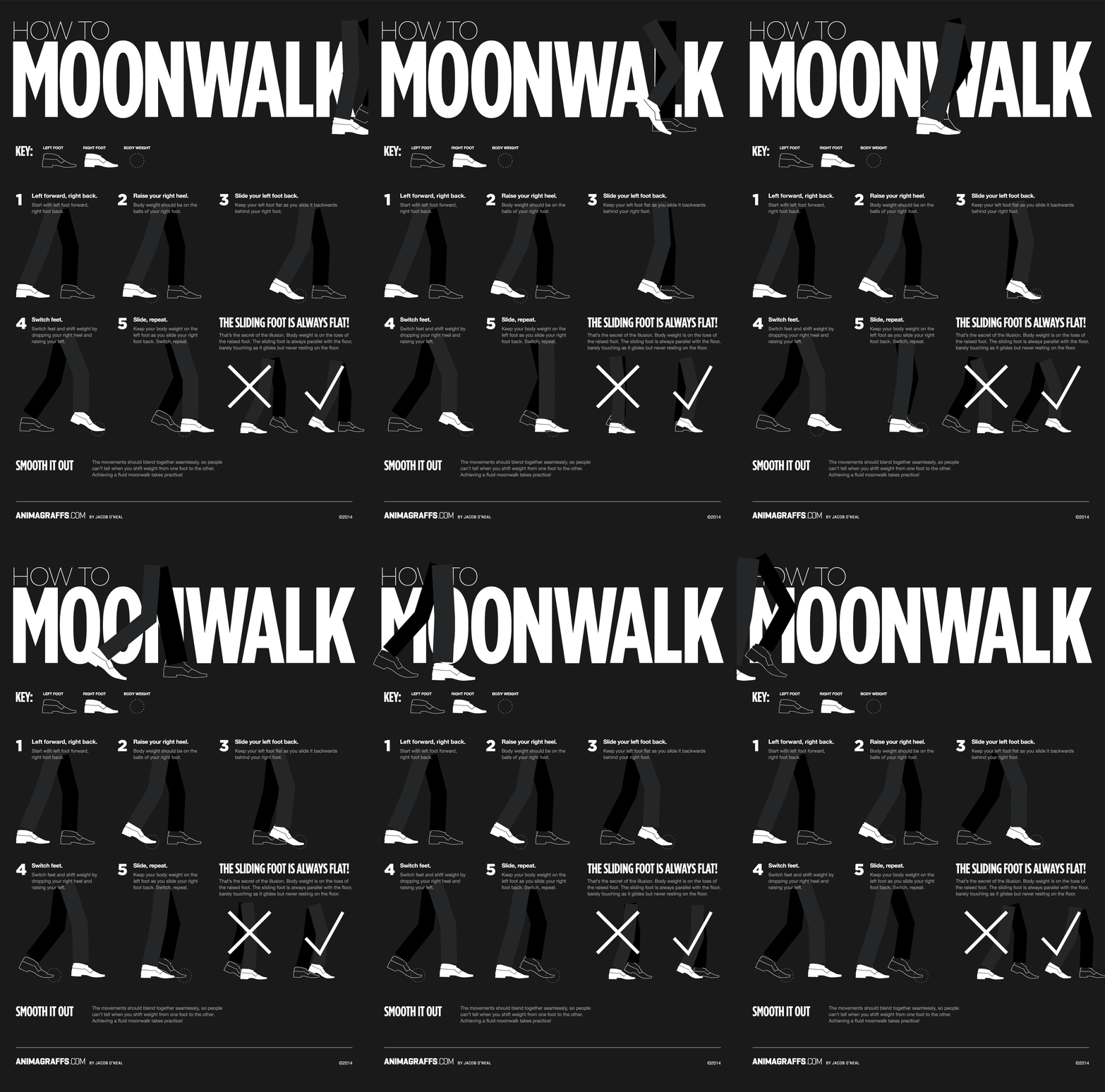
Stand straight with your feet parallel, spaced roughly four inches apart. Shift your entire body mass onto your right leg. Lift your right heel high off the floor so you balance on the ball of the right foot. Your right knee bends slightly forward. Keep your left foot completely flat against the floor. At this exact moment, your left foot carries zero weight. It rests on the floor like a slip of paper.
Push down through the ball of the right foot while sliding the flat left foot straight back along the floor, passing behind your right heel by roughly twelve inches. Keep the left foot completely level. Do not let the toes lift, and do not let the heel rise. The visual trick hinges on flat glide footwork that skims the ground without catching.
Once the left foot finishes its backward glide, switch your feet simultaneously. Drop your right heel flat onto the floor and immediately pop your left heel upward, transferring your full weight to the ball of the left foot. This instant weight distribution shift is the pivot point of the illusion. Now, with your weight locked over your left leg, slide the flat right foot backward past the left leg. Repeat the cycle in a continuous, measured tempo.
Ankle Flexibility Drills and Street Dance Isolation
Amateurs frequently appear rigid because they slide their upper torso awkwardly or look down at their shoes. The illusion succeeds only when your upper body remains level, decoupled from the aggressive leg shifts underneath. Street dance isolation isolates the hip and shoulder plane so the head glides on a horizontal line without bobbing.
To cultivate the necessary range of motion, incorporate targeted ankle flexibility drills into your practice routine. Stand barefoot on a staircase step with your heels hanging off the back edge. Lower your heels downward to stretch the Achilles tendons, then press high onto the balls of your feet for three sets of fifteen repetitions. Fluid weight transfers demand supple calf muscles and responsive plantar fascia.
Practice the heel-drop transition against a wall. Place your hands on the wall at shoulder height to take your balance out of the equation. Cycle through the heel lift and flat slide motion slowly, counting two seconds per slide. Focus on making the weight snap instantaneous. The switch must happen in a split second; any lingering middle ground ruins the deception.
Popping and Boogaloo Roots Behind the Pop Phenomenon
When Michael Jackson launched into "Billie Jean" at the March 25, 1983 Motown anniversary special, the world reacted as if gravity had fractured. In reality, Jackson was showcasing a movement perfected over decades across Black street culture and vaudeville stages. Recent historical analyses, including reporting published by History.com on the dance's roots in Black artistic resistance, detail how sliding steps served as expressive tools against social confinement long before reaching network television.
During the 1930s, jazz bandleader Cab Calloway performed what he called the "Buzz," a lateral sliding step across Harlem stages. Tap dancer Bill Bailey captured a direct precursor on film in 1955 at the Apollo Theater, tapping rhythmically before gliding backward into the wings. In the 1970s, West Coast street dance crews, most notably the Electric Boogaloos, refined these maneuvers under the umbrella of popping and boogaloo roots. Dancers like Boogaloo Sam and Poppin' Pete integrated sharp muscle contractions and robotic pantomime, perfecting the backslide along California boulevards.
Jackson learned the technique directly from dancers associated with the television show Soul Train, including Cooley Jaxson, Jeffrey Daniel, and Casper Candidate. Jackson smoothed Daniel's sharper robotic snaps into an elastic, floating stride, paired it with a black fedora and a sequined glove, and introduced it to a global audience of 47 million viewers.
| Era | Key Practitioners | Movement Distinctive |
|---|---|---|
| 1930s, 1950s Vaudeville & Tap | Cab Calloway, Bill Bailey | Tap-accented rhythms; diagonal and lateral slides across polished wooden stages. |
| 1970s West Coast Popping | The Electric Boogaloos, Jeffrey Daniel, Cooley Jaxson | Mechanical robotic stops, sharp muscular contractions, original naming of the "backslide." |
| 1983 Motown 25 Broadcast | Michael Jackson | Fluid, theatrical presentation with forward-leaning isolation; popularization of the "moonwalk" label. |
| 2026 Revival Era | Jaafar Jackson, Antoine Fuqua film crew, street flashmob creators | Choreographic accuracy on film sets and viral multi-camera street assemblies. |
Optical Illusion Mechanics: Friction, Footwear, and Floor Prep
Even master dancers fail on rubberized gym floors or rough asphalt. The physics of the moonwalk depend directly on the coefficient of friction between your sole and the ground. High grip halts the backslide in its tracks, forcing the dancer to hop and breaking the visual spell.
When starting out, footwear selection makes or breaks your practice. Thick rubber athletic soles grab surfaces aggressively. Instead, practice in smooth leather-soled dress shoes or wear wool socks across a slick hardwood or laminate floor. Socks eliminate friction and allow you to internalize the weight transfer without your toes snagging.
Pay close attention to your posture. If you lean too far backward, your body weight bleeds into the sliding flat foot, pinning it down. If you lean too far forward, your bent supporting knee tires out instantly. Maintain a tall spine, tilt your pelvis slightly under your torso, and keep your shoulders relaxed. When your eyes stay fixed on a point straight ahead rather than tracking your feet, your head appears to hover through space.
Common Faults and How to Correct Them
The single most persistent error among beginners is lifting the heel of the sliding foot. The moment your rear foot arches, the illusion collapses into an awkward, clumsy reverse walk. That back foot must remain flat to the floor until the moment of the snap transition.
Another frequent issue is uneven pacing during the transfer. Novices slide the flat foot slowly, pause, make an obvious jump to swap feet, and then start the next slide. The movement must feel like a continuous conveyor belt. The heel lift on the front foot and the heel drop on the back foot should happen synchronously on the exact same beat.
Film your practice sessions using a smartphone placed at knee height against a baseboard. Review the footage in slow motion. Watch the vertical line of your head: if it bounces up and down with each step, your knees are extending prematurely. Keep your legs operating beneath a stabilized core.
Frequently Asked Questions (FAQ)
Q1: What is the technical difference between the moonwalk and the backslide?
A1: In historical street dance terminology, the move executed backward is the "backslide." The original "moonwalk" was a circular or forward-facing gliding mime technique. When Jackson debuted the backslide during his 1983 performance of "Billie Jean," the public conflated the terms, permanently cementing "moonwalk" as the universal name for the backward slide.
Q2: What are the best shoes to use when learning how to moonwalk?
A2: Begin in ordinary athletic crew socks on smooth hardwood or linoleum. When graduating to footwear, choose classic penny loafers, dress shoes with flat leather soles, or worn-in canvas sneakers with smooth bottoms. Avoid running shoes or footwear with high-traction rubber treads.
Q3: How long does it take an average beginner to master the step?
A3: Most dancers understand the core mechanic within twenty minutes of deliberate practice. Developing the muscular isolation, ankle mobility, and continuous flow needed to perform it cleanly across five or six consecutive strides typically takes two to three weeks of daily ten-minute sessions.
The Technical Longevity of the Slide
The enduring appeal of the backslide lies in its disruption of physical perception. More than four decades after Jackson's Pasadena showcase, audiences still pause whenever someone appears to float against the laws of momentum. By understanding that the flat foot moves while the bent foot anchors your frame, you strip away the confusion and unlock one of the sharpest movement illusions in street dance history.


