From 1987 Studio Jam to 2026 Resurgence: The Timeline of R.E.M.'s Apocalyptic Hit
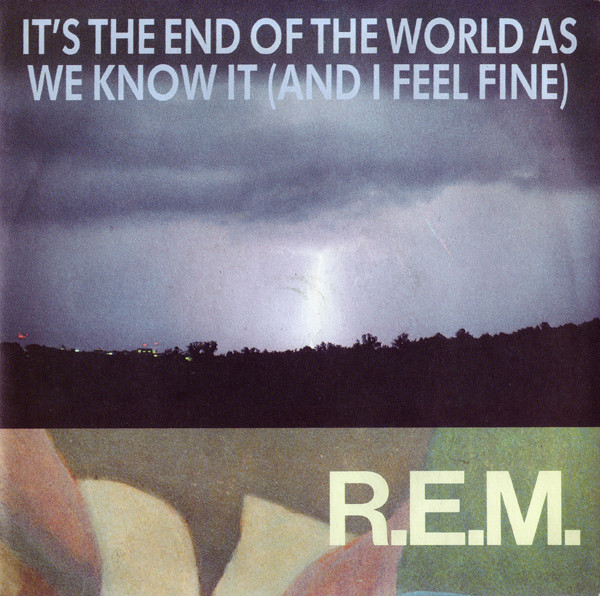
Every time the modern world wobbles, a frantic barrage of acoustic strums, rapid-fire syllables, and cascading drums starts climbing digital charts. R.E.M.’s 1987 single "It's the End of the World as We Know It (And I Feel Fine)" has spent nearly four decades serving as the unofficial global panic button. When economic instability flares, geopolitical conflicts escalate, or pandemics halt daily life, the track reliably surfaces from the archive to soundtrack human anxiety.
The cultural persistence of the song reflects shifts across global music consumption. Industry analyses, such as the retrospective tracking published by the Official Charts Report detailing a decade of metrics, show that legacy records no longer fade into static historical footnotes. Instead, digital listeners pull historic catalog titles into active daily commentary. R.E.M.'s whirlwind track remains the sharpest case study of this behavioral loop.
📌 Key Takeaways:
- Studio Origin: The song evolved from an unreleased 1985 outtake titled "Bad Day," transformed during the 1987 sessions for the fifth studio record, Document.
- Lyrical Construction: Frontman Michael Stipe assembled the verses through fevered stream of consciousness songwriting, combining television broadcasts, dream journals, and historical figures sharing the initials "L.B."
- Modern Revelations: Stipe has clarified in recent retrospectives that the song was never fatalistic cynicism; it was a defiant critique of media saturation and Reagan-era political complacency.
Birth of a Juggernaut on the 1987 Document Sessions
In spring 1987, R.E.M. entered Sound Emporium Studios in Nashville with co-producer Scott Litt. The band was on the verge of commercial dominance. Having established an untouchable critical reputation through their early run on Athens-based indie label I.R.S. Records, the four-piece aimed for greater dynamic punch. They wanted an aggressive record that hit harder than the jangly college-rock textures of their early releases.
The track’s harmonic skeleton originated two years earlier under the title "Bad Day," an unfinished sketch the band shelved during the Lifes Rich Pageant sessions. Guitarist Peter Buck picked up the abandoned progression, stripping out its slower cadence and replacing it with an abrasive, driving attack. The definitive Peter Buck guitar riff, a churning acoustic-electric hybrid played with relentless percussive rhythm, locked instantly into Bill Berry’s breakneck snare pattern.
That kinetic velocity became the backbone of the Document album 1987 tracklist. Placed as the sixth song on side one, it contrasted the slower, politically charged funk of "The One I Love" and the industrial clatter of "Finest Worksong." Producer Scott Litt pushed the band to record the basic rhythm tracks live in the room, capturing a manic, unpolished speed that modern digital production rarely replicates.
Stream of Consciousness and the Leonard Bernstein Mystery
The frantic sprint of the rhythm track forced Michael Stipe to abandon traditional melodic phrasing. Armed with a notebook filled with scraps of news headlines, discarded notes, and overheard conversations, Stipe turned to stream of consciousness songwriting. He took cues from Bob Dylan’s "Subterranean Homesick Blues," stacking syllables end-to-end without letting the listener pause for breath.
Deciphering the Michael Stipe lyrics meaning quickly turned into a favorite parlor game for college radio listeners. Stipe later revealed that the legendary sequence featuring Lenny Bruce, Lester Bangs, and a famous conductor came from an actual dream. He awoke from a bizarre fever dream about attending a party where every guest shared the initials "L.B." That dream yielded the iconic Leonard Bernstein lyric reference, uniting the Broadway composer with rock critic Lester Bangs and comedian Lenny Bruce in a single breathless couplet.
Beyond the surrealist dreams, the lyrics skewered 1980s American commercialism and escalating military posturing. Lines addressing jellybeans, continental drift, and patriotic revivals directly targeted the media theater surrounding Ronald Reagan's presidency. Stipe strung together catastrophic imagery, earthquakes, birds, snakes, and falling towers, to mimic the dizzying sensations of watching a late-night cable television broadcast flicker uncontrollably between local disasters and consumer advertisements.
The Mechanics of Panic: Chart History and Track Performance
Despite its enduring fame, the single was not an immediate chart runaway upon release. In late 1987, commercial pop radio found the vocals too dense and the tempo too breathless for mainstream formats. Its initial run through the Billboard Hot 100 chart history stalled at an unassuming No. 69, though it hit No. 39 on the UK Singles Chart during a 1991 reissue.
Much of the track’s longevity stems from its vocal balance. As Stipe sprints through chaotic verses, the melodic counterweight arrives via the harmonic arrangements. The distinctive Mike Mills backing vocals slice through the density of the chorus with soaring, crystal-clear counter-melodies, offering harmonic reassurance while Stipe chants his rhythmic apocalyptic inventory. That vocal interplay turned an otherwise claustrophobic punk track into one of the most accessible alternative rock apocalyptic anthems in modern music history.
| Era | Key Event / Milestone | Commercial / Cultural Marker |
|---|---|---|
| 1987 | Release on the Document LP via I.R.S. Records | Peaks at No. 69 on the US Billboard Hot 100 |
| 1991 | European reissue alongside "Radio Song" | Breaks top 40 in the UK; heavy European MTV rotation |
| 1999, 2000 | Y2K millennium bug anxiety surge | Universal radio syndication at midnight, Dec 31, 1999 |
| 2020 | COVID-19 global lockdowns begin | 264% download spike; reappears on iTunes Top 100 |
| 2024, 2026 | Algorithmic catalog syndication & geopolitical shifts | Exceeds 500M Spotify streams; steady crisis playlist driver |

Why Global Emergencies Send Streaming Catalog Numbers Soaring
Music consumption underwent a fundamental structural transformation over the past decade. Algorithmic streaming eliminated the boundary between current releases and back catalogs. Modern audiences no longer consume older songs solely through classic rock radio nostalgia. Instead, historic tracks act as immediate conversational shorthand on social video feeds and personal playlists.
This dynamic fuels consistent streaming surges during global crises. In March 2020, as international lockdowns began, Nielsen Music documented an immediate 264% jump in digital sales for the single, alongside a 184% rise in on-demand audio streams within 72 hours. Similar surges occurred during the 2016 election cycle, the peak of the 2008 financial crisis, and various geopolitical standoffs over the past several years.
The track has become a foundational pillar of the Official Chart streaming catalog and global digital platforms. The song does not resurface because listeners want somber, mournful laments. Rather, audiences reach for cathartic release. The blistering 145-BPM tempo allows listeners to process collective panic through dark humor and kinetic physical energy, functioning as an antidote to media-induced paralysis.
Michael Stipe’s Lyric Bombshell and What "And I Feel Fine" Really Meant
For decades, pop culture treated the song's famous refrain as detached, Gen-X nihilism. The dominant interpretation assumed that the narrator watched civilization crumble while shrugging from a distance. In recent years, Stipe dismantled that interpretation, revealing a far more deliberate philosophy behind the chorus.
The true And I Feel Fine meaning centers on emotional liberation rather than apathy. Stipe clarified that the refrain represents the intentional decision to free oneself from the psychological grip of institutional panic. The world that is ending is not the earth itself, but the artificial structures of political authority, television alarmism, and consumerist anxiety. Realizing those fragile systems are temporary allows an individual to exhale, regroup, and regain personal autonomy.
During the early days of the 2020 pandemic, Stipe reinforced this human-centered reading when he posted an unvarnished home video to his personal channels. Singing the hook while demonstrating proper handwashing safety protocols, he urged audiences not to give in to paralyzing terror. As R.E.M.'s historic work continues to generate substantial performance royalties for the I.R.S. Records catalog rights-holders, Stipe's public interventions consistently redirect listeners back to the core premise: chaos is inevitable, but fear is an individual choice.
Frequently Asked Questions (FAQ)
Q1: Why did Michael Stipe include Leonard Bernstein in the lyrics?
A1: The inclusion originated from a vivid dream Stipe had where he arrived at an eccentric party where every prominent guest shared the initials "L.B." When writing the verses using stream of consciousness techniques, he linked Bernstein with writer Lester Bangs and satirist Lenny Bruce.
Q2: Did R.E.M. ever re-record the song under its original title?
A2: Yes. The underlying chord progression and vocal rhythms originally came from an unreleased 1985 demo titled "Bad Day." R.E.M. returned to that original framework in 2003, finally recording and releasing "Bad Day" as an official single for their greatest hits package, In Time: The Best of R.E.M. 1988, 2003.
Q3: Which instruments drive the rapid acoustic rhythm of the track?
A3: The signature attack relies on Peter Buck playing an aggressive acoustic flat-picking rhythm overdriven through a tube amplifier, doubled with a jangly Rickenbacker electric guitar, while Bill Berry drives a straight-ahead, unyielding 4/4 rock drum cadence.
Why the World Still Reaches for R.E.M. When Chaos Hits
Nearly four decades after leaving the Nashville studio floor, the song has outlived the Cold War era that created it. The speed of digital information has finally caught up with the track's breathless tempo. Today's social feeds deliver the exact rapid-fire sensory overload that Stipe captured across his verses in the late 1980s.
By transforming dread into infectious, communal rock and roll, R.E.M. created something rare in modern popular music: an apocalyptic anthem that leaves the listener energized rather than defeated. As long as history keeps delivering unforeseen crises, the world will keep turning up the volume, shouting the chorus, and finding comfort in four defiant words.


