From A New Hope to Modern Canon: How Star Wars Dialogue Evolved
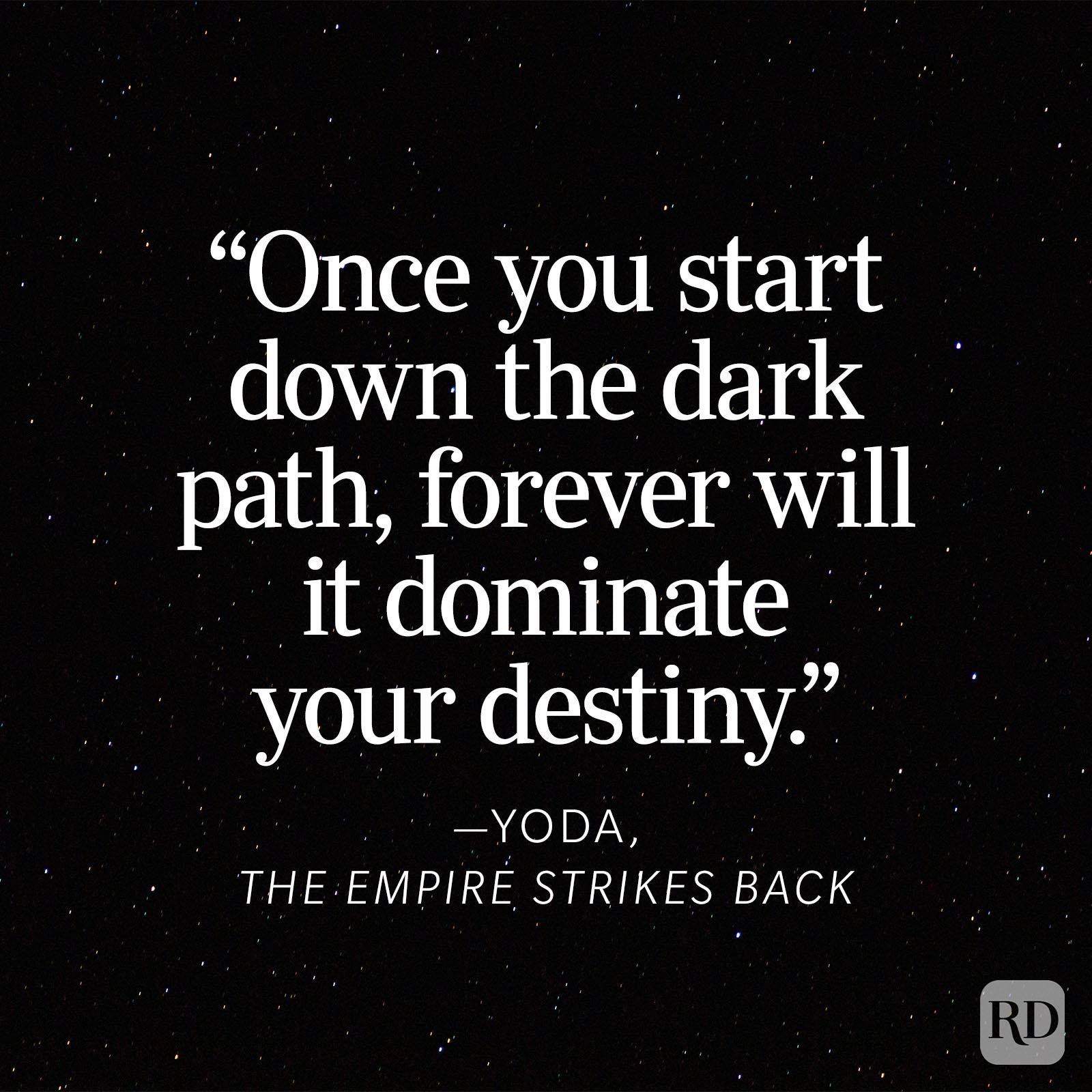
When George Lucas handed his cast the shooting script for a space fantasy in 1976, Harrison Ford famously snapped that while someone could type such lines, speaking them aloud was another matter entirely. Five decades later, those stylized cadences form the bedrock of global pop culture. Millions of moviegoers quote the galactic saga daily, yet the scripts underwent a dramatic stylistic transformation along the way. That ongoing legacy came back into the spotlight after a recent retrospective by a MovieWeb Report noted that forty-six years after its theatrical debut, Yoda’s swamp-bound masterclass on the nature of failure remains one of the sharpest screen philosophies ever filmed.
The words spoken across the franchise are rarely accidental artifacts. They track the evolution of modern American cinema, moving from mid-century adventure serials to operatic melodrama and arriving at the grounded political realism of prestige streaming television. What began as awkward expositions about hyperspace coordinates eventually matured into complex speeches about rebellion, sacrifice, and authoritarian rot.
📌 Key Takeaways:
- Creative Friction Built the Lore: Early dialogue succeeded because actors like Harrison Ford, Carrie Fisher, and Mark Hamill actively pushed back against wooden technical terminology.
- The Shifting Genre Footprint: Star Wars dialogue moved through distinct literary movements, traveling from pulp space opera in 1977 to Victorian court drama in the prequels and gritty revolutionary prose in modern releases.
- Persistent Pop Culture Myths: The franchise’s most quoted lines are often misremembered, proving how audience collective memory reshapes cinema history.
The Pulp Roots and On-Set Clashes Behind A New Hope
The production of the original 1977 film was notoriously chaotic, largely because the script read like an instruction manual for an imaginary engine. George Lucas drew inspiration from 1930s Flash Gordon serials and Akira Kurosawa’s historical epics, writing dialogue packed with dry technical jargon and ceremonial declarations. The young cast struggled to find emotional truth behind lines detailing parsecs, sub-light drives, and planetary shields.
Mark Hamill spent weeks trying to memorize dense blocks of dialogue that never felt natural in his mouth. During production inside the stifling Death Star trash compactor set, Hamill famously lobbied the director to excise a particularly tortuous line. According to script archives examined in a 2026 report by BGR, Hamill begged Lucas to drop an excruciating sequence where Luke Skywalker, reacting to an off-screen intercom warning, was supposed to say: "I can't, kid! There's an alternate negative coordinate on the axis terminal!" Hamill argued that nobody under mortal pressure from closing hydraulic walls would utter such mechanical drivel. Lucas relented, cutting the phrase and letting raw panic carry the scene.
The dialogue that survived worked because Alec Guinness anchored it with Shakespearean weight. Obi-Wan Kenobi quotes gave a fantastical galaxy an immediate spiritual backbone. When Guinness spoke of an energy field created by all living things, audiences bought the illusion completely. Lines like "These aren't the droids you're looking for" and "The Force will be with you, always" succeeded because they were delivered with absolute conviction, elevating pulp prose into mythic folklore.
How The Empire Strikes Back Redefined Cinematic Gravitas
By 1980, the creative dynamics shifted. Lucas brought in veteran screenwriter Leigh Brackett and later Lawrence Kasdan to polish the second installment, handing the directorial reins to Irvin Kershner. The resulting script turned the universe darker, leaner, and psychologically complex. The Empire Strikes Back quotes abandoned exposition in favor of sharp character definitions and mythic brevity.
Nowhere was this clearer than in Han Solo's departure scene on Cloud City. The original shooting script called for Princess Leia to confess her love, to which Solo was supposed to reply, "I love you too." Both Kershner and Ford knew the exchange fell flat. Solo was a cynical smuggler facing freezing carbonite, not a romantic lead in a standard melodrama. Ford pitched a two-word alternative on set: "I know." That improvisation preserved the character’s roguish dignity while packing far more emotional resonance than the scripted text.
On the swamp world of Dagobah, Kasdan and Lucas crafted lines that crossed over into secular philosophy. Yoda iconic wisdom offered concise aphorisms that bypassed standard cinematic banter. When Luke Skywalker attempts to lift his sunken X-wing and complains that he will give it an honest try, the puppet master retorts: "Do or do not. There is no try." That single imperative crystallized the entire spiritual ethos of the Jedi Order. It stripped away equivocation, demanding unconditional discipline. Decades later, leadership seminars, athletic coaches, and mental health professionals still cite that eight-word sentence as a benchmark of operational focus.
Five Decades of Scriptwriting Shifts Across Galactic Eras
The linguistic style of the franchise did not stay frozen in the late twentieth century. As production budgets ballooned and the property expanded into digital cinema, the writing drifted across four distinct creative movements.
| Galactic Era | Dominant Dialogue Style | Defining Script Focus | Primary Narrative Influence |
|---|---|---|---|
| Original Trilogy (1977, 1983) | Mythic archetypes, pulp banter, practical improvisation | Spiritual balance and classic hero's journey motifs | 1930s matinee serials, Arthurian legends, Westerns |
| Prequel Trilogy (1999, 2005) | Formal operatic cadence, political rhetoric, Victorian melodrama | Institutional decay, senatorial debate, hubris | Ancient Roman senate proceedings, Shakespearean tragedy |
| Sequel Trilogy (2015, 2019) | Conversational modernism, legacy callbacks, rapid quips | Intergenerational trauma, self-referential mythmaking | Contemporary blockbuster pacing, deconstructionist drama |
| Prestige TV Era (2019, 2026) | Literary naturalism, ideological manifestos, bureaucratic realism | Radicalization, moral compromise, surveillance capitalism | Historical revolutionary texts, cold-war espionage fiction |
The Polarizing Operatic Cadence of the Prequels
When George Lucas returned to direct the prequel trilogy between 1999 and 2005, he intentionally abandoned the conversational looseness of the 1980s. Lucas sought a heightened, ceremonial cadence reminiscent of historical theater. Characters no longer sounded like roguish space pilots; they sounded like aristocrats speaking in formal stanzas.
That stylistic choice alienated many critics. Exchanges between Anakin Skywalker and Padmé Amidala, most notoriously Anakin's complaints about coarse sand, became lightning rods for ridicule. Actors were asked to deliver lines stripped of contemporary vocal patterns, making romantic intimacy feel stiff.
Yet beneath the wooden romance lay some of the most politically acute writing in modern Hollywood. When Senator Palpatine maneuvers the Republic Senate into granting him dictatorial powers, Padmé observes the tragedy in chillingly simple terms: "So this is how liberty dies... with thunderous applause." The phrase anticipated modern discussions of democratic erosion with surprising precision. Similarly, Palpatine’s manipulation of Anakin in the Coruscant opera house relied on pure dramatic subversion. By framing Sith knowledge as a tragic pursuit of forbidden medicine, Ian McDiarmid’s whispered monologues transformed simple movie villainy into seductive, Faustian politics.
Modern Prestige Television and the Shift Toward Grounded Prose
The launch of Disney+ changed how storytellers approached the franchise. Instead of two-hour cinematic sprints dependent on broad archetypes, writers had ten-hour seasons to explore institutional grit. The peak of this evolution arrived with Tony Gilroy’s work on Andor.
Gilroy stripped away Jedi mysticism, lightsabers, and destiny. In their place, he inserted the language of historical resistance movements. Monologues delivered by Stellan Skarsgård as Luthen Rael and Fiona Shaw as Maarva Andor showed an unprecedented level of rhetorical sophistication. When Luthen describes what his secret rebellion costs him personally, the script climbs to heights rarely attempted in speculative fiction:
"I burn my decencies for someone else's future. I burn my life to make a sunrise that I know I'll never see."
This was not a children's adventure story. It was an interrogation of revolutionary morality. The prose recognized that revolutions are built on dark compromises rather than pure spiritual destiny. That structural pivot proved that the fictional setting could sustain serious adult literature without losing its thematic identity.
Why Misremembered Lines Dominate Famous Movie Quotes Rankings
Pop culture memory is notoriously unreliable, and Star Wars dialogue provides some of the clearest examples of the Mandela effect in modern media. In annual retrospective surveys, such as the comprehensive retrospectives published by Reader's Digest and the American Film Institute, the saga's most famous exchange is routinely misstated.
Millions of viewers remember Darth Vader looming over a battered Luke Skywalker and declaring, "Luke, I am your father." He never said those words. The actual line delivered by James Earl Jones in 1980 was a direct correction:
- "He told me enough! He told me you killed him!"
- "No. I am your father."
Adding the character's name made the quote work as standalone playground shorthand, eventually replacing the true text in the broader cultural imagination.
The universal benediction "May the Force be with you" underwent a similar distortion. Many assume Obi-Wan Kenobi coined it in the original film. In truth, Kenobi tells Luke that the Force will be with him, while General Jan Dodonna first utters the complete formal phrase to the Rebel pilots right before the assault on the Death Star. Han Solo repeats it moments later, converting his early skepticism into genuine solidarity. The audience remembers the emotional resonance of the words, blending individual scenes into a unified collective memory.
Frequently Asked Questions (FAQ)
Q1: Did Darth Vader ever say "Luke, I am your father"?
A1: No. The actual line in *The Empire Strikes Back* is "No, I am your father." The phrase was altered in colloquial conversation so people could identify the reference without needing conversational context.
Q2: What was the line Mark Hamill begged George Lucas to cut in 1977?
A2: During the trash compactor scene on the Death Star, Hamill successfully argued against delivering an overly technical line about an "alternate negative coordinate on the axis terminal," pointing out that characters facing death would not speak in engineering jargon.
Q3: Who says "May the Force be with you" first in the original movie?
A3: General Jan Dodonna speaks the full phrase to the Rebel pilots during the Yavin IV briefing. Obi-Wan Kenobi uses variations like "The Force will be with you, always," but Dodonna speaks the exact wording first.
Q4: Was Han Solo's line "I know" scripted?
A4: No. The shooting script had Han respond with "I love you too." Harrison Ford and director Irvin Kershner agreed that the scripted line did not fit Solo's personality, leading Ford to improvise the iconic two-word reply on the set.
The Enduring Cultural Power of Lucasfilm Scriptwriting
Dialogue survives across generations when it accomplishes two distinct tasks at once: defining an intimate character relationship while offering listeners a universal truth they can apply to their own lives. Lucas built a world around stark mythic archetypes, but the performers, polishers, and subsequent screenwriters kept those archetypes from becoming hollow cartoons.
By pushing back against clunky drafts, ad-libbing character reactions in carbonite chambers, and eventually anchoring the universe in nuanced political literature, generations of storytellers turned space opera into an enduring international dialect. Audiences continue to quote these films because the words carry emotional weight that outlives the digital effects surrounding them.


