From Ancient Dynasty Banquets to Lunar New Year Phenomenon: The Dragon's Beard Resurgence
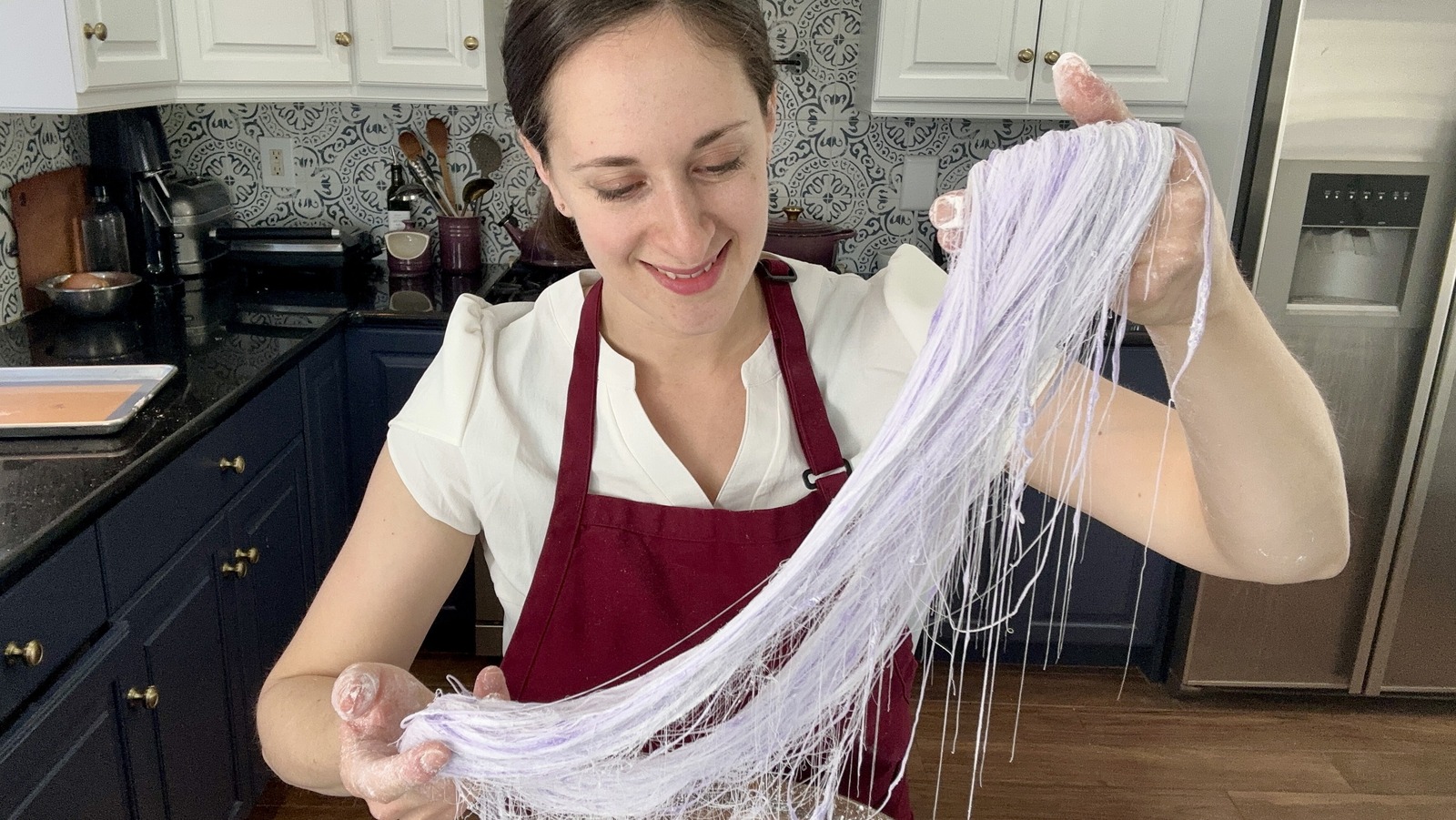
A cloud of white cornstarch billows across the night market stall as two hands pull a ring of solid amber syrup into two strands, then four, eight, and sixteen. Within two minutes of rhythmic, calculated stretching, that single dense puck of boiled sugar transforms into a silken skein of over sixteen thousand microscopic filaments. Long before confectioners in Europe experimented with spun sugar for aristocratic centerpieces, artisans in China were executing this exact mechanical feat. Today, the fragile delicacy known as dragon's beard candy has transformed from a forbidden banquet indulgence into one of the most sought-after centerpieces of global Lunar New Year celebrations, documented widely across food preservation archives and cultural heritage records like the Wikipedia (en) Report.
The sweet carries an improbable history. It survived centuries of imperial secrecy, slipped past the ideological purges of the mid-twentieth century, endured decades of quiet exile in Hong Kong and North American Chinatowns, and is now experiencing a fierce, youth-driven revival. What looks like street food theater is actually an unforgiving exercise in food chemistry, physical endurance, and historical survival.
📌 Key Takeaways:
- The Imperial Origins: Developed during the Han dynasty imperial court, the confectionery was reserved exclusively for royal banquets due to the extreme difficulty of hand-pulling boiled maltose syrup without modern temperature controls.
- The Mathematical Feat: An authentic artisanal candy master doubles the sugar precisely 14 times, producing exactly 16,384 spun sugar threads wrapped around crushed peanut filling, toasted sesame seeds, and desiccated coconut.
- Survival Through Migration: Nearly wiped out on the mainland during the Cultural Revolution, the craft survived through refugee confectioners in Hong Kong and Canada before returning as a Lunar New Year festival staple.
The Secret Geometry of the Han Dynasty Imperial Court
The origins of dragon's beard candy stretch back over two millennia to the Han dynasty. Imperial chefs created the sweet to amuse emperors who demanded dishes that demonstrated culinary impossibility. The confection took its name directly from mythological iconography: the emperor was symbolized by the dragon, and the billowing, snow-white mass of pulled sugar resembled the whiskers of the imperial beast.
The process demanded absolute physical mastery. Working over charcoal braziers, palace confectioners boiled a mixture of maltose syrup and sugarcane juice until it reached an exact, viscous hard-ball stage. Once cooled into a pliable golden disc, the master poked a hole through the center, forming a thick donut. From that moment, the hands never stopped moving.
Using a steady, continuous pulling motion, the artisan stretched the loop, twisted it into a figure-eight, folded it back over itself, and dredged it through toasted wheat flour or starch to prevent the strands from fusing. With each fold, the number of strands doubled exponentially. One loop became two, two became four, four became eight. By the fourteenth pull, the single disc had fractured into precisely 16,384 micro-filaments, so fine that breathing directly onto them could scatter the fibers like spider silk.
How the 16,384 Strands Technique Cheats the Humidity Clock
Unlike Western pulled taffy or spun sugar nests created by slinging caramel from a whisk, dragon's beard candy relies on an intricate balance of molecular moisture control and friction. The primary challenge is ambient humidity. Maltose is intensely hygroscopic; it sucks moisture directly out of the air. In an environment with relative humidity above 55%, an exposed batch of pulled threads collapses into a sticky, gelatinous paste within five minutes.
Artisanal sugar pulling craftsmanship counteracts this vulnerability through the cornstarch dusting method. The starch does not simply act as an anti-caking agent. It forms a micro-barrier around every single pulled filament, preventing the heated sugar chains from re-bonding into a unified mass.
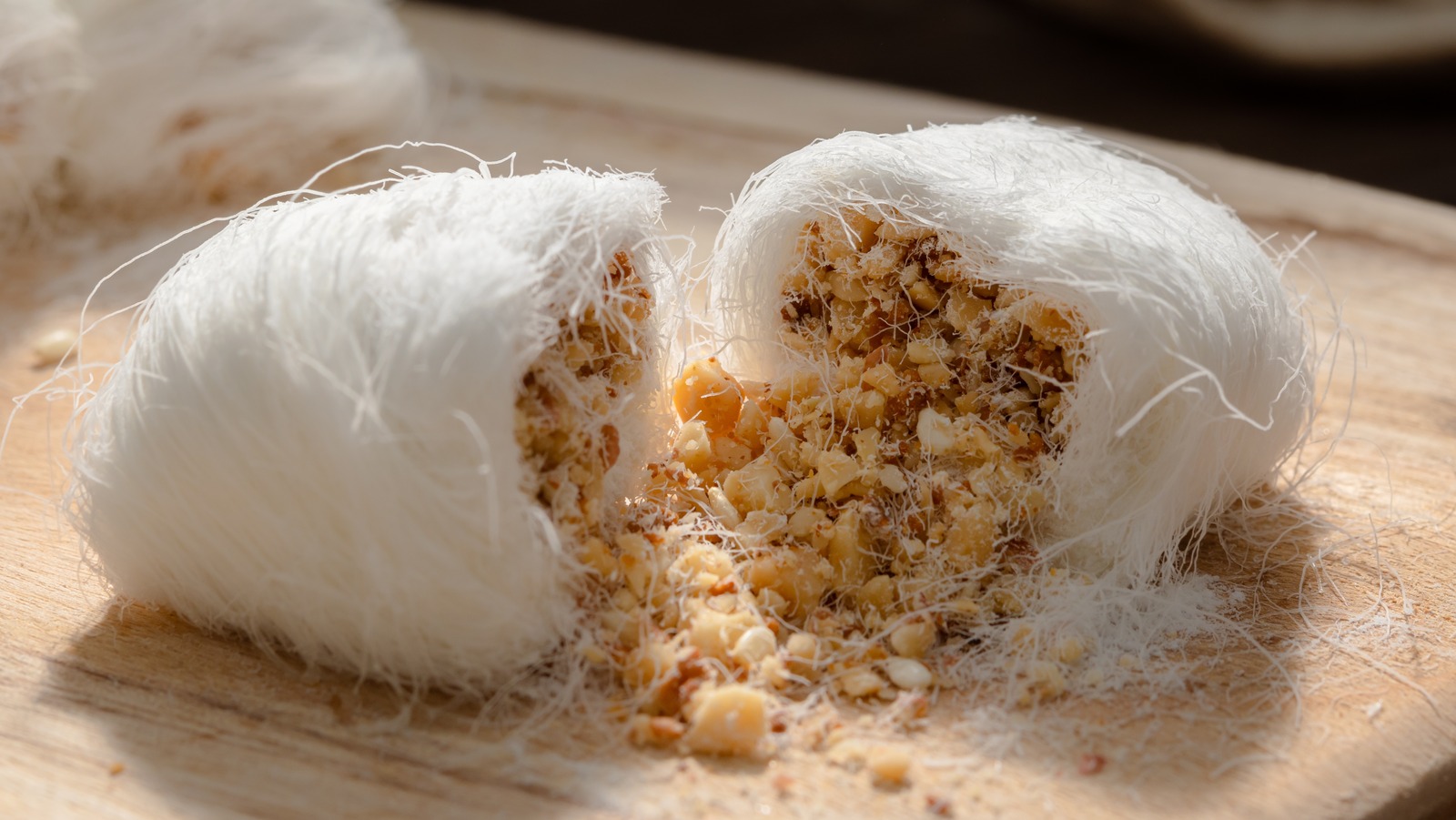
Once the 16,384 spun sugar threads reach optimal fineness, the master tears the mass into three-inch sections. Working rapidly, they spoon a filling of freshly ground crushed peanut filling, toasted sesame seeds, and dried coconut shavings into the center, rolling the silken sheath around the core like an airy, down-filled envelope. The exterior dissolves on the tongue instantly, leaving the warmth of toasted nuts and seeds behind without clinging to the teeth.
The Cultural Revolution Exile and the Chinatown Diaspora
The craft almost vanished entirely during the mid-20th century. During the Cultural Revolution, the Chinese government targeted traditional confections associated with imperial decadence. Street hawkers and private confectioners were forbidden from operating; the tools were confiscated, and recipes passed down orally through lineages were branded feudal remnants. For nearly two decades, public demonstrations of the art ceased on the Chinese mainland.
The survival of dragon's beard candy happened outside mainland borders. Fleeing master confectioners settled in British Hong Kong, Portuguese Macau, and Taiwan. There, the sweet transformed from an imperial secret into a high-skill street spectacle. Masters set up mobile wooden carts in night markets, using the theatrical pull of sugar stretching to draw massive crowds of working-class families and tourists.
| Historical Era | Cultural Function | Distribution & Accessibility |
|---|---|---|
| Han to Qing Dynasties (206 BCE, 1912 CE) | Imperial banquet dessert; symbol of royal prestige and longevity. | Restricted exclusively to palace walls and noble courts. |
| Mid-Twentieth Century (1966, 1976) | Classified as feudal superstition; practices banned on the mainland. | Subterranean home preparation; master artisans fled south to Hong Kong. |
| Diaspora Boom (1980, 2005) | Street theater showcase; preservation of intangible cultural identity. | Night markets across Hong Kong, Singapore, Vancouver, San Francisco. |
| Modern Resurgence (2020, 2026) | Lunar New Year prestige gifting; viral culinary craftsmanship trend. | Global pop-up stalls, boutique packaging, flash-frozen mail orders. |
By the late 1980s, masters like Johnny Chin brought the craft across the Pacific to Montreal's Chinatown, while others set up shop in San Francisco, New York, and Sydney. Chin spent decades performing the intricate pulling technique in front of curious Western crowds, explaining the mathematics of the folds while preserving a tactile link to pre-revolutionary Chinese culinary heritage.
Regional Siblings: The Rise of Kkul-tarae and Southeast Asian Variations
As the technique spread through East and Southeast Asia, it cross-pollinated with neighboring royal confectionery traditions. The most visible counterpart is Korea's kkul-tarae (Korean court cake). While modern Seoul vendors often market the dessert as a staple of the Joseon dynasty court, culinary historians note its contemporary boom originated in the late 20th century, directly borrowing the 14-fold mathematical technique from traditional Chinese confectionery.
The recipes differ in base syrups and internal fillings. Chinese dragon's beard uses a heavy foundation of golden maltose syrup, occasionally tempered with sugar and lemon juice, prioritizing a roasted peanut and sesame filling. Korean kkul-tarae swaps maltose for fermented honey and corn syrup, producing a slightly firmer, pearlescent strand wrapped around ground pine nuts, walnuts, and candied black beans.
In Malaysia and Singapore, street vendors adapted the recipe to humid equatorial heat, adjusting the boiling temperature of the syrup higher to yield a harder sugar matrix that resists moisture longer. These variations illustrate how a single core mechanical technique, hand-drawn sugar multiplication, serves different culinary palettes while preserving the essential theatrical draw of the live pull.
The 2026 Resurgence: Lunar New Year Street Food Renaissance
The confectionery is experiencing a global resurgence during the 2026 Lunar New Year cycle. Once threatened with extinction as older practitioners retired, the craft has captured a new demographic. Short-form video platforms have turned the pulling process into a visual sensation; a 90-second clip of an artisanal candy master transforming an amber ring into 16,384 strands routinely pulls millions of organic views.
Young culinary entrepreneurs are modernizing the classic flavor profile. Pop-ups in London, New York, and Melbourne offer limited-run holiday boxes that pair traditional peanut fillings with matcha powder, freeze-dried durian, black sesame praline, and Earl Grey infusions. High-end restaurants feature fresh-pulled dragon's beard candy as part of elaborate holiday tasting menus, highlighting the contrast between the hot filling and room-temperature sugar threads.
Preservation techniques have advanced as well. Because moisture remains the enemy of pulled sugar, artisanal producers utilize nitrogen-flushed, desiccated packaging or sub-zero flash-freezing. Eaten straight from the freezer, the confection exhibits an ultra-crisp, feather-light snap before dissolving in the mouth, solving the historic shipping problem that kept the sweet confined to stall counters for generations.
Frequently Asked Questions (FAQ)
Q1: Why does dragon's beard candy need to be eaten immediately after purchase?
A1: Maltose syrup is hygroscopic, meaning it rapidly absorbs moisture from surrounding air. In normal room humidity, the 16,384 fine sugar strands begin melting into each other within 10 to 20 minutes, losing their delicate, melt-in-your-mouth texture and turning into a chewy, sticky clump.
Q2: Is dragon's beard candy identical to cotton candy?
A2: No. While both are made of sugar, their production methods and textures are entirely different. Cotton candy is made by melting granulated sugar and flinging it through centrifugal force in a heated spinner. Dragon's beard candy is hand-pulled through physical labor, contains maltose syrup, uses cornstarch to separate the filaments, and features a rich filling of roasted nuts and seeds.
Q3: Can dragon's beard candy be stored long-term?
A3: Yes, provided it is kept away from moisture. Storing fresh pieces in an airtight container inside a freezer preserves their delicate strand structure for up to two months. Eating them straight from the freezer provides a crisp, refreshing texture without freezing rock-solid.
The Living Craft of the Pulled Strand
The revival of dragon's beard candy represents something deeper than novelty street food nostalgia. In an industrial food landscape dominated by mechanical extruders, automated packaging, and shelf-stable artificial stabilizers, this sweet remains stubbornly resistant to full mechanization. Industrial machines can pull basic hard candy, but no automated assembly line can match the sensory intuition required to feel the exact tensile resistance of maltose syrup on a humid winter afternoon.
Each box sold during the Lunar New Year stands as a direct line back to imperial palace kitchens. The physical stamina required to coax 16,384 distinct threads out of a dense block of syrup ensures that dragon's beard candy remains an art form anchored in human touch. As long as practitioners keep dusting their hands with cornstarch and working the sugar loop, this imperial relic will continue drawing crowds under festival lanterns worldwide.


