From Chapter 221 to Global Sensation: The Complete Evolution of 'Nah, I'd Win'
The Anatomy of a Modern Manga Phenomenon: How 'Nah, I'd Win' Took Over the Internet
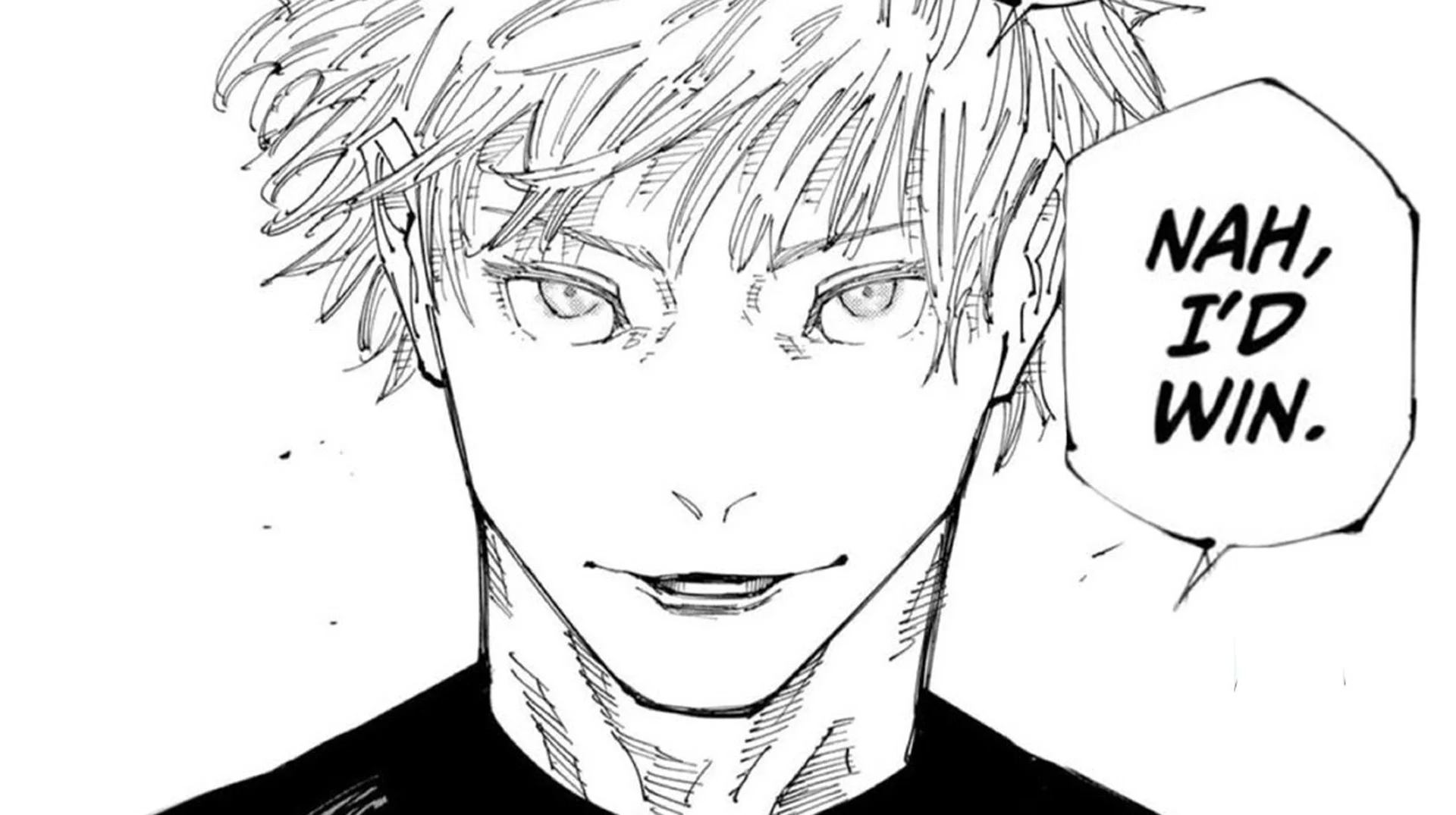
When Satoru Gojo broke free from the Prison Realm after three years of real-world absence, manga creator Gege Akutami engineered one of the most explosive character re-entries in modern serial fiction. The climactic final page of Jujutsu Kaisen Chapter 221 showed the sorcerer staring down Kenjaku and Ryomen Sukuna with razor-sharp confidence. Yet few could anticipate how three translated words would break out of Shonen Jump pages to dominate visual culture across Twitter, Reddit, and TikTok. According to documentation compiled in a Know Your Meme Report, the frame blossomed into an inescapable digital fixture, driving redraws across hundreds of unrelated fandoms.
The panel struck a nerve that went far beyond typical anime discourse. What began as a boastful declaration before the long-awaited Gojo vs Sukuna showdown mutated into a template for ironic doom, collective grief, and self-deprecating satire.
📌 Key Takeaways:
- The Translation Clash: A casual turn of phrase in unofficial fan scanlations established an emotional imprint that outlasted the formal licensed edition.
- Narrative Inversion: Chapter 236 transformed Gojo’s unshakeable swagger into a tragic setup, fueling the psychological comedy subculture known as Lobotomy Kaisen.
- Universal Adaptability: The composition of the Shonen Jump manga panel made redraws and face swaps technically simple, sparking an explosion of pop-culture variations.
The Midnight Leaks and the Translation Rift of Chapter 221
Chapter 221 arrived on illicit spoiler circuits on April 20, 2023, days ahead of the official release in Weekly Shonen Jump. Kenjaku taunted Gojo about whether he could truly defeat Sukuna, prompting Gojo to recall a conversation from Chapter 3 where Yuji Itadori asked the same question. In Japanese, Gojo's original response was identical across both chapters: "Katsu sa" (勝つさ), a relaxed, almost dismissive assertion meaning "I'll win."
Early fan scanlations operating on high-speed release cycles rendered the line with punchy, streetwise swagger: "Nah, I'd win." The phrasing captured Gojo’s aloof, untouchable personality. When the VIZ Media official translation appeared that Sunday, translator John Werry rendered the identical line as "No." While accurate to standard syntax, the official version lacked the rhythmic bite that was already racing through social channels.
Readers rebelled against the stark contrast. The fan scanlation phrasing matched the character's swaggering arrogance, creating an organic meme foundation before the chapter even hit store shelves in Tokyo.
How Chapter 236 Flipped Bragging Rights Into Tragic Satire
For five months, the phrase functioned as an earnest rallying cry for Gojo fans. The battle between Gojo and Sukuna unspooled over a brutal sequence of domain expansions, brain damage, and impossible cursed energy manipulation. Readers treated the frame as prophetic evidence of his invincibility.
Everything shattered on September 20, 2023, when leaks for Chapter 236 surfaced online. Rather than claiming victory, Gojo appeared bisected on the ground, having been killed off-screen by Sukuna’s reality-cutting slash. The sudden defeat stunned millions of readers worldwide.
Overnight, the confidence of "Nah, I'd win" took on a morbid double meaning. What had been a triumphant flex turned into an emblem of tragic overconfidence. Online communities did not retreat in silence; instead, they processed their disbelief through manic, surrealist humor.
The Rise of 'Lobotomy Kaisen' and the Distortion of the Original Panel
The two-week publication break following the release of Chapter 236 forced the fan base into a collective holding pattern. Without canonical story progression, platforms like Reddit's r/Jujutsufushi and r/JujutsuKaisen descended into absurdity, birthing the community-named era: Lobotomy Kaisen.
The Gojo panel became ground zero for visual mutations. Creators began warping the image using liquid tools, smearing Gojo's features into exaggerated, doll-like smiles. Caption generators stripped the text of context, replacing it with absurd variations.
[Original Panel: Smug, Sharp Gojo] -> [Warped Eye Filters] -> [Irony Layer: Doomed Overconfidence]
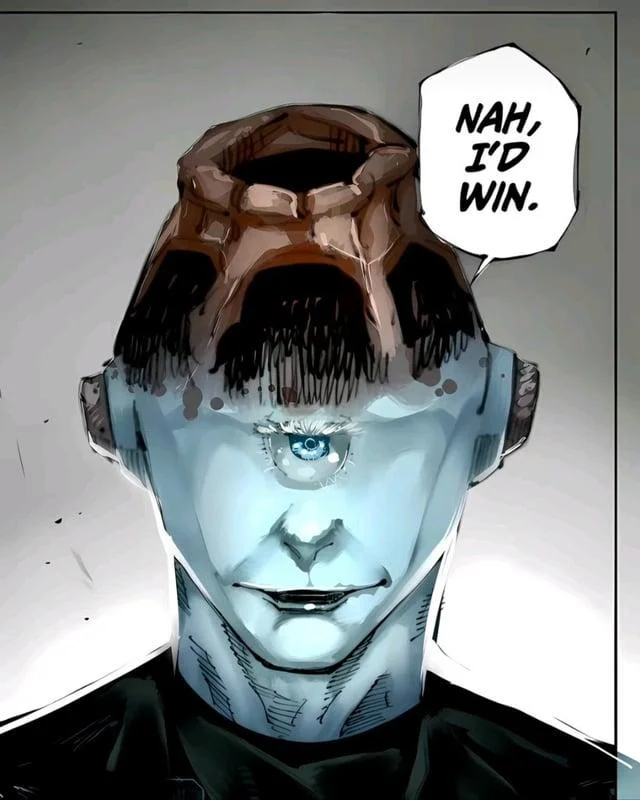
Early on, creators swapped Gojo's face with Jogo, the one-eyed volcanic cursed spirit who had previously suffered a humiliating defeat against the same sorcerer. The Jogo meme variation set a precedent: whenever a character in any medium faced impossible odds, users pasted their face onto the frame alongside the signature text.
| Phase & Date Range | Primary Context | Dominant Sentiment |
|---|---|---|
| April, September 2023 | Chapter 221 release; early Gojo vs Sukuna clashes | Genuine hype, character loyalty, fan pride |
| Late September 2023 | Chapter 236 leaks reveal Gojo's death | Shock, grief, ironic self-mockery |
| October, December 2023 | Manga hiatus weeks; peak Lobotomy Kaisen era | Surrealist humor, Jogo variants, distorted face-warps |
| 2024, 2026 | Crossover redraws in gaming, sports, and politics | Universal shorthand for doomed overconfidence |
Why the Shonen Jump Composition Made Viral Redraws Inevitable
Gege Akutami’s artistic framing in Chapter 221 possesses unique formal qualities that lowered the barrier for artistic iteration. The panel features a close crop on Gojo’s three-quarter profile, with clear negative space, bold cross-hatching, and an empty speech bubble floating on the right edge.
Artists did not need professional background rendering skills to build a parody. Anyone with basic digital drawing tools could superimpose characters like Spider-Man, Master Chief, or sports icons directly onto the composition. Digital communities across DeviantArt, Bluesky, and X generated thousands of custom adaptations.
The graphic clarity made it instantly recognizable at thumbnail sizes. Even as color palettes and character models shifted, the tilted head, knowing half-smirk, and stark dialogue box signaled the meme in a fraction of a second.
Linguistic Drift: When Fan Translations Outperform Official Localizations
The trajectory of this phrase exposes a recurring tension in modern entertainment: the friction between institutional translation standards and community-driven localization.
The Japanese original text "Katsu sa" carries an informal suffix ("sa") that indicates casual certainty. In everyday spoken Japanese, it conveys an implicit feeling of "Obviously, I will."
By choosing "No," the official VIZ localization answered Kenjaku's literal question ("Are you saying you'll lose?") with technical accuracy. But it discarded the conversational color. The scanlation team, translating for emotional tone rather than dry syntax, captured what readers felt Gojo should sound like.
By the time the anime adaptation reaches this scene, the scanlation's phrasing will already be etched into consumer memory. The official publishing apparatus found itself responding to a community consensus it could neither prevent nor overwrite.
Frequently Asked Questions (FAQ)
Q1: What manga chapter did the "Nah, I'd win" quote originate in?
A1: The scene appears on the final page of *Jujutsu Kaisen* Chapter 221, published in April 2023. It directly mirrors a line Gojo spoke to Yuji Itadori in Chapter 3.
Q2: Why did official releases translate the quote as simply "No"?
A2: Translator John Werry adhered strictly to the conversational prompt Kenjaku offered Gojo ("Would you lose?"). While grammatically sound, the literal rendering stripped away the cocky inflection found in the original Japanese particle usage.
Q3: How did the Jogo version of the meme start?
A3: After Gojo's death in Chapter 236, fans began swapping his face with cursed spirits that had previously talked tough and suffered brutal defeats. Jogo, who fought Gojo and Sukuna and lost to both, became the quintessential mascot for misplaced confidence.
The Cultural Afterlife of Shonen Slang in 2026
Memes based on ongoing serials usually fade once the plot moves past the disputed panel. Yet three years after Gojo's fateful proclamation, the phrase survives as a universal internet idiom.
Gamers post the cropped eye panel before queuing into unwinnable competitive matches. Sports franchises use edited versions when facing undefeated opponents. Casual internet users drop the quote into everyday conversations about minor personal obstacles.
The longevity of "Nah, I'd win" rests on its vulnerability. It captured an arrogant hero at the absolute height of his confidence, seconds before narrative mechanics dismantled him entirely. By embracing both the bravado and the inevitable collapse, digital audiences transformed a single panel into an enduring archetype for the hubris in us all.


