From Colonial Rhodesia to Modern Zimbabwe: The Naming Timeline of Africa’s Z Nations
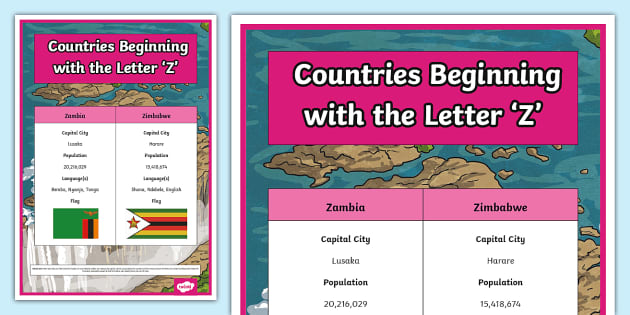
Scan any standard alphabetical country list of the 193 UN member states, scroll past Yemen, and you reach the ultimate pair: Zambia and Zimbabwe. These two southern African neighbors stand alone as the only sovereign countries starting with the letter Z. Yet their shared initial is far from a linguistic coincidence. It represents the culmination of a decades-long struggle to erase the personal vanity of Cecil Rhodes from the map of Africa.
Political nomenclature rarely shifts by accident. Much like modern civic rebellions where emerging generations reclaim political terminology to force systemic accountability, a phenomenon captured in a recent npr.org Report on grassroots identity shifts, the anti-colonial campaigns of mid-century Africa treated toponymy as an ideological battleground. Erasing the Rhodesian moniker meant dismantling the psychological architecture of British white-minority rule.
📌 Key Takeaways:
- The Current Roster: Only two sovereign UN member states begin with the letter Z: Zambia and Zimbabwe.
- The Imperial Severance: Both nations spent the twentieth century breaking free from Cecil Rhodes’s British South Africa Company, which had branded their lands Northern and Southern Rhodesia.
- The Vanished Contenders: Two other prominent African entities once held the Z initial: Zaire (renamed the Democratic Republic of the Congo in 1997) and Zanzibar (merged into Tanzania in 1964).
The Imperial Imprint of Cecil Rhodes Across the Zambezi Basin
By the late nineteenth century, Cecil John Rhodes envisioned an unbroken corridor of British territory running from Cape Town to Cairo. Through his commercial vehicle, the British South Africa Company (BSAC), Rhodes secured mining concessions through deceptive treaties, such as the 1888 Rudd Concession signed by King Lobengula of the Ndebele. BSAC forces subsequently marched north, deploying Maxim machine guns to crush local resistance across the plateau.
In 1895, the company officially designated its conquered territories "Rhodesia." By 1911, the vast territory split administratively along the natural fissure of the Zambezi River into Northern Rhodesia and Southern Rhodesia. Northern Rhodesia fell under direct British Colonial Office rule as a protectorate in 1924, focused heavily on extracting the vast copper deposits of the Copperbelt. Southern Rhodesia developed along a divergent, harsher trajectory: it became a self-governing British crown colony dominated by an entrenched white settler minority that expropriated the fertile highveld through the Land Apportionment Act of 1930.
October 1964: How Northern Rhodesia Chose the Zambezi River
Northern Rhodesia moved toward statehood with relative speed following the collapse of the ill-fated Federation of Rhodesia and Nyasaland in 1963. Liberation movements led by the United National Independence Party (UNIP), headed by Kenneth Kaunda, demanded an immediate end to colonial governance and an authentic indigenous name for the nascent republic.
Rather than adopt an ethnic or dynastic title that might alienate parts of its diverse population of over 70 ethnolinguistic groups, the leadership looked to the waterway that defined its southern boundary. They derived the name Zambia directly from the Zambezi River. In local Tonga and Lozi dialects, variants of the term, such as Yambezhi, translate roughly to "the great river" or "gathering of waters."
When midnight struck on October 24, 1964, Northern Rhodesia ceased to exist. At a packed stadium in the capital city of Lusaka, the Union Jack was lowered, and the green, red, black, and orange flag of the Republic of Zambia took its place. Kenneth Kaunda assumed the presidency, securing the new state's position as the world's 114th independent nation and its first modern Z republic.
The Fifteen-Year War and the Rebirth of Zimbabwe
South of the Zambezi, the timeline ran through fifteen years of armed conflict. When Britain insisted on majority rule as a precondition for granting independence, the white-minority regime led by Prime Minister Ian Smith defied London. On November 11, 1965, Smith issued a Unilateral Declaration of Independence (UDI), maintaining the name "Rhodesia" and creating an internationally isolated pariah state.
Black liberation movements, principally the Zimbabwe African National Union (ZANU) and the Zimbabwe African People's Union (ZAPU), launched an armed campaign known as the Second Chimurenga (the Bush War). These nationalist movements rejected the name Rhodesia entirely, insisting that the liberated country would bear the name Zimbabwe.
The term originated from the Shona phrase Dzimba-dza-mabwe, translating to "houses of stone." It paid homage to Great Zimbabwe, a monumental dry-stone medieval city constructed between the 11th and 15th centuries by ancestors of the Shona people. White colonial historians had spent decades fabricating alternative origins for the ruins, falsely attributing them to Phoenicians, Arabs, or the biblical Queen of Sheba to deny indigenous architectural genius. By claiming the name Zimbabwe, the liberation movement reclaimed ancestral history.
A desperate internal political settlement briefly established "Zimbabwe Rhodesia" in 1979 under Bishop Abel Muzorewa, but the hybrid compromise lacked international recognition and failed to end the war. Following the Lancaster House Agreement in London, genuine democratic elections were held in early 1980. On April 18, 1980, the independent Republic of Zimbabwe took its seat among sovereign nations. Two years later, the capital city of Salisbury was renamed Harare, honoring Chief Neharawa, erasing another layer of imperial branding.
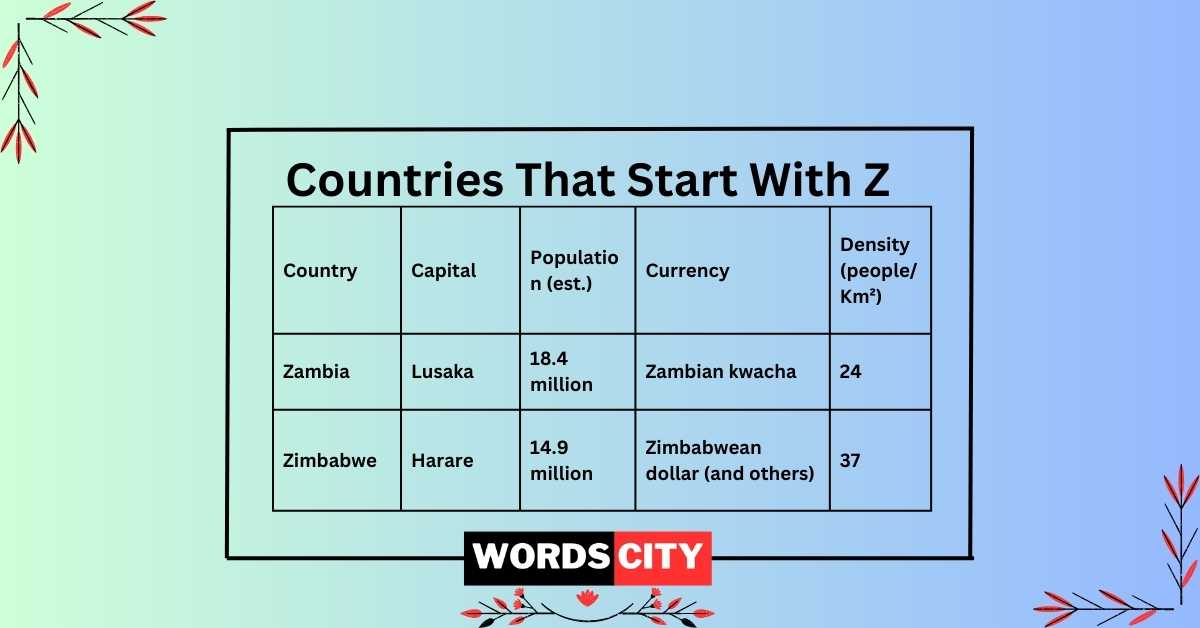
Mapping the Evolution: Milestones of Southern Africa's Name Changes
The process of sovereign renaming across the region required redrawing maps, re-registering international airline codes, and renegotiating bilateral diplomatic ties. The table below traces the chronological transition of these key states.
| Modern Entity | Colonial / Former Name | Transition Year | Etymological Origin |
|---|---|---|---|
| Zambia | Northern Rhodesia | 1964 | Derived from the Zambezi River (Yambezhi, meaning "river of many waters"). |
| Zimbabwe | Southern Rhodesia / Rhodesia | 1980 | From Shona Dzimba-dza-mabwe ("houses of stone"), citing Great Zimbabwe ruins. |
| DR Congo | Zaire (1971, 1997) | 1997 | "Zaire" was a Portuguese corruption of the Kikongo word nzere ("river"). |
| Tanzania | Zanzibar (merged entity) | 1964 | Portmanteau combining Tanganyika and Zanzibar. |
The Lost Zs: Mobutu's Zaire and the Autonomous Zanzibar Archipelago
Any comprehensive geopolitical review of the letter Z must address two entities that once occupied prominent places in global atlases: Zaire and Zanzibar.
In October 1971, General Mobutu Sese Seko launched his radical cultural policy of Authenticité across the former Belgian Congo. Mobutu ordered citizens to drop Christian names in favor of traditional African titles, abandoned European dress codes, and renamed the state the Republic of Zaire. The Congo River became the Zaire River, and the national currency became the zaïre.
Mobutu claimed the term was an authentic indigenous word. Ironically, linguistic research proved it was a sixteenth-century Portuguese mispronunciation of the Kikongo term nzere or nzadi, which meant "river swallowing all rivers." When Laurent-Désiré Kabila’s rebel alliance toppled Mobutu in May 1997, one of his first executive decrees was to strike Zaire from the global map, immediately restoring the country's pre-1971 name: the Democratic Republic of the Congo.
Meanwhile, the Indian Ocean archipelago of Zanzibar gained independence from the United Kingdom as a constitutional sultanate on December 10, 1963. Just a month later, in January 1964, a violent revolution led by the Afro-Shirazi Party overthrew the Arab ruling dynasty, establishing the People's Republic of Zanzibar. The sovereign Z republic lasted barely three months. Facing regional Cold War pressures, Zanzibar's leaders signed an Act of Union with neighboring mainland Tanganyika on April 26, 1964. The leaders blended the first syllables of both republics to form a new federal state: Tanzania. Zanzibar remains an autonomous region with its own president and legislature, but it no longer holds a separate seat at the United Nations.
Cartographic Sovereignty and the Legacy of African Toponyms
Changing state names was never an empty cosmetic exercise. For African nations emerging from twentieth-century imperial domination, toponymy served as an instrument of cultural survival. The colonial map was saturated with the names of foreign explorers, monarchs, and corporate shareholders who had never set foot on the continent: Lake Victoria, Leopoldville, the Orange Free State, Fort Salisbury, and Rhodesia.
By transforming Northern and Southern Rhodesia into Zambia and Zimbabwe, regional leaders reclaimed their geographic heritage. Zambia tied its civic identity to an untamed natural lifeline that sustained agriculture and hydropower across borders. Zimbabwe rooted its legitimacy in high stone walls constructed centuries before European arrival, debunking racist colonial theories that depicted Africans as incapable of sophisticated engineering.
This re-anchoring reverberated across the Southern African Development Community (SADC). Bechuanaland became Botswana, Basutoland became Lesotho, and Nyasaland became Malawi. Each transformation signaled that political independence was incomplete without linguistic sovereignty.
Frequently Asked Questions (FAQ)
Q1: Why are Zambia and Zimbabwe the only countries starting with Z?
A1: Under international law and standard diplomatic recognition, only 193 sovereign states are UN members. Among these recognized states, Zambia and Zimbabwe are the only two whose primary English spellings begin with Z. Both emerged from the dissolution of colonial Rhodesia and chose names starting with Z upon gaining independence.
Q2: Why is Zaire no longer listed among the Z countries?
A2: The state was renamed Zaire in 1971 by dictator Mobutu Sese Seko as part of his cultural nationalization program. Following Mobutu's fall from power in May 1997, the incoming government immediately abolished the name and reverted to the Democratic Republic of the Congo (DRC).
Q3: Is Zanzibar an independent country today?
A3: No. Zanzibar was a sovereign sultanate and briefly a republic between December 1963 and April 1964. It then united with mainland Tanganyika to form the United Republic of Tanzania. Today, Zanzibar is a semi-autonomous region within Tanzania rather than a distinct UN member state.
Q4: What happened to the capital cities of Northern and Southern Rhodesia?
A4: Northern Rhodesia’s capital was Livingstone until 1935, when the administration moved to Lusaka, which remained Zambia's capital after independence. Southern Rhodesia’s capital, Salisbury, was established by Rhodes's Pioneer Column in 1890. It was officially renamed Harare on April 18, 1982, commemorating the second anniversary of Zimbabwean independence.
The Enduring Legacy of Africa’s Renamed Republics
Today, Zambia and Zimbabwe occupy stable positions on international diplomatic lists. Their shared initial serves as an enduring reminder of their intertwined histories. Both nations endured the corporate monopolies of Cecil Rhodes, both fought complex battles for majority representation, and both used geography and archaeology to rebuild their identities after independence.
The transition from colonial outposts bearing an imperialist's name to sovereign republics anchoring the end of the world’s alphabetical rosters captures the true weight of decolonization. Place names carry history, power, and cultural memory. In casting aside the Rhodesian legacy, Zambia and Zimbabwe demonstrated that writing one's own national story begins with choosing what to call home.


