From Hong Kong Roast Houses to US Menus: The Rise of Char Siu Sauce

Hong Kong's Wan Chai district wakes to the hiss of industrial roasting drums and the scent of dripping sugar hitting white-hot ceramic. At heritage neighborhood institutions and buzzy new storefronts like Fat J Char Siu, roast masters pull glossy, blistered strips of pork belly from vertical ovens, painting them with thick syrup while the fat still pops. Halfway across the globe, that same red-tinged, savory-sweet profile is suddenly appearing in American ballpark concession stands, fast-casual noodle lines, and nationwide chain kitchens. As documented in a recent 2foodtrippers.com Report examining classic Cantonese barbecue traditions, authentic Chinese BBQ pork relies on a precise interplay of umami and caramelized gloss that Western diners are now actively seeking out.
The sauce driving this cross-cultural appetite is no longer confined to Chinatown glass displays or plastic takeout containers. Over the past three years, char siu sauce has crossed into mainstream American dining, moving from niche specialty pantries into large-scale culinary development pipelines.
📌 Key Takeaways:
- The Commercial Breakthrough: Major foodservice players, anchored by Panda Express rolling out Cantonese BBQ beef brisket, have pushed char siu flavor profiles into thousands of suburban locations.
- The Alchemy: True Cantonese barbecue relies on fermented red bean curd, Shaoxing wine, five-spice powder, and viscous maltose rather than standard corn syrup and ketchup.
- The Smokehouse Convergence: American pitmasters are replacing standard tomato bases with siu mei marinade components to bridge traditional Texas brisket techniques with Hong Kong roasting methods.
The Wan Chai Roasting Heritage Behind Hong Kong's Classic Glaze
In southern China, siu mei represents an exacting culinary science developed across centuries. Roast masters calibrate vertical drum ovens, called apollo roasters, to manage direct heat and dense smoke simultaneously. The meat, traditionally pork collar, shoulder, or belly, hangs from hooks, absorbing a layered seasoning blend before receiving multiple bastes of syrup in the final minutes of cooking.
The profile demands balance. A standard Western barbecue sauce leans heavily on vinegar sharpness and tomato solids. By contrast, authentic Cantonese barbecue demands deep umami punctuated by subtle floral aromatics. Neighborhood shops in Wan Chai and Sheung Wan guard their ratios fiercely. The baseline marinade penetrates the muscle fibers during an overnight soak, while the finishing glaze creates the trademark lacquered skin. When high radiant heat scorches the sugars, it produces the prized charred edges, the char in char siu, that supply textural contrast against tender meat.
Deconstructing the Formula: Fermented Bean Curd to Maltose Sheen
The distinct crimson hue of traditional Chinese BBQ pork often puzzles Western cooks. While budget-conscious operations sometimes resort to artificial red dye, traditional roast houses derive color and depth from fermented red bean curd (nam yu). This fermented tofu, preserved with red yeast rice, brings salty funk, wine-like fruitiness, and a natural ruby cast that commercial substitutes fail to replicate.
The foundation combines hoisin sauce for body, Shaoxing wine for acidity and aroma, and a restrained pinch of five-spice powder, cinnamon, cloves, fennel seed, star anise, and Sichuan peppercorns. Using too much five-spice ruins the blend, drowning out the pork's natural richness.
Equally vital is maltose, an ultra-dense wheat-derived sugar. Maltose possesses roughly half the sweetness of sucrose but boasts exceptional viscosity. Brushed onto the roasting pork during the last five minutes of heat exposure, it creates a glass-like sheen that clings to the surface without turning cloying or runny.
The Cross-Border Evolution: A Decade of Commercial Adaptation
The transition of char siu sauce from specialty Cantonese banquet halls to high-volume American operations required significant formulation adjustments. Industrial commissaries had to solve issues surrounding sugar burn points, allergen labeling, and ingredient sourcing at scale.
| Production Factor | Traditional Wan Chai Siu Mei | US Commercial & Smokehouse Menus |
|---|---|---|
| Sweetening Agent | Pure maltose and rock sugar glaze | Honey, brown sugar, or modified corn syrup |
| Umami Base | Fermented red bean curd, soy paste, dried shallots | Hoisin concentrate, tamari, garlic powder |
| Cooking Method | Vertical gas or charcoal roast drums (Apollo) | Offset wood smokers, combi-ovens, or flat-top woks |
| Target Protein | Pork butt, pork neck, pork belly | Beef brisket, smoked pork ribs, chicken wings |
| Finished Viscosity | Thin penetrating marinade; high-tack final gloss | Medium-thick pourable basting sauce |
Early Western attempts frequently leaned on excess sugar and synthetic dyes, yielding an artificial product that lacked savory depth. Over the past five years, consumer palates have shifted dramatically. Diners now favor complex fermentation notes over straightforward sugar bombs. Product developers have responded by preserving the core ingredients: fermented soy, garlic, and rice wine.
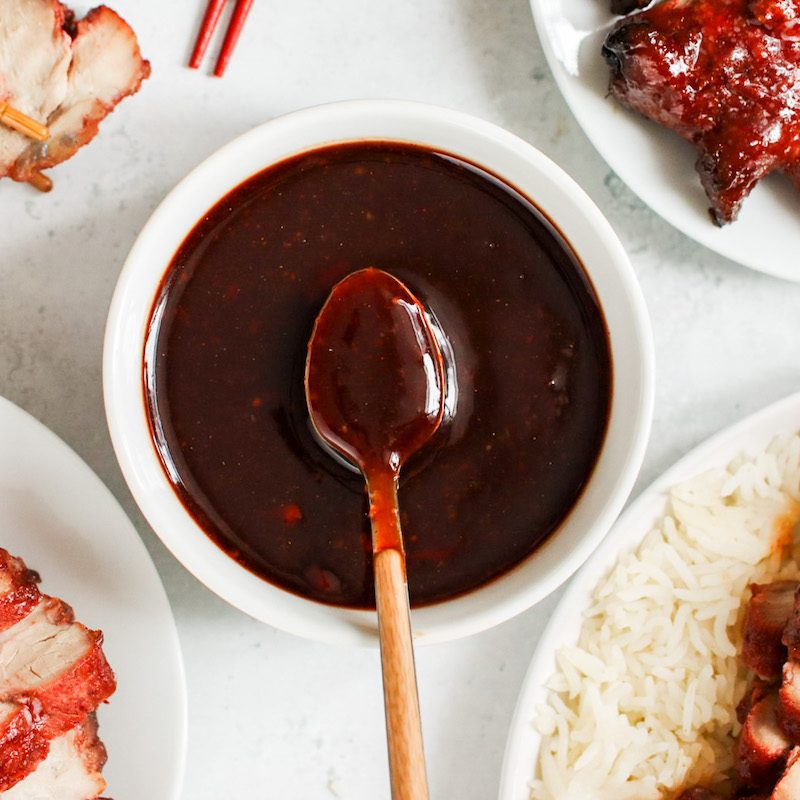
Fast-Casual Adoption and the Panda Express Brisket Milestone
The tipping point for any regional global flavor profile occurs when high-volume brands validate its unit economics. That threshold was crossed when Panda Express introduced Cantonese BBQ beef brisket featuring a custom char siu-style sauce across regional test markets and subsequent nationwide rotations.
Rather than serving standard pork strips, the brand paired the sweet savory glaze with slow-cooked beef brisket. The development team balanced the rich beef fat against a dark, aromatic sauce highlighting garlic, soy, and classic Chinese spices.
The move signaled an important inflection point. It proved that everyday American suburban consumers were ready for flavor profiles that extend beyond orange chicken and generic teriyaki glazes. Fast-casual operators quickly realized that a versatile siu mei marinade could streamline back-of-house operations: one batch works equally well tossed in a wok, brushed over charbroiled skewers, or served as a dipping sauce for fried appetizers.
Smokehouse Fusion: When American Barbecue Met Cantonese Siu Mei
Parallel to fast-casual adoption, craft American pitmasters began running their own experiments. Barbecue hubs in Austin, Atlanta, and Kansas City started merging Central Texas offset smoking techniques with classic Cantonese flavor profiles.
The standout result of this cross-pollination is char siu brisket. Traditional Texas brisket depends entirely on a simple salt-and-black-pepper rub cooked over post oak for 14 hours. Fusion pitmasters modify this framework: they brine the brisket with Shaoxing wine, ginger, and garlic, smoke it until the bark forms, and apply a reduced maltose-and-hoisin glaze during the final hours of the cook.
The fat cap on a prime brisket renders down while absorbing the soy and fermented bean curd marinade. The high ambient heat crystallizes the maltose, producing a crackling exterior crust that carries both smokehouse wood notes and Hong Kong roast house aromatics. Ballpark concession stands have taken note, loading smoked char siu pork belly burnt ends onto fries and steamed buns across major league stadiums in Seattle, San Francisco, and Los Angeles.
Frequently Asked Questions (FAQ)
Q1: What gives traditional char siu sauce its characteristic red color?
A1: Authentic Hong Kong roast houses rely on fermented red bean curd (*nam yu*), which is preserved using red yeast rice. Commercial or budget variations sometimes add red food dye to mimic this appearance without sourcing the specialty fermented tofu.
Q2: How does char siu sauce differ from standard hoisin sauce?
A2: While hoisin sauce is a primary building block of char siu sauce, the finished marinade incorporates Shaoxing wine, five-spice powder, fermented bean curd, garlic, and maltose or honey to create a thinner, more complex, and caramelizing glaze.
Q3: Can home cooks substitute honey for maltose in a char siu glaze?
A3: Yes. Honey is the most common home substitute. However, honey has a lower burning point and tastes considerably sweeter than maltose. When substituting honey, apply the glaze during the final three to five minutes of cooking to prevent the sugars from scorching.
Where Cantonese Barbecue Flavors Head Next
The rapid spread of char siu sauce across American food culture shows no signs of slowing down. As supermarket aisles dedicate expanded shelf space to specialized Asian condiments, home cooks are buying bottled siu mei glazes alongside everyday marinades. Food service developers continue to push the flavor profile beyond pork, testing it on poultry, plant-based proteins, and smoked seafood. What began as a tightly held craft inside the bustling kitchens of Wan Chai has established itself as an essential component of modern global comfort food.


