From Pigment Studies to 'Eyemaxxing': The Rising Fascination With Warm Eye Shades
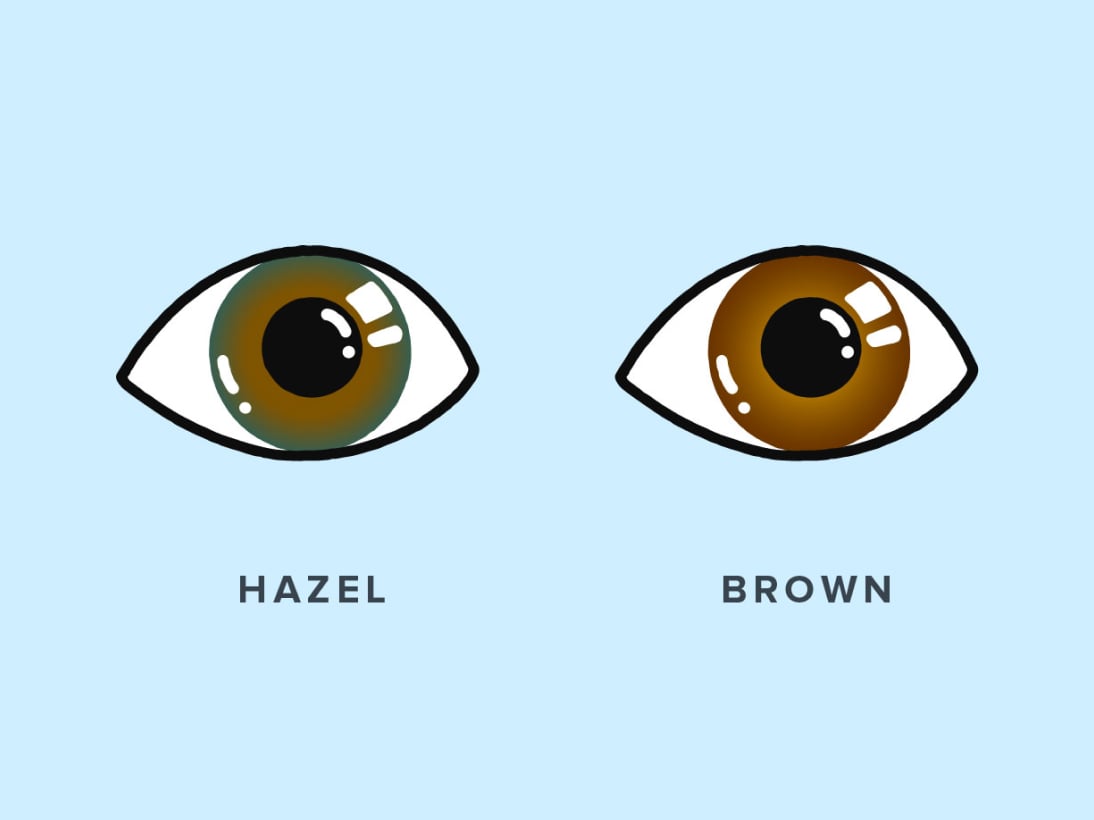
For decades, legacy beauty media treated light eyes as the default gold standard of allure, pushing blue and pale green irises to the center of editorial campaigns. That aesthetic hierarchy has flipped across digital platforms in 2026. Feeds on TikTok and Instagram are saturated with high-definition macro ocular photography and close-ups celebrating the deep amber facets of espresso tones alongside the shifting gold and green flecks of hazel irises. Propelled by beauty culture obsessing over contrast and cellular nuance, warm irises have become the primary canvas for digital creators. Recent industry coverage highlights this shift; as detailed in a recent Harper's BAZAAR Report on pro makeup curation, editorial teams and artists are entirely re-engineering their chromatic strategies around warm eye profiles.
This aesthetic pivot is not just a passing moodboard refresh. It coincides with a wider cultural obsession with structural aesthetics, spearheaded by the online "eyemaxxing trend." Participants in looksmaxxing subcultures and optical science forums have turned iris structural composition into a metric of visual impact. Rather than wishing for recessive hues, millions of users are parsing biological mechanics, from optical scattering to cellular density, to understand why hazel and brown eyes project striking physical presence under modern lens arrays.
📌 Key Takeaways:
- The Viral Pivot: Hazel and brown eyes dominate algorithmic beauty feeds as high-definition 4K sensors expose their complex internal depth and varied color layers.
- The Biophysical Reality: Eye color genetics and varying melanin concentration dictate ocular tone, with Rayleigh scattering in the stroma giving hazel its signature chameleon shifts.
- Strategic Enhancement: The eyemaxxing community relies on targeted metallic eyeshadow shades and color theory for hazel eyes to sharpen limbal ring definition and magnify golden undertones.
How the Eyemaxxing Phenomenon Redefined Ocular Aesthetics
The term "eyemaxxing" emerged from self-improvement and looksmaxxing enclaves before bleeding into mainstream beauty circles. The movement evaluates ocular aesthetics based on physical characteristics: canthal tilt, peri-orbital support, limbal ring definition, and contrast ratios. Within this framework, light eyes without strong framing can appear washed out under bright studio lighting or high-intensity phone flashes. Deep brown and multichromatic hazel eyes, by contrast, offer built-in perimeter contrast.
Online creators run 4K macro lenses over their irises to track how directional lighting changes their perceived hue. On Reddit forums like r/vindicta and r/Splendida, threads dissecting ocular chromatic depth draw hundreds of thousands of views. Users analyze how high ambient lighting interacts with the stroma, creating natural luminescence that flat blue eyes often fail to replicate without post-production filters. The goal of the trend is optimization. By understanding the biological foundation of their iris pigmentation, individuals select complementary makeup palettes, lighting angles, and frame styles that push natural ocular contrast to its absolute peak.
The Physics of Iris Pigmentation: Melanin Concentration and Rayleigh Scattering
The human iris does not contain green, hazel, or blue liquid pigment. The entire chromatic spectrum visible in human eyes relies on a single biological compound: melanin, specifically eumelanin. How that pigment sits inside the iris determines whether an eye appears deep mahogany, amber, or shifting olive.
In deep brown eyes, a dense melanin concentration coats both the anterior border layer and the stroma. This pigment layer absorbs nearly all incoming light wavelengths, reflecting back rich, uniform brown tones. The biological architecture of hazel eyes is more complex. Hazel irises feature moderate pigment dispersion across the anterior layer, leaving the underlying stroma relatively sparse.
When sunlight strikes a hazel eye, the short wavelengths of light encounter the sparse cellular particles in the stroma and scatter, a physical principle known as Rayleigh scattering, the same atmospheric effect that makes the sky appear blue. This scattered blue light blends with the physical yellowish-brown eumelanin sitting in the anterior layer. The visual consequence is an optical illusion: an eye that looks predominantly green in indirect morning light, gold at midday, and warm chestnut under evening halogen bulbs. Far from being a static color, hazel is an active physical interaction between light physics and cellular matter.
Deconstructing Ocular Structure: Deep Brown vs. Dynamic Hazel
To grasp why these two tones behave differently in high-contrast environments and photographic setups, examine their underlying physical properties and optical behaviors side by side.
| Structural Metric | Deep Brown Irises | Dynamic Hazel Irises |
|---|---|---|
| Stromatic Melanin Density | High to extreme; heavy eumelanin concentration throughout | Moderate to uneven; clustered primarily near the pupillary zone |
| Optical Scattering Mechanism | Minimal; pure light absorption with specular surface reflection | Active Rayleigh scattering interacting with anterior yellow lipochrome |
| Limbal Ring Visual Prominence | Blends seamlessly into the iris margin, creating pupil enlargement | High visual delineation; distinct dark outer band framing inner rings |
| Lighting Sensitivity Shift | Color remains stable (reflects amber/red undertones in direct sun) | Extreme variance (shifts between forest green, gold, and light bronze) |
| Primary Digital Appeal | High scleral contrast, perception of depth, warm undertones | Prismatic complexity, visible gold and green flecks, macro texture |

Polygenic Inheritance and the Myth of Simple Eye Color Genetics
High school biology textbooks long reduced eye color genetics to a simplistic Mendelian square: brown is dominant, blue is recessive, and two blue-eyed parents cannot produce a brown-eyed child. Geneticists have dismantled that model entirely. Eye color is a complex polygenic trait determined by interactions across more than 16 distinct genes.
The primary driver is the OCA2 gene located on chromosome 15, which produces the P protein responsible for melanin maturation. Yet the neighboring HERC2 gene acts as a master regulatory switch. A single nucleotide polymorphism in intron 86 of HERC2 can depress OCA2 expression, drastically cutting stromatic pigment production. Ancillary genes, including SLC24A4, TYR, and TYRP1, fine-tune the exact ratio of eumelanin to pheomelanin, as well as the structural density of the stroma itself. This polygenic lattice explains why siblings sharing identical ancestry can display completely different iris profiles, one ending up with dark cocoa irises while another inherits hazel eyes shot through with gold and green flecks.
Color Theory and Metallic Palettes: Maximizing Iris Dynamic Range
The surge of interest in warm irises has altered the beauty industry's product formulation pipelines. Backstage at international runway shows and across viral beauty channels, makeup artists lean on strict color theory for hazel eyes and deep brown tones to generate maximum optical pop.
Because hazel eyes carry warm undertones mixed with structural green scattering, artists deploy complementary shades across the color wheel. Swiping warm plum, aubergine, or burgundy shadow onto the lids draws out the green stromal scattering through simultaneous color contrast. Conversely, applying metallic eyeshadow, specifically molten copper, bronze, and champagne shimmer, amplifies the gold and green flecks suspended near the pupillary collarette.
For deep brown eyes, the aesthetic priority is drawing out subterranean warmth. True brown absorbs light, so artists use cool metallic jewel tones, midnight navy, emerald, and reflective burnished gold, to reflect light directly into the cornea. The contrast between cool shadow pigments and the warm, dark iris causes the brown to glow like polished cognac. In both cases, defining the outer perimeter with charcoal or espresso tightens the limbal ring definition, producing a clean border against the white sclera that photographs with razor-sharp clarity.
Frequently Asked Questions (FAQ)
Q1: Can hazel eyes permanently change to brown or green over time?
A1: While hazel eyes frequently appear to shift color based on lighting, surrounding clothing, and pupil dilation, the baseline melanin concentration remains relatively constant after early childhood. Age-related thinning of the stroma or specific ocular medications can alter pigment density, but everyday chromatic shifts are purely optical effects of Rayleigh scattering under changing ambient light.
Q2: Why do brown eyes look lighter and golden in direct sunlight?
A2: Direct sunlight penetrates deep past the anterior border layer of the iris, hitting the underlying melanin granules at an intense angle. This backlights the eumelanin, illuminating the warm red and amber undertones that are typically obscured under dim or diffused interior lighting.
Q3: What distinguishes hazel eyes from central heterochromia?
A3: Central heterochromia features two distinctly defined, separate color rings within the iris, for example, a sharp gold ring hugging the pupil surrounded by pure blue or green stroma. Hazel eyes feature a soft, blended gradient of brown, amber, and green tones dispersed throughout the entire iris matrix without hard chromatic boundaries.
The Cultural Realignment of Warm Eye Shades
The visual culture of 2026 has moved past artificial perfection and uniform aesthetic standards. Where colored contact lenses were once heavily marketed to mute brown irises, digital spaces now reward depth, structural uniqueness, and organic warmth. High-definition smartphone displays, macro lens accessories, and sophisticated lighting setups have trained consumers to recognize the subtle brilliance of high melanin concentration and structural scattering.
Hazel and brown eyes offer a dynamic, living interplay between biology and light. As scientific literacy continues to merge with modern aesthetics, the fascination with warm irises will only deepen. Understanding the cellular architecture behind your own eyes turns daily grooming into an exercise in biological appreciation, celebrating a complex genetic signature millions of years in the making.


