From Schoolyards to Global Headlines: The Complete Timeline of the '67' Explosion
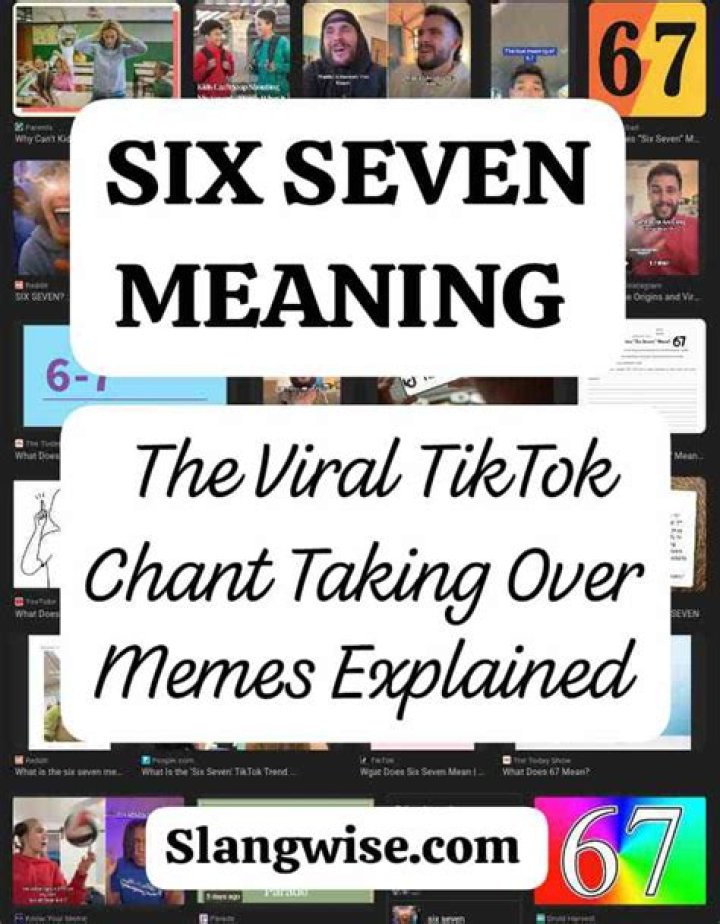
Elementary school teachers across the English-speaking world first noticed the disruption in mid-2025: two digits shouted in unison across hallways, followed by bursts of juvenile laughter. By late 2025, lexicographers recognized the absurdity by naming "67" the Dictionary.com Word of the Year, officially marking the first time in lexicographical history that a recognized entry carried no formal semantic definition. As documented in a recent Mental Floss Report on the six seven trend, millions of baffled parents and onlookers scrambled to find a hidden cipher that simply did not exist.
The phrase represents pure social friction. It functions as linguistic anti-matter, designed specifically to baffle algorithms, frustrate adults, and signal peer belonging. What began as a playground chant migrated across TikTok feeds, inspired countless social media memes, and eventually reached the highest corridors of global visibility when Pope Leo participated in a viral video demonstration in May 2026.
📌 Key Takeaways:
- The Literal Meaning: The number has no intrinsic semantic definition; its power lies entirely in contextual delivery, cadence, and collective confusion.
- The Cultural Origin: It developed as an organic schoolyard chant trend among Gen Alpha before migrating to TikTok feeds and short-form algorithms.
- The Historical Milestone: Dictionary.com selected "67" as its 2025 Word of the Year, formalizing the rise of anti-definition internet slang.
How Playground Rhythms Sparked a Global Meme
Linguistic contagion among pre-teens rarely requires corporate marketing budgets. The origin of 67 traces back to early 2025 classroom chatter and recess games across suburban American school districts. Children repeated the phrase "six-seven" with a sharp, syncopated inflection, raising their vocal pitch on the second digit while gesturing outward with both hands.
Educators initially dismissed the habit as standard classroom distraction. Yet within weeks, the habit crossed state lines through youth sports tournaments, summer camps, and gaming chat lobbies on platforms like Roblox and Discord. Unlike previous youth expressions such as "skibidi" or "gyatt," which carried loose associative definitions rooted in digital subcultures, 67 offered zero narrative framework.
The gesture filled an interactive vacuum. When an adult or an out-of-the-loop classmate asked a question, whether about homework deadlines or cafeteria lunches, the reply was simply a deadpan "6-7." The humor stemmed entirely from the resulting communicative breakdown.
The Mechanics Behind Slang Without Definition
Linguists categorize the phrase as an aggressive example of phatic communication, speech that conveys social connection rather than literal data. When teenagers utter the phrase, they establish an immediate boundary between those who share the inside joke and those left searching dictionaries for an explanation.
By late 2025, Google search queries for "what does 67 means" surged by over 420% quarter-over-quarter. Online forums filled with elaborate conspiracy theories. Some commenters argued it referenced specific highway routes, rap lyrics, or basketball jersey numbers. Others theorized it masked numeric code for illicit activity.
The reality was far simpler. The joke exists because there is no punchline. Internet culture repeatedly cycles through absurdist phases, but the velocity of this specific TikTok viral phrase revealed how quickly algorithmic feeds can amplify pure nonsense into a universal cultural touchstone.
The Evolution from School Halls to Global Recognition
The journey of the phrase from recess blacktops to international institutions happened across an eighteen-month span, reshaping mainstream pop culture conversations along the way.
| Phase & Date | Core Event | Cultural Footprint |
|---|---|---|
| Q1, Q2 2025 | Playground adoption across North America | Restricted to localized peer groups, youth sports leagues, and elementary classrooms. |
| August 2025 | Short-form audio tracks flood TikTok and Reels | Videos featuring the chant surpass 2.8 billion collective views in under 60 days. |
| October 2025 | Dictionary.com selects '67' as Word of the Year | Marks the first time a mainstream reference tool selects an entry explicitly lacking definition. |
| May 2026 | Pope Leo features in a viral demonstration video | Global media coverage solidifies the phrase as a universal cross-generational meme. |
| Mid-2026 | Mainstream brand saturation and editorial retrospectives | Corporate adoption signals peak saturation, shifting organic youth slang toward new frontiers. |
Dictionary.com and the Codification of Nonsense
On October 29, 2025, editorial teams at Dictionary.com sparked fierce debate across academia by naming the phrase their annual flagship selection. Traditionalists expressed irritation. Lexicographers, however, defended the choice by pointing out that language reflects living human usage rather than rigid rules.
In public statements accompanying the announcement, editors noted that modern youth culture uses language as an exclusionary shield. Older generations relied on pig Latin or subtle double entendres; Gen Alpha adopted complete numerical abstraction. By awarding the title to a phrase without a definition, the editorial board documented a cultural watershed: digital communities no longer require semantic consensus to build global communicative phenomena.
Major outlets, including Forbes and NPR, confirmed that user traffic searching for clarification broke site records on the day of the announcement. Readers sought a translation guide. What they received was a sociological mirror reflecting digital culture back at them.
The Vatican Moment and Institutional Saturation
Nothing demonstrates the life cycle of digital humor quite like institutional co-optation. On May 19, 2026, USA Today covered footage showing youth delegates demonstrating the hand gestures to Pope Leo during an international youth summit in Rome. The pontiff mirrored the syncopated delivery back to the crowd, prompting deafening applause and an immediate avalanche of clips across social channels.
When the highest global figures adopt an underground schoolyard meme, the nature of the joke shifts. For adolescents, the utility of the phrase as an exclusive code began to wane the moment authority figures joined in. What started as an act of playground rebellion transformed into harmless mass entertainment.
Teachers who spent the previous autumn issuing detentions for classroom interruptions found themselves smiling at morning assembly references. The menace had completely dissolved into everyday vocabulary.
Frequently Asked Questions (FAQ)
Q1: What is the official definition of the slang phrase '67'?
A1: There is no official or literal definition. The phrase functions as contextual, absurdist slang where the humor comes from uttering the numbers unexpectedly to confuse listeners or demonstrate community membership.
Q2: Why did Dictionary.com name '67' its 2025 Word of the Year?
A2: The platform recognized the phrase because it dominated global linguistic search traffic and captured an unprecedented cultural shift: the rapid rise of digitally native slang designed intentionally to lack formal semantic meaning.
Q3: How should parents or teachers respond when kids shout 'six-seven'?
A3: Acknowledge the trend without overreacting. The phrase carries no derogatory, profane, or coded harmful meaning; treating it as harmless verbal play typically leads kids to lose interest as the novelty wears off.
Linguistic Drift Beyond the Two-Digit Trend
Every viral language phenomenon leaves a clear path for whatever follows. The explosion of the two digits proved that short-form video algorithms now establish linguistic habits faster than traditional media can document them. By stripping words down to raw numbers and pitch inflection, younger generations constructed a private linguistic playground out of plain sight.
As brands, educators, and global dignitaries incorporate the phrase into everyday communication, youth communities inevitably migrate toward the next cipher. The historical footprint remains undeniable. The digits showed that modern language does not require traditional meaning to bind millions of people together in shared, chaotic laughter.


