From Secret Acronym to Global Phenomenon: How Bad Bunny's 'DtMF' Captured the World
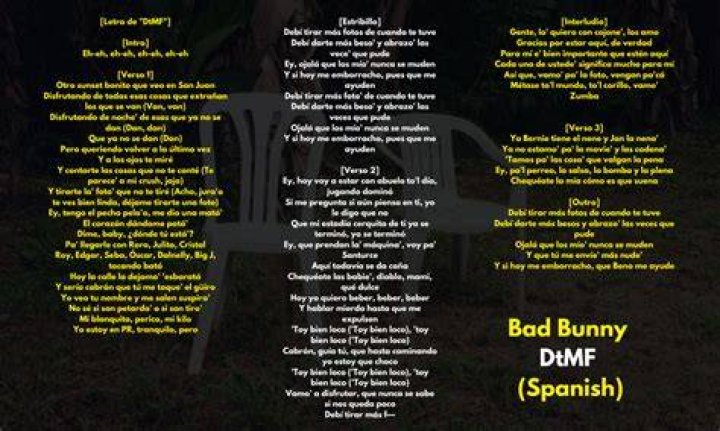
When Bad Bunny dropped "DtMF," listeners around the world immediately rushed to translation engines to unpack the enigmatic four-letter title. Within hours of release, searches for the track's English translation spiked by triple digits across North America and Europe, revealing a song far deeper than a standard breakup ballad. As unpacked in an insightful Teen Vogue Report, the track fuses an agonizing meditation on personal memory with the socio-political anxieties facing modern Puerto Rico.
The title stands for "Debí Tirar Más Fotos" ("I Should Have Taken More Photos"). What begins as an introspective reflection on lost time quickly broadens into an urgent cultural anthem. Driven by indigenous Caribbean percussion and sharp wordplay, the song demonstrates how Benito Antonio Martínez Ocasio uses mass streaming platforms to deliver localized historical weight to non-Spanish speakers worldwide.
📌 Key Takeaways:
- The Title Meaning: "DtMF" stands for "Debí Tirar Más Fotos" ("I Should Have Taken More Photos"), an expression of raw regret over fleeting relationships and moments captured only in memory.
- Musical Roots: The song transitions from a stripped-down, acoustic cadence into traditional Puerto Rican plena, an Afro-Puerto Rican rhythm historically dubbed the island's "sung newspaper."
- Political Subtext: Beneath romantic longing lies sharp commentary on displacement, gentrification, and systemic neglect across Puerto Rico.
- Global Reaction: Non-Spanish-speaking audiences have turned "DtMF lyrics English" into a persistent viral trend ahead of Bad Bunny's international stadium dates in 2026.
Decoding the Acronym: What 'Debí Tirar Más Fotos' Really Means
The initial mystery surrounding the capital letters resolved quickly when Spanish-speaking communities parsed the chorus. "Debí Tirar Más Fotos" captures a very specific, modern ache. It speaks to looking back at past relationships, friendships, and home landscapes, only to realize you failed to preserve the visual proof of those happier days. Benito mourns the moments he lived through too quickly, wishing he had snapped more pictures before life pulled everything apart.
On tracks like "Amorfoda" or "Si Estuviésemos Juntos," Bad Bunny examined loss through cold minimalism. Here, the tone shifts toward warm, painful nostalgia. The lyrics alternate between specific memories, sharing a drink on the porch, casual road trips across the coast, and the sudden realization that those spaces no longer exist in the same way. For an international listener reading along in English, the sentiment cuts straight through linguistic barriers. Regret is universal, but Bad Bunny anchors it within concrete physical territory.
From Melancholy Ballad to Puerto Rican Plena Rhythm
Musically, "DtMF" does something radical for a mainstream streaming hit. It abandons glossy commercial synth lines midway through the arrangement. The song opens softly, carrying the intimacy of a demo recorded late at night. Then, hand percussion takes over. The pandereta hand drums enter, accompanied by the syncopated pulse of plena.
Plena emerged in the early 20th century in Ponce, Puerto Rico, shaped by working-class Afro-diasporic communities. Historically, communities referred to plena as el periódico cantado, the sung newspaper, because towns used its call-and-response choruses to spread news, discuss community strikes, and voice public outrage. By steering a massive commercial release into plena, Benito links private grief with collective heritage. The tempo picks up, the percussion intensifies, and what felt like a quiet sigh turns into a communal dance.
Line by Line: Key Lyrics Translated and Contextualized
To understand why the song struck such a chord, English speakers must look past literal machine translations. Several pivotal verses carry double meanings that define the entire track:
"Pensando en todo lo que no te dije / y en las fotos que no te tiré"
Translation: "Thinking about everything I never told you / and the photos I never took of you."
This opening anchors the central premise. The silence between two people hurts just as much as the lack of visual records. It establishes an intimate, conversational space where Benito admits vulnerability without defensive swagger.
"El tiempo pasa y no avisa / te juro que extraño tu risa"
Translation: "Time slips away without warning / I swear to you that I miss your laugh."
A short, rhythmic declaration. Bad Bunny delivers this line with an unpolished, conversational cadence that mimics spontaneous speech rather than formal poetry.
"Me quedé con las ganas de ver el amanecer contigo otra vez en la isla"
Translation: "I was left longing to watch the sunrise with you again on the island."
Here, the narrative widens. The romantic partner and the physical homeland blend together. The loss is no longer just a lover who walked away; it is the physical island itself, changing rapidly under real estate speculation and migration.
Evolution of Bad Bunny's Narrative Voice Across Eras
The transition toward rich folklore and explicit socio-political themes represents a deliberate artistic progression over the last decade. The chart below tracks how Benito's sonic signatures, thematic priorities, and international reception have evolved leading up to "DtMF."
| Release Era | Dominant Genre Focus | Primary Lyrical Themes | Global Audience Behavior |
|---|---|---|---|
| Trap Era (2016, 2018) | Latin Trap, Heavy 808s | Hedonism, heartbreak, raw ambition | Club airplay; niche suburban streaming |
| Expansion Era (2019, 2021) | Reggaeton, Pop-Rock, Dembow | Gender fluidity, party culture, escapism | Billboard #1 records; stadium sellouts |
| Caribbean Folklore Era (2022, 2024) | Mambo, Bossa Nova, Reggaeton | Summertime joy, Puerto Rican pride | Global chart dominance; mainstream crossover |
| Current Era (2025, 2026) | Plena, Acoustic Folk, Trap fusions | Displacement, memory, systemic friction | Mass lyric translations; cultural deep-dives |
The Subversive Political Undertone Hidden Behind Nostalgia
Why did Teen Vogue, along with mainstream outlets like Capital XTRA and Variety, zero in on the politics of this track? The answer lies in how modern Puerto Ricans experience nostalgia. For millions living on the island and in the diaspora, looking at old photographs is not merely sentimental. It is an encounter with spaces that have been privatized, developed into tax-haven luxury retreats, or destroyed by natural disasters exacerbated by failing power grids.
When Benito sings about wishing he had documented a past life, he speaks directly to a generation priced out of their own neighborhoods. Real estate investors operating under Act 60 incentives have transformed coastal towns. Longtime residents watch family houses get bulldozed to make way for short-term rentals. "Debí Tirar Más Fotos" functions as an archive. The song asks: if our neighborhoods vanish before our eyes, did we at least capture them on film? The plena percussion drives this home; historically, plena was the sound of protest, resilience, and community survival under colonial pressures.
Preparing for the Global Stage: Tour Setlists and Live Crowds
The cultural momentum behind "DtMF" has created an unusual concert dynamic for upcoming international dates. In previous tours, non-Spanish-speaking fans learned phonetic hooks to sing along with party anthems like "Tití Me Preguntó" or "Monaco." With "DtMF," fan forums across Reddit and TikTok show thousands of attendees memorizing translated verses and vocal harmonies in advance.
Live performances planned for 2026 put the plena drummers center stage. Rather than relying solely on backing tracks, Benito's touring arrangement utilizes live pandereteros and traditional acoustic instrumentalists. Stadiums full of English speakers screaming verses about Puerto Rican preservation illustrate a notable shift in pop music. Audiences no longer expect Latin artists to anglicize their work to achieve universal resonance. Instead, listeners do the work themselves, translating the lyrics and honoring the indigenous traditions embedded within them.
Frequently Asked Questions (FAQ)
Q1: What does the acronym 'DtMF' stand for in English?
A1: "DtMF" stands for "Debí Tirar Más Fotos," which translates directly into English as "I Should Have Taken More Photos."
Q2: Why does the song switch musical styles midway through?
A2: The song transitions from a contemplative, acoustic ballad into traditional Puerto Rican plena. This Afro-Puerto Rican genre historically served as a storytelling tool for working-class communities, allowing Bad Bunny to transform an individual lament into a collective cultural statement.
Q3: Is 'DtMF' about a specific breakup or Puerto Rico itself?
A3: It is intentionally written about both. While the lyrics frame a story of romantic estrangement, the imagery references disappearing landscapes, local traditions, and the displacement of native Puerto Ricans, making the song simultaneously personal and political.
The Lasting Cultural Footprint of 'Debí Tirar Más Fotos'
Bad Bunny's "DtMF" proves that pop music does not need to compromise local identity to conquer global charts. By wrapping a painful political reality inside an irresistible, Afro-Puerto Rican rhythm, the song invites millions of listeners to look deeper into the history behind the music they stream. Fans looking up English translations are discovering more than just romantic poetry. They are engaging with the history of plena, the lived reality of contemporary Puerto Rico, and an urgent reminder to hold onto the people and places around them before they slip away.


