From Sketch to Screen: The Complete Evolution of Manolo in The Book of Life
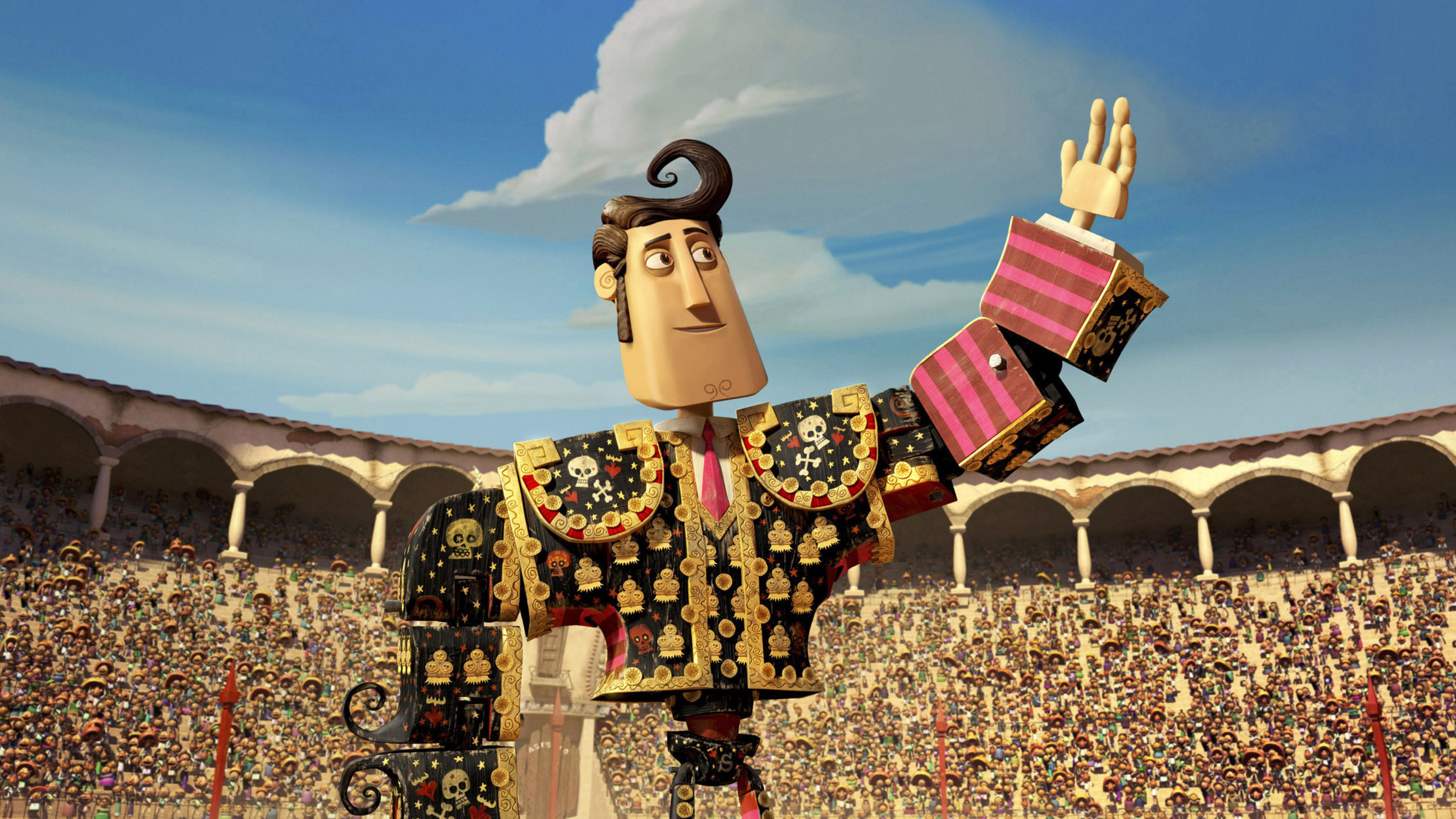
When director Jorge R. Gutierrez first walked into Hollywood pitch meetings carrying sketches of a matador who refused to kill, studio executives pushed back with bewildered silence. Hollywood animation in the early 2010s ran on glossy, uniform computer graphics, clean anthropomorphic animals, and sanitized fairytales. Gutierrez instead presented a skeleton-rich universe carved from Mexican folk art, centered on an introspective guitarist named Manolo Sanchez who preferred ballads over blades. As documented in an early NPR Report during production, the project was an unapologetic celebration of Día de los Muertos, demanding that American cinema respect Mexican folklore on its own visual and narrative terms.
Over a decade after its theatrical debut, The Book of Life occupies a singular position in modern animation. What began as an uphill battle against risk-averse studio boards evolved into a masterclass in visual storytelling and cultural authenticity. Manolo Sanchez, brought to life through Diego Luna’s tender voice performance, broke away from conventional macho archetypes, offering audiences a hero whose supreme act of courage was radical empathy.
📌 Key Takeaways:
- Creative Resistance: Major studios initially rejected the film for fourteen years until Guillermo del Toro stepped in to protect Gutierrez’s artistic autonomy at Reel FX Animation Studios.
- Defying Archetypes: Manolo Sanchez rejected generational bullfighter tradition, substituting slaughter with music to win back his life and the hand of Maria Posada.
- Aesthetic Distinction: The production team preserved raw wooden puppet design mechanics within 3D rigging, bypassing standard digital smoothing to honor artisanal folk craft.
The Fourteen-Year Pitch That Major Studios Kept Rejecting
Gutierrez conceived Manolo Sanchez while studying at the California Institute of the Arts in the late 1990s. The idea was simple yet culturally specific: a musical hero trapped between duty to his ancestors and loyalty to his own conscience. Pitching that vision across Los Angeles, however, exposed institutional myopia. Studio heads repeatedly asked Gutierrez to scrub away the cultural core. Some suggested turning the characters into dogs. Others insisted on stripping out the Día de los Muertos backdrop entirely, worried that skulls and mortality would frighten young children.
The logjam broke when Guillermo del Toro reviewed the concept art. Del Toro instantly recognized the authenticity of Gutierrez's universe. He signed on as producer, leveraging his industry clout to shield Gutierrez from studio dilution. With Del Toro acting as a protective barrier, 20th Century Fox teamed up with Reel FX Animation Studios in Dallas, Texas. Reel FX, then an underdog studio looking to make its mark against industry giants, committed to preserving the rough-hewn, textured lines that corporate studios routinely sand down.
Production kicked into gear with a tight production budget of roughly $50 million, a fraction of the $150 million to $200 million sums typically consumed by legacy animation houses. Gutierrez turned that financial constraint into an aesthetic asset. Every dollar went toward visual density, hand-crafted detail, and vibrant color theory.
The Anatomy of a Pacifist Matador
At the narrative center of San Angel sits Manolo, caught in a generational vise. The Sanchez family legacy is built on the sands of the bullring, drenched in bravado and blood sport. His father, Carlos Sanchez, measures masculine worth exclusively by how a man faces the bull. Manolo inherits unmatched physical agility, yet his hands ache for the nylon strings of a guitar rather than the cold steel of a matador's sword.
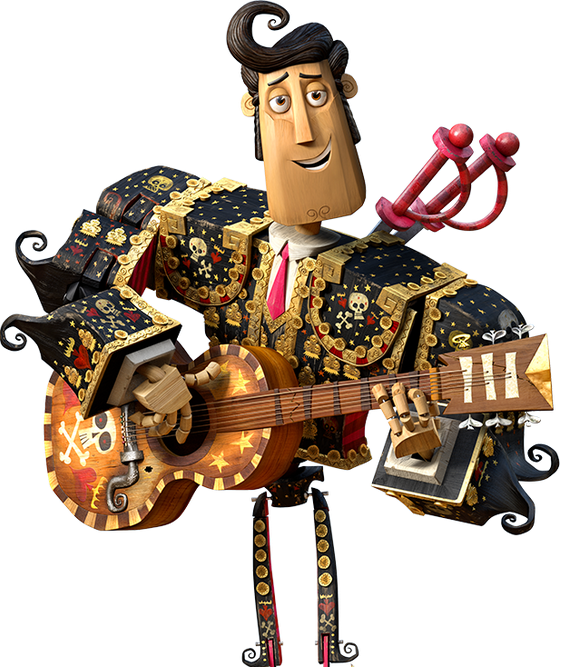
The guitar motif operates as Manolo's true weapon. Inscribed with the words "Always play from the heart," a gift from childhood companion Maria Posada, the instrument serves as an anchor against violent expectations. While his childhood rival Joaquin Mondragon collects military medals and succumbs to town-wide worship, Manolo sings.
This dynamic forms the crux of the high-stakes wager orchestrated by subterranean deities: La Muerte, ruler of the blooming Land of the Remembered, and Xibalba, sovereign of the dreary Land of the Forgotten. Betting on human desire, they place their markers on who will win Maria's heart. Xibalba cheats, slipping Joaquin the Medal of Everlasting Life to ensure physical invulnerability. Manolo receives no magical charms. His only protection is an unwavering commitment to his identity, even when refusing to execute a cornered bull earns him the contempt of his own father and the jeering insults of the San Angel crowd.
Engineering the Wooden Puppet Aesthetic at Reel FX
Achieving Manolo's distinctive presence required Reel FX Animation Studios to reinvent their digital pipelines. Gutierrez hated the homogenized, hyper-smooth plastic look that dominated contemporary 3D features. He instructed his visual development artists and modelers to treat characters as living, articulated wooden puppets, carved by hand from cedar and pine.
Artists rendered visible wood grain across Manolo’s skin, leaving tool marks and joint seams exposed. The rigging team engineered hinges and ball joints into his elbows and wrists, mimicking handmade artisan marionettes found in Mexican artisan markets. When Manolo moves, his cloth cape sways with deliberate weight, contrasting against the rigid timber of his limbs. Lighting artists designed shaders that mimicked aged lacquer, giving the impression that centuries of touch had polished his wooden cheekbones.
+-------------------------------------------------------------+
+-----------------------------+-------------------------------+
+-----------------------------+-------------------------------+
+-----------------------------+-------------------------------+
This aesthetic continuity created a seamless bridge between the framing narrative, schoolchildren observing museum artifacts, and the epic myth itself. The visual language signaled to the viewer that this story belonged to an ancient, oral tradition passed through tactile objects.
| Production Phase | Milestone & Core Challenge | Narrative & Visual Outcome |
|---|---|---|
| 2001, 2011 | Initial pitches rejected across multiple studio networks | Gutierrez retained rights; refused scripts that removed Mexican iconography |
| 2012 | Guillermo del Toro boards project; Reel FX greenlights production | Budget set near $50M; complete artistic autonomy granted to creative heads |
| 2013, 2014 | Diego Luna voice cast; custom wooden texture rigging built | Acoustic pop-folk adaptations recorded; handcrafted marionette look perfected |
| October 2014 | Global theatrical release ahead of Día de los Muertos | Grossed $100M worldwide; earned Golden Globe nomination for Best Animated Feature |
| 2024, 2026 | Long-tail streaming syndication and critical reappraisal | Cemented as an animation classic; celebrated for redefining hero archetypes |
Diego Luna’s Vocal Delivery and the Subversive Soundtrack
Casting Diego Luna altered the emotional baseline of the film. Matinee heroes in animated films frequently lean on polished vocal bravura. Luna offered something different: vulnerability, crackling vocal warmth, and slight hesitation that underscored Manolo’s inner conflict. Luna was not a professional recording artist, which served the story brilliantly. His acoustic renditions felt like spontaneous prayers whispered in an empty courtyard rather than rehearsed stadium numbers.
The soundtrack, composed by Gustavo Santaolalla, blended traditional ranchera structures with contemporary global pop. Santaolalla and Gutierrez took massive creative risks by re-arranging songs like Radiohead’s "Creep," Mumford & Sons' "The Cave," and Rod Stewart’s "Do Ya Think I'm Sexy?" into acoustic Latin folk laments.
When Manolo takes the center of the ring in the Land of the Remembered to face the colossal skeleton bull, he does not raise a blade. He picks up his guitar and sings "The Apology Song." Written by Paul Williams and Santaolalla, the ballad asks for forgiveness on behalf of mankind's cruelty toward beasts. Luna's performance during this sequence remains a defining moment in modern animation. Manolo triumphs by shedding blood sport entirely, bringing a monstrous phantom of fury to peace with a song of remorse.
The Enduring Fan Legacy in the Post-Coco Era
Following the release of Pixar's Coco in 2017, film critics and casual viewers frequently pitted the two projects against each other. Both explored the Land of the Remembered through Mexican folklore, family altars, and music. Yet online communities, particularly animation enthusiasts across Reddit and independent art circles, quickly rallied to defend the distinct identity of Gutierrez's vision.
Where Coco approached the underworld with Pixar’s signature narrative formula and pristine realism, The Book of Life remains wilder, louder, and formally experimental. Fans continue to celebrate Manolo because his journey tackled toxicity within heritage itself. He loves his ancestors, but he refuses to inherit their cruelty. That nuance has kept the character alive in popular discourse long after its theatrical run. Fan art, cosplay conventions, and specialty vinyl soundtrack releases continue to circulate globally, sustained by an audience that values its uncompromising visual swagger.
The film proved that international audiences were hungry for indigenous mythologies delivered without cultural sanitization. By trusting the richness of Mexican art, Gutierrez opened creative doors that subsequent generations of animators continue to walk through.
Frequently Asked Questions (FAQ)
Q1: Why did Manolo refuse to kill the bull at the end of the film?
Manolo's entire character arc centers on rejecting inherited violence. Throughout his life, his family pressured him to become a ruthless matador, but his true calling was music. During the final showdown in the Land of the Remembered, he recognizes that the colossal bull is composed of the pain and rage of every bull killed by the Sanchez family. By singing "The Apology Song" and asking for forgiveness, he breaks the generational cycle of killing through empathy.
Q2: How does Manolo die, and how does he return to the living world?
Manolo is deceived by Xibalba, who uses a two-headed snake to bite him twice after falsely claiming that Maria Posada had died from a snakebite. Believing Maria is dead, Manolo willingly accepts death to reunite with her in the Land of the Remembered. After discovering that Maria only fell into a deep sleep and that Xibalba cheated to win the wager, Manolo travels through the underworld, completes impossible trials, and earns his life back from the deities to defend San Angel from bandits.
Q3: Did Diego Luna do his own singing for Manolo Sanchez?
Yes. Diego Luna performed all of Manolo’s musical tracks himself, including the acoustic cover of Radiohead’s "Creep," Elvis Presley’s "Can't Help Falling in Love," and the original track "The Apology Song." Director Jorge R. Gutierrez intentionally wanted raw, emotionally resonant vocals rather than polished, Broadway-style execution to highlight Manolo’s earnest personality.
The Lasting Impact of San Angel's Musical Matador
Manolo Sanchez remains an indelible figure in modern animation because he challenged the traditional anatomy of courage. In an industry that often equates heroic resolve with physical dominance, his defining weapon was a guitar that bore the scars of his childhood ideals. Jorge R. Gutierrez fought through years of creative resistance to place an unapologetically Mexican story onto cinema screens worldwide, refusing to sand down the edges of his heritage. The result is a film that treats cultural folklore not as exotic set dressing, but as living history capable of inspiring radical gentleness. Manolo’s journey proves that the most profound victories belong to those who dare to play straight from the heart.


