From Tudor Slumber to Modern Nights: What History Reveals About Bedtime Prayers

Every night across the industrialized world, millions of people lie awake in dark rooms illuminated only by the cold blue wash of smartphone screens. Modern clinical data from the American Academy of Sleep Medicine indicates that over 30% of adults experience persistent insomnia symptoms, driven largely by bedtime cognitive arousal, the chronic inability to silence runaway thoughts about work, finances, and global instability. Yet five centuries ago, when physical nights were genuinely perilous, our ancestors approached the dark with structured rituals designed to neutralize that exact psychological panic.
Sleep was not a passive collapse into exhaustion in the pre-industrial era; it was an actively negotiated threshold. When antique dealer Ian Coulson identified an intricately carved 15th-century bedstead discarded in an English hotel parking lot, believed to be the royal marriage bed of King Henry VII and Elizabeth of York, as detailed in an Artnet News Report, historians examined its deep oak reliefs of Christ and protective biblical allegories. Tudor bedtime rituals treated the bed as an altar and a fortress. Examining how historical bedtime prayers functioned reveals why bedside liturgy offered an astonishingly effective antidote to nighttime dread that modern neuroscience is only now beginning to quantify.
📌 Key Takeaways:
- The Historical Framework: Pre-industrial bedside prayer history reveals that evening devotions were pragmatic psychological barriers against acute mortal dread and sleep disruption, not mere symbolic gestures.
- The Biphasic Reality: Tudor and medieval sleep followed a natural two-stage cycle; the waking hour between midnight and 2:00 a.m. was reserved for quiet contemplation, intimate conversation, and meditative petition rather than panic.
- Neurological Down-Regulation: Rhythmic liturgical recitations, such as the Compline night prayer and specific bedtime psalms, trigger measurable parasympathetic activation, systematically lowering somatic hyperarousal before sleep.
The Architecture of Fear and Slumber in Tudor England
To understand the intensity of Tudor bedtime rituals, one must confront the profound terror the night held for early modern Europeans. Without streetlights, climate control, or emergency medical response, darkness meant genuine vulnerability. House fires broke out silently from open hearths. Sickness struck violently without warning. Burglars and vagrants operated in total blackness, while folk theology populated the midnight air with demons, incubi, and the sudden chill of nocturnal pestilence.
The English bedroom was designed to counter this vulnerability. Wealthy families commissioned four-poster oak bedsteads hung with heavy wool or velvet curtains. These enclosures functioned as insulated rooms within rooms, shielding occupants from damp drafts and drafts believed to carry toxic miasmas. But physical protection was never considered sufficient on its own.
Bedtime prayer history illustrates that early English households regarded sleep as a literal preview of death. The Elizabethan evening prayer in the 1559 Book of Common Prayer asked God to "defend us from all perils and dangers of this night." Before drawing their bed curtains, family members recited Christian evening prayers, made reconciliations with domestic servants, and commended their spirits to God. Relinquishing conscious control required a formal transfer of responsibility: because the sleeper could not protect themselves, an omnipotent guardian had to take the night watch.
Segmented Sleep and the Lost Midnight Vigil
Historian A. Roger Ekirch uncovered evidence that until the late 19th century, Western sleep was overwhelmingly biphasic. Humans slept in two distinct intervals: "first sleep," beginning shortly after dusk, followed by a waking interval of roughly an hour around midnight, and then a "second sleep" lasting until dawn.
This middle interval, often termed "the watch," was never viewed as a medical failure. It was an accepted, productive period of quiet wakefulness. Monasteries formalized this midnight window through Matins and Vigils, while domestic householders leaned into bedside devotions. People prayed, meditated on nightly devotion scriptures, tended embers, or reflected on their dreams without the crushing anxiety that modern insomnia creates.
In contrast, 21st-century sleepers interpret waking at 1:30 a.m. as a catastrophe. Sleep anxiety and prayer historically held a symbiotic relationship: wakefulness was seen as an invitation to unload lingering guilt or worry before sliding into restorative second rest. Removing this middle-of-the-night acceptance has turned normal micro-arousals into full-blown panic attacks about tomorrow's productivity schedule.
Contrasting Historic Night Devotion with Modern Sleep Habits
The operational mechanics of how humanity prepares for the dark have shifted radically over five centuries, trading communal cognitive offloading for solitary digital stimulation.
| Element | Tudor & Medieval Era (1500, 1700) | Modern Digital Era (2020, 2026) |
|---|---|---|
| Sleep Architecture | Biphasic: First sleep (3, 4 hours), midnight vigil (1 hour), second sleep (3, 4 hours). | Monophasic: Continuous 7, 8 hours expected; midnight waking coded as pathology. |
| Pre-Bed Cognitive Input | Recitation of Compline, Psalter readings, candlelight, whispered household blessings. | High-frequency blue light, algorithmic social feeds, automated work email notifications. |
| Anxiety Management | Externalization of risk: Surrendering physical safety to divine sovereignty. | Internalization of risk: Obsessive self-tracking, sleep apps, pharmacological sedation. |
| Nocturnal Arousal Response | Calm contemplation, short prayer before sleeping, intimate marital speech. | Dopaminergic seeking (doomscrolling), cortisol release, catastrophic time-math. |
The Neuroscience of the Compline: Ancient Liturgy as Nervous System Reset
Among monastic orders and literate laypeople, the day ended with the Compline night prayer, from the Latin completorium, meaning the completion of the working day. Monks recited Compline in near-total darkness, singing the exact same set of prayers every night year after year. The service included Psalm 91, the hymn Te lucis ante terminum ("Before the ending of the day"), and the confession of daily sins.
Neurologists studying sleep architecture recognize this mechanism immediately. Sleep is an autonomic process that cannot be forced; it must be permitted. For sleep onset to occur, the sympathetic nervous system ("fight or flight") must yield to the parasympathetic nervous system ("rest and digest"). Heart rate variability increases, core body temperature drops, and prefrontal cortex activity decelerates.
When an individual recites a protection prayer at night or repeats rhythmic psalms to read before bed, they engage in focused linguistic repetition. This suppresses the brain's default mode network (DMN), the neural circuit responsible for rumination, future planning, and threat detection. The 6th-century monastic rule of Saint Benedict effectively engineered a non-pharmacological down-regulation protocol centuries ahead of modern clinical cognitive behavioral therapy for insomnia (CBT-I).
Cognitive Externalization: Why Surrender Defeats Sleep Anxiety
Insomnia is largely a disorder of perceived control. Chronic insomniacs lie in bed calculating how many hours of rest remain if they fall asleep right now, obsessing over unfinished emails, and fighting to force their brains unconscious. This effort itself triggers adrenaline release, making sleep neurologically impossible.
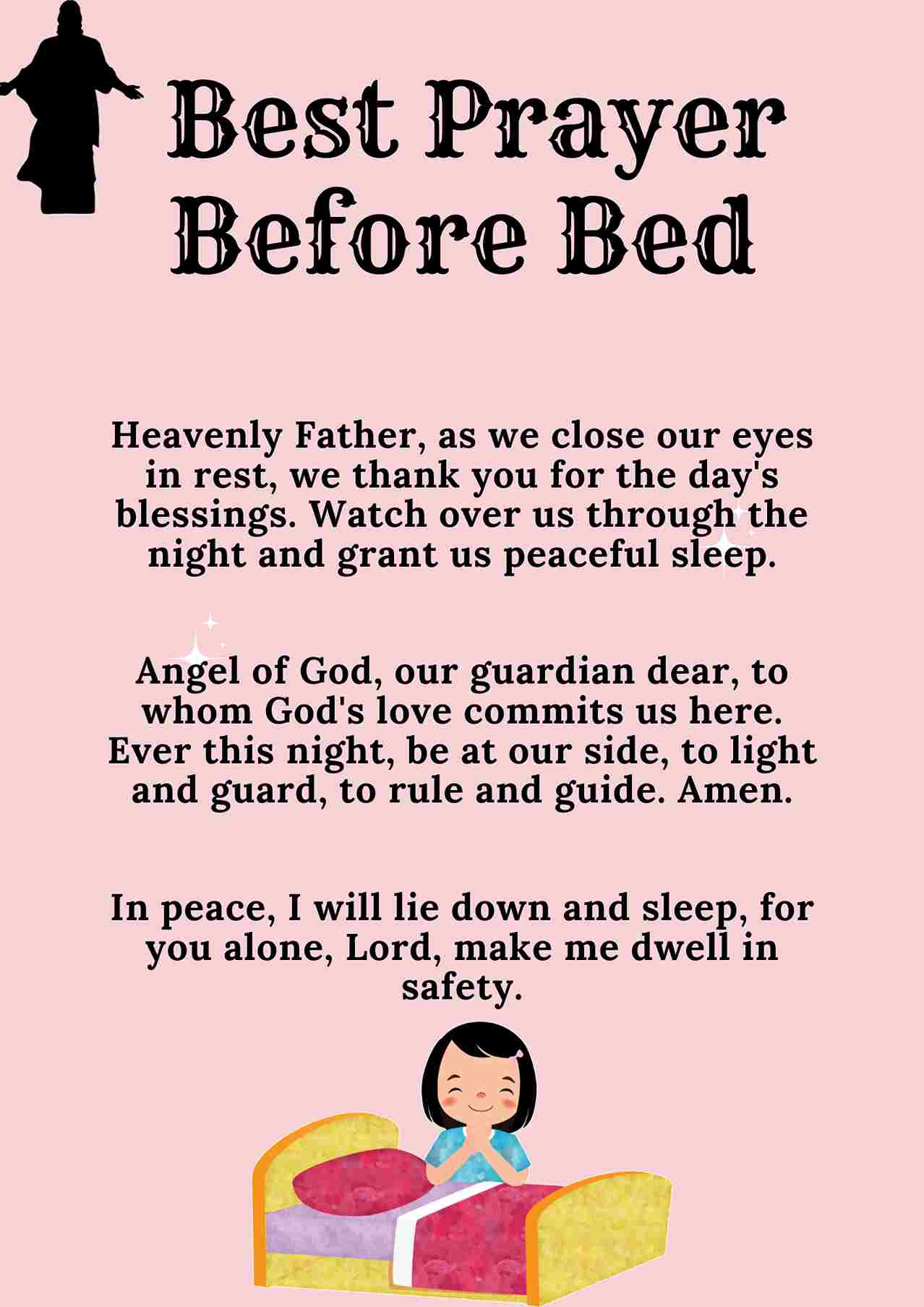
Bedside prayer history reveals an entirely opposite cognitive strategy: surrender. Traditional Christian evening prayers explicitly emphasize human frailty and the abandonment of personal control. A classic bedtime prayer for peaceful sleep, drawn from Psalm 4:8, states: "In peace I will lie down and sleep, for you alone, Lord, make me dwell in safety."
In clinical psychology, this mechanism is called externalization. By voicing worries in prayer and consciously placing them into the hands of an all-powerful entity, the individual offloads the cognitive burden of solving those problems overnight. The mind is granted permission to stand down. You cannot fix your career, resolve your debt, or repair your relationship at 2:00 a.m. Medieval peasants understood this intuitively; they handed the problems of tomorrow over to God and closed their eyes.
Reconstructing Spiritual Bedtime Routines for the 2026 Household
Reviving these historical tools does not require converting to medieval monasticism or living by candlelight. It involves adopting the structural wisdom of pre-industrial sleep hygiene to protect our mental margins from digital encroachment.
A functional, historically grounded evening protocol begins by establishing an absolute boundary against algorithmic inputs. Setting phones aside 45 minutes before sleep eliminates the dopamine spikes that maintain cerebral alertness. In place of the screen, deliberate spiritual bedtime routines reintroduce sensory quiet.
Reading tactile, poetic texts, such as Psalm 23, Psalm 121, or a traditional evening blessing, replaces fragmented digital narratives with steady cadences. Follow this with a short prayer before sleeping: acknowledge one failure of the day to release moral guilt, state three points of concrete gratitude, and explicitly name the anxieties being set aside until dawn. This creates a psychological partition between waking productivity and restorative surrender.
Frequently Asked Questions (FAQ)
Q1: Which biblical passages are most historically associated with bedtime prayers?
A1: The historical Western tradition relies heavily on the "evening psalms." Most prominent are Psalm 4 ("In peace I will lie down"), Psalm 91 ("He will cover you with his feathers"), and Psalm 121 ("He who watches over you will not slumber"). In addition, Simeon's canticle from Luke 2:29, 32 (the Nunc Dimittis: "Lord, now let your servant depart in peace") has served as the anchor text for Christian night prayer for over 1,500 years.
Q2: Can non-religious individuals benefit from historic evening prayer structures?
A2: Yes. The clinical utility of these rituals rests on cognitive offloading, repetitive linguistic cadence, and somatic relaxation. Secular cognitive behavioral practitioners regularly adapt these elements into bedtime journaling, structured worry-dumping exercises, and breath-synchronized contemplative mantras that mirror the rhythm of the monastic Compline without specific theological framing.
Q3: How should someone handle waking up in the middle of the night according to historical sleep habits?
A3: If you wake at 2:00 a.m., avoid checking the time or looking at any illuminated screens, as bright light halts melatonin production. Instead of tossing restlessly, embrace the Tudor concept of the waking interval: sit quietly in dim light, read a few verses of reflective prose or poetry, recite a quiet prayer of thanksgiving, and allow your body to naturally transition back into its second sleep phase.
Reclaiming the Margin of the Night
Modern society systematically stripped the night of its sacred boundary, transforming what was once a protected sanctuary into an extended shift for commerce, digital entertainment, and silent panic. We dismantled ancient rituals because we mistakenly believed that electric lighting and smart devices made the terrors of darkness obsolete. Yet human biology did not evolve to withstand relentless 24-hour stimulation.
The ornate carvings on Tudor oak beds and the quiet cadences of monastic Compline served a lasting medical purpose: they recognized the boundary of human strength. When you speak a prayer before bed, you re-establish that border. You step back from the machinery of daily performance and acknowledge that the universe can run itself while you rest.


