From Wellness Trends to AI Cooling: Why Everyone Is Counting Gallons and Litres
Hydration influencers lugging translucent jugs across gym floors tell you to drink a gallon a day. Meanwhile, hyper-scale cloud facilities operating a few miles outside town burn through hundreds of thousands of gallons an hour to chill clusters of graphic processing units. Water consumption has abruptly shifted from an unexamined municipal utility bill into a fierce public debate over local resources. When tech executives spar over utility footprints, such as in a recent WRAL Report examining claims comparing agricultural irrigation against server farm evaporative chillers, the exact arithmetic becomes urgent.
The basic math seems simple enough on paper. Yet, confusing standard measures across borders and industrial sectors routinely creates costly errors in municipal planning, corporate sustainability reports, and daily health habits.
📌 Key Takeaways:
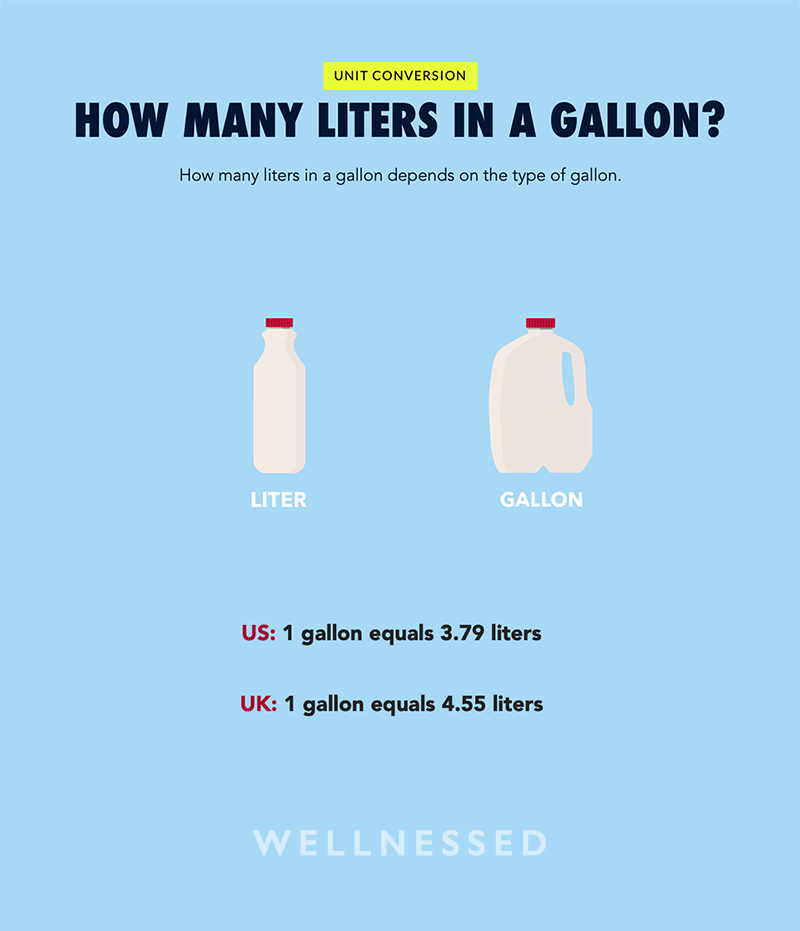
- Core Ratio: A standard US liquid gallon equals exactly 3.785411784 liters, whereas an Imperial gallon measures 4.54609 liters, a 20 percent discrepancy that distorts cross-border data.
- Industrial Scale: High-density artificial intelligence computing racks demand immense cooling, creating an environmental footprint that now rivals whole countries in utility demand.
- Resource Accountability: Tracking volume conversions accurately prevents catastrophic errors in municipal water supply tracking and community infrastructure planning.
The Mathematical Constant: Converting US Gallons to Litres
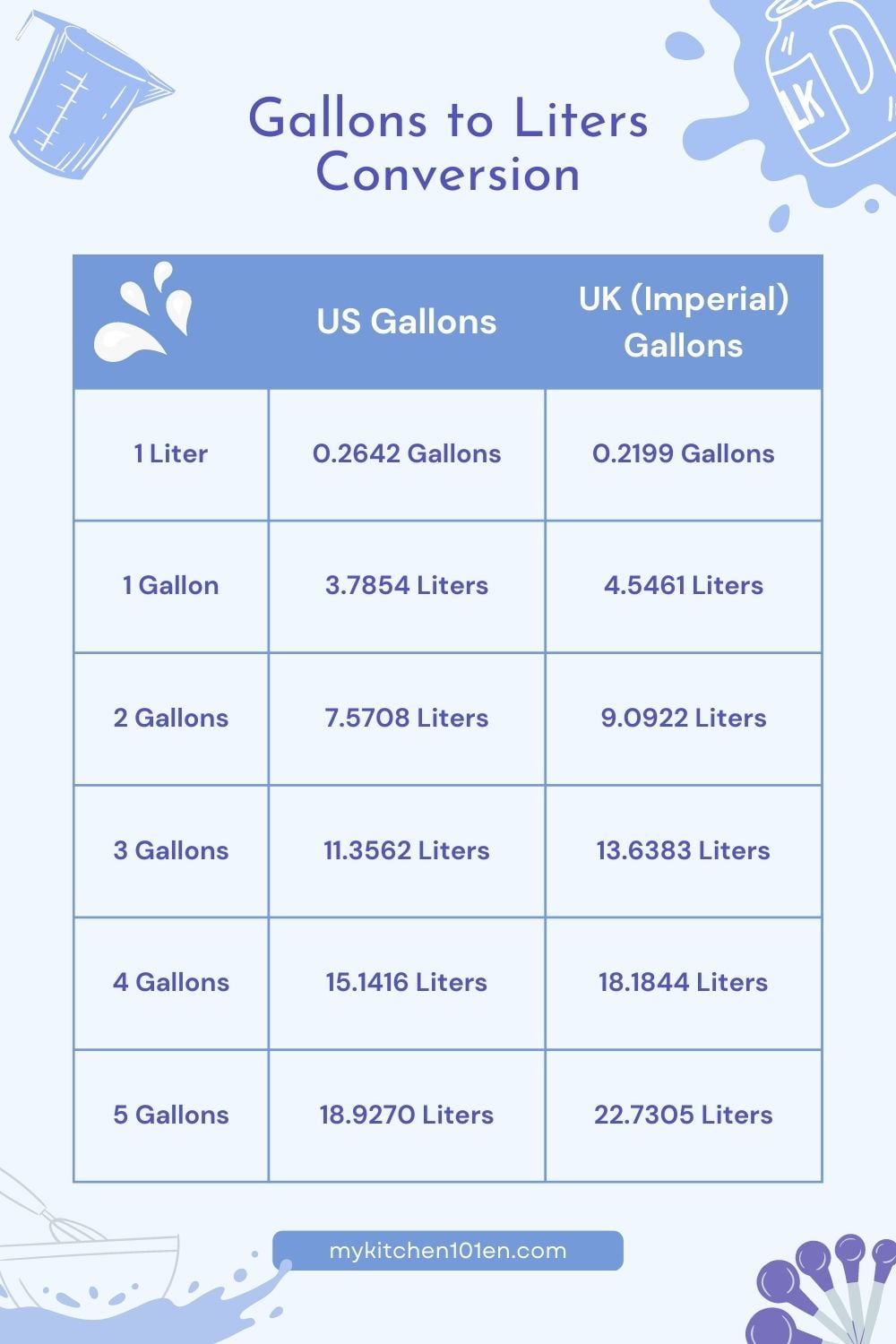
One standard US liquid gallon contains precisely 3.785411784 liters. For quick everyday kitchen calculations or personal hydration logs, rounding to 3.785 liters per gallon works fine. If you want to convert liters into gallons, divide your liter figure by 3.785, or multiply by 0.264.
The standard litres to gallons formula looks like this:
$$\text{Gallons (US)} = \frac{\text{Litres}}{3.78541}$$
$$\text{Litres} = \text{Gallons (US)} \times 3.78541$$
This ratio traces back to Queen Anne’s wine gallon of 1707. Defined as a cylinder seven inches in diameter and six inches deep, it equaled 231 cubic inches. The United States preserved that historical standard when formalizing national weights and measures in 1824.
Metric-standardized nations adopted liters directly tied to cubic decimeters. Because one cubic decimeter equals 1,000 milliliters of pure water at its maximum density, converting imperial units to the metric system requires decimal conversions rather than clean base-10 adjustments.
The Transatlantic Rift: Imperial Gallon vs. US Gallon
People often run into confusion when reading British fitness guides or Commonwealth environmental filings. The British Imperial gallon equals 4.54609 liters, roughly 20 percent larger than the American equivalent.
The split occurred during Britain’s Weights and Measures Act of 1824, when the British Empire abandoned traditional wine and ale gallons. Parliament redefined the gallon as the volume occupied by 10 pounds of distilled water weighed in air with brass weights at 62 degrees Fahrenheit. The United States ignored the reform entirely, staying loyal to Queen Anne’s historic dimensions.
| Unit Type | Volume in Litres | Fluid Ounces | Primary Jurisdictions |
|---|---|---|---|
| US Liquid Gallon | 3.785 L | 128 fl oz (US) | United States, Latin America trade |
| Imperial Gallon | 4.546 L | 160 fl oz (Imp) | United Kingdom, Canada (informal), Caribbean |
| US Dry Gallon | 4.405 L | N/A (Dry goods only) | US agricultural commodities |
When an American company tracks municipal water supplies across facilities in both Dublin and Ashburn, Virginia, skipping unit normalization creates serious balance sheet distortions. A plant reporting one million gallons of water use in Northern Virginia consumes 3,785,411 liters. The same nominal volume in the United Kingdom consumes 4,546,090 liters, a silent gap of 760,679 liters.
The Megawatt Thirst: AI Data Centers and Industrial Chilling
The difference between liters and gallons stops being academic trivia when scaled to modern computing infrastructure. Cooling hardware for complex software tasks burns enormous volumes of water. High-density server banks produce intense heat, forcing facilities to rely on evaporative cooling towers. These systems mist treated water onto heat exchangers, evaporating the liquid into the air to pull heat away from sensitive silicon.
A single mid-sized facility can cycle through 300,000 to 500,000 gallons of water daily, roughly 1.13 million to 1.89 million liters. According to investigative coverage from Politico, one facility drained 30 million gallons of water (113.5 million liters) unnoticed from municipal reserves until surrounding residents filed complaints over sharp drops in domestic water pressure.
Reporting from PBS revealed that the collective energy, water, and environmental footprints of modern computing corridors now rival the total utility demands of mid-sized sovereign countries. An inquiry by CBS News highlighted that generating an extended series of AI responses can evaporate anywhere from half a liter to two liters of water depending on server location and local temperatures.
Silicon Valley tech firms are racing to publish water efficiency benchmarks to ease public concern. In June 2026 corporate updates, Amazon claimed its facilities operated up to seven times more water-efficiently than the broader industry average, leaning on direct-to-chip liquid loops and industrial recycling systems to lower evaporative losses.
The Viral Hydration Trend: 3.78 Litres on the Kitchen Counter
The gallons to liters ratio has also entered private homes through fitness culture. The "gallon challenge" has swept social feeds, with enthusiasts carrying large reusable plastic jugs to drink a gallon of water every 24 hours.
Most people taking the challenge consume a US liquid gallon, or 3.785 liters. That is roughly sixteen standard 8-ounce glasses.
Medical professionals caution that daily water usage metrics need to match individual biology, ambient humidity, and physical exertion instead of an arbitrary volumetric target:
- Flooding the digestive tract with 3.8 liters of plain water without replenishing sodium, potassium, and magnesium can dilute blood sodium below 135 mEq/L, triggering fatigue, disorientation, and muscle cramping.
- Healthy human kidneys filter roughly 0.8 to 1.0 liters per hour. Gulping a quarter-gallon in twenty minutes strains the urinary system without improving cellular hydration.
- The National Academies of Sciences, Engineering, and Medicine recommend an overall daily fluid intake of roughly 3.7 liters for men and 2.7 liters for women. Crucially, that estimate includes moisture drawn from whole foods, fruits, and soups, which usually supply 20 percent of daily fluids.
How Municipalities Track Gallons, Litres, and Megalitres
Water meter infrastructure reveals another layer of complexity. Municipal water utilities measure domestic and commercial usage using differing volume denominations depending on age, regional regulations, and digital metering hardware.
American utilities bill customers using two main units:
- Centum Cubic Feet (CCF): One CCF equals 100 cubic feet, translating to 748.052 US gallons or 2,831.68 liters.
- Thousand Gallons (kGal): Equal to 1,000 gallons or 3,785.41 liters.
Across Canada, Europe, and most emerging industrial zones, SCADA systems track distribution networks in megaliters (ML), where one megaliter equals exactly 1,000,000 liters or 264,172 US liquid gallons.
When municipal water supply tracking systems flag pipeline leaks, mixing up US gallons, Imperial gallons, and megaliters delays maintenance crews. Engineers relying on digital fluid volume calculators must verify that their input parameters match the physical pumps installed in their pump stations.
Frequently Asked Questions (FAQ)
How many litres are in a standard US gallon of drinking water?
A standard US liquid gallon holds exactly 3.785411784 liters. For everyday household tracking, 3.785 liters is the universally accepted figure.
Why is the British gallon different from the American gallon?
In 1824, the British Parliament unified its measurement systems around the Imperial gallon, defining it as the space occupied by 10 pounds of water at 62 degrees Fahrenheit (4.546 liters). The United States retained the earlier British wine gallon standard established in 1707 (3.785 liters).
How do I convert liters to US gallons on a simple calculator?
Take your volume in liters and divide it by 3.785. For example, 10 liters divided by 3.785 yields roughly 2.64 US gallons.
How many liters of water are used when cooling large computer servers?
A commercial server facility can evaporate anywhere from 1.13 million to 1.89 million liters (300,000 to 500,000 US gallons) every single day, depending on regional outdoor temperatures, server loads, and chiller engineering.
Is drinking an entire gallon of water safe for an average adult?
For most healthy adults with normal kidney function, spacing 3.785 liters of fluid over sixteen hours is safe, provided dietary sodium and mineral balance remain steady. Drinking that volume within two or three hours, however, risks water intoxication and severe electrolyte dilution.
Managing Fluid Resources in an Era of High Consumption
Volumetric accuracy has grown into a core operational discipline. Whether auditing cloud cooling systems, calculating commercial manufacturing wastewater, or monitoring personal wellness habits, converting gallons to liters requires understanding the origin of those numbers. One gallon is not a single, universal metric. Checking your conversion factors before planning infrastructure budgets, logging municipal intake, or filling your morning water container keeps your numbers accurate and your local water systems balanced.


