Harley Quinn Fart Comic Cover Revealed: Why Fans Are Calling It DC's Worst Ever
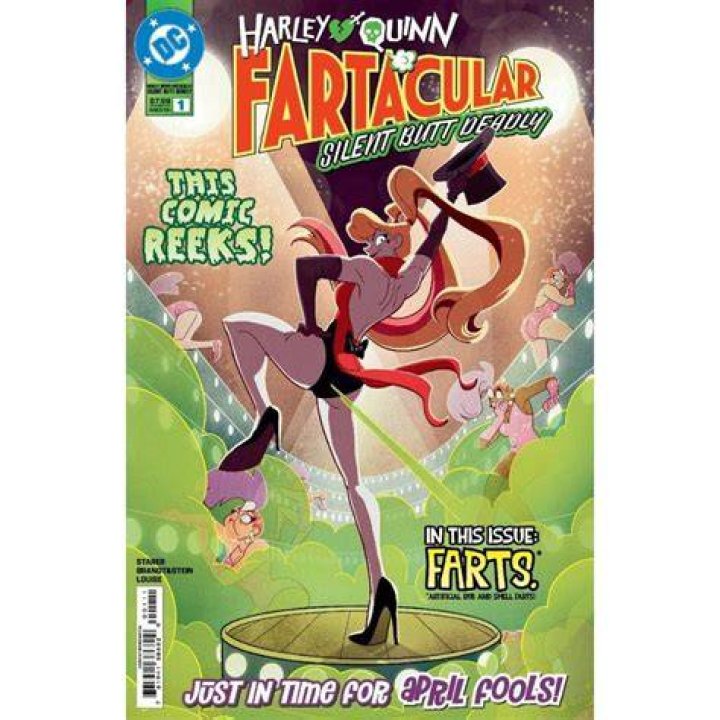
When DC Comics released its March 2025 solicitations in late December 2024, readers scanned the lineup for major Batman crossovers and summer event setups. Instead, an unvarnished piece of bathroom humor hijacked the conversation. The publisher revealed Harley Quinn Fartacular: Silent Butt Deadly #1, an oversized April Fools Day special that instantly polarized readers across social platforms, comic shops, and collector forums.
The cover artwork, depicting Harley Quinn proudly reveling in noxious green fumes, triggered immediate disgust from purists and bewildered amusement from casual readers. As detailed in an early GeekDad Report, the project leaned unapologetically into lowbrow slapstick. What began as a seasonal publishing stunt quickly evolved into a heated debate over DC's creative dignity, brand dilution, and the commercial viability of pure shock value.
(Source: GeekDad: "Review – Harley Quinn Fartacular: Silent Butt Deadly #1 – Yep, That’s the Title")
📌 Key Takeaways:
- The Project: DC Comics solicited Harley Quinn Fartacular: Silent Butt Deadly #1 in December 2024 as a dedicated April Fools Day parody book.
- The Backlash: Longtime fans lambasted the cover art as an embarrassing low point for the character, citing crass commercial pandering.
- The Creative Intent: Helmed by veteran comedy writer Elliott Kalan, the release was designed as an intentional, self-aware sendup of comic tropes rather than serious DC canon.
December Solicitations and the April Fools Ambush
Comic solicitations serve as the industry's retail road map. Three months before physical copies reach shelves, publishers drop cover art, plot teasers, and creative rosters to secure shop pre-orders. When Diamond and Lunar Distribution populated listings on December 20, 2024, pop culture news sites like Popverse and The Direct immediately flagged the listing. DC was not joking around about its joke.
Priced at $5.99, the one-shot carried a title that looked like an internet parody. It was not. DC placed the comic on official print schedules for an April 1, 2025 street date. Mainstream superhero books occasionally touch juvenile humor, but rare is the instance where a premier Big Two publisher builds an entire forty-page prestige release around flatulence. The decision felt calculated to provoke outrage, and comic book social media delivered right on cue.
The Shock Factor of Silent Butt Deadly #1
The cover design did not mince visual metaphors. Green, wavy gas clouds, exaggerated character expressions, and cartoonish typographic sound effects signaled exactly what was inside. Within minutes of the solicitation reveal, social feeds lit up with complaints. Many readers decried the cover as "rock bottom" for Harley Quinn, an iconic character originally created by Paul Dini and Bruce Timm in Batman: The Animated Series.
Harley has walked a strange creative line for three decades. She evolved from the Joker's tragic, abused sidekick into an emancipated anti-heroine, a box-office powerhouse, and an LGBTQ+ icon. To her dedicated fanbase, reducing her to literal scatological gags felt regressive. Reddit's r/DCcomics erupted with dismissive threads, while YouTube commentators dissected the cover as evidence of editorial creative bankruptcy. For another segment of readers, the collective gasp was the entire point. DC set an April Fools trap, and fandom walked straight into it.
How Fan Outrage Reshaped the Comic's Trajectory
The controversy exposed a deep divide between traditional comic readers, novelty buyers, and collectors hunting for oddities. Comic shops reported contradictory customer behavior: purists canceled their ongoing Harley Quinn pull-list subscriptions in protest, while speculative buyers asked for multiple copies of the main and variant covers.
| Reader Segment | Primary Reaction | Market Behavior (2025, 2026) |
|---|---|---|
| Legacy DC Fans | Harsh criticism; labeled the cover degrading and tasteless | Boycotted the issue; demanded tighter editorial oversight |
| Speculative Collectors | Anticipated a bizarre, low-print-run cult oddity | Hoarded variant covers; secondary market flips hit $15, $25 |
| Casual & Humor Readers | Welcomed the irreverent, self-deprecating parody tone | Purchased off impulse racks during April 2025 |
| Direct Market Retailers | Nervous about front-facing display optics | Adjusted initial orders conservatively; sold out initial shipments |
Elliott Kalan and DC's History of Vulgar Parody
Behind the headline-grabbing cover stood a writer whose resume contradicted the accusation of amateurishness. Elliott Kalan, a former head writer for The Daily Show with Jon Stewart and head writer of Netflix's Mystery Science Theater 3000 reboot, took the writing reins. Kalan understood satire, absurdist structure, and the mechanics of comedic deflation.
DC Comics holds a long, forgotten tradition of juvenile parody. Decades before this special, DC published Plop! The Magazine of Weird Humor in the 1970s and periodically weaponized Ambush Bug to mock internal editorial sacred cows. Kalan's script operated inside that legacy. The interior pages functioned less like a nonstop parade of flatulence jokes and more like an anarchic deconstruction of corporate comic crossovers. The plot ridiculed superhero self-seriousness, fourth-wall conventions, and the very editorial machine that approved the book. The provocative exterior hid a sharp, self-aware gag comic.
Comic Retailers, Variant Art, and the Modern Back-Issue Market
The controversy created a logistical dilemma for local comic shop owners. Comic book stores cater to an increasingly diverse clientele, including young readers, parents, and older collector traditionalists. Multiple retailers voiced concern on distributor forums about displaying the primary cover on front-facing new release walls. Several shops opted to place it behind counters or face-out only variant covers that toned down the visual crudity.
Paradoxically, outrage fueled commerce. By late March 2025, pre-order numbers had climbed steadily on the novelty factor alone. Variant cover art featuring stylized homages and humorous cartoon renditions attracted collectors who specialize in offbeat historical artifacts. The book mirrored similar moments in publishing history, such as Marvel's infamous 1990s parody lines or bizarre crossover issues. Decades later, weird comics rarely lose resale interest; they become legendary oddities.
Frequently Asked Questions (FAQ)
Q1: Why did DC Comics publish Harley Quinn Fartacular: Silent Butt Deadly #1?
DC greenlit the one-shot specifically as a seasonal April Fools Day parody special, designed to release on April 1, 2025, poking fun at superhero tropes through irreverent, gross-out humor.
Q2: Who were the primary creators behind the issue?
The special was written by Emmy-winning comedy writer Elliott Kalan, widely known for his tenure at The Daily Show, alongside a rotating roster of DC cartoonists and humor illustrators.
Q3: Is the comic considered part of mainstream DC Universe canon?
No. The issue is an out-of-continuity gag comic. Its events hold no canonical bearing on ongoing storylines in the flagship Harley Quinn solo title, Detective Comics, or Batman.
Q4: How did comic book stores handle the controversial cover?
While some shop owners tucked the primary cover behind counters due to family-friendly store policies, strong collector interest and online buzz helped the title sell through its initial print run quickly.
Where DC's Satirical Impulse Goes Next
The dustup over Harley Quinn Fartacular: Silent Butt Deadly #1 demonstrates how sensitive superhero fandom remains to brand perception. In an era dominated by billion-dollar cinematic franchises and curated corporate IP, fans often expect characters to maintain elevated, cinematic prestige. When a legacy publisher releases an unabashed fart joke on glossy paper, the friction is immediate.
DC took a calculated risk. The publisher sacrificed a brief news cycle of creative dignity for viral awareness and strong sales among humor enthusiasts. While critics still point to the cover as an emblem of lowbrow excess, the issue succeeded in its primary objective: nobody who saw the solicitation forgot it existed. Satire in superhero comics will always be divisive, particularly when it smells like this.


