How to Master the Cable Reverse Fly: Form, Sets, Reps, and Variations

Most lifters walk out of the gym with overdeveloped anterior deltoids and completely neglected posterior shoulders. Decades of heavy pressing create internal rotation, rolled shoulders, and chronic joint instability. The solution is not mindlessly swinging lightweight dumbbells on an incline bench; it requires targeted mechanics. According to analysis from the Men's Health Report on resistance equipment, selectorized cable stacks maintain continuous torque across the entire range of motion, exposing weaknesses that free weights simply bypass.
Mastering the cable reverse fly turns a fragile, unbalanced upper back into a resilient, structurally sound frame. Getting the most out of this movement requires dialing in your setup, fixing shoulder blade mechanics, and understanding muscle line-of-pull.
📌 Key Takeaways:
- Biomechanical Advantage: A constant tension resistance curve forces the rear deltoid to stay loaded during the stretch, where dumbbells lose tension completely.
- Scapular Mechanics: Keeping the shoulder blades protracted isolates the posterior deltoid, while excessive squeezing recruits the rhomboids and middle trapezius.
- Setup Specifics: Adjust pulleys roughly level with your shoulders and cross the cables to pull directly through your arm's horizontal plane.
Why Free Weights Fail the Posterior Deltoid
The standard dumbbell reverse fly suffers from a flawed torque curve. When your arms hang toward the floor, gravitational pull acts parallel to your limbs, meaning zero tension on the target muscle. Tension only peaks at the very top of the repetition, where leverage is weakest and momentum usually takes over. Lifters end up jerking 30-pound dumbbells with their lower back and neck, never loading the target tissue under a deep stretch.
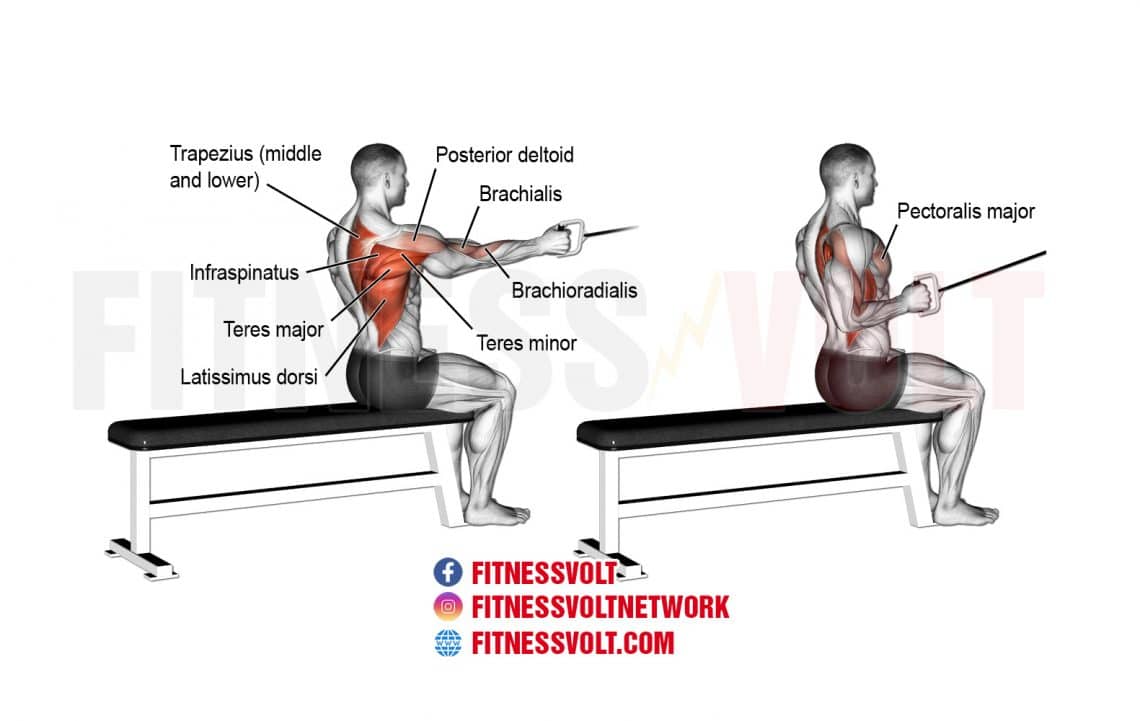
Pulleys resolve this mismatch. A cable maintains steady resistance from the moment your hands cross in front of your chest through the end of horizontal abduction. By loading the lengthened position, you stimulate high mechanical tension across muscle fibers that are rarely challenged. This continuous pull also supports rotator cuff health by strengthening external rotators like the infraspinatus alongside the rear deltoid, establishing balance against heavy bench presses and overhead work.
Setting Up the Cable Crossover Machine for Direct Rear Delt Isolation
Walk up to a dual-pulley cable crossover station. The first step is precise cable height adjustment. Set both pulleys between shoulder height and chin level. If the pulleys sit too high, the movement degenerates into a modified lat pulldown; set them too low, and you turn it into a front raise variation that overloads the upper traps.
Remove all stirrup handles. Instead, grip the bare cable carabiners or attach padded wrist cuffs. Gripping traditional handles forces forearm activation and wrist extension, which often causes lifters to pull with their forearms instead of driving their elbows outward. Wrist cuffs completely bypass grip strength, eliminating forearm compensation and focusing tension squarely on the posterior shoulder.
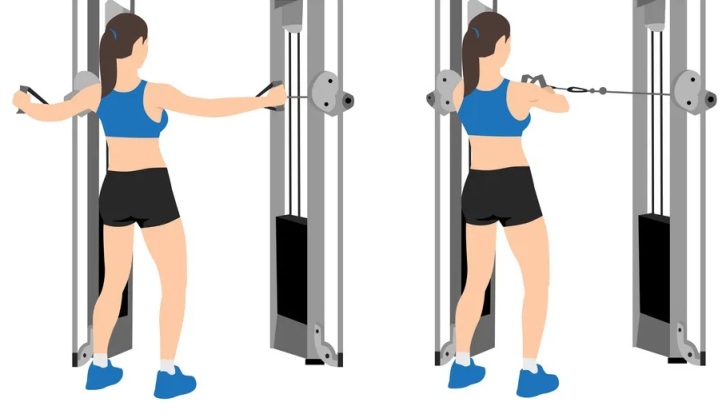
Stand centered between the towers. Reach your left hand across your body to grab the right cable, and your right hand to grab the left cable. Step back one or two paces so the weight plates lift slightly off the stack. Your feet should sit hip-width apart in an athletic, balanced stance.
Scapular Retraction vs Protraction: The Core Mechanical Shift
The single biggest error in horizontal abduction work is aggressively pinching the shoulder blades together. When your shoulder blades squeeze back toward your spine, the rhomboids and middle trapezius immediately take over the work. Because these mid-back muscles are substantially larger than the posterior deltoid, they absorb the load and reduce tension on the shoulder.
Rear deltoid isolation requires conscious scapular protraction. Think about pushing your shoulders forward, wrapping your shoulder blades around your rib cage, and keeping them fixed in that position. As your arms sweep outward, sweep them away from your center without pinching your back together. Moving your upper arm relative to your torso, without moving the scapula, isolates the posterior delt head and maximizes infraspinatus activation.
| Execution Variable | Protracted Execution (Targeted Isolation) | Retracted Execution (Mid-Back Dominant) |
|---|---|---|
| Primary Drivers | Posterior Deltoid, Infraspinatus, Teres Minor | Rhomboids, Middle Trapezius, Posterior Deltoid |
| Scapular Position | Fixed, slightly spread around rib cage | Dynamic squeeze toward thoracic spine |
| Range of Motion | Stops roughly parallel to the torso plane | Extends deep past the torso plane |
| Loading Capacity | Light to moderate (strict tension control) | Heavy (synergistic multi-muscle pull) |
Correcting Common Rear Delt Mistakes and Grip Faults
Gym-goers run into several common rear delt mistakes that ruin the exercise's effectiveness:
- Excessive elbow bending: Turning the fly into a row occurs when the load is too heavy. Keep a slight, soft bend (around 10 to 15 degrees) fixed in your elbows throughout the entire set.
- Over-abducting past the torso: Pulling your arms way behind your body forces the humerus to glide anteriorly inside the glenohumeral joint. This strains the front joint capsule while shifting tension to the mid-traps. Stop your pull once your upper arms align with your torso.
- Shrugging the shoulders upward: If your traps creep into your ears as you fatigue, you engage the upper trapezius and levator scapulae. Drive your collarbones down before starting each repetition.
- Using dynamic torso sway: Rocking backward on heels to pull the stack introduces momentum. Keep your torso completely stationary.
Standing Reverse Cable Fly Variations to Maximize Hypertrophy
While the standard standing reverse cable fly remains the baseline movement, minor variations help shift focus across different muscle fibers and build fuller upper back development.
The Incline Bench-Supported Cable Fly
Place an adjustable bench set at a 45-to-60-degree angle between the cable stacks. Facing the bench with your chest supported removes all core balance demands. It prevents hip rocking and eliminates momentum entirely. If you struggle with lower back fatigue or balance on standing movements, this chest-supported setup offers pristine stability for pure shoulder training.
Single-Arm Cross-Body Cable Fly
Working one side at a time provides exceptional mind-muscle connection. Stand perpendicular to a single cable pulley set at upper-chest height. Reach across your body, grab the cable without a handle, and pull in a wide, sweeping arc. Unilateral training lets you adjust your body angle to match your specific shoulder anatomy, while keeping tension locked on one rear delt without spinal twisting.
High-to-Low Rear Delt Pull
Set the pulleys 6 to 12 inches above eye level. Pull diagonally downward at roughly a 30-degree angle. This path aligns closely with the lower fibers of the posterior deltoid and teres minor, helping build lower-trap control and reinforcing shoulder posture correction for lifters locked into forward-head postures from desk work.
Hypertrophy Sets and Reps: Programming for Posterior Growth
The posterior deltoid is built primarily of type I and type IIa muscle fibers, meaning it responds well to moderate-to-high repetition ranges with low-to-medium rest periods. Heavy sets of five or six reps almost always lead to cheating and mid-back dominance.
- Hypertrophy Phase (Mass Building): 3, 4 sets of 12, 15 repetitions, keeping 1, 2 reps in reserve (RIR). Rest 60, 75 seconds between efforts. Focus on a controlled 3-second eccentric return.
- Metabolic Stress Phase (Endurance & Density): 3 sets of 15, 20 repetitions using wrist cuffs. On the final set, perform a 10-second rest-pause extension to fully deplete muscle glycogen.
- Posture Restoration & Warm-Up: 2 sets of 20 repetitions with very light loading prior to upper-body pressing days. This primes external rotation, lubricates the shoulder capsule, and establishes shoulder blade control before bench pressing.
Train the posterior deltoid twice per week with 6 to 10 total direct weekly working sets. Its small size allows it to recover quickly compared to larger back muscles like the latissimus dorsi.
Frequently Asked Questions (FAQ)
Q1: Should I use handles or cuffs for the cable reverse fly?
A1: Cuffs attached around the wrists are superior. They remove grip and forearm fatigue entirely, preventing you from over-gripping and letting you focus completely on pulling through your elbows to isolate the posterior deltoid.
Q2: Why do I only feel this exercise in my upper back and neck?
A2: You are retracting and elevating your shoulder blades instead of keeping them protracted and depressed. Drop the weight by 30%, push your shoulders forward, and focus on sweeping your knuckles outward rather than pinching your back together.
Q3: How does this exercise help with shoulder pain from bench pressing?
A3: Heavy pressing overdevelops the pecs and front delts, pulling the shoulder joint into continuous internal rotation. The cable reverse fly strengthens the posterior deltoid and infraspinatus, helping re-center the humeral head and stabilizing the rotator cuff under load.
Building Balanced Shoulders Moving Forward
Building strong, healthy shoulders requires deliberate balance. When your training focuses entirely on pressing movements, your shoulder joint pays the price in poor posture and joint wear. The cable reverse fly provides the consistent tension, directional control, and muscle isolation that free weights cannot replicate. Set the pulleys properly, keep your shoulder blades steady, and let the rear deltoid handle the load.