Mastering the Single-Arm Cable Row: Form Execution, Grip Variations, and Programming Protocols
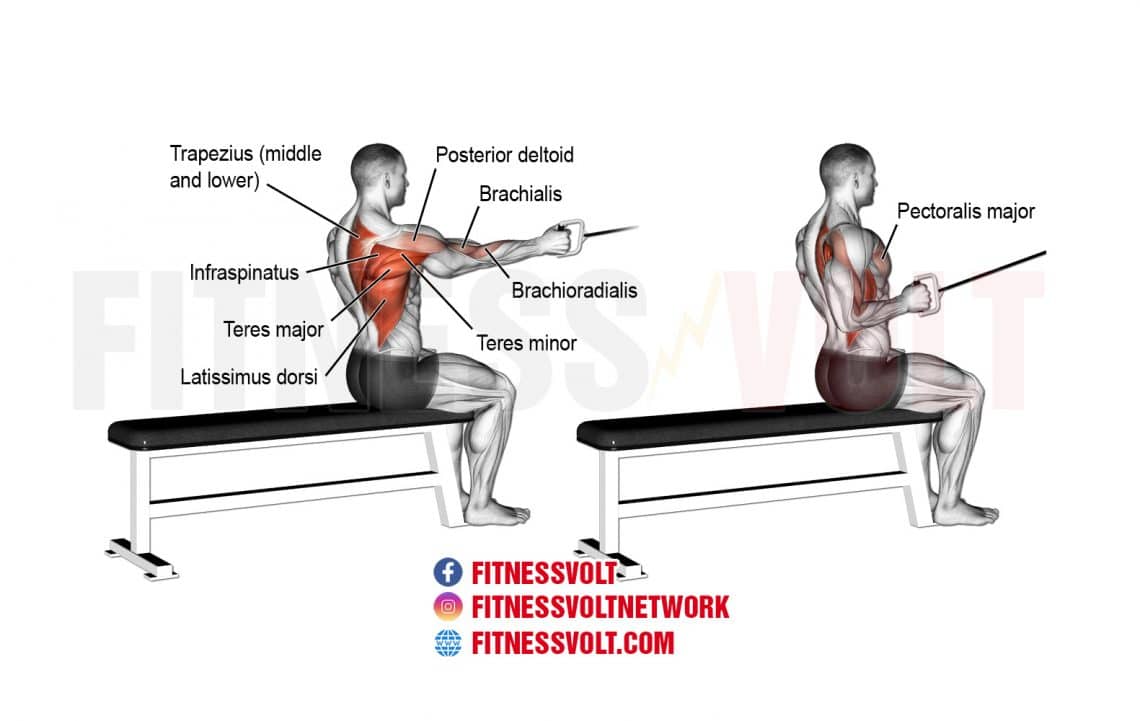
Strength coaches and sports scientists have spent years debating the hierarchy of back exercises. When analyzing compound pulling movements, athletic performance journals and mainstream fitness coverage, including a comprehensive breakdown from the Yahoo Report examining rows versus vertical pulls, consistently emphasize that horizontal pulling provides unmatched thoracic support and postural integrity. Yet traditional bilateral barbell rows often force trainees into lumbar fatigue long before their upper back reaches mechanical failure.
The single-arm cable row eliminates that bottleneck. By isolating each side through continuous cable tension, this movement aligns the resistance directly with muscle fiber orientation while demanding intense core stabilization. It bridges the gap between raw hypertrophy and functional spine health.
📌 Key Takeaways:
- Biomechanical Advantage: Unilateral cable pulling matches the natural fiber orientation of the lower and middle lats better than fixed barbell paths.
- Rotational Stability: Resisting the cable's transverse rotational pull forces deep activation across the obliques, quadratus lumborum, and transverse abdominis.
- Joint Preservation: Freedom of wrist and elbow rotation drastically reduces anterior shoulder impingement and medial elbow strain common in fixed-handle rows.
The Biomechanical Shift Toward Unilateral Cable Training
Bilateral rows lock both hands onto a rigid bar, dictating a compromise between spinal positioning and arm travel. If your left shoulder has ten degrees less internal rotation than your right, a standard barbell forces your spine to twist slightly under load. Over thousands of repetitions, that subtle asymmetry creates chronic soft-tissue irritation.
Unilateral back training fundamentally bypasses structural asymmetries. Working one side at a time exposes discrepancies in strength, firing pattern, and mobility. More importantly, using a single-arm setup increases latissimus dorsi activation by allowing the working side to track independently through its full functional arc.
Cables maintain constant tension across the entire excursion of the movement. Free weights offer maximum tension only when gravity is perpendicular to your limb; at the top of a dumbbell row, resistance falls off significantly. A cable pulley delivers identical resistance at full stretch, mid-concentric drive, and peak contraction. That uninterrupted tension enhances the mind-muscle connection and drives mechanical tension across all active motor units.
Line of Pull Setup and Pulley Height Calibration
The trajectory of your cable determines which muscle group does the heavy lifting. Setting the cable pulley height adjustment at random turns what should be a precision lat exercise into an unfocused upper-trap shrug.
For targeting the lower lat fibers, set the pulley roughly between hip and lower-rib height. When seated or kneeling, this angle creates a line of pull running low to high during the stretch, and high to low as you pull backward. That descent matches the downward-and-inward orientation of the thoracic and lumbar latissimus divisions.
For upper back emphasis, rhomboids, posterior deltoids, and mid-trapezius, shift the pulley down to floor level or bring it to chest height while altering your grip. Sit tall on a flat bench or set up in a half-kneeling position on a mat. Position your torso roughly arm's length plus six inches away from the machine. This spacing guarantees the weight stack does not bottom out when your arm reaches complete humeral extension.
Grip Attachments and Directional Mechanics
Handle selection dictates forearm rotation, which directly changes elbow tracking relative to your ribcage. To clarify how different attachments affect muscular recruitment, consider the mechanics outlined in the comparison below.
| Attachment Type | Grip & Elbow Path | Primary Target | Key Technical Cue |
|---|---|---|---|
| Single D-Handle (Standard) | Semi-neutral, tucked at 15, 30° | Latissimus dorsi (iliac & thoracic) | Pull elbow toward the hip pocket; stop at the torso line. |
| Neutral Grip Attachment | Strict neutral, elbow tight to ribs | Lower lat fibers, biceps brachii | Drive straight back; minimize upper-body lean. |
| Rope Attachment | Pronated-to-neutral twist, 45° flare | Teres major, posterior deltoid | Rotate thumb up on concentric; squeeze shoulder blade inward. |
| Padded Ankle Strap on Wrist | Gripless, custom elbow tracking | Pure lat isolation (eliminates forearms) | Think exclusively about driving the humerus back. |
When your elbow stays pinned tight against your side, the moment arm favors the lats. If your elbow flares out toward a 45-to-60-degree angle, scapular retraction increases, pulling the rhomboids and mid-traps directly into the primary line of force. Choosing your attachment is therefore a direct choice of target tissue.

Executing Proper Scapular Dynamics and Elbow Path
Poor execution turns the cable row into a frantic forearm pull. High-level execution requires breaking the movement down into distinct segments: reach, initiate, drive, and hold.
Begin at full arm extension. Allow your shoulder blade to wrap forward around the rib cage into protraction. This provides a deep, loaded stretch on the lat without letting your lumbar spine round forward. Your lower back stays neutral; only the shoulder girdle reaches.
Initiate the concentric phase not by bending the elbow, but by depressing and anchoring the scapula downward. Once the shoulder blade sets, execute your elbow path mechanics by driving the elbow straight back toward your pelvic crest. Stop your elbow drive the instant your upper arm aligns with your torso.
Pulling your elbow significantly past your body does not contract your lat further. The latissimus dorsi loses its leverage once the humerus passes extension; pushing beyond this point rolls the humeral head forward, straining the anterior shoulder capsule. Squeeze for a crisp one-second isometric pause at peak contraction before initiating a controlled, two-to-three-second eccentric return.
Managing Anti-Rotation Core Stability
The single-arm cable row is as much an abdominal movement as it is a back builder. Because the load pulls from one side, the cable creates a constant twisting moment on your spine. Your trunk must generate immediate anti-rotation core stability to keep your ribs square to the pulley.
In a seated cable row variation, plant your feet firmly on the footplates with knees slightly bent. Brace your abdominal wall as if preparing for impact. If your right arm is pulling, your left internal oblique and right external oblique work isometrically to stop your chest from swiveling to the right.
In a half-kneeling setup, where the knee on the pulling side rests on the floor, the demand spikes further. The glute on the grounded side must clamp down hard to stabilize the pelvis. This makes unilateral rowing exceptional for muscle imbalance correction across both the posterior chain and the anterior core. If your torso twists aggressively to yank the cable, the weight is too heavy.
Programming Schemes and Hypertrophy Rep Ranges
Cable rows respond exceptionally well to moderate-to-high volume because continuous tension reduces joint shear compared to heavy free-weight rows. To build regional back thickness, program this movement within specific hypertrophy rep ranges.
For pure muscle growth, aim for 8 to 12 repetitions per set with an RPE (Rating of Perceived Exertion) between 7 and 9. Rest for 60 to 90 seconds between arms, allowing systemic recovery so performance on the second side does not degrade.
Apply a systematic progressive overload protocol over 4-to-6-week training cycles. Because cable stacks often jump by 10 to 15 pounds per plate, jumping a full plate every week is unrealistic. Instead, progress by adding reps within your target bracket (e.g., advancing from 8 reps to 12 reps with identical weight), slowing the eccentric tempo to 3 to 4 seconds, or clipping a 2.5-pound micro-plate onto the stack pin. Clean execution must always take precedence over load.
Frequently Asked Questions (FAQ)
Q1: Should I let my torso rotate during the row to get a bigger stretch?
A1: Keep rotation minimal. While a slight torso lean (under 10 degrees) can accentuate the stretch at the end range, excessive rotation transfers the work from your lats to your spinal erectors and momentum. Master strict anti-rotation before experimenting with dynamic torso movement.
Q2: Is a seated cable row or a half-kneeling cable row better?
A2: Seated variations offer greater external stability, allowing you to handle heavier loads for maximum lat hypertrophy. Half-kneeling variations introduce balance constraints, making them superior for core stabilization, hip flexor opening, and functional athletic balance.
Q3: How do I stop feeling the exercise in my biceps and forearms?
A3: Lighten the stack by 20%, utilize a thumbless (hook) grip, or wear lifting straps around the D-handle. Focus mentally on pulling through the point of your elbow rather than closing your hand tightly around the handle.
Long-Term Programming and Structural Posture Gains
Modern desk work forces prolonged thoracic flexion and protracted shoulders. Bilateral pulling helps, but unilateral cable rows rebuild structural posture by directly balancing left-to-right force outputs and engaging deep rotational stabilizers.
Incorporate the movement once or twice per week as a primary accessory after your heavy compounds. Pair deliberate scapular protraction on the stretch with a disciplined, low-elbow drive on the contraction. By prioritizing line-of-pull precision over reckless load, you build a dense, resilient back while protecting vulnerable joints for years of continuous training.
