'I'm the Captain Now' Across Pop Culture: From NHL Game Stories to High Art and Politics
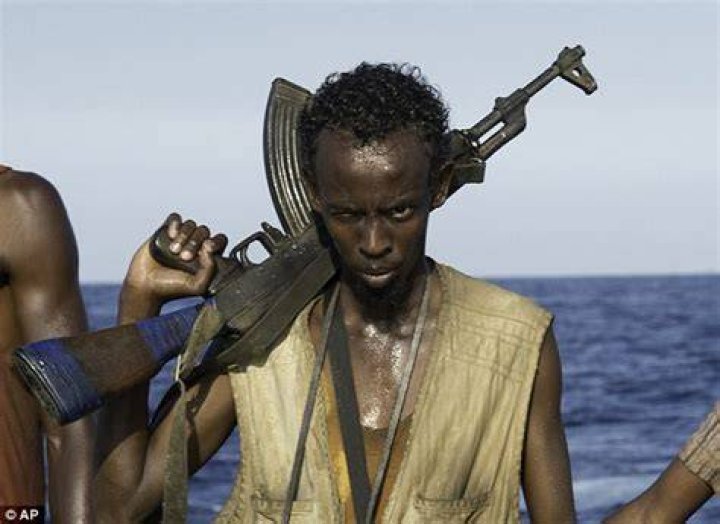
When Barkhad Abdi stepped onto the bridge of the Maersk Alabama set in 2012, opposite two-time Oscar winner Tom Hanks, he possessed no formal screen acting experience. What he had was sharp creative instinct. Staring down Hanks with terrifying stillness, Abdi pointed two fingers toward his own eyes, redirected them forward, and uttered four improvised words: "I'm the captain now." The line instantly electrified director Paul Greengrass's set, earned Abdi an Academy Award nomination, and birthed one of the most resilient catchphrases of 21st-century cinema.
More than a decade later, the phrase has transcended its cinematic origin to become a universal cultural shorthand for abrupt power reversals, surfacing in sports locker rooms, fine art galleries, and bruising political combat. That political dimension hit a fever pitch in January 2026, when a major government agency sparked intense international controversy by weaponizing the meme. According to a News18 Report, the US Department of Homeland Security faced fierce condemnation after deploying the image macro on official state channels following the termination of temporary protected status for Somali nationals. The incident underscored how a brief, spontaneous movie line can travel from maritime thriller to digital satire and, ultimately, into statecraft.
📌 Key Takeaways:
- The Cinematic Genesis: First-time actor Barkhad Abdi ad-libbed the iconic command on the set of Captain Phillips, turning a real-world 2009 maritime crisis into an Oscar-nominated performance.
- Cross-Disciplinary Reach: Digital culture catalogers like Know Your Meme tracked the phrase as it moved from Reddit message boards into NHL sports reporting, national editorial columns, and contemporary gallery installations by artists like Hayley Millar-Baker.
- The 2026 Political Backlash: Federal use of the meme to broadcast immigration enforcement decisions provoked diplomatic scrutiny, highlighting the ethical perils of using viral ethnic tropes in official communications.
The Improvised Moment on the Maersk Alabama
The scene depicts the real-world April 2009 hijacking of the container ship MV Maersk Alabama off the coast of Somalia. While the production aimed for hyper-realism, Greengrass deliberately kept Hanks and the Somali-American actors apart until cameras rolled for the bridge breach. When Abdi, born in Mogadishu and raised in Minneapolis, entered the frame, he felt the heavy presence of Hanks's Hollywood stature. To seize actual dramatic control of the room, he went off-script.
The written screenplay called for a generic assertion of authority. Abdi discarded it. He leaned in, tapped into raw street realism, and spoke the chilling line: "Look at me. Look at me. I'm the captain now." The quiet delivery cut deeper than shouting. It established an immediate inversion of status: an unarmed, threadbare pirate dictating terms to an experienced American merchant mariner. The crew went silent, Greengrass kept the camera rolling, and the improvised take became the central anchor of the film's entire marketing campaign.
From NHL Rinks to Contemporary Gallery Walls
Pop culture quickly absorbed Abdi's gesture. Online communities on Reddit and Tumblr isolated the frame within months of the film's 2013 premiere. Know Your Meme cataloged the two-panel "Look At Me" format as a masterclass in internet vernacular, used to signal unseating a boss, taking ownership of a family pet, or hijacking a friend group's road trip playlist.
The vernacular soon seeped into mainstream journalism and professional sports. Headline writers in the National Hockey League turned to the quote during high-stakes goalie controversies or sudden captaincy shakeups. When a backup netminder seized the crease during a playoff push or an aggressive defenseman commanded the neutral zone, sports columns routinely deployed the line to frame the takeover. Similarly, personal identity essayists, such as those writing for The Globe and Mail on shedding social expectations, turned to the phrase to describe reclaimed self-possession.
The meme achieved its most profound transformation in the fine art world. Acclaimed Gunditjmara artist Hayley Millar-Baker engaged the phrase's underlying theme of reclaimed authority within Australian contemporary art spaces. By subverting colonial narratives and patriarchal ownership through visual storytelling, artists like Millar-Baker demonstrated that the phrase operates on a deeper level than humor. It serves as an unvarnished claim to sovereignty.
Mapping the Evolution Across Culture and Media
The transition of "I'm the captain now" from an ad-libbed cinema line to institutional messaging highlights how digital memes evolve over long cycles. The phrase moved through distinct stages of cultural adoption:
| Phase & Timeline | Primary Medium | Societal Context & Impact |
|---|---|---|
| 2013, 2014 | Theatrical Release & Reddit | Barkhad Abdi receives a BAFTA Award and an Oscar nomination; image macros debut on social forums as classic reaction humor. |
| 2015, 2020 | Sports & Cultural Commentary | NHL and Premier League headlines adapt the phrase for leadership changes; mainstream opinion writers use it to describe personal reinvention. |
| 2021, 2024 | Contemporary High Art | Indigenous and institutional artists interrogate the phrase to explore systemic power dynamics, land reclamation, and historical sovereignty. |
| 2025, 2026 | Statecraft & Political Policy | Official government agencies deploy the meme alongside controversial immigration rollbacks, drawing immediate international blowback. |
The Homeland Security Backlash and State-Sponsored Memes
The collision between internet meme culture and geopolitical policy surfaced dramatically in January 2026. When federal authorities announced the end of Temporary Protected Status (TPS) protections for thousands of Somalis residing in the United States, official communications teams posted the "Look at me, I'm the captain now" template to broadcast the shift.
The public reaction was swift and polarized. Digital strategists within conservative political circles argued that using recognizable pop culture formats stripped bureaucratic announcements of dry formality, making policy enforcement relatable to online audiences. Civil rights advocates, legal scholars, and Somali diaspora leaders saw something far more troubling. Critics pointed out that using an image of a fictionalized Somali pirate to announce the deportation of law-abiding families, healthcare workers, and students conflated an entire national heritage with maritime criminality.
The incident revealed a deeper evolution in government communications. Memes once served as grassroots satire by everyday web users punching up at authority. In this instance, state actors repurposed that exact grammar to punch down, utilizing Hollywood imagery as an enforcement mechanism. The controversy prompted congressional inquiries and intense debates among media ethics boards regarding the weaponization of viral tropes by executive agencies.
Why the Phrase Refuses to Disappear
Most movie lines fade into trivia within five years. "I'm the captain now" survived and expanded because it targets a primal dynamic: the sudden, irreversible collapse of hierarchy. It does not describe an orderly transfer of power. It describes a rupture.
Abdi's cadence created the longevity. He did not bellow like a cartoonish villain; he whispered with deadly certainty. That tension makes the meme endlessly adaptable across wildly different situations:
A software developer resolving a stubborn server crash by overriding senior architecture uses it to declare technical dominance. A rookie quarterback leading a game-winning fourth-quarter drive embodies it without uttering a word. An artist challenging white-cube gallery conventions weaponizes it against institutional gatekeeping. The line carries an instinctive punch across languages and contexts because everyone understands the sudden moment when leverage flips from the person at the top of the mast to the one holding the wheel.
Frequently Asked Questions (FAQ)
Q1: Was the line "I'm the captain now" actually in the original script?
A1: No. Screenwriter Billy Ray wrote a standard dialogue exchange for the bridge takeover scene. Barkhad Abdi ad-libbed "Look at me, look at me, I'm the captain now" on the spot to establish immediate dramatic dominance over Tom Hanks, whose star power initially intimidated the first-time actors.
Q2: What sparked the 2026 Homeland Security controversy involving the meme?
A2: In January 2026, the US Department of Homeland Security faced severe backlash after using the meme on official channels to publicize the revocation of Temporary Protected Status for Somali immigrants. Critics argued that using a Hollywood depiction of Somali piracy to celebrate the deportation of legal residents was racially charged and unprofessional.
Q3: How did the quote transition from internet humor to high art?
A3: Visual artists, including Indigenous Australian contemporary artist Hayley Millar-Baker, engaged the phrase's underlying theme of sudden power inversion. Instead of using it for internet laughs, contemporary creators repurpose the concept to interrogate historical ownership, colonial resistance, and systemic sovereignty.
The Mechanics of Modern Digital Sovereignty
Language on the internet evolves through attrition. Gags wear out, formats get commodified, and users move on to fresher material. Yet "I'm the captain now" remains firmly embedded in our cultural vocabulary because it provides an efficient grammar for authority shifts.
Abdi delivered an unvarnished performance that earned an Academy Award nomination and etched a raw human dynamic into screen history. Whether etched into museum pieces, shouted from hockey benches, or co-opted into federal immigration battles, those four words capture an enduring reality: power is never permanent, and leverage can change hands in a single second.


