Is ASF Vulgar or Offensive? Fact-Checking Text Slang Meanings and Context
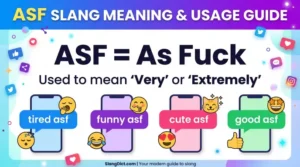
Spend five minutes scrolling through TikTok comment sections, Instagram DMs, or Discord channels, and the three-letter sequence "asf" appears almost everywhere. It punctuates quick reactions to outfit checks, gaming victories, homework complaints, and breaking celebrity gossip. For older generations or anyone outside the daily loop of teen text patterns, seeing an unfamiliar three-letter acronym can trigger immediate confusion, especially when an automated content monitor flags it as suspect.
According to research highlighted in a recent Parents Report on modern youth communication, digital vernacular changes so rapidly that caregivers and educators routinely struggle to separate harmless social banter from genuinely illicit behavior. Deciphering whether "asf" represents a benign colloquial habit or explicit vulgarity requires looking past the surface letters to understand how digital slang actually operates across contemporary messaging platforms.
📌 Key Takeaways:
- Core Definition: The acronym "asf" stands for "as fuck," serving almost exclusively as an informal intensifier synonymous with "extremely" or "very."
- The "AF" vs. "ASF" Split: While both originate from the same phrase, "asf" includes the "s" sound from "as" to mirror spoken cadence and add extra conversational emphasis.
- Offense Level: In casual peer-to-peer chats, it carries virtually no literal sexual connotation, but institutional text filters and corporate settings treat it as profanity.
Decoding the Acronym: The Shift from "AF" to "ASF"
At its core, "asf" stands for "as fuck." It functions as an adverbial intensifier. When a teenager sends a message saying "I'm tired asf" or "that test was hard asf," they are not invoking a literal sexual act, nor are they hurling an insult. Instead, they are substituting standard adverbs like "immensely," "seriously," or "incredibly" with an emphatic street-level modifier.
The shorter version, "af," appeared across internet chatrooms and early SMS networks in the late 2000s. Early smartphone users adopted "af" to save characters on metered texting plans. Over the past decade, however, mobile phone keyboards added predictive text, swipe input, and unlimited messaging. As typing speed constraints disappeared, "asf" surged in popularity across social platforms.
Adding the letter "s" serves an auditory purpose. In spoken English, especially informal American English, speakers stress the sibilant hiss of the word "as" when emphasizing a point: "tired ass-fuck." Typists adopted "asf" to capture the rhythmic pulse of how they speak in real life. It provides a more dramatic punch on the screen than the two-letter variant.
Linguistic Roots: Intensifiers, AAVE, and Semantic Bleaching
The ubiquity of "asf" is not an accidental youth invention. It stems directly from a well-documented linguistic process known as semantic bleaching. Semantic bleaching happens when a word with a severe, highly specific meaning loses its original weight through frequent everyday use. Words like "terrible" (originally meaning inspiring terror) and "awful" (originally full of awe) followed this exact trajectory centuries ago. Today, profanities like "fuck" and "ass" undergo the same transformation online, stripping away explicit erotic or anatomical meanings and leaving behind pure, unadulterated emphasis.
Much of this syntactic behavior traces back to African American Vernacular English (AAVE). As documented in cultural analyses published by Vocal on dialectal syntax, AAVE frequently employs compound grammatical structures where profane descriptors act as productive modifiers rather than offensive insults. Phrases like "crazy as hell" or "cold as fuck" gained expressive flexibility within Black urban communities decades before social networks digitized them.
When internet platforms flattened geographic boundaries, these speech patterns migrated onto the open web. Gen Z and early Gen Alpha texters internalized the cadence of AAVE through hip-hop media, streaming culture, and viral clips. By the time an acronym enters an online teen slang dictionary or gets cataloged on Urban Dictionary, its linguistic edge has softened. To digital natives, "funny asf" carries about as much literal animus as "funny as heck."
Evaluating Digital Intensifiers Across Modern Platforms
Understanding where shorthand phrases fit requires evaluating their perceived severity, social etiquette, and demographic adoption. The table below outlines how common digital intensifiers compare in current online messaging ecosystems.
| Acronym | Literal Expression | Intended Social Meaning | Workplace / School Filter Risk |
|---|---|---|---|
| ASF | As fuck | Extremely, excessively, without doubt | High (flags on profanity keyword lists) |
| AF | As fuck | Standard shorthand for high degree | Moderate-to-High (often caught by regex) |
| FR / FRFR | For real / For real, for real | Genuine agreement, absolute sincerity | None (completely clean intensifier) |
| Deadass | Dead serious | Truthful, earnest, strictly serious | Moderate (contains soft profanity "ass") |
| TF / WTF | The fuck / What the fuck | Confusion, outrage, disbelief | High (carries combative tone) |

Offensive Slang Check: When Does ASF Cross the Line?
Context determines whether "asf" reads as innocuous slang or crude insubordination. In casual peer interactions, such as a group text between classmates discussing a football game, the term registers as everyday vernacular. Nobody in that demographic stops to read out the full four-letter expletive in their heads. They read it as simple emphasis.
Algorithmic safety tools and institutional administrators view things through an entirely different lens. School-district content filters, such as Bark, GoGuardian, or Securly, scan student-issued Chromebooks and school Wi-Fi connections using rigid dictionary-based blacklists. Because "asf" derives from the most recognized four-letter profanity in the English language, these automated checkers routinely flag the phrase. An innocent message like "this cafeteria pizza is dry asf" can generate an automated content report sent straight to a guidance counselor or parent dashboard.
Professional environments demand an even stricter boundary. Using "asf" in corporate messaging suites like Slack, Microsoft Teams, or external client emails crosses clear conduct boundaries. Senior colleagues unfamiliar with youth shorthand will either look it up and see an uncensored swear word or perceive the writer as unprofessional and careless. Even though modern work cultures have trended informal, explicit text acronyms remain inappropriate for office communication.
The Evolving Digital Lexicon: Tracking Shifting Chat Habits
Text slang is inherently cyclical. As soon as parents, teachers, and brand marketers master an existing batch of phrases, younger users abandon them in favor of newer linguistic markers. A comprehensive 2026 guide to tween slang published by SheKnows highlights this recurring friction, noting that teens deliberately rotate expressions to establish privacy and peer distinction.
Consider how quickly new catchphrases displace old ones across social video platforms. In early 2026, social feeds saw a massive surge of creators using the phrase "she the birthday," a rhythmic linguistic trend sparked by Atlanta rapper Hunxho's viral track "Birthday Girl." Just as that phrase rapidly morphed from a single lyric into broad social shorthand for someone receiving special attention, acronyms like "asf" are gradually becoming legacy terms for older Gen Z, while younger tweens cycle into newer phonetic inventions.
When adults run an offensive slang checker or consult an internet safety guide, their primary anxiety is usually safety: does this acronym indicate bullying, grooming, or drug use? For "asf," the answer is decisively no. It indicates emotional intensity, nothing more. A child texting "I'm bored asf" is expressing run-of-the-mill adolescent restlessness rather than engaging in dangerous online subcultures.
Frequently Asked Questions (FAQ)
Q1: Does "asf" always mean "as fuck," or can it mean something else?
In mobile texting, gaming lobbies, and social media comments, it almost universally means "as fuck." However, in niche professional contexts, it can occasionally represent established acronyms like the American Science Fiction society, Advanced Systems Format (a Microsoft audio/video file format), or Australian Standard Framework. Context reveals the intent: if it follows an adjective like "tired," "cold," or "mad," it is the slang intensifier.
Q2: Should parents discipline their kids for using "asf" in text messages?
Rather than imposing punitive bans, communication experts recommend discussing situational etiquette. Clarify that while the acronym may feel harmless among friends, digital footprints are permanent. Explain that automated monitoring software on school laptops or future employers will read the phrase as raw profanity, which can lead to unintended academic or professional repercussions.
Q3: Is "asf" considered worse than typing "af"?
No. Linguistically and socially, they share the exact same weight. "Asf" simply reflects a more colloquial, spoken cadence. Both terms carry the same baseline risk of being flagged by automated profanity filters or sounding crude in polite company.
Navigating Tone and Meaning in Modern Chat
Digital slang is an organic extension of natural language, evolving to fill emotional voids created by flat screen text. Without vocal inflections, facial expressions, or body posture, typed messages often feel clinical or sterile. Acronyms like "asf" act as conversational seasoning, injecting personality, humor, and visceral weight into brief digital exchanges.
Labeling "asf" strictly as offensive obscenity misses the reality of how language functions among younger speakers. It is not an attack; it is an intensifier. Navigating modern communication requires discerning the boundary between harmless stylistic shorthand among peers and the polished formality expected in public, academic, and professional spaces.


