Is 'Spring' Capitalized? Clear Examples and Quick Visual Reference
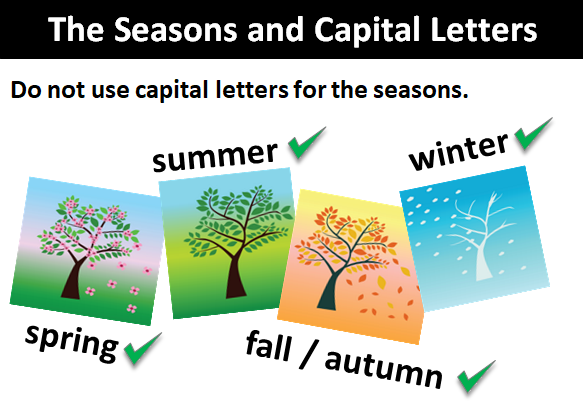
Every year as temperatures rise, writers, corporate communicators, and students run into the same copy-editing roadblock: should "spring" get an uppercase letter? Most people instinctively treat seasons like days of the week or months of the year, hitting the shift key out of habit. As highlighted in a classic StyleBlueprint Report on sneaky capitalization rules, seasons remain standard lowercase words in almost every standard editorial environment.
The impulse to capitalize seasons stems from false equivalence. Monday and March require capitalization, but spring does not. The rule seems straightforward on paper, yet nuances emerge when drafting college syllabi, corporate sales announcements, and headline copy.
📌 Key Takeaways:
- Core Grammar Rule: The word "spring" is a common noun and must remain lowercase in regular sentence prose, unlike calendar months or days of the week.
- Universal Style Consensus: Both the Associated Press (AP) Stylebook and The Chicago Manual of Style mandate lowercase treatment for spring, summer, fall, and winter unless they appear in a formal proper noun.
- Valid Uppercase Exceptions: Capitalize "spring" only when starting a sentence, following title case rules in a headline, functioning within a formal trademark or event title, or personified in creative literature.
The Core Grammatical Split: Proper Nouns vs. Common Nouns
The difference between capitalizing March and lowercasing spring comes down to the fundamental boundary separating proper nouns from common nouns. English capitalizes proper nouns to mark a specific, uniquely named entity. Days of the week and months of the year derive directly from proper names of Roman gods, Germanic deities, and celestial bodies. January honors Janus; Thursday honors Thor; July honors Julius Caesar.
Seasons evolved differently. Words like "spring," "summer," "fall," and "winter" originated as generic descriptions of agricultural conditions and weather cycles. The term "spring" entered Middle English as a shorthand description for the season when plants literally "spring from the earth." Because these seasonal terms describe generalized recurring weather conditions rather than a single distinct entity, lexicographers categorize them as common nouns.
This classification applies to derivatives as well. You lowercase "springtime," "springlike," and "vernal." Unless a seasonal term carries specific naming rights, standard English syntax leaves it in the lower register.
How AP Style and The Chicago Manual of Style Govern Seasons
Mainstream publishing relies primarily on two editorial rulebooks: The Associated Press Stylebook for journalism, public relations, and web media; and The Chicago Manual of Style (CMOS) for publishing, book production, and long-form academic work. Both stylebooks agree completely on seasonal capitalization.
AP Style explicitly mandates that seasons, spring, summer, fall, winter, and their compounds, take lowercase letters. The only deviation AP allows occurs when a season forms part of a formally recognized proper name. You write "the spring equinox" or "our spring fashion preview," but you write "the Spring Valley Community Board" or "the 2026 Spring Olympics."
The Chicago Manual of Style (specifically rule 8.88) issues an identical standard. Chicago advises writers to lowercase the names of the seasons in regular running text, even when accompanied by a specific year. In Chicago-compliant publishing, you write "the spring of 2026," not "the Spring of 2026." The Modern Language Association (MLA) and the American Psychological Association (APA) follow this same rule in academic manuscripts and research citations. Across all professional style manuals, lowercasing is the default baseline.
Academic Calendars and the Spring Semester Dilemma
Academic writing generates more capitalization errors around seasons than almost any other sector. Syllabi, admissions emails, and university administration memos frequently capitalize terms like "Spring Semester," "Fall Term," or "Spring Break."
Standard grammar requires academic term capitalization to remain lowercase in general narrative sentences. If you write about a course you are taking next year, the correct format is "spring 2026 semester." The semester itself is not an institutional proper noun.
Incorrect: I plan to take organic chemistry during the Spring Semester.
Correct: I plan to take organic chemistry during the spring semester.
The exception occurs when an institution uses the term as an official label for a published, administrative calendar record or a catalog title. If you reference a designated document or an institutional program, capital letters apply:
Informal/Running Text: We return to campus for the spring semester on January 12.
Administrative Document: Refer to the Spring 2026 Academic Schedule for registration deadlines.
The spring break grammar rule works the same way. General references to the annual recess stay lowercase: "We are traveling to Austin during spring break." However, if a university officially titles a specific scheduled closure in an official policy index, that document may treat "Spring Break 2026" as an administrative event. In resumes, personal statements, and professional cover letters, keeping "spring semester" lowercase demonstrates clean, unpretentious grammatical precision.
Side-by-Side Style Reference Across Writing Contexts
To see how these rules play out across different sectors, review the standard usages below:
| Context & Register | Incorrect Usage | Correct Usage | Governing Rule |
|---|---|---|---|
| Everyday Prose | We planted tulips last Spring. | We planted tulips last spring. | Common noun standard |
| Academic Scheduling | She graduates after the Spring semester. | She graduates after the spring semester. | Descriptive academic term |
| Vacation & Recess | The office closes for Spring Break. | The office closes for spring break. | Informal calendar period |
| Event Titles | Tickets for the spring gala are sold out. | Tickets for the 2026 Spring Gala are sold out. | Formal proprietary event name |
| Literary Personification | ...as spring stepped lightly across the field. | ...as Spring stepped lightly across the field. | Poetic personification |
| Commercial Fashion Line | Check out our spring/summer line. | Check out our Spring/Summer 2026 Collection. | Industry-recognized product brand |
Literary Personification and Title Case Mechanics
Two technical environments override the standard lowercase rule: literary personification and formal title case formatting.
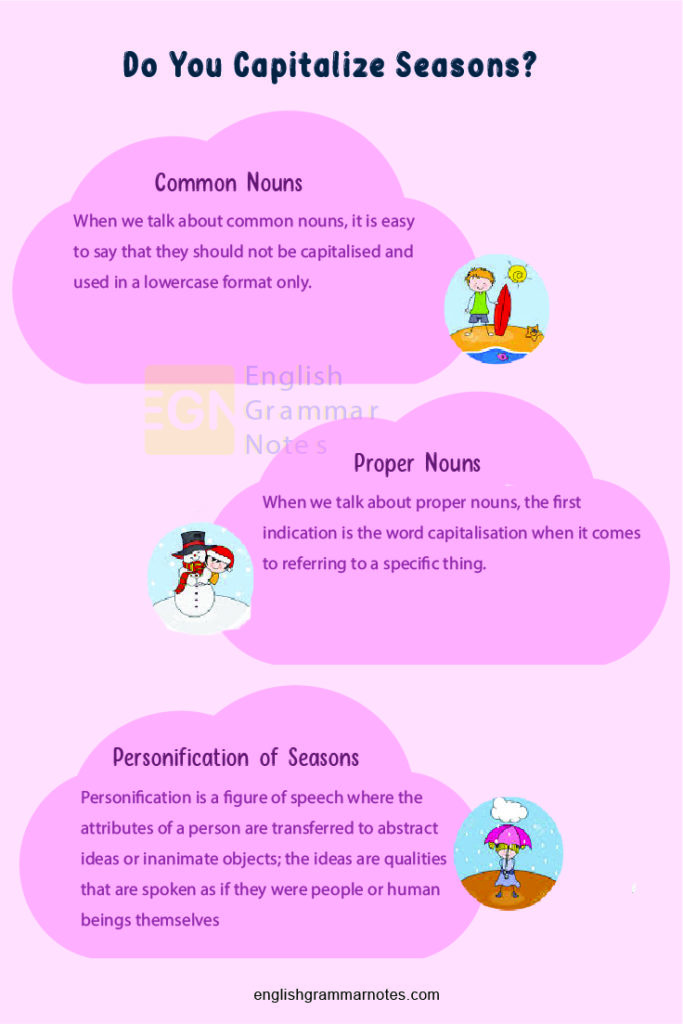
In classical literature and poetry, authors often treat an abstract season as an active, conscious entity. When a writer imbues a season with human attributes, emotions, or intentional actions, the term transitions from a common noun into an allegorical character. The Chicago Manual of Style explicitly permits capitalization in these cases. For instance, in Percy Bysshe Shelley’s Ode to the West Wind, the poet writes: "O Wind, / If Winter comes, can Spring be far behind?" Here, Spring represents an active, almost divine persona rather than a simple 90-day slice of the calendar year.
Literal: The spring rainfall helped clear away the smog.
Personified: Winter relented at last, surrendering his crown to triumphant Spring.
The second major exception involves headline and title capitalization. Choosing between title case and sentence case determines whether "spring" gets an initial capital letter:
In title case (standard for feature articles, book chapters, song titles, and published academic papers), all major words receive capital letters, including nouns:
- Why Spring Brings Renewed Energy to Workplaces
- The Best Destinations for Your Spring Vacation
In sentence case (standard in British digital publications, scientific abstracts, and AP-style news headlines), writers capitalize only the first word and proper nouns. Under sentence case rules, spring stays lowercase:
- Why spring brings renewed energy to workplaces
- The best destinations for your spring vacation
Understanding the display environment prevents you from mixing these conventions on the page.
Corporate Branding, Seasonal Product Releases, and Public Relations
In corporate marketing and product management, seasons often serve as functional product labels. Companies routinely announce their "Spring 2026 Hardware Lineup" or a "Spring/Summer Footwear Release."
When an apparel company or consumer brand names a distinct product cycle, the season acts as a proper brand identifier within press releases and packaging copy. Apple, for example, treats its "Spring Event" as a named trade conference. In contrast, editorial journalists reporting on that corporate event generally revert the surrounding prose to lowercase: "Apple announced three new tablets during its spring media showcase."
Marketing/Trade Label: Introducing the Aurora Spring 2026 Running Jacket.
Journalistic Coverage: Aurora released a new running jacket this spring.
PR professionals often overcapitalize seasons to make their announcements seem more significant. Resist this temptation in standard body copy. Unless "Spring" serves as part of a registered trademark, trademarked product lineup, or named community festival, keeping the word in lowercase ensures professional, polished copy that aligns with industry standards.
Frequently Asked Questions (FAQ)
Q1: Should "spring" be capitalized when written next to a year, such as "spring 2026"?
A1: No. In regular prose, write "spring 2026" with a lowercase "s." You should only capitalize the season if it begins a sentence or forms part of an official administrative title, such as "Spring 2026 Commencement Ceremony."
Q2: Why are days of the week and months capitalized, but the four seasons are not?
A2: Days of the week (Monday, Tuesday) and months (March, April) derive from proper names of historical figures, gods, and planetary bodies. Seasons (spring, summer, fall, winter) developed as descriptive common nouns derived from weather conditions and farming cycles.
Q3: Is "spring break" capitalized on an official university transcript or resume?
A3: Keep "spring break" lowercase in running sentences, cover letters, and resumes. It remains an informal calendar period unless a university catalog directly indexes an event under an official, proprietary program heading.
Q4: Do you capitalize "spring" in email subject lines?
A4: That depends on your chosen capitalization style. If your subject line uses title case ("Our Favorite Spring Picks for Your Home"), capitalize it. If your subject line uses sentence case ("Check out our favorite spring picks for your home"), leave it lowercase.
Q5: Are the other three seasons governed by these exact same capitalization rules?
A5: Yes. The rules for spring apply identically to summer, fall (autumn), and winter. All four stay lowercase in standard running prose, with identical exceptions for proper names, title case, and literary personification.
Editorial Precision for Polished Writing
Clean writing requires knowing when to hold back on capitalization. Overcapitalizing common words clutters sentences, slows reader comprehension, and signals an uncertain grasp of baseline grammar rules.
When deciding whether to capitalize "spring," apply a straightforward test: is the word working as an official, named proper entity, or is it simply identifying a quarter of the year? If you are discussing the weather, referencing the calendar, or tracking a college semester in general prose, keep the "s" lowercase. By reserving capital letters for legitimate proper nouns, official event titles, and title-case headlines, you keep your writing clean, authoritative, and aligned with professional publishing standards.


