Minecraft Combat Overhauls: Is Bane of Arthropods Worth Crafting on Weapons in 2026?
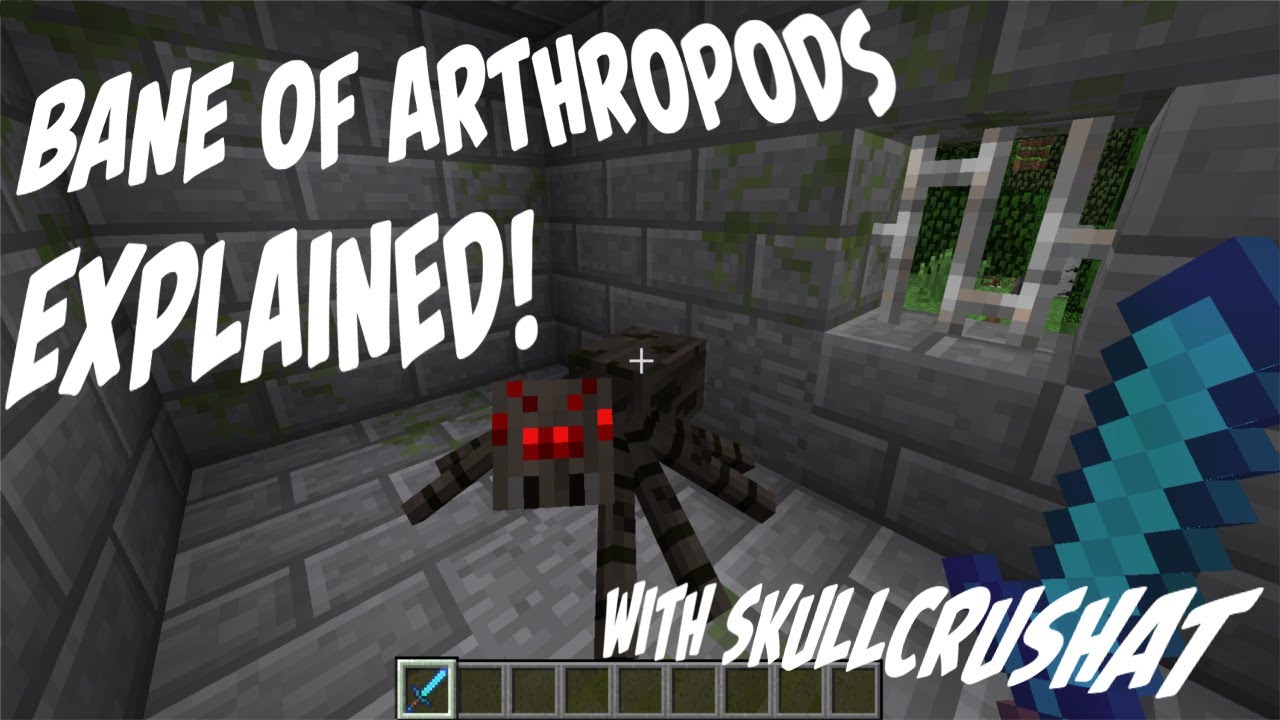
For over a decade, pulling Bane of Arthropods from an enchanting table felt like rolling a critical failure. Veteran players routinely tossed enchanted diamond swords into lava or stripped them at a grindstone the moment that specific golden script appeared on the blade. That historical disdain met a massive design challenge with the arrival of the 1.21 update cycle, which introduced combat trials, new heavy weapons, and treacherous underground chambers. According to detailed patch notes compiled in an official Minecraft Report, Mojang’s systemic combat updates continue to force players to reconsider how niche offensive stats interact with fresh enemy compositions and specialized room encounters.
Understanding why this enchantment exists requires looking directly at its mathematical output rather than community folklore. While modern combat scenarios have broadened where and when specialized weapons get fielded, Bane of Arthropods remains one of the most misunderstood systems in modern Minecraft melee weapon mechanics.
📌 Key Takeaways:
- Core Mechanics: The enchantment adds 2.5 extra damage (1.25 hearts) per level strictly against arthropods, while simultaneously inflicting a crippling Slowness IV debuff.
- Target Pool: It applies exclusively to five specific targets: regular spiders, cave spiders, silverfish, endermites, and bees.
- The Opportunity Cost: Bane of Arthropods is mutually exclusive with Sharpness and Smite, preventing players from stacking universal or undead damage bonuses on the same weapon.
- The Modern Shift: Trial Chambers and specialized mob spawners give this modifier a defined utility role, though it remains a secondary utility rather than an all-purpose primary weapon enchant.
The Mathematical Anatomy: Extra Damage and Slowness IV
Bane of Arthropods functions as a targeted damage booster paired with a status debuff. On a base level, it scales across five distinct tiers, reaching its peak at Bane of Arthropods V maximum level. Each tier adds an extra 2.5 damage per hit to qualifying targets. A standard Netherite sword deals 8 base damage; equip it with Bane of Arthropods V, and that swing leaps to 20.5 damage against arthropods before critical hit multipliers or strength buffs enter the equation.
The damage threshold matters because of enemy health pools:
- Regular spiders possess 16 health (8 hearts).
- Cave spiders have 12 health (6 hearts).
- Silverfish and endermites sit at 8 health (4 hearts).
At tier IV or V, any diamond or Netherite weapon will reliably eliminate every standard arthropod in a single strike.
Beyond raw damage, the enchantment carries a secondary crowd-control mechanic that many players overlook. Landing a hit applies the Slowness IV effect duration to the target. The debuff length scales randomly based on the enchantment level: tier I inflicts Slowness IV for 1 to 1.5 seconds, while tier V extends that window from 1 to 3.5 seconds. Because Slowness IV slashes movement speed by 60%, jumping spiders freeze mid-leap, rendering their aggressive pounce useless.
Which Mobs Count as Arthropods?
The enchantment does not apply to every creepy-crawly creature wandering the Overworld. The internal arthropod tag in the game code targets five specific entities:
- Spiders and Cave Spiders: The most common combatants, found roaming surface biomes at night and swarming in abandoned mineshafts.
- Silverfish and Endermites: Tiny, high-frequency swarming pests spawned from infested deepslate, mountain blocks, broken monster spawners, or discarded Ender Pearls.
- Bees: Technically categorized as arthropods, though striking a neutral pollinator remains an act of self-sabotage for anyone farming honey.
Hostile mobs like Creepers, Phantoms, Slimes, and Magma Cubes do not belong to the arthropod class. Against these standard threats, a weapon with Bane of Arthropods deals solely its un-enchanted base damage.
Sharpness vs Smite Comparison: The Cost of Specialization
Choosing an offensive enchantment on an enchanting table and anvil setup involves navigating mutually exclusive enchantments. A single weapon cannot combine Sharpness, Smite, and Bane of Arthropods without using administrative commands. That structural limitation defines the entire debate surrounding melee loadouts.
Sharpness delivers flat, all-around utility. It boosts damage against all entities by 1.5 extra damage at level I, plus 0.5 damage per additional level (totaling 3.0 extra damage at level V in Java Edition). Smite provides 2.5 extra damage per level against undead mobs, a category encompassing zombies, skeletons, withers, drowned, and phantoms.
| Enchantment Modifier | Damage Bonus Per Level | Target Pool Breadth | Secondary Effect |
|---|---|---|---|
| Sharpness V | +3.0 total (Java) / +6.25 (Bedrock) | Universal (All Mobs & Players) | None |
| Smite V | +2.5 per level (+12.5 max) | Undead (Zombies, Skeletons, Wither) | None |
| Bane of Arthropods V | +2.5 per level (+12.5 max) | Arthropods (5 Mob Types) | Slowness IV (1.0, 3.5s duration) |
Smite dominates end-game farming because undead monsters make up the majority of hazardous encounters and include boss-tier threats like the Wither. Sharpness serves as the baseline safety pick for open-world survival and PvP skirmishes. Bane of Arthropods hits as hard as Smite, but its target group lacks high-health boss encounters, keeping its general value compressed.

Trial Chambers and Modern Mob Encounters
The structural relevance of Bane of Arthropods shifted with the introduction of Trial Chambers. These sprawling copper-and-tuff structures feature dynamic trial spawners that calibrate mob waves based on party size.
Inside these corridors, players regularly encounter concentrated waves of cave spiders and silverfish springing from corrupted walls. In ominous trials, where spawners throw enhanced gear and negative splash potions into the mix, swarms of poison-inflicting cave spiders become lethal quickly. A diamond axe or sword carrying Bane of Arthropods V drops these enemies in one sweep, preventing venom buildup and stopping spider swarms from climbing over barricades.
The expansion of heavy weaponry, most notably the Mace introduced in update 1.21 alongside specialized enchants like Density and Breach, has also redefined loadout configurations. Rather than forcing a single primary weapon to solve every combat scenario, players now carry purpose-built hotbars. A mace handles massive downward plunge attacks, a Smite sword cleans up armored skeletons, and an off-hand Bane of Arthropods tool strips away fast-moving swarms in narrow underground corridors.
Sword and Axe Combat: Which Weapon Carries It Best?
Putting Bane of Arthropods on your primary diamond or Netherite sword remains a mistake for open exploration. Doing so leaves you underpowered against Creepers, Piglins, Endermen, and Illagers. The real efficiency lies in crafting secondary tools.
In Java Edition, axe strikes possess high base damage coupled with a slower attack cooldown. An iron axe with Bane of Arthropods V instantly eliminates cave spiders and standard spiders without requiring full critical jump timing. This turns an inexpensive utility axe into a dedicated sidearm when excavating abandoned mineshafts.
For Bedrock Edition players, where weapon cooldown timers do not exist, a fast-swinging Bane of Arthropods sword clears infested silverfish blocks instantly. When silverfish erupt from broken blocks, hitting one without killing it signals every nearby block to burst open. A single-shot kill mechanism prevents cascading silverfish hordes entirely.
Automated Farms: The Spider Spawner XP Engine
The clearest long-term home for Bane of Arthropods is an engineered spider spawner XP farm. Cave spider spawners found in abandoned mineshafts produce rapid streams of climbing, web-spinning targets. Standard sweeping attacks with a Sharpness sword often leave cave spiders alive at low health, allowing them to counterattack and poison the player through killing-chamber slats.
Mounting an iron or diamond sword enchanted with Bane of Arthropods V into an automated clicker setup, or holding it at a kill-station drop chute, guarantees instant kills without letting poison register. Because the Slowness IV effect immediately roots any spider that survives an off-angle hit, the remaining mobs cannot ascend trapdoors or climb back up the collection chutes.
Frequently Asked Questions (FAQ)
Q1: Does Bane of Arthropods work on the Ender Dragon or the Wither?
A1: No. Neither boss possesses the arthropod tag. The Wither is classified as undead (weak to Smite), and the Ender Dragon takes extra damage only from general attacks boosted by Sharpness.
Q2: Can I combine Bane of Arthropods with Fire Aspect and Looting?
A2: Yes. Bane of Arthropods conflicts strictly with Sharpness and Smite. You can freely combine it with Looting, Fire Aspect, Unbreaking, Mending, and Knockback on the same weapon.
Q3: Is Bane of Arthropods worth using on a Netherite sword?
A3: Only if you already own a primary Netherite sword enchanted with Sharpness V or Smite V. Devoting your sole high-tier weapon to Bane of Arthropods severely reduces your damage output against skeletons, zombies, and general Overworld hostiles.
Strategic Application for 2026 Loadouts
Bane of Arthropods is not useless code, but it is an aggressive specialist enchant. If you treat it as your daily primary blade, you will struggle against common nighttime threats and high-tier dungeon challenges.
The smartest way to play this modifier in 2026 is deliberate compartmentalization. Keep an inexpensive iron or diamond weapon stamped with Bane of Arthropods V inside your ender chest or secondary tool pouch. When cracking deepslate mineshafts, harvesting string from a cave spider spawner, or braving the tight halls of a Trial Chamber, swap it into your main hand. Use it to instantly eliminate swarming pests and suppress movement speed, then return to your primary weapon once the crawl space is clear.


